Contents
- What was found in Malmö
- Why scientists are calm
- What this mosquito is
- What diseases it carries
- Mosquitoes are returning to Europe
- Why Sweden monitors vectors
- How the public can help
- Are these mosquitoes dangerous to dogs and cats?
- How to recognise dirofilariasis in a dog
- If you're taking your dog south
- What people should know when travelling
- What happens next
What was found in Malmö
On 20 October 2026 the Swedish National Veterinary Institute (SVA) reported the country's first find of Aedes aegypti, known as the yellow fever mosquito. A female was caught in a mosquito trap in Malmö, in the south of Sweden. The trap had been set as part of a new national programme to monitor vectors — blood-sucking insects and ticks that can transmit diseases to animals and people.
We're not aware of any previous introductions of this species into Sweden. It wasn't the species I expected to be the next new Swedish mosquito.
Anders Lindström, senior researcher at SVA
SVA, VeterinärMagazinet; 20 October 2026
Why scientists are calm
According to SVA, the risk of disease spreading in Sweden is extremely low. The mosquito was most likely introduced by accident: invasive mosquitoes travel in cars and lorries, in luggage and with imported plants. Aedes aegypti loves warmth and, in experts' view, is unlikely to be able to survive the winter at Sweden's latitude.
The yellow fever mosquito is a warmth-loving species that probably finds it hard to overwinter at our latitudes. Most likely this is an introduction that won't become established.
Anders Lindström, SVA
Scientists don't rule out that temporary populations could appear in a warm summer, but they would disappear when winter comes. To make sure the mosquito hasn't taken hold, SVA will expand monitoring around Malmö next mosquito season.
What this mosquito is
Aedes aegypti originates from Africa but has long since spread throughout the tropics and subtropics worldwide. Together with the Asian tiger mosquito, it is considered one of the most invasive mosquito species. It thrives near people — in towns and villages — bites mainly during the day and lays its eggs in small containers of water: plant pots and saucers, buckets, old tyres, gutters. The eggs can survive drought for months on the side of a container and "come to life" when water gets in again — which is why they are so easily transported with freight.
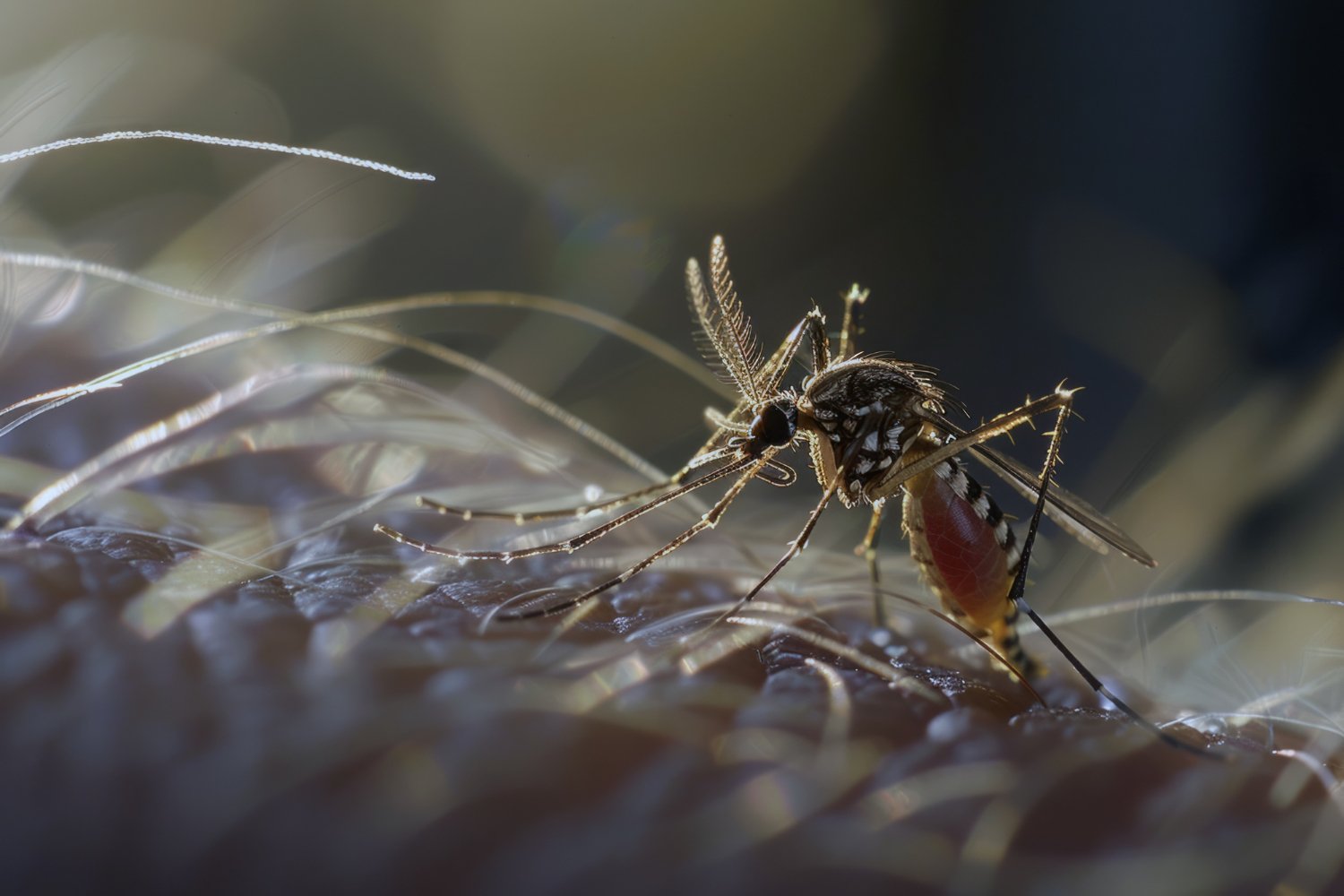
It is a small dark mosquito with white bands on its legs. It can be told apart from the tiger mosquito by the pattern on its back: the yellow fever mosquito has a white lyre-shaped pattern, while the tiger mosquito has a single white stripe down the middle. But only a specialist can identify the species for certain.
What diseases it carries
Aedes aegypti can carry dengue, chikungunya, Zika and yellow fever viruses. All of these diseases are dangerous to people and are widespread in tropical countries. For the mosquito to pass on a virus, it must first bite an infected person, and then the virus has to multiply inside the mosquito in warm weather. Sweden has neither a permanent population of these mosquitoes nor the conditions for such a chain, which is why SVA considers the risk extremely low.
Mosquitoes are returning to Europe
The yellow fever mosquito once lived in southern Europe too, but disappeared from there in the 20th century. Now it is coming back. According to SVA, there are populations around the Black Sea, in Cyprus and on Madeira. It is regularly brought into the Netherlands with freight. And at the beginning of September 2026, these mosquitoes were found breeding in residential areas of east London, after which monitoring there was stepped up. In SVA's assessment, the Swedish find is not linked to the London one.
The Asian tiger mosquito, Aedes albopictus, is spreading even more noticeably. Over recent decades it has become established in Italy, France, Spain and other countries in southern Europe and is moving north; in the UK it has been detected at ports and motorway service areas. During hot summer months it has already caused local cases of dengue in France and Italy — in people who had not travelled.
Why Sweden monitors vectors
In the past, mosquitoes and ticks in Sweden were studied mainly in individual research projects. Now SVA has been tasked with building a permanent national vector surveillance system. The institute works with other agencies, including the Public Health Agency of Sweden. The Malmö find shows the system works: the unusual mosquito was spotted immediately, not years later when it might have been able to breed. Traps for invasive mosquitoes are usually set where new species can arrive with transport and freight — near ports, major roads and logistics centres. Malmö, with its port and bridge to Denmark, is exactly that kind of place.
How the public can help
SVA invites the public to take part in its "Mosquito Map" project (Myggkartan). If you find a mosquito that looks like a yellow fever or tiger mosquito, you can send it to SVA — specialists will identify the species and let you know the result. Finds like these help new vectors to be spotted early. It's best to keep the mosquito intact; the project website explains how to pack and send it. In the UK, the UK Health Security Agency runs a similar scheme for reporting suspected invasive mosquitoes.
To avoid helping mosquitoes breed in summer, it helps to:
- not leave containers of standing water in the garden or on the balcony — buckets, watering cans, old tyres, toys;
- change the water in plant-pot saucers, bird baths and outdoor dog bowls once a week;
- cover water butts with a lid or fine mesh;
- clear gutters so water doesn't collect in them.
Are these mosquitoes dangerous to dogs and cats?
Dengue, chikungunya, Zika and yellow fever viruses are dangerous to people, not to dogs and cats. But mosquitoes in general also carry pet diseases, and the most important of these in Europe is dirofilariasis. These are parasitic worms whose larvae a mosquito passes to a dog when it bites. The heartworm form affects the heart and pulmonary arteries and can lead to severe heart failure. The subcutaneous form causes nodules under the skin; it can also be passed to people. Cats can also be infected with heartworm, though less often than dogs.
Dirofilariasis is widespread in southern and eastern Europe — in Italy, Spain, Portugal, the Balkans and Hungary — and is gradually moving north as the climate warms. It can be carried by various mosquito species, including Aedes.
How to recognise dirofilariasis in a dog
What makes heartworm so treacherous is that for the first months, or even years, it shows almost no signs: the worms grow slowly in the heart and lung vessels. Later the dog develops a cough, especially after exercise, tires quickly on walks, becomes breathless and loses weight; in severe cases there is swelling and fainting. The subcutaneous form shows up as painless lumps under the skin that may move around.
Your vet can find the parasites with a blood test. Prevention is far easier than treatment: treating heartworm takes a long time, requires strict rest and carries risks of its own. That's why vets recommend prevention and an annual blood test for dogs that travel to southern Europe.
If you're taking your dog south
Many Swedish, Finnish, German and British owners take their dogs on holiday to the Mediterranean. Before a trip like this, it's worth seeing your vet:
- discuss products that repel mosquitoes and sandflies — collars or spot-ons;
- ask about heartworm prevention: usually a medicine given during the trip and for a while after you get back;
- in southern countries dogs are also protected against leishmaniasis, which sandflies transmit — another reason to choose a product in advance;
- keep your dog indoors in the evening and at night, when mosquitoes and sandflies are most active;
- tell your vet about the trip when you get back — some diseases only show up months later.
Important: insect-control products for dogs must not be used on cats without a vet's advice — some of them are toxic to cats.
What people should know when travelling
For travellers, the Malmö find changes nothing, but it is a reminder of simple rules in tropical countries where this mosquito is common. Aedes aegypti bites during the day, so repellent is needed not only in the evening. Light-coloured clothing with long sleeves, air conditioning and window screens all help. Travel to some countries in Africa and South America requires a yellow fever vaccination, and sometimes proof of it at the border — check with your GP or a travel clinic in advance. If you develop a fever after a trip, be sure to tell your doctor where you've been.
What happens next
Next year SVA will monitor mosquitoes in Malmö more closely to rule out a population. People in southern Sweden don't need to do anything special: the risk of disease is extremely low. But the find is a reminder that tropical mosquitoes increasingly travel with people and goods. The earlier they're spotted, the easier it is to stop them taking hold. Dog owners should think about mosquitoes not only on holiday: it's best to discuss insect protection for your pet with your vet in spring, before the season starts.
Sources
- Swedish National Veterinary Institute (SVA), 20 October 2026
- VeterinärMagazinet, 20 October 2026