Contents
- What happened
- Why the environment ministry and GMO law are involved
- What kind of vaccine it is
- Why parvovirus is so dangerous
- The "window of susceptibility" in puppies
- How strain 630a helps
- What this means for Europe
- Does the vaccination schedule need to change
- How to protect your puppy until vaccinations are complete
- Genetically modified vaccines for animals aren't new
- Why live vaccines are assessed so strictly
- What happens next
- When to see a vet
What happened
On 27 October 2026 Japan's Ministry of Agriculture, Forestry and Fisheries (MAFF) announced a public consultation on a new vaccine for dogs. It's a live genetically modified vaccine against parvovirus, one of the most dangerous infections in puppies. The application for approval was submitted by MSD Animal Health's Japanese company, part of the international pharmaceutical group MSD.
At the same time, Japan's Ministry of the Environment opened the same consultation. Comments are accepted from 27 October to 25 November 2026, through the government portal or by post. It's enough to send a comment to one of the ministries: both will take it into account.
MAFF and Ministry of the Environment of Japan; 27 October 2026
Why the environment ministry and GMO law are involved
In Japan, any live genetically modified organism used outside a laboratory is assessed under the so-called Cartagena Act — Japan's law on conserving biological diversity when using genetically modified organisms. A live vaccine is a weakened virus that multiplies in the dog's body and can be shed into the environment. So before it can be approved, it must be shown that the modified virus won't harm Japan's wild animals and plants.
To do this, the manufacturer draws up rules for using the vaccine, and the agriculture and environment ministries review them. On 19 June 2026 experts from the relevant committee of the Pharmaceutical Affairs Council met. Their conclusion: if the vaccine is used according to the proposed rules, there's no risk to biodiversity. The ministries have now published the assessment report and are asking for the public's views, after which they'll make a final decision.
What kind of vaccine it is
According to the ministry, the vaccine is based on canine parvovirus strain CPV 630a. A change has been introduced into its genes: the virus produces a modified VP2 capsid protein. This is precisely the protein against which a dog's immune system makes protective antibodies. The modified protein is intended to give dogs strong protection against parvovirus.
Conventional live parvovirus vaccines are made differently — by weakening the natural virus over a long period in the laboratory. The genetic engineering approach makes it possible to set the vaccine virus's properties precisely, rather than relying on random changes.
Why parvovirus is so dangerous
Parvovirus is a severe viral infection of the gut. Puppies aged 6 weeks to 6 months and unvaccinated dogs of any age are most at risk. They develop severe vomiting, diarrhoea that is often bloody, a high temperature, lethargy and refuse food. The dog loses fluid fast, and without intensive treatment in a veterinary hospital many puppies die within a few days.
The biggest danger is how hardy parvovirus is. It survives for months or even years on floors, in soil and on shoes and clothing, and resists many ordinary disinfectants. So a dog can be infected without ever meeting a sick dog — for example, on a patch of grass where an infected dog had been.
The "window of susceptibility" in puppies
The main challenge in vaccinating puppies is maternal antibodies. A puppy receives them in its mother's colostrum in the first days of life, and for a while they protect it. But the same antibodies interfere with conventional vaccines: they neutralise the vaccine virus before the puppy's body can build its own protection.
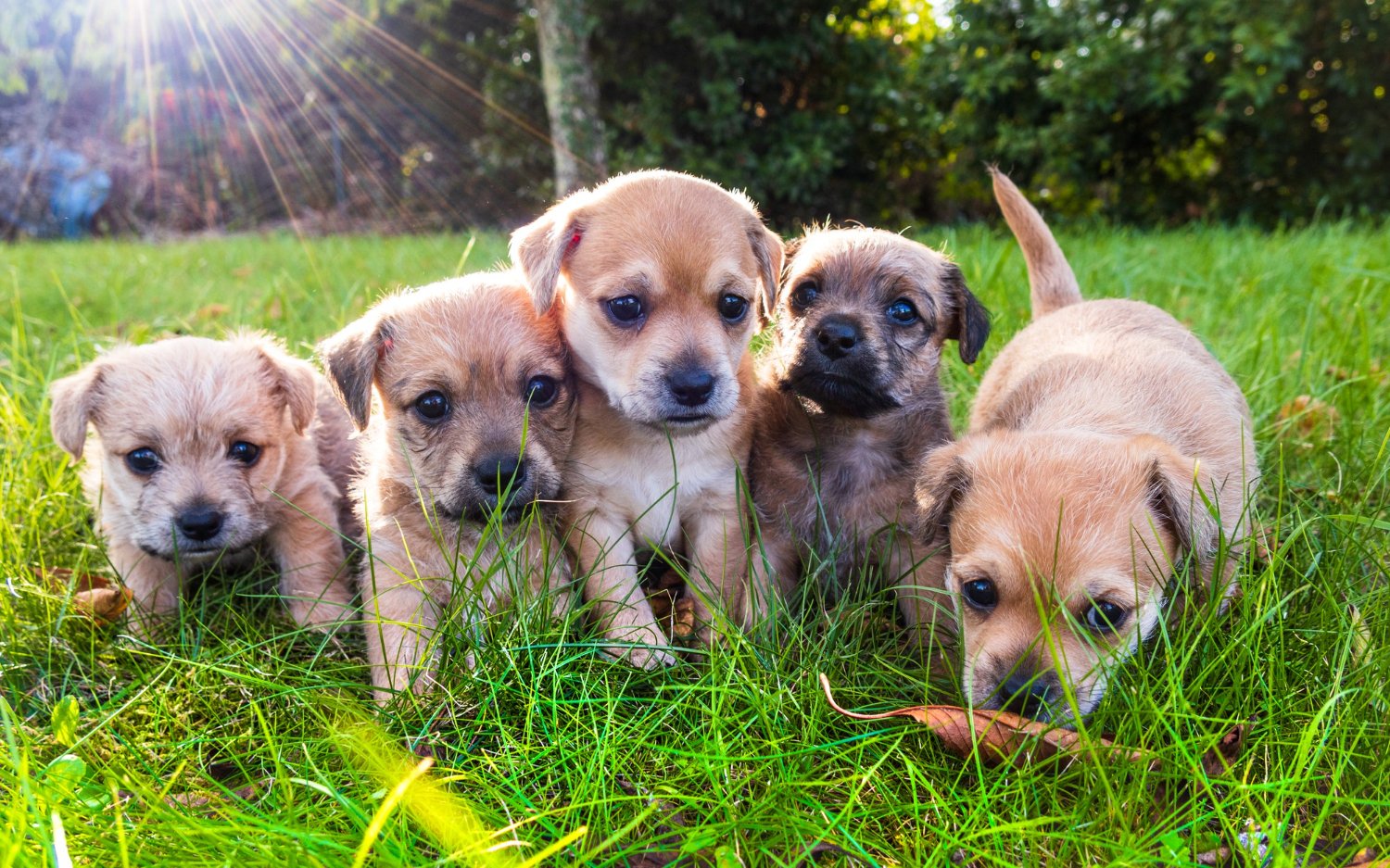
Maternal antibodies fade gradually, but at a different time in each puppy — anywhere from a few weeks to four months. That creates a "window of susceptibility": the mother's protection is no longer enough to prevent disease but still enough to block the vaccine. This is exactly when puppies most often become infected. That's why they're vaccinated several times at intervals, until it's clear the vaccine has "taken".
How strain 630a helps
Vaccine strain 630a was developed precisely to close this window. Its capsid was modified so that maternal antibodies barely interfere with the vaccine. According to the developers' data, published in 2023 in the journal Vaccines, a similar vaccine protected puppies from as early as 4 weeks of age, even with high levels of maternal antibodies. These are manufacturer-associated study data rather than independent confirmation.
If the vaccine performs the same way in everyday practice, it means earlier and more reliable protection for puppies — especially in breeding kennels, rescue centres and places where parvovirus is common.
What this means for Europe
For owners in Europe, this vaccine isn't new. In the EU, parvovirus strain 630a is already part of MSD Animal Health's puppy vaccine Nobivac DP Plus, which combines recombinant parvovirus 630a with live attenuated canine distemper virus. The European Medicines Agency's (EMA) Committee for Veterinary Medicinal Products published an assessment report on this vaccine in 2020, and it's authorised centrally for all EU countries.
The European product information states that maternal antibodies to parvovirus don't interfere with the vaccine, and that in some puppies the vaccine virus is shed in faeces for up to 8 days and may occasionally spread to other dogs and cats without causing disease. If Japan decides in favour, a similar approach will simply be extended to another large country. The Japanese announcement doesn't give a brand name, so whether it's exactly the same vaccine as in Europe is worth confirming once it's authorised.
Does the vaccination schedule need to change
No. Your vet decides which vaccine to use and when. In the UK and Europe, vets follow the guidelines of the World Small Animal Veterinary Association (WSAVA) and national bodies. Puppies are usually vaccinated against parvovirus, distemper and hepatitis several times — starting at 6–8 weeks and continuing to 16 weeks or older — with a booster about a year later. Vaccines designed for younger puppies can be useful where the risk of infection is especially high; your vet will discuss whether they're right for your puppy.
How to protect your puppy until vaccinations are complete
- Avoid places where lots of other dogs go until your vet says the primary course is complete.
- Wash your hands and take off outdoor shoes before playing with your puppy.
- Don't buy a puppy from an unknown seller — ask the breeder for records of the mother's and puppy's vaccinations.
- Only let your puppy meet vaccinated adult dogs — that's good for socialisation and safe.
- Stick to the vaccination schedule and don't skip boosters, even if your puppy seems healthy.
Genetically modified vaccines for animals aren't new
For many owners, the words "genetically modified vaccine" sound alarming, but such products have been used in veterinary medicine for decades. In Europe, for example, vector vaccines for cats and dogs have long been in use: a virus that's harmless to the animal carries the gene for a single protein of the disease-causing organism, and the body learns to recognise it. There are recombinant vaccines for poultry, pigs and horses. Their safety is checked just as thoroughly as that of conventional vaccines, along with their effects on the environment.
The strain 630a vaccine works a little differently: it isn't a carrier of a foreign gene but canine parvovirus itself, with its capsid protein precisely modified. The principle is the same, though — genetic engineering makes it possible to produce a vaccine virus with properties set in advance.
Why live vaccines are assessed so strictly
Live vaccines give strong, long-lasting protection, but they contain a virus that can multiply. So regulators worldwide check whether the vaccine virus could regain harmful properties, spread among wild animals or affect the environment. For genetically modified vaccines the checks are stricter still: in the EU and the UK, too, they're assessed for their environmental impact. Japan's procedure with a public consultation is an example of how this can be done openly.
What happens next
Until 25 November the Japanese ministries are taking comments, after which, taking the public's views into account, they'll decide whether to allow the vaccine to be used. The product will then still need to be authorised as a veterinary medicine. It hasn't been announced when the vaccine will reach Japanese clinics. Anyone can take part in the consultation, but comments are accepted only in Japanese, and the ministries won't reply to them individually. For owners in Europe, the main lesson is how differently countries assess the same products: in Japan, with a focus on biodiversity law and open consultation.
When to see a vet
If a puppy or unvaccinated dog has vomiting, diarrhoea (especially with blood), lethargy, refuses food or has a high temperature, see a vet urgently. Parvovirus progresses quickly, and the chances of recovery are better if treatment starts within the first hours. So that other dogs at the practice aren't infected, phone ahead to describe the signs before you arrive.
Sources
- Ministry of Agriculture, Forestry and Fisheries of Japan (MAFF), 27 October 2026
- Ministry of the Environment of Japan, 27 October 2026
- European Medicines Agency (EMA), Nobivac DP Plus product information, 2020
- Pearce et al., Vaccines journal, 2023