Contents
- What happened
- How many cases there are in the state
- What rules apply
- Cattle trade across the border
- What kind of parasite it is
- How the US got rid of the fly last century
- How to spot an infestation
- Why the fly is dangerous to dogs and cats
- How to protect animals on the farm
- Can the fly affect people
- What this means for Europe
- What happens next
- When to see a vet
What happened
On 27 October 2026 New Mexico announced three new cases of livestock infested with New World screwworm, a parasite whose larvae eat the living tissue of animals. The new cases were found in a calf in Hidalgo County in the south-west of the state and in a bull and a ram in Doña Ana County in the south, near the city of Las Cruces.
One of the Doña Ana cases was found on the grounds of New Mexico State University (NMSU) in Las Cruces itself. The authorities have stepped up surveillance and set fly traps on and around the campus, and restriction zones have been placed around the sites.
Searchlight New Mexico, New Mexico Livestock Board; 27 October 2026
How many cases there are in the state
According to the news outlet Searchlight New Mexico, the state has had eight infestations, six of which the US Department of Agriculture (USDA) considers active. The fly, which the US had for decades regarded as defeated, crossed the border from Mexico in June. Since then it has been found in Texas, and on 21 October for the first time in a wild animal in the US.
New Mexico's state veterinarian, Samantha Holeck of the Livestock Board, explained why it matters to report every suspicion:
Every confirmed case helps us better understand where New World screwworm may be present.
Samantha Holeck, state veterinarian, New Mexico Livestock Board
What rules apply
Around each case the authorities set up an infested zone with a radius of at least 12.4 miles — about 20 kilometres. Strict rules apply inside it:
- inspection before movement — animals may not be moved into or out of the zone without being checked for larvae;
- treatment where needed — if wounds or larvae are found, the animal is treated before it is moved;
- surveillance and traps — specialists set fly traps to work out how far the parasite has spread.
The zone map has been produced by New Mexico State University's extension service, and new cases in areas where the fly hasn't been found before are to be announced as soon as they are confirmed.
Cattle trade across the border
The fly arrived in the US from the south, via Mexico, where it has been found in five northern states — Sonora, Chihuahua, Coahuila, Nuevo León and Tamaulipas. Because of this the US closed its border crossings to livestock imports. The USDA is now gradually reopening them, with tougher checks. The Santa Teresa crossing in Doña Ana County reopened in September with stricter inspections, and the Columbus crossing in neighbouring Luna County on Monday, 26 October.
What kind of parasite it is
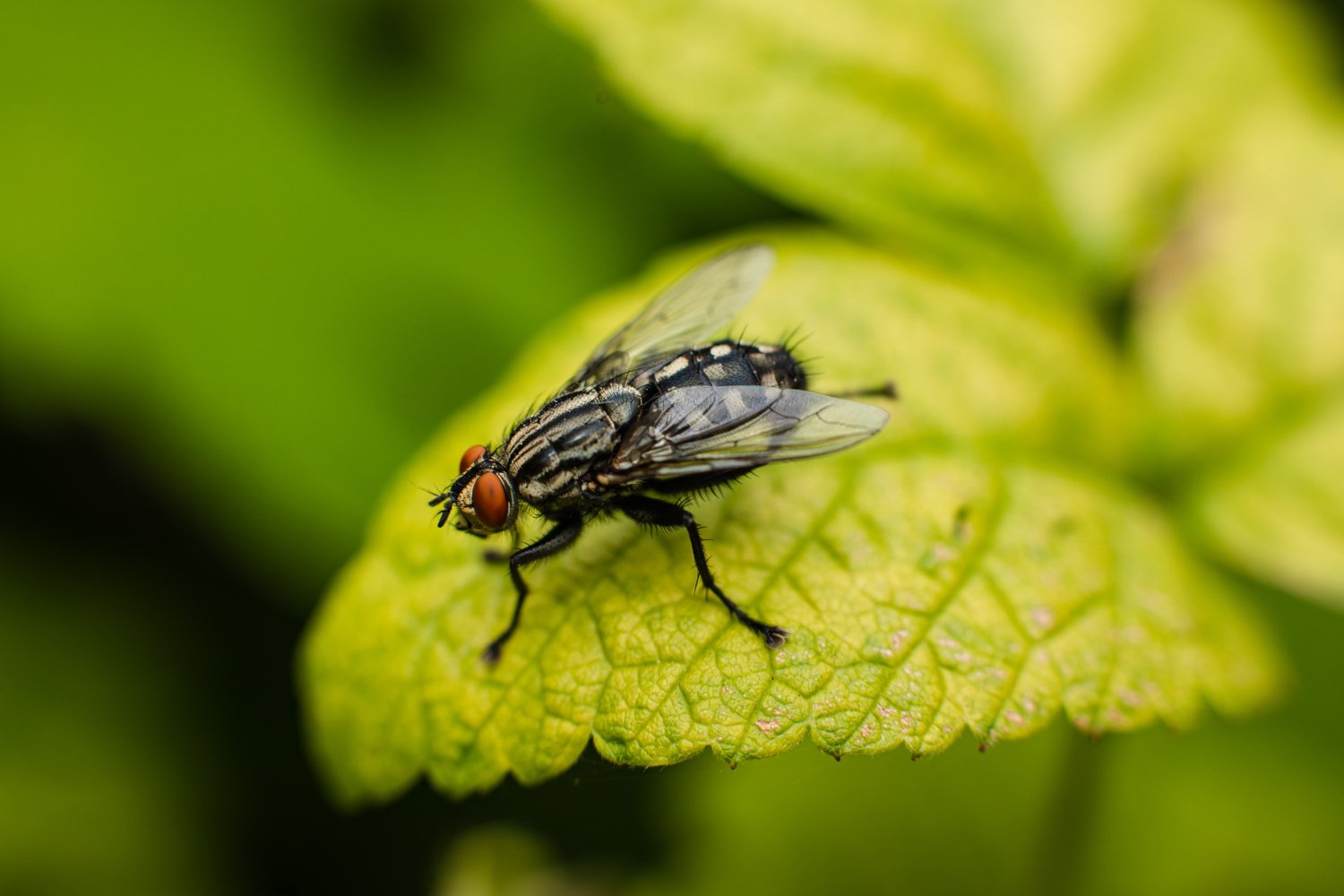
The New World screwworm (Cochliomyia hominivorax) is a bluish-green fly slightly larger than a housefly. It isn't the fly itself that's dangerous but its larvae. The female lays hundreds of eggs on the edges of fresh wounds, on the navels of newborn animals or in moist skin folds. The larvae that hatch burrow into living tissue, the wound grows, starts to fester and smell, and that attracts more flies.
Without treatment an animal can die within one to two weeks. Cattle, sheep, goats, horses, pigs and wildlife are affected, as are dogs and cats. Occasionally people suffer too.
How the US got rid of the fly last century
The screwworm once caused enormous damage to cattle farming in the southern US. It was beaten in an unusual way: millions of flies were reared in factories, the males were sterilised by irradiation and released from aircraft. The female mates only once in her life, so if her partner is sterile there are no offspring. Over a few decades the flies were pushed out of the US, Mexico and Central America, and a "barrier" of sterile flies was maintained on the border between Panama and Colombia.
In recent years the barrier has been breached: the fly moved north through Central America and Mexico and reached the US in 2026. The authorities are now expanding sterile fly production again.
How to spot an infestation
The Livestock Board and the New Mexico Department of Agriculture ask animal owners to look out for:
- wounds that don't heal or get worse over time;
- an unpleasant, rotting smell from a wound;
- discharge from a wound, sometimes bloody;
- restlessness — the animal shakes its head, rubs, licks or bites at one spot;
- visible larvae — white, ringed and sitting deep in the wound.
Anyone who suspects an infestation should report it immediately to the New Mexico Livestock Board and not move the animal.
Our best tool for early detection is our eyes.
Tom Paterson, president of the New Mexico Cattle Growers' Association
Paterson urged people to keep an eye not only on livestock but also on pets — and even children.
Why the fly is dangerous to dogs and cats
Dogs and cats become infested in the same way as livestock: through wounds, scratches from fights, bites, surgical stitches and inflamed skin. Stray animals are especially vulnerable, as are older, less mobile pets that may have pressure sores and puppies and kittens whose navels haven't yet healed. In areas with the fly, vets advise treating and covering any wound on a pet straight away and checking it every day.
How to protect animals on the farm
For farmers in zones with the fly, the key is to give it nowhere to lay eggs. Vets usually advise:
- checking animals every day, especially newborn calves, lambs and kids — their navels remain an open wound for several days;
- treating every wound at once, including barbed-wire scratches and tick bites;
- postponing routine procedures — castration, disbudding, tail docking — until the colder months when there are fewer flies;
- using fly treatments as prescribed by your vet;
- not moving animals with open wounds and always following the zone rules.
Can the fly affect people
Yes, though it is rare. Female screwworm flies also lay eggs in human wounds, especially in people who spend a lot of time outdoors and in elderly or frail people. In recent years a few cases have been described in the US in people returning from Central America. So health authorities in areas with the fly advise keeping your own wounds covered and seeing a doctor if a wound won't heal and you feel movement inside it.
What this means for Europe
The New World screwworm is not present in Europe, and for owners here it isn't a danger for now. But there are a few important points.
First, travel. People and animals returning from Central and South America, Mexico and now the southern US can bring larvae back in wounds. If your dog develops a wound with larvae after such a trip, tell your vet about the trip straight away: they will keep the larvae for testing and decide whether the find needs reporting to the animal health authorities — in Great Britain, the Animal and Plant Health Agency (APHA).
Second, animal imports. Animals from the Americas can only enter the UK and the EU with veterinary certificates and checks, and the rules take parasites like this into account. The current outbreak in the US is likely to make veterinary services inspect animals from these regions more carefully.
Third, Europe has its own flies whose larvae settle in wounds — for example Wohlfahrt's wound myiasis fly, which is found in southern and eastern Europe and affects sheep, dogs and people. So the advice is the same everywhere: in summer and autumn, any wound on an animal should be kept clean and checked regularly.
What happens next
The New Mexico authorities are continuing to set traps, inspect livestock and declare new zones. The USDA is expanding sterile fly releases along the border. On and around the New Mexico State University campus, where one of the cases was found, state teams are continuing to inspect animals and check fly traps. Livestock keepers are asked not to hide suspicious wounds: quick reporting helps not only their own herd but also their neighbours, while delay can mean a new restriction zone for the whole area. Vets expect fly activity to drop as the weather cools, but the parasite can only be stopped for good once sterile males have displaced the wild ones — and that will take months, if not years.
When to see a vet
If your animal has a wound that won't heal, smells unpleasant, oozes fluid or has larvae visible in it, see a vet the same day. Don't try to remove the larvae yourself or use anything from your home first-aid kit — you could push the larvae deeper or damage the tissue: your vet will clean the wound, prescribe treatment and report the find to the authorities if necessary.
Sources
- Searchlight New Mexico, 27 October 2026
- Source New Mexico, 27 October 2026
- New Mexico Livestock Board, statement, 27 October 2026