
Pet diaryDiaryMemorial page
Siberian cat

features of the breed
and care
national treasure of Russia and one of the oldest breeds formed naturally. These cats have thick fur, a strong constitution and a friendly character, which makes them ideal pets for families. They are hardy, smart and have a well-developed hunting instinct.
Siberian cat -
Breed characteristics
Adaptability
Care
Energy level
Health problems
Suitable for children
Friendly to strangers
Social needs
Loving
Shedding level
Dog friendly

Siberian cat -
national treasure of Russia and one of the oldest breeds that developed naturally. These cats have thick fur,
a strong constitution and a friendly character, which makes them ideal pets for families. They are hardy, smart and have a well-developed hunting instinct.
Breed characteristics
Adaptability
Energy level
Suitable for children
Social needs
Shedding level
Care
Health problems
Loving
Dog friendly
Friendly
to strangers
The Siberian cat is an aboriginal breed that developed in Russia naturally, without the intervention of breeders. Due to the harsh climate, its fur became thick and water-repellent, and its body became strong and resilient. The first mentions of such cats were found in the 16th-17th centuries, and the breed received official recognition only in the 20th century. Today, the Siberian cat is widely known throughout the world and is valued for its beauty, strength, and devotion to its owner.
History and origin of the Siberian cat
Appearance of the Siberian cat
The Siberian cat is a large, powerful animal with well-developed muscles. Adult males can weigh from 6 to 12 kg, and females - from 4 to 7 kg.
The tail is long and fluffy, used for warmth in the cold season.
The paws are large, strong,
with tufts on the toes,
which helps to walk on snow.

The head is massive,
with rounded features,
a strong chin
and high cheekbones.
Eyes are large, almond-shaped, and range in colour from green to amber.
The coat is long, thick, with a dense undercoat, and provides good protection from the cold.
Appearance of the Siberian cat
The Siberian cat is a large, powerful animal with well-developed muscles. Adult male cats can weigh from 6 to 12 kg, and females - from 4 to 7 kg.
The head is massive, with rounded features, a strong chin and high cheekbones.
The eyes are large, almond-shaped, and range in colour from green to amber.
The coat is long, thick, with a dense undercoat, and provides good protection from the cold.
The paws are large, strong, with tufts on the toes, which helps them walk on snow.
The tail is long and fluffy, used for warmth in the cold season.
The most popular are:
Red and cream
- rich warm shades.
Classic mackerel (tabby) -
Wild type colouring -
White -
Red and cream -
Black, grey, blue -
Neva Masqueradeβ€”
striped pattern on the coat.
a combination of brown, grey and black shades.
spectacular colour, sometimes with blue eyes.
rich warm tones.
monochromatic variations.
(Siberian with Siamese colouring)

light body and dark markings on the face, paws and tail.
Siberian cat colour
Siberian cats come in a variety of colours.
The most popular are:
To participate in exhibitions, Siberian cats must meet strict breed standards. Not only the external data, but also the behaviour of the animal in the ring are assessed.
Show Standards
for Siberian Cat
Head: The Siberian cat should be powerful, with broad cheeks, well-defined features and good proportions.
Coat: Long and dense, with good undercoat, should be water-repellent and free of tangles.
Body: Large and muscular, with a proportionally developed chest and powerful legs.
Colour: At exhibitions, purity of colour and the absence of spots and defects in the coat are valued.
Show Standards
for Siberian Cat
To participate in exhibitions, Siberian cats must meet strict breed standards. Not only the external data, but also the behaviour of the animal in the ring are assessed.
Head: The Siberian cat should be powerful, with broad cheeks, well-defined features and good proportions.
Coat: Long and dense,
with good undercoat, should be water-repellent
and free of tangles.
Body: Large and muscular, with a well-developed chest and powerful legs.
Colour: At exhibitions, purity of colour and absence of spots and defects in the coat are valued.
Character and personality of the Siberian cat
Siberian cats are affectionate, intelligent and independent pets. They love attention, but are not intrusive, and are able to find their own activities and entertainment.
They have a good memory, quickly get used to the house and their owners. Despite their independence, they are very devoted to the family and get along well with children.

These cats have a strong hunting instinct and are capable of catching even small pests
in the house. They are also known for their curiosity
and intelligence.
Character
and personality of the Siberian cat
Siberian cats are affectionate, intelligent and independent pets. They love attention, but are not intrusive, and are able to find activities and entertainment for themselves. They have a good memory and quickly get used to the house and their owners. Despite their independence, they are very devoted to their family and get along well with children.
These cats have a strong hunting instinct
and are capable of catching even small pests in the house. They are also known for their curiosity
and intelligence.
Caring for a Siberian cat
Grooming the Siberian cat involves regular brushing of its thick, long fur, especially during shedding periods to prevent mats from forming. The fur should be brushed two to three times a week, and daily during active shedding periods.
Siberian cats need rare but thorough baths - about 3-4 times a year, using a special shampoo for long-haired cats, and after bathing it is important to gently dry the coat.
In addition, it is necessary to regularly check and clean the eyes
and ears to avoid infections. Trimming the claws and brushing the teeth are also important to maintain the hygiene and health of the cat. The diet should be balanced, providing the necessary amount of proteins and fatty acids for healthy coat. The Siberian cat will feel good
if you pay attention to its hygiene needs
and monitor its condition.
Caring for a Siberian cat
Grooming a Siberian cat involves regular brushing of its thick, long fur, especially during shedding periods, to prevent mats from forming. The fur should be brushed two to three times a week, and daily during active shedding periods. Siberian cats need infrequent but thorough baths - about 3-4 times a year, using a special shampoo for long-haired cats, and after bathing, it is important to gently dry the fur.
In addition, it is necessary to regularly check and clean the eyes and ears to avoid infections. Trimming the claws
and brushing the teeth are also important
to maintain the hygiene
and health of the cat. The diet should be balanced, providing the necessary amount of proteins and fatty acids for the health of the coat. The Siberian cat will feel good
if you pay attention to its hygiene needs
and monitor its condition.

Pros and cons of the breed
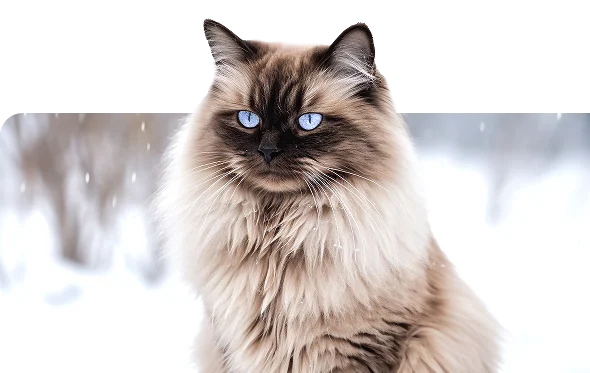
Excellent hunter

Pros

Excellent hunter

Agile and quick, the Siberian is good at catching rodents and insects and loves active games, which makes it ideal for a house with a garden.

Affectionate and devoted

Siberians become attached to their owners and like to be nearby without being demanding.
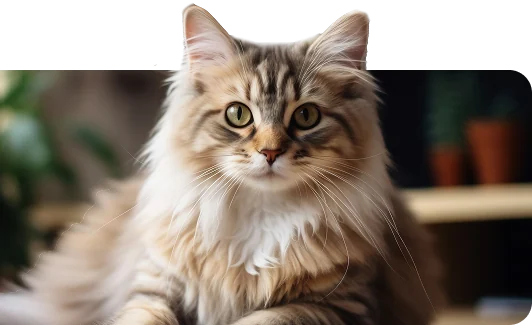
Independent character

Cons

Independent character

Despite being affectionate, Siberians can be stubborn and do not always come when called.

Seasonal moult

In spring and autumn the Siberian sheds its undercoat heavily, so regular brushing is needed.

Siberian cat -
An ideal pet for those who value independence, loyalty and natural beauty.
She has robust health, thick fur and a balanced character. These cats do not require complex care, but they do need
regular brushing and a balanced diet.
If you are looking for an intelligent, affectionate, but independent friend,
the Siberian cat will be a great choice!
Siberian cat -
An ideal pet for those who value independence, loyalty and natural beauty.
She has robust health, thick fur
and a balanced character.
These cats do not require complex care, but they do need regular brushing and a balanced diet. If you are looking for an intelligent, affectionate, but independent friend, the Siberian cat will be a great choice!
You might be interested in:
Tools
Cat symptom checkerVaccination scheduleIs it poisonous?Breed finderWhich breed suits you?Food calculatorAge in human yearsAll tools β†’

Breed health

Siberian cats are generally robust, but hypertrophic cardiomyopathy and polycystic kidney disease have been described in the breed. Hypertrophic cardiomyopathy (HCM) is a thickening of the heart wall; it can stay silent for a long time and then show up suddenly as breathlessness or a blood clot (thromboembolism). It is diagnosed with a heart scan (echocardiography).

When buying a kitten, ask about the parents’ health tests: the DNA tests used in the breed and, for breeds at risk of cardiomyopathy, a heart scan. Take your cat for a check-up once a year, and twice a year from 8–10 years of age.