
Regular preventive check-ups are key to the health and longevity of your pet. Many diseases in animals develop without obvious symptoms, and only timely examination by a veterinarian can help detect problems at early stages. In this article, we’ll discuss what a comprehensive veterinary check-up includes, how often it should be done, and why it’s so important.
Why Do You Need a Preventive Check-up?
Even if your pet looks healthy, it doesn't mean there are no hidden problems. Regular visits to the veterinarian allow you to:
- Detect diseases early.
- Evaluate your pet's overall health condition.
- Adjust nutrition and care depending on your pet’s age and health status.
- Prevent the development of serious illnesses.
- Ensure timely vaccinations and parasite treatments.
The earlier a problem is detected, the easier and cheaper the treatment will be.
How Often Should You Have a Check-up?
The frequency of preventive check-ups depends on your pet's age and health condition:
- Kittens and puppies: Check-ups should be done every 3-4 weeks until the vaccination course is completed.
- Adult pets (1 to 7 years old): It’s recommended to visit the veterinarian at least once a year.
- Senior pets (older than 7 years): Check-ups should be done every 6 months, as the risk of chronic diseases increases with age.
- Additional check-up: If your pet shows changes in behavior, appetite, or any concerning symptoms, an unscheduled visit is advisable.
What Does a Comprehensive Check-up Include?
1. General Check-up
The veterinarian will assess your pet's overall appearance, check the coat, skin, ears, eyes, and oral cavity. The condition of mucous membranes will be inspected, and body temperature will be measured. The veterinarian will also assess breathing and heart rhythm.
2. Oral and Dental Health Evaluation
Dental problems such as tartar, gum inflammation, and other dental issues can lead to serious internal organ diseases. The vet will check the condition of the teeth and recommend professional cleaning if necessary.
3. Weight Measurement and Physical Fitness Assessment
Overweight or underweight may indicate health problems. The veterinarian will help correct your pet’s diet and physical activity regimen.
4. Listening to Heart and Lungs
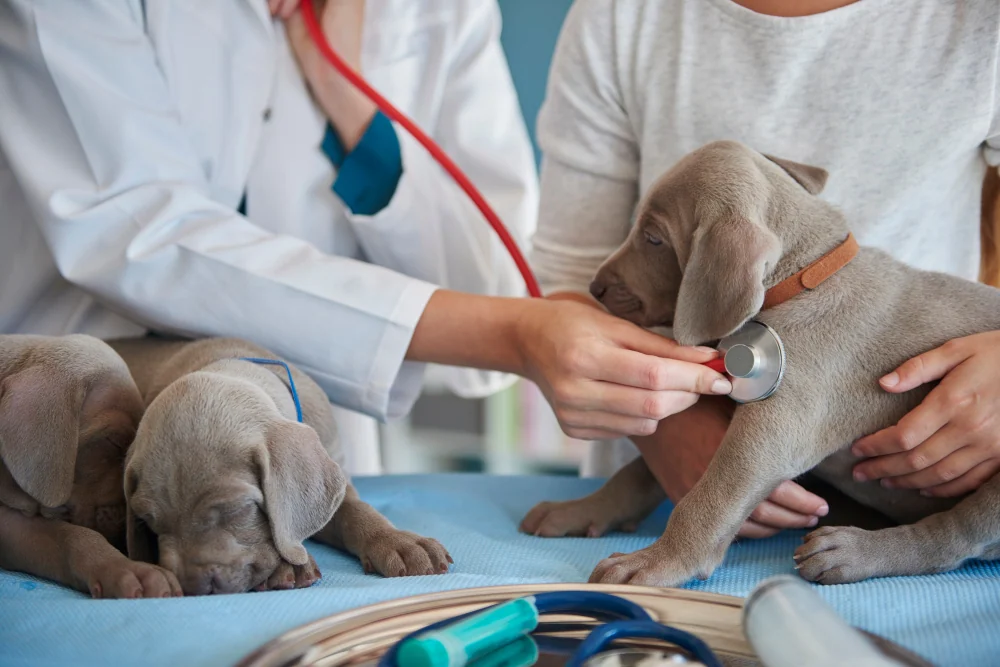
Auscultation (listening) allows the vet to detect heart murmurs, arrhythmias, or respiratory issues. This is particularly important for breeds prone to heart disease.
5. Joint and Musculoskeletal System Check
The vet will examine the paws, joints, and spine. In older pets, the risk of arthritis and other bone and joint diseases is evaluated.
6. Skin and Coat Examination
The vet will look for signs of skin diseases, allergies, fungal infections, and parasites (fleas, ticks).
7. Eye and Ear Inspection
The vet will check for inflammation, infections, cataract (clouding of the lens), and other eye or ear issues.
8. Laboratory Tests
To further investigate your pet’s health, the following tests may be prescribed:
- General and biochemical blood tests: These can detect anemia, infections, liver and kidney diseases.
- Urine test: Helps diagnose urinary tract problems.
- Fecal analysis (coprogram): Identifies parasites and gastrointestinal issues.
- Hormonal tests: Recommended if there are suspicions of endocrine disorders, like diabetes or hypothyroidism.
9. Vaccination
The veterinarian will check your pet's vaccination status and administer necessary vaccines. Vaccination is crucial for protecting against viral diseases such as rabies, distemper, panleukopenia, and more.
10. Parasite Treatment
Preventive treatments for fleas, ticks, and worms will be carried out. The vet will select suitable medications based on your pet’s age and health condition.
11. Ultrasound and X-ray (if necessary)
If there are signs of internal organ diseases, additional instrumental studies such as ultrasound or X-ray may be required.
What to Do After the Check-up?
After the examination, the veterinarian will provide recommendations for care, nutrition, physical activity, and disease prevention. If problems are identified, treatment or additional tests will be prescribed. It's important to follow the vet’s advice and not delay follow-up visits if necessary.
How to Prepare Your Pet for the Check-up?
To ensure the visit to the veterinarian goes smoothly, prepare in advance:
- If you have a cat, use a carrier to make your pet feel secure.
- Don’t feed your pet for 3-4 hours before the check-up if tests are scheduled.
- Note down any symptoms that concern you, so you don’t forget to tell the vet.
- Bring your pet’s veterinary passport.
A comprehensive preventive check-up is a vital part of your pet's health care routine. Regular visits to the veterinarian help detect diseases early, adjust care, and prolong your pet’s life. Don’t delay the check-up — your pet’s health is in your hands!
