
What is MRI and How Does It Help in Pet Diagnosis?
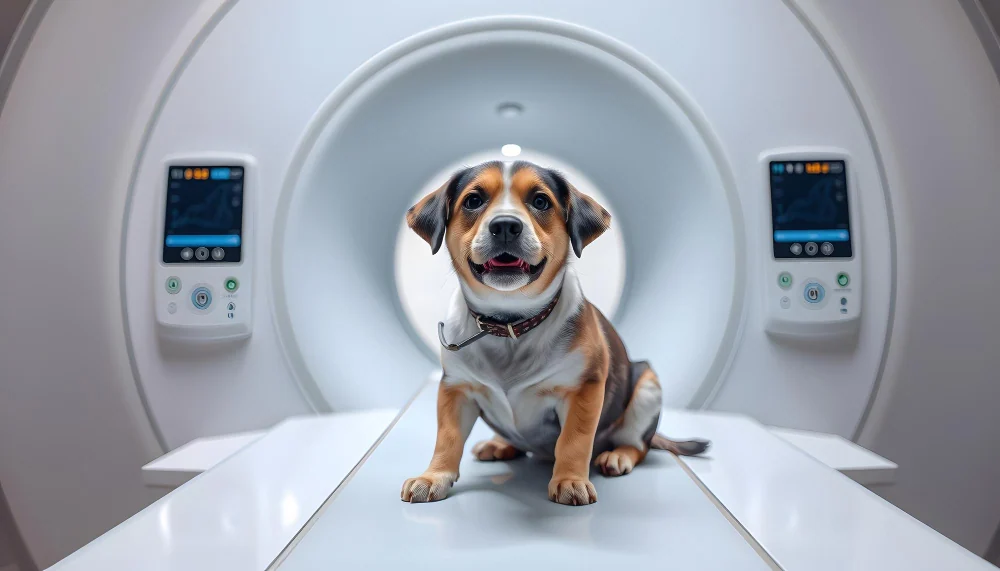
Magnetic Resonance Imaging (MRI) is an advanced diagnostic technique that creates detailed images of the organs and tissues inside the body without using X-rays. In veterinary practice, MRI is used to examine soft tissues, such as the brain, spinal cord, joints, and to detect diseases and injuries that might not be visible with other diagnostic methods.
Advantages of MRI in Veterinary Medicine
MRI offers several benefits, making it one of the most accurate diagnostic methods for pets:
- Harmless to the Pet: MRI does not use X-rays, which makes it safe for the pet's health.
- High Accuracy of Images: MRI provides detailed images of soft tissues, which is particularly useful for diagnosing diseases of the brain, spine, joints, and other organs that are hard to examine with other methods.
- Detection of Hidden Diseases: MRI helps identify problems that might not be visible on regular X-ray images, such as tumors, inflammation, and degenerative diseases.
- Non-invasive: MRI is a painless, non-invasive procedure, minimizing stress for the pet and providing accurate health information.
Indications for MRI in Pets
While MRI is not always the first diagnostic method, it is necessary in certain situations. Below are the conditions and diseases where MRI becomes essential.
1. Neurological Problems
One of the most common indications for an MRI in pets is neurological disease or injury. This includes:
- Neurological Disorders: Pets showing symptoms like loss of coordination, limb weakness, seizures, balance issues, may have neurological conditions requiring further examination.
- Spinal and Head Injuries: If an animal has suffered trauma, especially to the head or spine, MRI can reveal brain, spinal cord, or nerve root damage.
- Brain Tumors: Tumors in the brain or spinal cord can cause neurological disturbances. MRI can accurately localize the tumor and assess its size and location.
2. Joint and Spine Diseases
MRI can also be valuable for diagnosing diseases affecting the joints and spine:
- Degenerative Spine Diseases: Conditions like intervertebral disc herniation, osteochondrosis, and disc diseases can be effectively diagnosed with MRI.
- Joint and Soft Tissue Injuries: MRI helps detect soft tissue injuries, such as ligament, cartilage, and joint capsule damage, that might not be visible on X-rays.
- Arthritis and Other Inflammatory Diseases: Joint problems, like arthritis or osteoarthritis, can be diagnosed at an early stage with MRI, allowing treatment before the disease significantly impairs the pet's mobility.
3. Internal Diseases and Tumors
MRI is used to detect diseases and tumors that may affect internal organs, such as:
- Soft Tissue Tumors: MRI can reveal tumors in soft tissues, like the liver, lungs, and kidneys, that are not always visible on X-rays.
- Examination of Thoracic and Abdominal Organs: In some cases, when other diagnostic methods don’t provide clear results, MRI can be used to assess the condition of internal organs.
4. Congenital Anomalies and Genetic Diseases
Some pet breeds may have congenital abnormalities that require MRI diagnosis. For example, dogs with a predisposition to spinal or joint problems, like hip dysplasia or spinal insufficiency, can benefit from MRI to determine the severity of the condition and plan the best course of treatment.
When to Consider MRI as a Diagnostic Tool?
Not all diseases require MRI. However, if your pet exhibits the following symptoms, you should discuss the possibility of an MRI with your veterinarian:
- Unexplained Pain or Lameness: When pain persists after standard treatment or there is lameness that cannot be explained, MRI can help find the underlying cause.
- Neurological Symptoms: Loss of coordination, seizures, behavioral changes, or movement problems may indicate serious neurological issues requiring MRI.
- Head or Spine Injuries: If you suspect a head injury or spinal trauma, MRI can accurately assess the extent of the damage.
- Symptoms Persisting for a Long Time Without Improvement: If traditional treatments are ineffective, and the pet continues to suffer from symptoms like weakness, fatigue, or worsening condition, MRI can help pinpoint the cause.
How is the MRI Procedure for Pets Conducted?
The MRI procedure for pets is carried out in a veterinary clinic and requires the pet to be prepared beforehand. Typically, the pet will be under anesthesia because MRI requires complete immobility to ensure clear and precise images. The scanning process can take from 30 to 90 minutes, depending on the complexity of the study.
MRI Preparation:
- Anesthesia: Most animals require anesthesia for MRI, as they must remain still during the entire scan.
- Fasting: Pets are usually instructed to fast for 12 hours before the procedure.
- Other Tests: Sometimes, additional tests such as blood or urine tests are performed before the MRI to assess the pet's overall health.
MRI is a powerful tool that plays a key role in diagnosing various diseases and injuries in pets. It helps detect issues that might not be visible with other diagnostic methods and allows accurate diagnoses of soft tissue conditions, such as tumors, injuries, neurological disorders, and joint diseases. It's important to discuss the need for an MRI with your veterinarian if your pet is showing suspicious symptoms requiring further diagnosis.
