
What Are Diagnostic Tests and Why Are They Important?
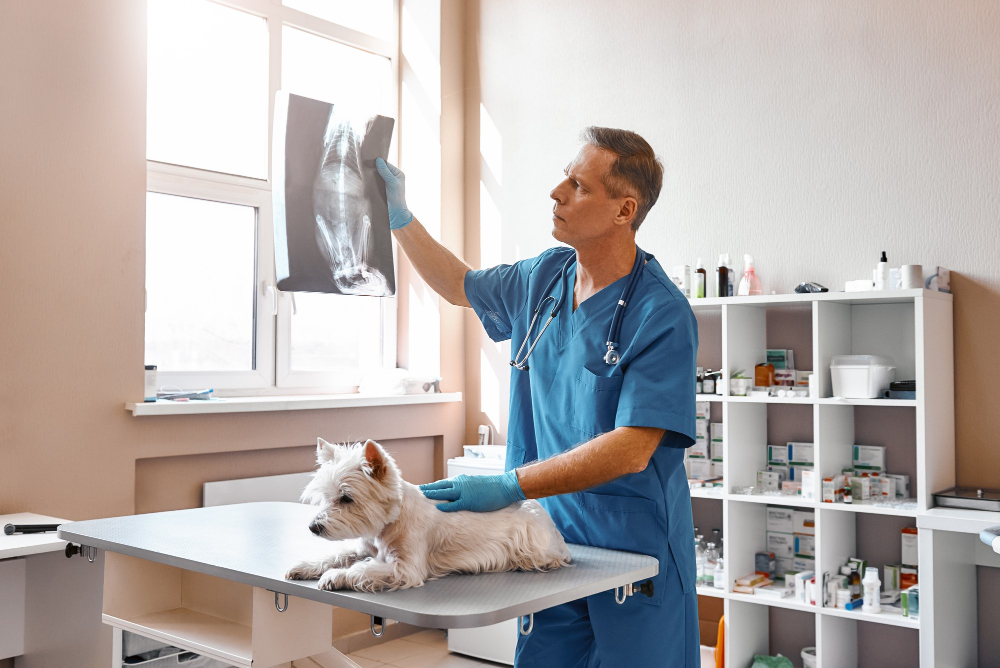
Diagnostic tests, such as ultrasound (US), radiography (X-rays), and electrocardiography (ECG), play a crucial role in diagnosing diseases in pets. These methods allow veterinarians to not only visualize internal organs and structures but also detect various pathologies that cannot be identified through a simple physical examination. They can help in early disease detection, which is particularly important for effective treatment.
When Should Diagnostic Tests Be Performed?
Diagnostic tests are carried out as prescribed by a veterinarian. These procedures are usually recommended in the following cases:
- For diagnosing diseases of internal organs (liver, kidneys, heart, etc.);
- In cases of injuries (fractures, internal organ damage);
- To assess the condition after surgery;
- For monitoring chronic conditions that require regular observation;
- If there is suspicion of tumors or other abnormalities;
- To evaluate heart function in cases of arrhythmias or other cardiovascular diseases.
Each of these tests has its own indications, advantages, and limitations.
Ultrasound (US) in Dogs and Cats
What Is Ultrasound?
Ultrasound is a diagnostic method that uses high-frequency sound waves to create images of internal organs and tissues. It is a non-invasive, safe, and painless procedure that, in most cases, does not require special preparation.
When Is Ultrasound Needed?
Ultrasound is most commonly used to diagnose diseases in abdominal organs, such as:
- Liver, kidneys, and pancreas: To detect inflammations, tumors, stones, or cysts.
- Heart: To assess heart function and detect cardiovascular diseases.
- Uterus and ovaries in females: To diagnose reproductive system diseases, such as inflammations or cystic formations.
- Lymph nodes: To detect inflammations or tumors.
- Pregnancy: Ultrasound can be used to visualize embryos and monitor their development in pregnant dogs and cats.
How to Prepare Your Pet for Ultrasound?
The preparation for ultrasound depends on which organs will be examined. For most cases, it is enough to ensure the pet is calm. In some situations, it is recommended that the test be performed on an empty stomach to avoid interference from gas or food in the stomach. For abdominal examinations, pets should fast for 12 hours prior to the procedure.
Advantages of Ultrasound:
- Safe and painless.
- Ability to study different organs in real-time.
- Less invasive compared to other diagnostic methods.
- Does not require anesthesia in most cases.
X-ray (Radiography) in Dogs and Cats
What Is X-ray?
X-rays use ionizing radiation to obtain images of internal organs and tissues. This method allows for the evaluation of bones, lungs, the heart, and other organs.
When Is an X-ray Needed?
Radiographic examinations are often used to diagnose:
- Bone fractures and injuries;
- Lung diseases, such as pneumonia or lung cancer;
- Cardiovascular diseases, such as cardiomegaly (enlarged heart) or pulmonary edema;
- Foreign objects, if a pet has swallowed something suspicious;
- Joint conditions in cases of arthritis or dysplasia.
How to Prepare Your Pet for X-rays?
X-ray preparation does not require complex procedures. However, in some cases, the pet may need to remain still during the procedure. Light sedation is often used, especially if the pet is nervous or very active.
Advantages of X-ray:
- Quick procedure.
- Highly informative for detecting fractures and bone diseases.
- Well-suited for evaluating the lungs and cardiovascular system.
Electrocardiography (ECG) in Dogs and Cats
What Is an ECG?
Electrocardiography (ECG) is a diagnostic method that records the electrical activity of the heart. This test helps to identify various arrhythmias, heart rhythm abnormalities, and monitor the heart's condition after diseases or surgeries.
When Is an ECG Needed?
An ECG is recommended in the following cases:
- When arrhythmia (irregular heart rhythm) is suspected;
- To monitor heart function in pets with already diagnosed heart diseases (e.g., mitral insufficiency or cardiomyopathy);
- Before surgeries, especially if general anesthesia is required, which may stress the heart;
- When symptoms of heart disease, such as rapid or slow heartbeat, coughing, weakness, or fainting, occur.
How to Prepare Your Pet for an ECG?
Typically, no special preparation is required for an ECG, as long as the pet is calm. In some cases, light sedation may be necessary if the pet is extremely nervous.
Advantages of ECG:
- Accurately determines heart rhythm.
- No complex preparation is needed and it is a safe method.
- Helps identify hidden heart diseases that may not manifest through external symptoms.
How to Choose the Right Diagnostic Test for Your Pet?
The decision on which test to perform is always made by the veterinarian. This depends on the symptoms displayed by the pet, as well as the preliminary diagnosis established through clinical examination and other tests.
The Benefits of a Comprehensive Diagnostic Approach
Often, a combination of diagnostic methods is used for a thorough diagnosis. For example, if a pet complains of abdominal pain, the veterinarian might begin with an ultrasound to examine the internal organs, followed by an X-ray to rule out bone problems or foreign objects. In the case of heart disease, an ECG may be performed for a more detailed diagnosis.
Ultrasound, X-rays, and ECG are three essential methods of instrumental diagnostics that help detect various diseases in pets at an early stage. They assist the veterinarian in making an accurate diagnosis and determining appropriate treatment. Regular testing, especially in the presence of chronic conditions, helps maintain the pet's health and prevents serious complications.

