
Ear infections are one of the most common issues in pets, especially in dogs and cats. A foul smell coming from the ears can be one of the first signs that your pet needs assistance. Ignoring this problem can lead to more serious consequences, such as chronic ear diseases or even hearing loss. In this article, we will discuss how to recognise the symptoms of ear infections, what can cause bad smells, and when to seek veterinary help.
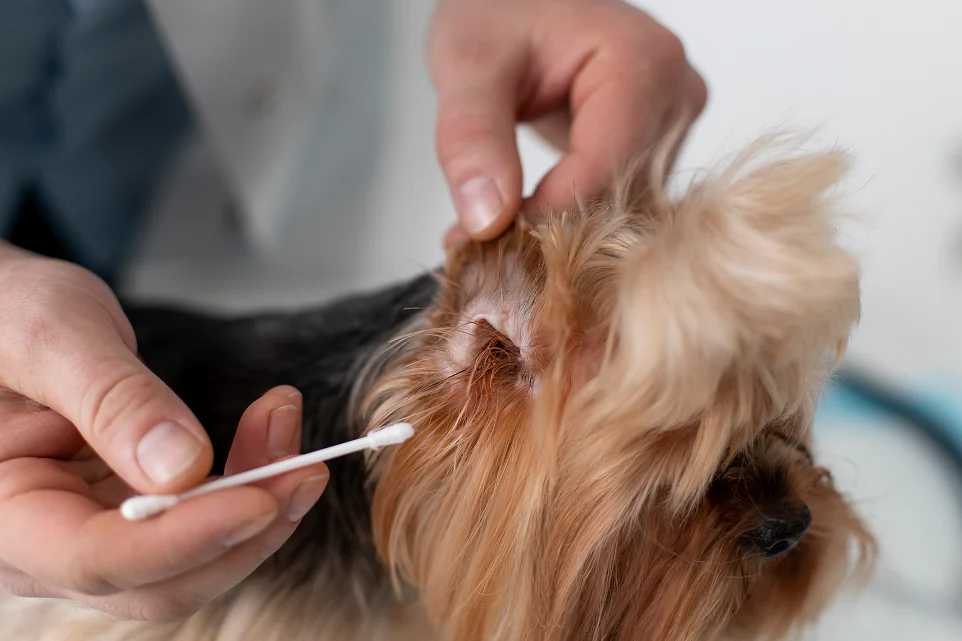
1. Causes of Bad Odour from Ears in Pets
1.1. Ear Infections
One of the main causes of a foul smell from a pet’s ears is an ear infection. Both bacterial and fungal infections can develop in a pet’s ears, especially if the ears haven’t been cleaned for a long time or if the pet frequently swims in water.
- Bacterial infections: These can develop due to the accumulation of dirt, moisture, or inflammation in the ears.
- Fungal infections: Often caused by excess moisture in the ears, which creates a suitable environment for fungi, such as Candida.
1.2. Ear Mites
Ear mites are tiny parasites that can inhabit your pet’s ears. They often cause inflammation, itching, and a bad smell. This is most common in cats, but can also affect dogs, especially if they frequently interact with other animals, such as in kennels.
1.3. Accumulation of Wax and Dirt
Some pets, especially those with long ears, may accumulate excess wax, dust, and dirt in their ear canals. This can cause an unpleasant odour, itching, and irritation. Lack of ear care and infrequent cleaning can lead to the buildup of these contaminants.
1.4. Allergies
Allergic reactions to food, pollen, or other allergens can cause inflammation in the ears, resulting in a bad smell. This is often accompanied by itching, ear discharge, and redness.
1.5. Injuries and Trauma
If your pet has injured its ear (for example, by scratching it or tearing it), it can lead to inflammation and infection, which will also result in a bad smell.
2. Symptoms of Ear Infections in Pets
2.1. Bad Odour
The first and most obvious sign of an ear infection is a bad smell coming from the ears. This odour usually resembles decay or sourness, and it can be particularly strong if the infection is fungal in nature.
2.2. Ear Discharge
During infections, your pet’s ears may discharge fluids, which can be clear, yellow, brown, or even purulent in nature. This discharge may also be the source of the unpleasant odour.
2.3. Itching and Head Shaking
Your pet may scratch its ears, rub them against furniture or carpets, or attempt to scratch the ear canals. This could indicate severe itching caused by an infection or ear mites. Sometimes pets may shake their heads or tilt them to alleviate discomfort.
2.4. Swelling and Redness
If the ear is inflamed, it may appear swollen, red, or warm to the touch. Sometimes, ulcers or scabs may form on the inner ear.
2.5. Behaviour Changes
If your pet has become more irritable, nervous, frequently touches its ear, avoids contact with it, or reacts painfully when its ear is touched, it is also a signal that there may be an issue with the ear.
3. When to See a Veterinarian
If you notice any of these symptoms in your pet, it is important to consult a veterinarian as soon as possible. Remember that self-treatment or delaying a visit can lead to more serious problems.
3.1. Strong and Persistent Odour from the Ear
If the unpleasant smell persists for several days, it may indicate an infection or other underlying issues. In such cases, seeking help is essential to prevent the infection from spreading further and causing complications.
3.2. Ear Discharge with Blood or Pus
If your pet’s ear is discharging blood or pus, this is a concerning sign. It may indicate damage, trauma, infection, or parasitic diseases. Immediate consultation with a veterinarian is necessary.
3.3. Persistent Itching and Pain
If your pet is scratching its ear, shaking its head, or experiencing ongoing discomfort, this is a clear indication of an ear problem. Intense itching and pain could point to more serious conditions, such as ear mites or inflammation, which require medical treatment.
3.4. Elevated Body Temperature
If your pet has a high temperature, it may indicate inflammation or infection. In the case of ear infections, a raised temperature may result from the inflammation in the ears.
3.5. Ear Infection with Other Symptoms
If the bad odour from the ears is accompanied by other symptoms, such as loss of appetite, lethargy, vomiting, or balance problems, this may indicate a systemic infection or other conditions requiring immediate intervention.
4. Diagnosis and Treatment of Ear Infections in Pets
4.1. Ear Examination by a Veterinarian
A veterinarian will examine your pet’s ear using a special tool — an otoscope — to assess the condition of the ear canal and eardrum. This helps determine if there is any inflammation, damage, or presence of foreign bodies.
4.2. Analysis of Discharge
To make an accurate diagnosis, the veterinarian may perform an analysis of the ear discharge to determine whether the infection is bacterial or fungal. This helps select the most effective treatment.
4.3. Treatment of Ear Infections
Depending on the type of infection, the veterinarian may prescribe:
- Antibacterial or antifungal medications to eliminate the infection.
- Ear drops or ointments to treat inflammation and reduce pain.
- Anti-inflammatory drugs to reduce inflammation and relieve pain.
4.4. Treatment for Ear Mites
If ear mites are the cause, the veterinarian may recommend special treatments to remove the parasites and treat the inflammation.
4.5. Surgical Intervention
In rare cases, if the infection has caused damage to the ear or the formation of an abscess, surgical intervention may be needed to clean the ear canal or remove foreign bodies.
5. How to Prevent Ear Infections in Pets
5.1. Regular Ear Hygiene
Regular ear cleaning using a special solution will help prevent the accumulation of dirt and wax, as well as reduce the risk of infection.
5.2. Moisture Control
Avoid letting your pet’s ears remain wet, especially if it frequently swims or walks in rainy weather. After bathing, carefully dry the ears and check their condition.
5.3. Use of Preventative Drops
If your pet is prone to ear infections, your vet may recommend preventative ear drops to reduce the risk of infections.
5.4. Regular Vet Check-ups
Periodic check-ups with the vet will help identify ear problems early on and prevent infections from developing.
A bad smell from your pet’s ears is a symptom that should never be ignored. It could be a sign of an ear infection, parasitic infestation, or other underlying conditions. If your pet is experiencing this symptom, it is crucial to see a veterinarian promptly for an early diagnosis and treatment. Regular ear care and preventative measures will help avoid infections and ensure your pet lives a long, healthy life.
