
Healthy pets: simple rules
- Pet products only. Dog and cat skin differs from human skin (dog skin is less acidic), and human shampoo can dry it out.
- For cats, only products labelled “for cats”. Some dog products – for example flea shampoos containing permethrin – are deadly for cats.
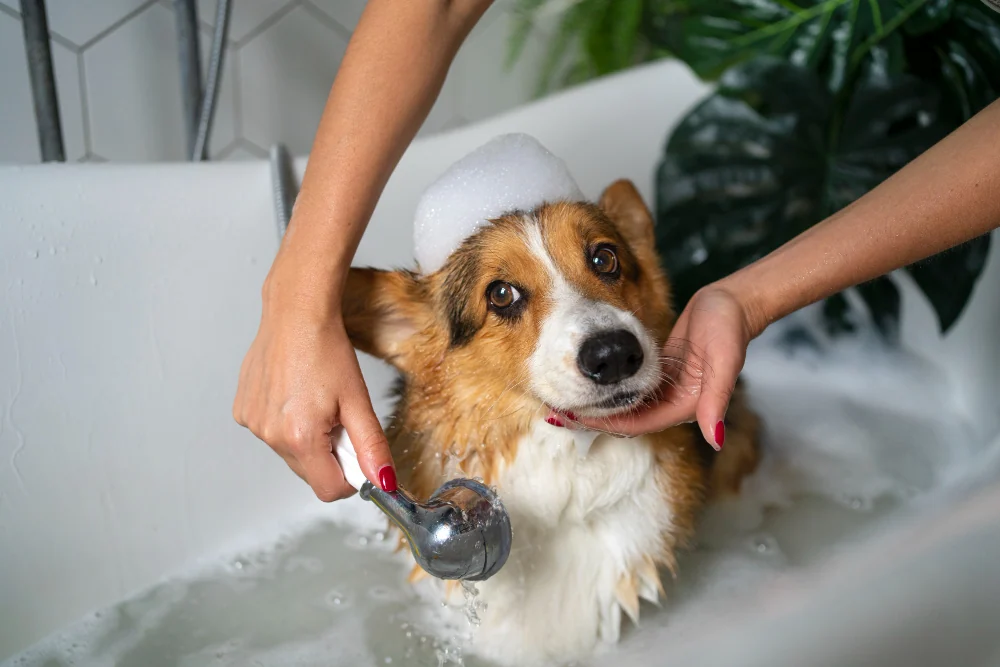
- Bath only when needed, when your pet is dirty or starts to smell. Short-haired cats usually don’t need bathing; long-haired and older cats sometimes need help.
- Rinse the shampoo out thoroughly: residue causes itching.
Conditioners
They make brushing easier and reduce tangles in long-coated breeds. Products with ceramides and fatty acids help with dry skin. If a product causes itching or redness, rinse it off and stop using it.
Medicated shampoos – on your vet’s advice
If your pet has itching, redness, smelly skin, pustules, dandruff or hair loss, a diagnosis comes first: a shampoo chosen at random can mask the disease.
- Chlorhexidine – bacterial skin infection (pyoderma).
- Chlorhexidine with miconazole – Malassezia (yeast), and as an add-on for ringworm.
- Benzoyl peroxide – deep pyoderma, blocked hair follicles; very drying.
- Salicylic acid, sulphur – seborrhoea (greasy or dry scale).
- Colloidal oatmeal, ceramides – support for the skin barrier in atopic dermatitis.
A medicated shampoo is usually left on the skin for 10 minutes and then rinsed off. For dogs with atopic dermatitis, frequent bathing (sometimes once or twice a week) with a mild or medicated shampoo actually helps – it washes away allergens and reduces itching. Your vet will tell you how often.
Essential oils – don’t use them
Tea tree, lavender, eucalyptus, peppermint, citrus, pine, ylang-ylang, wintergreen and other essential oils:
- irritate the skin and airways;
- are toxic to cats: their liver handles these substances poorly, and cats also lick the oil off their coat;
- tea tree oil applied to the skin has caused weakness, wobbliness, tremors and liver damage in cats and dogs.
Don’t use essential oils on the coat, in “home-made” shampoos or in diffusers near pets.
Carrier oils (coconut, argan, jojoba)
There is little evidence of benefit for dog and cat skin. Don’t put oils on a cat’s coat – it will lick them off. For dry skin, discuss the cause and products made for animals with your vet.
When to see a vet
- itching, scratching, redness, pustules;
- hair loss, crusts, dandruff;
- an unpleasant smell from the skin or ears;
- drooling, wobbliness or trembling after applying a product (especially in a cat) – urgently; wash the product off with mild washing-up liquid and warm water. In the UK, the Animal PoisonLine (01202 509000) can advise whether your pet needs to see a vet.
Sources
- Olivry T. et al. Treatment of canine atopic dermatitis: 2015 updated guidelines from the International Committee on Allergic Diseases of Animals (ICADA). BMC Vet Res, 2015.
- Mueller R. S. et al. A review of topical therapy for skin infections with bacteria and yeast. Vet Dermatol, 2012.
- Hillier A. et al. Guidelines for the diagnosis and antimicrobial therapy of canine superficial bacterial folliculitis (ISCAID). Vet Dermatol, 2014.
- Veterinary Poisons Information Service and ASPCA Animal Poison Control Center – essential oils and permethrin.
Paw4care editorial team
