The key is to cut costs in the right places. Saving on prevention usually costs more later; saving on brand names, packaging and impulse buys does not. Here is where you can save safely, and where you should not.
Food: the biggest regular cost
Choose a complete food that suits your cat
- Look for "complete" on the label and the right life stage (kitten, adult, senior). A mid-priced complete food from a reputable manufacturer is often just as good as a premium brand.
- Very cheap foods are not always a saving if your cat needs to eat more of them or develops digestive problems.
- Do not switch foods constantly to chase offers: frequent changes can upset your cat's stomach.
Feed the right amount
Overfeeding is expensive and unhealthy. Many UK cats are overweight, which increases the risk of diabetes, arthritis and urinary problems, all costly to treat.
- Weigh dry food with kitchen scales.
- Count treats as part of the daily ration.
- Use puzzle feeders, which slow eating and help cats feel full.
Buy sensibly
- Larger bags of dry food are usually cheaper per kilogram, but store them in an airtight container and use them before the best-before date.
- Multipacks of wet food and subscription discounts can cut costs.
- Supermarket own-brand complete foods can be a reasonable option; check the label rather than the price alone.
Be careful with home-made diets
Cooking for your cat is rarely cheaper once you include good meat and the necessary supplements, and it is very difficult to balance. Cats need taurine, vitamin A and other nutrients that plain chicken does not provide. If you want to feed home-made food, use a recipe designed by a veterinary nutritionist.
Litter and hygiene
- Clumping clay and wood pellet litters are often good value, because you only remove the used part. Compare the cost per month, not per bag.
- Scoop daily and top up rather than changing the whole tray too often.
- Use one tray per cat plus one in multi-cat homes. Fewer trays may seem cheaper, but toileting problems and stress-related cystitis cost far more.
- Buy a sturdy tray once rather than replacing cheap, scratched ones.
Grooming at home
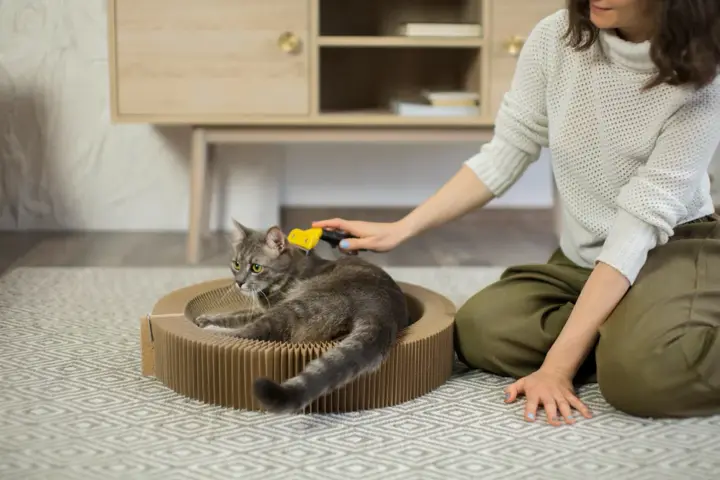
- Brush regularly to prevent mats, especially in long-haired cats. Severe matting often has to be clipped under sedation, which is expensive.
- Learn to trim claws if your cat allows it; ask a vet nurse to show you how.
- Do not use dog or human products on your cat to save money: some, such as dog flea treatments containing permethrin, are dangerous to cats.
Veterinary care: prevention saves money
Do not skip the essentials
- Vaccinations protect against cat flu and feline enteritis, which can be fatal and expensive to treat.
- Neutering prevents unplanned litters, reduces fighting injuries and abscesses in males and prevents womb infections and some cancers in females.
- Flea and worm control tailored to your cat's lifestyle avoids skin disease, tapeworms and household infestations.
- Yearly health checks find dental disease, kidney problems and weight changes early, when treatment is cheaper.
Ways to reduce vet costs
- Pet health plans: many UK practices offer a monthly plan that covers vaccinations, regular checks, flea and worm treatment and discounts on other services.
- Ask for prices and estimates. Practices should be able to tell you the cost of common treatments, and you can ask for a written estimate before any procedure.
- Written prescriptions: for long-term medication, you can ask your vet for a prescription to buy medicines from a reputable online veterinary pharmacy, which is sometimes cheaper even after the prescription fee.
- Discuss options: there is often more than one reasonable way to investigate or treat a problem. Tell your vet if cost is a concern; they can suggest a step-by-step approach.
- Low-cost neutering schemes: charities such as Cats Protection run neutering schemes for owners on low incomes in many areas.
Help for owners on low incomes
Charities such as the PDSA and Blue Cross provide free or reduced-cost veterinary care to eligible owners, usually those receiving certain benefits and living in the area of one of their hospitals. Some RSPCA branches also run clinics. Check eligibility on their websites before you need help.
Insurance: protecting against big bills
A single emergency, such as a road accident, a blocked bladder or a swallowed foreign object, can cost several thousand pounds. Insurance helps you afford treatment when it matters.
- Lifetime policies cover ongoing conditions year after year as long as you renew. They cost more but are best for chronic illnesses.
- Time-limited and maximum-benefit policies are cheaper but may stop covering a condition after 12 months or once a limit is reached.
- Accident-only policies are the cheapest but do not cover illness.
- Insure early: conditions that appear before the policy starts are usually excluded.
- Compare the excess, the annual limits and how premiums rise with age, not just the first year's price.
If you choose not to insure, consider putting a fixed amount aside each month in a savings account for vet bills.
Toys and accessories
- Cats often prefer simple things: cardboard boxes, paper bags (handles removed), ping-pong balls and wand toys.
- A sturdy scratching post saves your furniture; make sure it is tall and stable enough for your cat to stretch fully.
- Rotate toys every few days to keep them interesting instead of buying new ones.
- Avoid small parts, string, elastic bands and hair ties, which can be swallowed and cause intestinal blockages that need surgery.
Where not to cut corners
- vaccinations, neutering and parasite control;
- a complete, appropriate diet;
- prompt vet care when your cat is unwell;
- a safe home: secure windows, no lilies in the house (all parts are toxic to cats), medicines and chemicals out of reach.
Waiting to see if a problem goes away can turn a simple, inexpensive treatment into an emergency.
When to see a vet
Do not delay seeing a vet to save money if your cat:
- is straining in the litter tray or passing little or no urine (especially males);
- has not eaten for 24 hours;
- has difficulty breathing or is breathing with its mouth open;
- vomits repeatedly or has bloody diarrhoea;
- has been in contact with lilies, antifreeze or a dog flea product;
- is hiding, very quiet or obviously in pain.
Frequently asked questions
How much does it cost to keep a cat in the UK?
It varies widely, but food, litter, preventive treatments, insurance and routine vet visits typically come to several hundred to over a thousand pounds a year, before any unexpected treatment. Kittens cost more in their first year because of vaccinations, neutering and microchipping.
Is pet insurance worth it for a cat?
For many owners, yes, especially if a large unexpected bill would be difficult to pay. If you do not insure, set aside an emergency fund for your cat.
Can I buy flea and worm treatments cheaply online?
Yes, from reputable UK pharmacies. Make sure the product is licensed for cats, and dosed for your cat's weight. Prescription products require a written prescription from your vet.
Are cheap cat foods bad?
Not necessarily. A complete food that keeps your cat at a healthy weight with good stools and a shiny coat is doing its job. Watch your cat rather than the price tag.
Where can I get help if I cannot afford vet treatment?
Talk to your vet practice first: many offer payment plans. Charities such as the PDSA and Blue Cross help eligible owners, and some local rescue organisations offer small grants.
Paw4care editorial team