Contents
- What was found near Virolahti
- How the disease reached Finland
- Which zones are in force
- Why African swine fever is so dangerous
- Is the disease dangerous to people or other animals
- What to do if you find a dead wild boar
- What dog owners need to know
- What pig keepers — including micro-pig owners — need to know
- How to recognise the disease in a pig
- How people spread the virus
- Why the disease is hard to stop
- What happens next
- When to see a vet
What was found near Virolahti
On 28 October 2026 Finland's Food Authority, Ruokavirasto, reported a worrying new find. Around 2–3 kilometres west of the border of the African swine fever core zone, close to the boundary between the municipalities of Virolahti and Miehikkälä, several dead wild boar were found at once.
The search turned up 15 carcasses. All were fairly fresh: experts estimated that most of the animals had died no more than a week earlier. They included 4 adults and 11 piglets. The authority writes that the find points to the boar having died of African swine fever.
Samples from the carcasses were tested in Ruokavirasto's laboratory the same day, 28 October. The tests confirmed African swine fever in seven wild boar, with results for the rest to follow later. On 29 October the authority extended the core zone by about 11 kilometres to the west, in the Virolahti and Miehikkälä areas.
Ruokavirasto; 28–29 October 2026
How the disease reached Finland
African swine fever was first confirmed in Finland on 30 July 2026, when the virus was found in dead wild boar in Virolahti, in the south-east of the country on the border with Russia. The result was verified by the EU reference laboratory for African swine fever. The disease was later found in the neighbouring municipalities of Miehikkälä, Lappeenranta and Pyhtää as well.
Finds increased over the autumn. The authority's timeline shows how the virus stepped beyond the set boundaries:
- 9 September — a case confirmed in a wild boar from Pyhtää;
- 21 September — the disease found in the Hujakkala area of Lappeenranta;
- 24 September — the core zone extended and restrictions changed;
- 7 October — the virus detected in Virolahti outside the core zone;
- 13 October — new cases outside the core zone in Lappeenranta, Pyhtää and Virolahti;
- 15 October — the core zone in Lappeenranta extended again and hunting rules changed;
- 28 October — 15 dead wild boar west of the zone near Virolahti, seven of them confirmed positive;
- 29 October — the core zone extended about 11 km west.
Which zones are in force
To stop the disease, Ruokavirasto has divided the area into three bands.
- Infected zone — an area where cases have already been found or the risk of spread is higher.
- Core zone — the part of the infected zone with the strictest rules. Anything that might disturb wild boar and drive them out of the area is restricted here, along with anything that could carry the virus out on people, vehicles, machinery or belongings.
- Buffer zone with additional restrictions — a band around the infected zone, set up on 10 September. No disease has been found there, but the rules help make sure it isn't missed.
The new find lay just outside the core zone, so on 29 October the zone was extended by about 11 kilometres to the west, in the Virolahti and Miehikkälä areas. The outer boundaries of the infected zone remain unchanged. Hunting restrictions stay in place, although the authority clarified some of them in its decision of 29 October.
Why African swine fever is so dangerous
African swine fever is a severe viral disease of domestic pigs and wild boar. Almost all infected animals die, and there is no vaccine authorised in the EU. The virus is extremely hardy: it survives for months in carcasses, in soil and in meat and sausages, including frozen and smoked products. So the disease travels not only with wild boar but with people too — on boots, vehicle tyres, hunting kit and in food.
For Finland this is a serious threat to pig farming. If the virus reaches a farm, the whole herd has to be culled, and restrictions on moving and selling pork are imposed around it. Neighbouring farms suffer as well: even without infection, they will find it hard to sell animals and meat while restrictions are in place. That's why the Finnish authorities are working so hard to keep the disease confined to wild boar in the south-east and off farms.
Is the disease dangerous to people or other animals
The authority stresses that African swine fever does not spread to people. Dogs, cats, horses and cattle don't catch it either. But people and animals can carry the virus without knowing it — for example, if a dog visits a carcass and its coat and paws later end up near pigs.
What to do if you find a dead wild boar
Ruokavirasto asks for every find to be reported — the sooner, the better:
- Report it to the municipal vet (kunnaneläinlääkäri) — their contact details are usually on the municipality's website under environmental health.
- Note the coordinates of the spot, for example in your phone's map app.
- Don't touch the carcass or move it.
- Follow the vet's instructions.
Quick reporting helps find and remove carcasses before other wild boar become infected from them. Since 1 September 2026 a reward has been paid in Finland for wild boar samples — details are on the authority's website.
What dog owners need to know
In autumn many people walk their dogs in the woods, pick mushrooms and berries or go hunting. In areas where the disease has been found, you should:
- keep your dog on a lead and don't let them approach or sniff carcasses;
- wash paws, coat and boots after a walk in the woods, especially if you keep pigs;
- don't take your dog onto pig farms after a walk in the infected zone;
- follow the rules for hunting dogs — they may change as the zones are extended.
The authority has separate advice for people out in nature and for hunters; it's worth reading before a trip to south-eastern Finland.
What pig keepers — including micro-pig owners — need to know
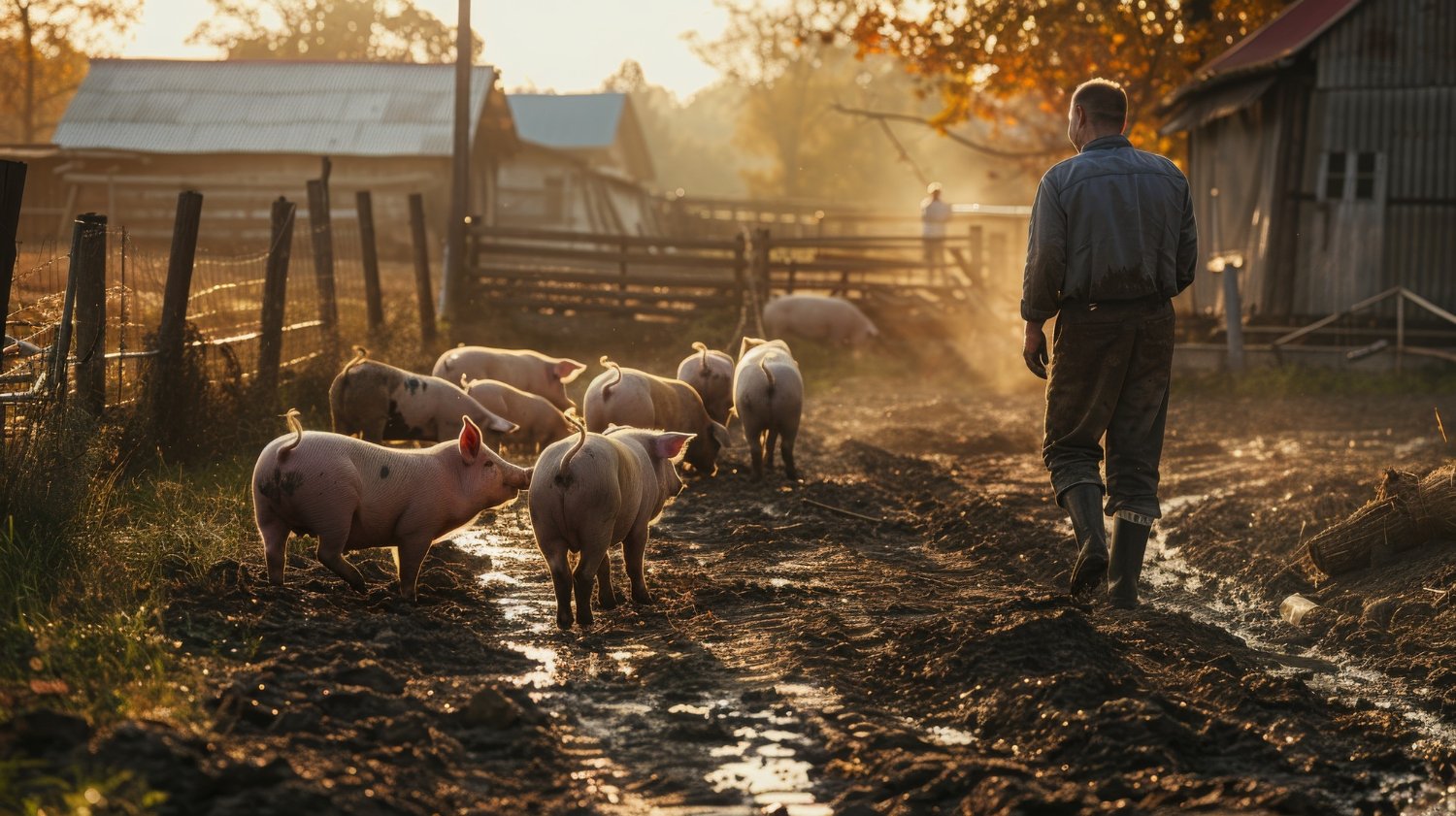
All pigs can catch African swine fever, including micro pigs kept as pets. The key rules are the same for a large farm and for one pig at home:
- never feed pigs kitchen scraps, especially meat products — this is also illegal in the UK;
- keep pigs away from anywhere wild boar can get to, and keep their enclosure fenced;
- change your boots and clothes before tending your pigs;
- don't bring meat products back from areas with African swine fever;
- call your vet straight away if a pig stops eating, has a high temperature, red or bluish skin or seems weak.
How to recognise the disease in a pig
African swine fever develops quickly, and the first signs are easy to mistake for an ordinary chill or poisoning. Be alert to:
- a high temperature and lethargy — the pig lies down and won't get up to eat;
- refusing food and water;
- red or bluish skin, especially on the ears, belly and legs;
- vomiting and diarrhoea, sometimes with blood;
- an unsteady gait, weak hind legs;
- sudden death of one or more pigs for no obvious reason.
Other diseases can cause similar signs, so only a vet can make the diagnosis, based on laboratory tests. The key thing is not to wait and not to try to treat the pig yourself.
How people spread the virus
The longest "jumps" African swine fever has made across Europe are usually down to people, not wild boar. The virus can travel in a ham sandwich thrown away by the roadside, in meat brought back from a trip, on a hunter's boots or a car's tyres. So the rules are simple and apply to everyone, not just farmers:
- don't bring pork or sausages back from areas with African swine fever — whether from Finland or anywhere else;
- throw food waste away only in closed bins, especially at lay-bys and in the woods;
- clean your boots, kit and car after a trip to the infected zone;
- don't feed wild boar — feeding brings them together and helps the virus spread.
Why the disease is hard to stop
In the wild, African swine fever is kept going by wild boar. They live in groups, roam long distances and come into contact with the carcasses of dead boar. So controlling the disease rests on two things: finding and removing carcasses, and reducing the wild boar population in a controlled way. In Finland this is done by Ruokavirasto together with hunting associations and local hunters.
Other countries' experience shows that it can be done. Sweden, for example, managed to eradicate the outbreak in wild boar that began in 2023, thanks to strict zones and carcass searches. But in Germany, Poland and the Baltic states the disease has persisted for years.
What happens next
African swine fever has already been confirmed in seven of the 15 wild boar, and Ruokavirasto will report results for the remaining carcasses later. The core zone has been extended; if the virus is found further west, the zone boundaries will change again — and with them the rules for hunting, forestry work and walks. People living in south-eastern Finland should keep an eye on the zone map on the authority's website, which also has answers to common questions and an email address for queries about the rules.
When to see a vet
If you keep pigs or micro pigs and notice an animal falling ill or dying suddenly, call your vet straight away — suspected African swine fever must be reported in the UK and across the EU. If your dog has had contact with a wild boar carcass, the disease itself poses no threat to them, but such finds can carry other infections and parasites, so see your vet at any sign of illness.
Sources
- Ruokavirasto (Finnish Food Authority), 28 October 2026
- Ruokavirasto (Finnish Food Authority), 29 October 2026
- Ruokavirasto, "ASF in Finland 2026" page, 23 October 2026