Contents
What the congress discussed
On 23 October 2026 the British Cattle Veterinary Association (BCVA) congress discussed the bluetongue outbreak. Its key message, unexpectedly, was about another disease. Outgoing BCVA president David Black admitted he is very afraid that foot-and-mouth disease (FMD) could already be in the country without anyone noticing, because its outward signs are easily confused with bluetongue.
I'm terrified by the thought that we may already have foot-and-mouth.
David Black, outgoing president of the BCVA
Where the outbreak stands
According to the government's official update of 26 October, 3,445 cases of bluetongue serotype 3 or undetermined serotype have been confirmed in Great Britain in the 2026/27 season. A case is a premises where the disease has been confirmed. Another 53 suspected cases are under investigation. There are few new cases: between 23 and 25 October, four were confirmed in England, one in Wales and none in Scotland. Serotype 8 has not been detected this season. Serotypes are different strains of the bluetongue virus. Immunity and vaccination against one serotype give almost no protection against another, so veterinary services track each one separately. At the congress two days earlier, the figures quoted were 3,412 confirmed cases and 59 suspected ones — the outbreak is slowly subsiding.
UK government (GOV.UK), 26 October 2026; Vet Times
Restricted zones
The restricted zone covers the whole of England, the whole of Wales — since 10 November 2025 — and the whole of Scotland — since 3 October 2026. Within England, animals can be moved without a specific licence and without pre-movement testing. Livestock can also be moved from England to Wales without vaccination or other measures. In Scotland, keepers must follow the movement rules and obtain licences where required. Separate testing requirements apply to frozen semen, ova and embryos. When the zone covers the whole country its purpose changes: the aim is no longer to stop the virus at the zone boundary, but to control the movement of animals to disease-free regions and countries and to watch for new serotypes.
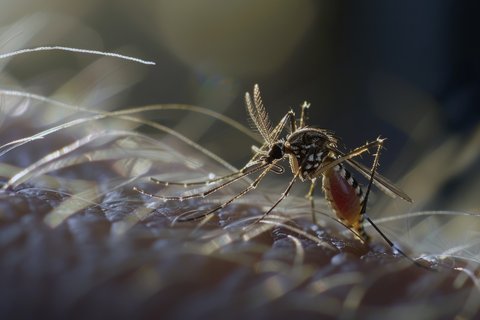
Experts assess the risk of spread as medium: such cases occur regularly. The midges that carry the virus became active again as early as 31 March 2026, and transmission continued throughout the season.
What the outbreak has cost
Former Sheep Veterinary Society president Fiona Lovatt estimates that more than 20,000 sheep died during the outbreak and a further 110,000–175,000 needed treatment. Bluetongue is especially severe in sheep: they develop a high temperature, swelling of the face and tongue, mouth ulcers, drooling and lameness. Many weakened animals die, and survivors take a long time to recover, losing weight and fleece. In cattle the disease is usually milder, but milk yields still drop, and there may be crusting on the nose, lameness and abortions.
There are less visible losses too. Rams' fertility falls for a while after the disease, ewes may abort or produce weak lambs, and treatment, extra care and restrictions on selling animals hit farm incomes. For many sheep farmers, especially on hill farms in the north of England, Wales and Scotland, this outbreak has been a heavy blow.
Why vets fear missing FMD
Scotland's Chief Veterinary Officer, Sheila Voas, backed her colleague and urged vets to stay vigilant.
The signs could mask the first case of foot-and-mouth.
Sheila Voas, Chief Veterinary Officer for Scotland
The logic is simple. When a vet sees hundreds of sheep with mouth ulcers, drooling and lameness in a season, and it almost always turns out to be bluetongue, it's tempting to assume the next case is "just another one". But foot-and-mouth looks very similar, and the cost of a mistake is incomparably higher. Every day's delay with FMD means more infected farms: the virus multiplies quickly and is shed in huge quantities before the signs become obvious.
How the two diseases are alike and how they differ
Both diseases affect ruminants — sheep, cattle and goats. Both can cause fever, drooling, mouth lesions and lameness. But there are important differences:
- bluetongue is spread by midges and is not passed directly from animal to animal. Pigs don't get it;
- foot-and-mouth disease is one of the most contagious animal diseases there is. It spreads through direct contact, via objects, vehicles, clothing and even through the air, and affects all cloven-hoofed animals, including pigs. A typical sign is blisters on the tongue, gums, around the feet and on the udder, which burst quickly and turn into ulcers.
It's impossible to tell them apart by eye on farm — a laboratory test is needed. FMD is especially treacherous in sheep: in them it is often mild, with slight lameness and small ulcers that are easy to miss. That is exactly how the virus spread unnoticed across the country with sheep movements in 2001. That's why vets say: if in doubt, report it straight away.
Why the concern is justified
The UK has been free of foot-and-mouth since 2007, but the country remembers the 2001 epidemic well, when millions of animals had to be culled and the countryside was effectively closed for months. In 2025 FMD reappeared in Europe, with cases found in Germany, Hungary and Slovakia. After that, Defra updated its FMD control strategy. If the virus enters the country and isn't spotted immediately, it could spread very widely before being detected.
Laboratories and notification
Bluetongue is a notifiable disease in the UK. BCVA director Laura Roberts noted that this has helped: farmers and vets became more alert and reported suspicions earlier. But the flood of samples left laboratories struggling, and results were delayed. According to Voas, the backlogs are now being cleared, the Animal and Plant Health Agency is simplifying the reporting process, and in future bluetongue control may become "lighter touch", although it will remain notifiable. Notifiable means that a farmer or vet who suspects the disease must inform the government agency immediately, and the agency decides whether testing and restrictions are needed. For FMD this rule is especially important: whether an outbreak can be stopped at one farm depends on how fast that first call is made.
Why vaccination matters
Vaccines against bluetongue serotype 3 exist and are permitted for use in the UK. But according to Voas, farmers have been reluctant to vaccinate, which she finds deeply frustrating — she likened her appeals to banging her head against a brick wall. Vaccination not only protects your own animals but also reduces the amount of virus in the area — and so the number of cases among which FMD could be lost. It's best to vaccinate in advance, before the midge season begins in spring, following the vaccine manufacturer's schedule; your vet can advise when and which animals to vaccinate first.
What farmers should do
- Discuss vaccination against bluetongue with your vet before the next midge season.
- Report any suspicion. Mouth ulcers, drooling, lameness, blisters on the feet or udder, or a sudden drop in milk yield are all reasons to call your vet straight away. If there is even the slightest suspicion of FMD, report it to APHA immediately.
- Practise good biosecurity: disinfect footwear and machinery, limit access by visitors, and isolate new and sick animals. Keep new animals separate for at least a few weeks and check them before they join the herd or flock.
- Don't bring meat or dairy products back from countries with FMD, and don't feed kitchen waste to pigs — it's illegal.
- Protect animals from midges at dusk: repellents authorised for the species, and removing manure and standing water.
And pets?
Bluetongue is spread by midges and affects ruminants — sheep, cattle and goats — and camelids such as alpacas and llamas. Dogs and cats are at practically no risk from midge bites. Alpaca and llama owners should remember that their animals are susceptible: it's best to talk to your vet in advance about vaccination and midge protection. Dogs and cats don't get FMD either, but they can carry the virus on their paws and coats, so if there is an FMD outbreak nearby the authorities ask people not to walk dogs on farmland.
What happens next
In winter midges become less active, and vets are hoping for a quieter period. Congress participants suggested using it to talk to farmers about the impact of the outbreak and to prepare for next year — explaining the risks calmly, consistently and honestly. The main task for the winter is to increase vaccine uptake and stay alert to any signs that could turn out to be not bluetongue but foot-and-mouth. For smallholders with a few sheep, goats or alpacas, the rules are the same: vaccinate on your vet's advice and call immediately if you see any suspicious signs.
Sources
- Vet Times, on the BCVA congress, 23 October 2026
- UK government, bluetongue: latest situation, 26 October 2026