Contents
- What happened in the UK
- Why the campaign was needed
- Why guinea pigs hide illness
- How to do a health check at home: step by step
- The most common problems
- What to feed your guinea pig
- Why guinea pigs need company
- Housing your guinea pigs
- Does a healthy guinea pig need to see a vet
- How to choose a vet for your guinea pig
- Guinea pigs and children
- What the campaign means for Europe
- When to see a vet straight away
What happened in the UK
From 26 to 30 October 2026, the UK marked Guinea Pig Awareness Week. This year it had a practical focus: on Friday 30 October, owners across the country were invited to carry out the Big Pig Health Check on their pets. Owners could sign up through the Guinea Pig Alliance website.
Vet Times reported on the campaign on 27 October. By then more than 2,500 people had signed up for the check — over five times the organisers' original target.
The health check gives the campaign a practical focus, uniting owners, rescues and veterinary professionals.
John Chitty, chair of Guinea Pig Welfare
Vet Times, Burgess Small Animal Census, RSPCA; 27 October 2026
Why the campaign was needed
The campaign was prompted by data on how owners look after their guinea pigs' health. Analysis drawn from the Burgess Small Animal Census found that 64% of participants only take their guinea pig to a vet once they already believe something is wrong. Almost one in seven owners weren't confident they could recognise when their guinea pig was stressed or in pain.
Another warning sign comes from the RSPCA. In 2025, the number of guinea pigs taken into its national centres in England and Wales rose by 76% compared with the previous year. The RSPCA believes the true figure is higher still, because its independent branches aren't included in the statistics.
This trend is deeply concerning. A simple check can help identify potential problems early.
Eloise Dicks, science and policy officer at the RSPCA
Why guinea pigs hide illness
In the wild, guinea pigs are prey, not predators. A weak animal is more easily spotted and caught, so guinea pigs hide pain and illness for as long as they can. Owners often only notice a problem once it's advanced: the guinea pig stops eating, loses weight and sits hunched in a corner. And in such small animals, things can go downhill within a day or two.
That's why vets advise not waiting for obvious signs but checking your guinea pig yourself regularly — which is exactly what the campaign was about.
How to do a health check at home: step by step
A quick check once a week takes 5–10 minutes. It's best done at the same time each week on a table covered with a towel, so your guinea pig doesn't slip or fall.
- Weigh your guinea pig on kitchen scales in a bowl or box, and write the weight down. This is the earliest warning sign: weight loss often shows before anything else.
- Look at the eyes — they should be clear and bright, with no discharge, crusts or cloudiness.
- Check the nose — dry and clean, with no discharge or sneezing.
- Look in the mouth as far as you can and at the front teeth: straight, not too long and not chipped. Watch for drooling or a wet chin.
- Check the ears — clean, with no crusts or unpleasant smell.
- Run your hand through the coat against the lie of the fur: are there bald patches, scurf, sores, scratches or lumps under the skin?
- Check the feet and nails — pads free of sores and calluses, nails not curling round.
- Look at the rear end — clean fur with no sign of diarrhoea, and normal droppings: dry, oval pellets.
- Watch their behaviour — your guinea pig should be active, eating hay, drinking and responding to sounds.
The most common problems
Guinea pigs have a few typical problems every owner should know about.
- Teeth. Guinea pigs' teeth grow throughout life and only wear down when they chew plenty of hay. Without enough hay, the teeth overgrow, make eating difficult and injure the cheeks and tongue.
- Vitamin C deficiency. Like people, guinea pigs can't make their own vitamin C and must get it from food. Without enough, their joints become painful, their gums bleed and wounds heal poorly.
- Skin parasites. Mites and lice cause intense itching, bald patches and scratches. They need treating by a vet, not with products for cats or dogs.
- Respiratory disease. Sneezing, discharge from the nose and eyes and noisy breathing are serious signs in guinea pigs, especially if their home is draughty or damp.
- Gut problems. If your guinea pig stops eating and there are few or no droppings, the gut may be shutting down — this is an emergency.
What to feed your guinea pig
Hay is the basis of the diet: it should always be available, without limit. Alongside it come fresh vegetables and greens rich in vitamin C and a small amount of guinea pig nuggets. Sweet fruit should be given rarely and in small amounts, and rabbit or hamster food isn't suitable, as it doesn't contain enough vitamin C. Fresh water must always be available. It's best to discuss any supplements or vitamins with your vet.
Why guinea pigs need company
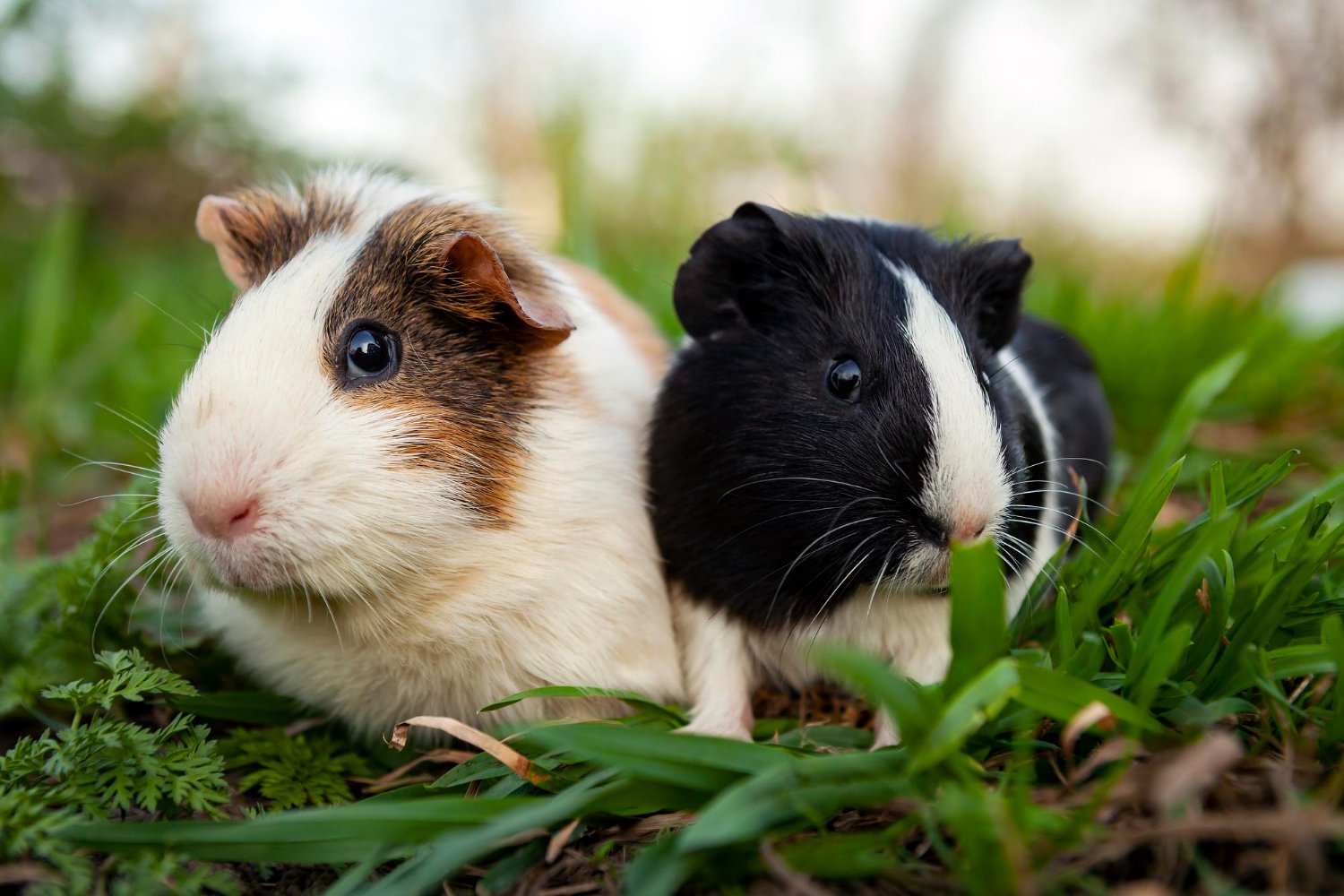
Guinea pigs are herd animals. On their own they get bored and stressed, and stress weakens their health. Vets and welfare charities recommend keeping guinea pigs at least in pairs — for example, two females or a neutered male with a female. New guinea pigs should be introduced gradually and kept apart at first so they don't bring in disease.
Housing your guinea pigs
Guinea pigs need lots of space: a roomy hutch or enclosure where they can run around, hide in shelters and burrow in hay. A cramped cage without hiding places is a common cause of stress and weight gain. Guinea pigs cope badly with heat, draughts and damp, so keep their home away from radiators, direct sunlight and open windows. Change the bedding regularly: wet, dirty bedding causes sore feet and skin problems.
Does a healthy guinea pig need to see a vet
Yes. Even if your guinea pig seems healthy, it's worth taking them for a yearly check with a vet who sees rodents and rabbits. They'll check the teeth, including the back teeth you can't see at home, as well as the heart, lungs, weight and skin, and advise on diet and housing. Older guinea pigs — from 4–5 years — need checks more often.
How to choose a vet for your guinea pig
Not every practice is equally experienced with small mammals. Guinea pigs have their own anatomy, their own diseases and their own sensitivity to medicines: some antibiotics commonly used in cats and dogs are dangerous to guinea pigs. So it's best to find a vet who regularly treats rabbits and rodents in advance — often described as exotics vets. Ask the practice whether they have such a vet, scales for small animals and facilities to hospitalise your guinea pig. Save the number in your phone while your pet is well — in an emergency there won't be time to search.
Guinea pigs and children
Guinea pigs are often bought "for the children". They really are calm and friendly, but they need an adult's care: a child won't notice weight loss, won't realise the guinea pig has stopped eating and can't get it to the vet in time. Vets advise that an adult keeps an eye on the guinea pig's health with the child helping — for example, by writing the weight in a notebook after each weekly check. It's best for children to hold the guinea pig while sitting on the floor so it can't fall from a height: falls are a common cause of broken bones in guinea pigs.
What the campaign means for Europe
Guinea pigs are popular all over Europe, and owners' problems are similar everywhere: guinea pigs are often seen as an "easy" pet for children, and their needs are underestimated. The UK campaign shows what can be achieved at little cost: weighing once a week and a five-minute check help spot illness days or weeks before it becomes dangerous. You can do this kind of check without any campaign — in any country, on any day.
When to see a vet straight away
Don't wait — phone your vet the same day if your guinea pig:
- has stopped eating or drinking, especially for more than 12 hours;
- is producing few droppings or has diarrhoea;
- is losing weight fast;
- is breathing heavily, wheezing or has discharge from the eyes or nose;
- sits hunched and doesn't respond to you;
- is drooling, has a wet chin or tries to eat but drops the food.
In small animals, hours count, so it's better to see a vet too early than too late.
Sources
- Vet Times, 27 October 2026