Contents
- What the FDA approved
- How it differs from the original Convenia
- Which infections it treats
- Why dogs' skin becomes inflamed so often
- Why a single injection is convenient
- Why it is for dogs only
- An antibiotic to be used sparingly
- How a vet treats a skin infection
- What this means for Europe
- How to help a dog with a skin infection at home
- When to see a vet urgently
- What happens next
What the FDA approved
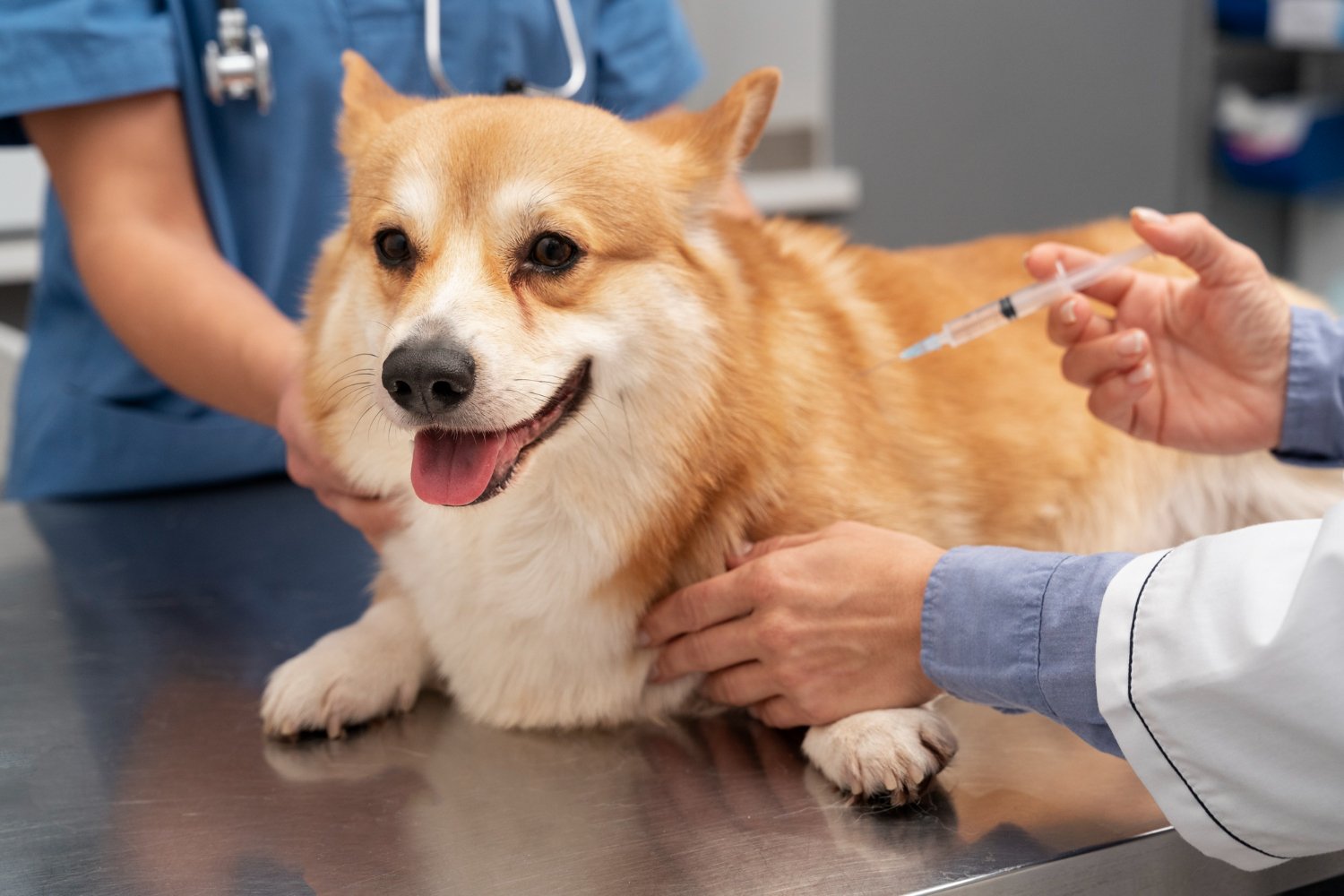
On 20 October 2026 the FDA's Center for Veterinary Medicine approved Convenia RTU for dogs. It is an injectable suspension of the antibiotic cefovecin made by the company Zoetis. RTU stands for "ready to use": the product does not need to be reconstituted before injection — shaking the vial for 60 seconds is enough.
The product is approved to treat skin infections in dogs caused by susceptible strains of the bacteria Staphylococcus pseudintermedius and group G Streptococcus canis. It is available only on a veterinary prescription. The decision followed a review of data on quality, safety and effectiveness submitted to the FDA by the company. According to the company and trade publications, a single injection provides up to 14 days of treatment.
FDA, Zoetis, dvm360; 20–23 October 2026
How it differs from the original Convenia
The active ingredient is the same as in Convenia, which has been approved in the USA since 2008 for dogs and cats. But there are important differences:
- twice the concentration — 160 mg per millilitre instead of 80. A large dog needs a smaller injection volume;
- no powder to reconstitute — the 10 ml vial (1,600 mg of cefovecin) is ready to use and designed for multiple doses;
- different excipients: the new form contains benzyl benzoate and propylene glycol, which are not in the original product.
According to the manufacturer, the new form should help more medium-sized and large dogs receive treatment with a single injection.
Which infections it treats
The bacterium Staphylococcus pseudintermedius is the main cause of skin infections in dogs, which vets call pyoderma. It normally lives on the skin of healthy dogs without causing harm. But when the skin's protective barrier is damaged — by scratching due to allergies, scratches, bites or parasites — the bacteria multiply and cause inflammation. Red spots and pustules appear, along with crusts, round scaly patches with hair loss, an unpleasant smell and itching. Vets distinguish superficial pyoderma, where the upper layers of the skin and hair follicles are inflamed, from deep pyoderma, where the infection goes into the deeper skin and the tissue beneath it. Deep pyoderma is painful, may come with swelling, draining tracts and fever, and takes much longer to treat — sometimes months.
Streptococcus canis is a different bacterium that can also cause skin and wound infections. The product is approved to treat infections caused by susceptible strains of both bacteria.
Why dogs' skin becomes inflamed so often
Pyoderma is rarely "just an infection". There is almost always another problem behind it that weakens the skin:
- allergies — to pollen, house dust mites, food or flea bites;
- parasites — fleas, ticks, mange mites;
- hormonal diseases, such as an underactive thyroid;
- skin folds in some breeds, where moisture collects;
- wounds and cuts that the dog keeps licking.
If the cause is not found and treated, the infection will keep coming back, however many courses of antibiotics the dog receives. Breeds prone to allergies and skin problems — such as French Bulldogs, Labradors, Shar-Peis and West Highland White Terriers — suffer from pyoderma more often, but any dog can be affected.
Why a single injection is convenient
Many owners know how hard it is to give a dog a tablet twice a day for two weeks. The dog spits out the medicine, the owner goes away, the course is interrupted. An infection that is not fully treated comes back, and the bacteria gradually get used to the antibiotic. Long-acting products solve this problem: the vet gives an injection at the practice and the medicine does the rest. This is particularly useful for dogs that tolerate tablets poorly, for aggressive or very nervous animals and for busy owners.
Long action also has a downside. If the dog has an adverse reaction to the medicine, the injection cannot be "undone": the product stays in the body for several weeks. So the vet decides whether this approach suits a particular animal, taking into account its health, other medicines and previous reactions to antibiotics.
Why it is for dogs only
The FDA stresses that the new product is approved for dogs only. Two of its excipients — benzyl benzoate and propylene glycol — may be toxic to cats. Cats are sensitive to many substances that dogs tolerate well, because their liver processes certain compounds differently.
For cats the original Convenia, approved for both dogs and cats, remains available. This is a good example of why you must never give a dog's medicine to a cat "just in case", even if the active ingredient is the same. If you have both a dog and a cat at home, always check with your vet which species a medicine is intended for.
An antibiotic to be used sparingly
Cefovecin is a third-generation cephalosporin. Antibiotics of this kind are very important in human medicine, so vets around the world are asked to use them with care: the more often an antibiotic is used, the faster bacteria become resistant to it. Methicillin-resistant staphylococci are a particular concern: they are being found in dogs more and more often in Europe and North America, and such infections are very hard to treat. Dogs and people who live together exchange bacteria, including resistant ones. So responsible use of antibiotics in animals also protects the health of the family: vets and doctors call this approach "One Health".
That is why current guidelines advise treating pyoderma first with topical products — shampoos and solutions with antiseptics — and using systemic antibiotics, especially those "critical" for people, only when really necessary. Before that, ideally a swab should be taken to check which antibiotics the bacteria are sensitive to.
How a vet treats a skin infection
Treatment usually involves several steps:
- Examination and tests. The vet examines the skin, takes scrapings and impression smears and, if needed, a culture with antibiotic sensitivity testing.
- Topical treatment. For a mild superficial infection, medicated shampoos, sprays and wipes with antiseptics are often enough.
- Antibiotics by mouth or injection — for deep or widespread infections, usually for at least several weeks.
- Treating the cause. Allergy control, parasite treatment, treatment of hormonal diseases.
- Follow-up. A recheck to make sure the infection has cleared completely rather than just "faded".
Vets often continue treatment for another one to two weeks after the skin looks healthy: this makes a relapse less likely. If pyoderma comes back several times a year, the usual next step is to look for an allergy — it is the most common hidden cause.
What this means for Europe
Cefovecin itself is familiar to owners in Europe: the original Convenia for dogs and cats has long been authorised in the European Union and is used in practices. The new ready-to-use form is so far approved only in the USA. For it to become available in the EU, the manufacturer needs a separate authorisation from European regulators, and when that might happen is unknown.
At the same time the rules for using such antibiotics in the EU are stricter than in many other countries. Under the European Veterinary Medicinal Products Regulation, vets must prescribe antibiotics prudently, and third-generation cephalosporins are among those whose use should be restricted — only when other products are unsuitable, ideally after sensitivity testing. So even when the new form arrives in Europe, "an injection instead of tablets" will not be given to every dog with a few spots, but to those that really need it.
How to help a dog with a skin infection at home
- Do not let your dog lick or scratch inflamed areas: use a protective collar or a body suit if needed.
- Bathe your dog with a medicated shampoo exactly as your vet prescribed — it usually needs to be left on the skin for a few minutes.
- Do not stop treatment early, even if the skin looks better.
- Do not use antibiotics left over from a previous treatment or meant for people. The wrong dose and the wrong product only help bacteria become resistant.
- Treat your dog regularly against fleas and pay attention to its diet — this helps the skin recover.
When to see a vet urgently
See a vet the same day if the inflammation is spreading quickly, the skin is hot and painful, draining tracts or ulcers appear, or your dog becomes lethargic, has a temperature or refuses food. Deep skin infections can be dangerous and need active treatment.
What happens next
In the USA the new product should reach veterinary practices soon. For Europe the main news lies elsewhere: even convenient medicines do not replace finding the cause of skin problems and using antibiotics responsibly. If your dog's skin infections keep coming back, ask your vet to find out what is causing them — that is the best way to reduce the number of antibiotic courses in future. And if your vet suggests a long-acting injection, ask why this particular product was chosen and whether a sensitivity test is needed first: a good vet will gladly explain the decision.
Sources
- US FDA, Center for Veterinary Medicine, 20 October 2026
- dvm360, 23 October 2026
- Zoetis, press release, 20 October 2026