Contents
- What the conservationists said
- Why cemeteries have become a refuge
- Roe deer and roses
- Why roe deer aren't afraid of people in cemeteries
- Foxes and candles
- Birds and ribbons
- Bats in crypts
- Foxes and badgers near people: what dog owners should know
- Hedgehogs get ready to hibernate
- Hamsters and insects
- How to make a grave wildlife-friendly
- Science with help from the public
- How to help scientists with your photo
- Why towns need such islands of nature
- Cats in cemeteries
- Dogs in cemeteries
- Why candles and decorations are dangerous for pets
- If you meet a wild animal in a cemetery
- What this means for Europe
- When to see a vet
What the conservationists said
On 31 October 2026 the science desk of the Austrian broadcaster ORF reported on observations by the Austrian Nature Conservation Union (Naturschutzbund). According to citizen science data, meaning photos and reports sent in by the public, wild animals are adapting better and better to life in cemeteries. Cemeteries are becoming particularly important refuges in big cities and suburbs.
The report came out the day before All Saints' Day on 1 November, when people in Austria, as in many European countries, visit graves in large numbers, light candles and decorate headstones.
ORF, Naturschutzbund; 31 October 2026
Why cemeteries have become a refuge
Cemeteries are often the only quiet places in towns and villages. They have old trees and a mix of open areas, thickets and flowers.
In cemeteries there's a mosaic-like interplay of open, wooded and flowering areas.
Lucas Ende, species protection coordinator at the Austrian Nature Conservation Union
According to Ende, this allows a great variety of habitats in a small area: roe deer, badgers, foxes, European hamsters and bats find conditions in cemeteries that have become rare in towns.
Roe deer and roses
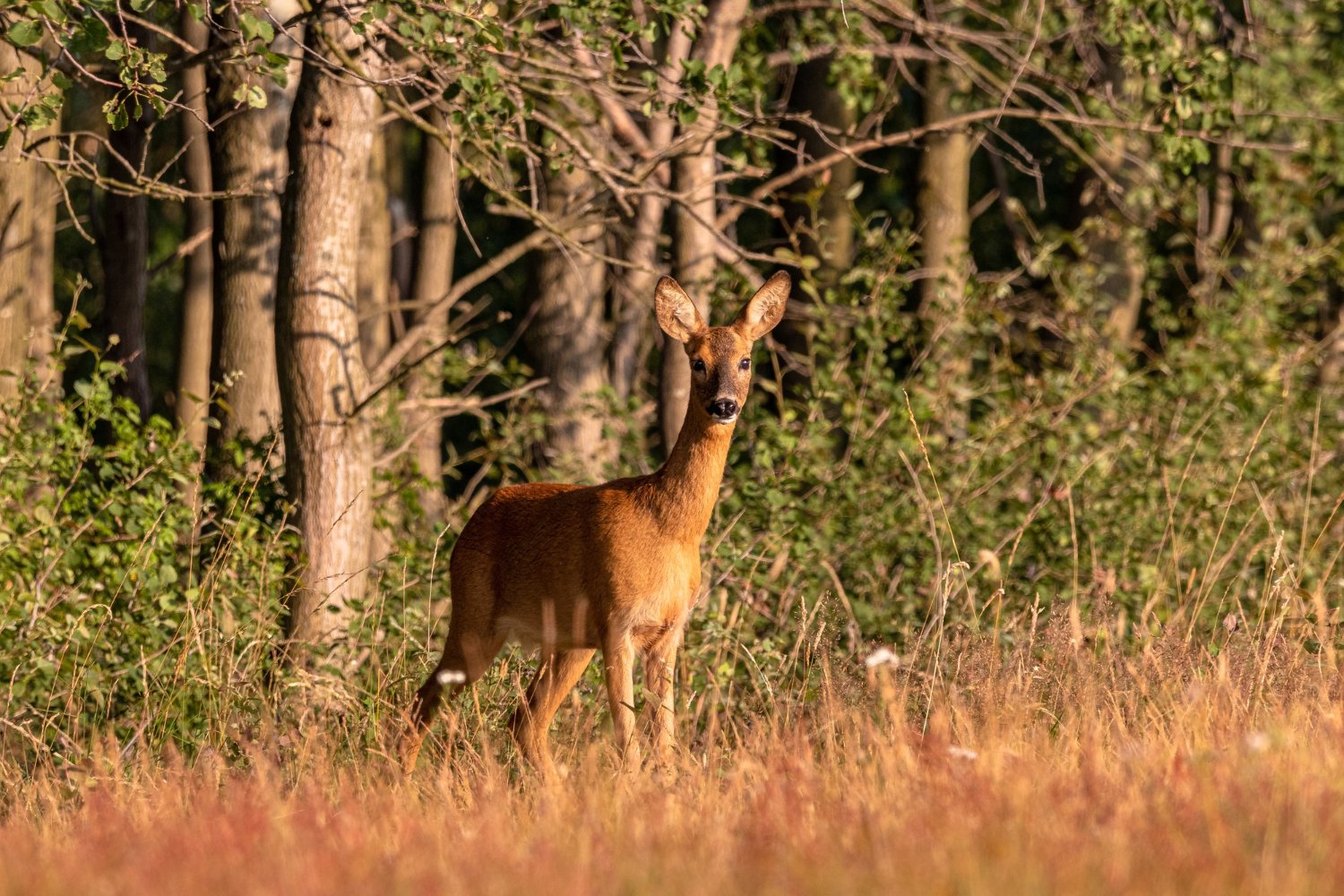
According to Ende, roe deer living in cemeteries have developed a taste for rosebuds: the animals look for the most nutritious food, and roses have apparently become a delicacy for them. For anyone wanting to protect the flowers on a grave, Ende advises planting kitchen herbs nearby, such as sage, whose taste roe deer dislike.
Why roe deer aren't afraid of people in cemeteries
There's no hunting in cemeteries, dogs are usually on leads and visitors behave quietly. Animals quickly learn that nothing threatens them here and stop running away from people. So roe deer can graze calmly among the graves during the day, and foxes can come out at dusk. That doesn't mean they should be fed or touched: animals that get used to being fed lose their caution and are more often hit by cars on nearby roads.
Foxes and candles
Foxes are reportedly gnawing grave candles more and more often. The oils and fats in candles give them an energy source for building up winter fat, Ende explains. For a fox it's an unusual but understandable strategy, as predators try to eat as many calories as possible before winter.
Birds and ribbons
Birds, meanwhile, have developed a liking for ribbons and other soft decorations from wreaths, and are carrying them to their nests more and more often. Ende urges people to avoid plastic in grave decorations where possible. Plastic ribbons and threads are dangerous for birds: chicks can get tangled in them, and plastic doesn't break down and stays in the environment for years.
Bats in crypts
Bats in cemeteries benefit not only from old trees but also from old family crypts and small mausoleums. These are especially important as winter roosts.
For bats, it's important to have frost-free winter roosts with high humidity where they won't be disturbed.
Lucas Ende, Austrian Nature Conservation Union
So when repairing old crypts, it's worth remembering overwintering animals and not sealing all cracks and openings.
Foxes and badgers near people: what dog owners should know
Urban foxes and badgers usually avoid people, but dogs have reason to keep their distance. Foxes can have mange, which passes to dogs through close contact or from places where a fox has lain. In Austria and other Central European countries, foxes also carry the fox tapeworm, which is dangerous to people. A dog can become infected by catching and eating a mouse or vole. So don't let your dog dig in burrows or eat carrion or rodents, and talk to your vet about regular worming.
Hedgehogs get ready to hibernate
In early November you may come across hedgehogs in cemeteries, parks and gardens looking for a place to overwinter. Hedgehogs make nests in leaf piles, under bushes and in hedges, so in autumn don't clear away all the leaves or burn piles of branches without checking them first. If you see a hedgehog during the day, especially a small, thin one, it may be weak, and you should contact a local wildlife rescue.
Hamsters and insects
European hamsters, which are threatened with extinction in Europe, also find quiet places in cemeteries. For many wild bees and bumblebees, patches of bare soil among the grass are important, as that's where they build underground nests. Insects in turn feed birds, bats and other vertebrates.
How to make a grave wildlife-friendly
The Nature Conservation Union advises decorating graves as close to nature as possible and choosing native plants:
- in dry spots, heather, lavender, rosemary and thyme, whose flowers feed insects;
- in damp spots, periwinkle and creeping Jenny, which are easy to look after;
- no pesticides, which kill more organisms than they should;
- no peat-based compost, as peat extraction destroys bogs;
- no plastic, as birds carry ribbons, artificial flowers and packaging to their nests.
Science with help from the public
Several research projects are studying biodiversity in cemeteries. The Nature Conservation Union and BOKU University in Vienna are asking for photos of animals seen in cemeteries. According to Ende, this data helps show who lives there and what's worth protecting. He suggests designating the most species-rich cemeteries as protected areas.
How to help scientists with your photo
For a photo to be useful to researchers, the animal must be clearly visible, and it's important to add the date, the place and, if possible, the time. Take the photo from a distance, don't approach the animal and don't lure it with food for the shot. If you don't know what animal it is, that's fine, as specialists will identify the species from the photo. Photos of rare species such as hamsters are particularly valuable, as are signs of animal activity, such as burrows, gnaw marks and droppings.
Why towns need such islands of nature
Towns are growing, and there are fewer and fewer places where animals can live in peace. Cemeteries, old parks and gardens act as islands and as bridges between them: animals move through the town along them and find food and shelter. The more such places a town has, the more resilient its nature is, and the more birds, hedgehogs, bats and pollinating insects it has.
Cats in cemeteries
Cemeteries also attract outdoor pet cats. For birds nesting in old trees and bushes, and for small mammals, cats are serious predators. If your cat goes outdoors, keep it in during the morning and evening, when birds are most active, especially during the spring nesting season, and be sure to have it neutered so as not to add to the number of stray cats.
Dogs in cemeteries
In many towns you can visit a cemetery with a dog on a lead, but rules vary, so check in advance. On holidays a cemetery is full of temptations for a dog: burning candles, flowers, food left on graves and the scent of wild animals. Keep your dog on a short lead, don't let it gnaw candles or decorations and keep it away from wild animals' burrows and shelters.
Why candles and decorations are dangerous for pets
If swallowed, wax and paraffin can cause vomiting and digestive upset in a dog, and the metal and plastic parts of lanterns and lids can cause injury and intestinal blockage. A burning candle can burn whiskers, fur and paws, especially in curious puppies and cats. Some plants often grown on graves are poisonous to animals, such as yew and a number of bulb flowers.
If you meet a wild animal in a cemetery
- Watch from a distance and don't try to approach or feed the animal.
- Put your dog on a lead and lead it away.
- Don't touch young animals, as the mother is usually somewhere nearby.
- Don't disturb bats in crypts and cracks, especially in winter.
- Report an injured animal to a local wildlife rescue.
What this means for Europe
In Austria, Germany, Poland, the Czech Republic and many other countries, millions of people visit cemeteries in early November. The experience of Austrian conservationists shows that cemeteries are not only places of remembrance but also important islands of nature in towns. Small changes, such as less plastic and fewer pesticides, more native plants and careful treatment of old crypts, help keep these animals close to us.
When to see a vet
If your dog has eaten a candle, a lantern, a plastic decoration or a plant from a grave and develops vomiting, diarrhoea, lethargy or abdominal pain, see a vet. Go to a clinic straight away if your dog has swallowed a metal lid, glass or a battery from an electric candle, as such objects are dangerous even before any symptoms appear.
Sources
- ORF, science.ORF.at, 31 October 2026