Contents
- What this is about
- From goddess to lucky charm
- Where the bad name came from
- Black cats in shelters
- Chocolate
- Xylitol and raisins
- Wrappers, candles and decorations
- Open doors
- Costumes
- How much chocolate is dangerous
- Nuts, pumpkin and holiday food
- Glow sticks and masks
- Candles in pumpkins and fairy lights
- How to tell if your cat is stressed
- Children in costumes and dogs
- If your pet does run away
- What to do if your pet has eaten sweets
- What this means for Europe
- When to see a vet
What this is about
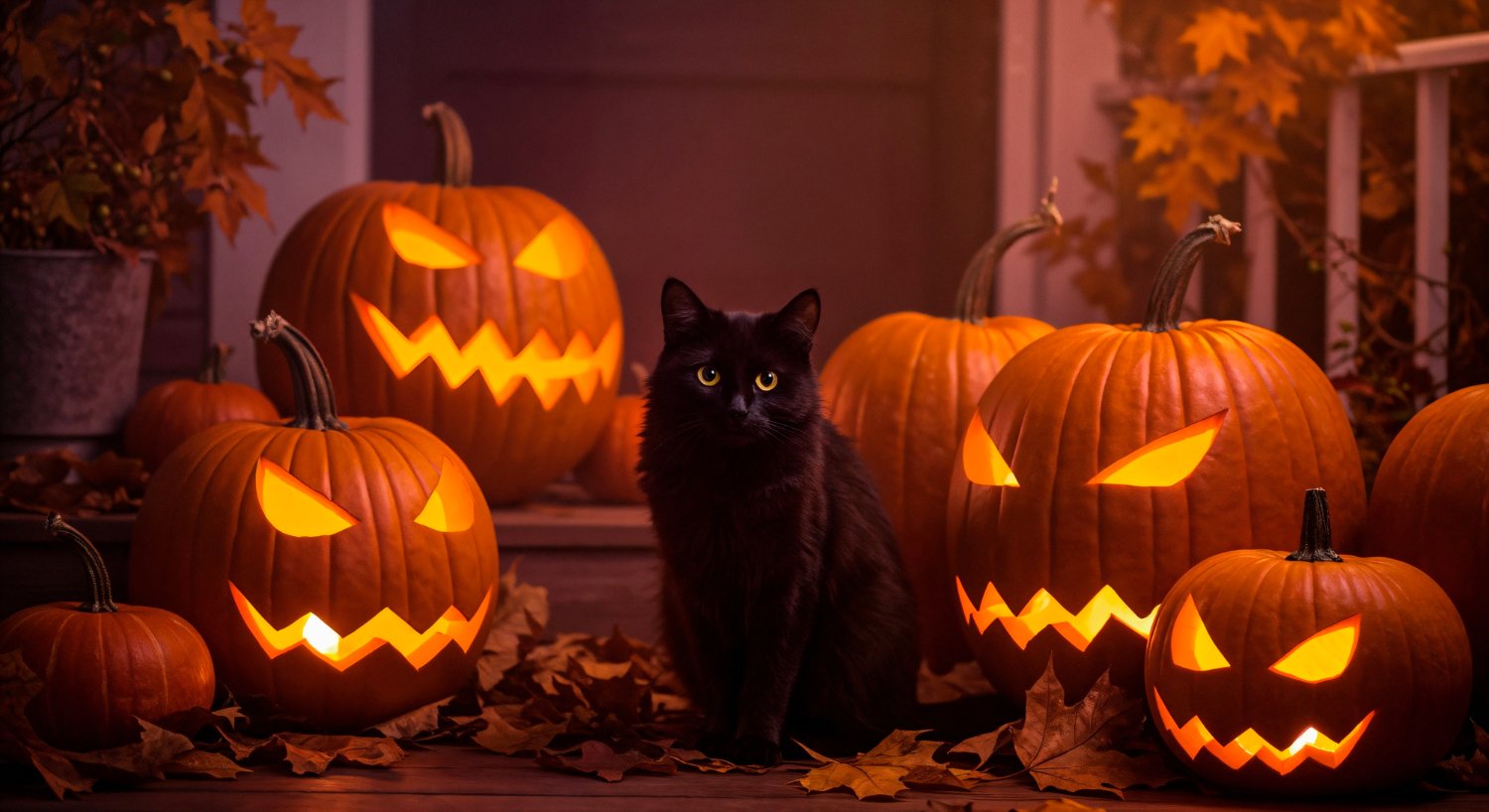
On 30 October 2026, the day before Halloween, the Dutch animal protection society Dierenbescherming published a piece headlined "Black cats bring luck!". It aimed to "thoroughly polish" the reputation of black cats, which were appearing again on holiday decorations as a symbol of witchcraft.
Veterinary organisations on both sides of the Atlantic also used these days to remind owners of the real dangers of Halloween for dogs and cats. The most common reasons for out-of-hours vet visits over the holiday are eaten sweets and animals escaping through an open door.
Dierenbescherming, AVMA; October 2026
From goddess to lucky charm
The society points out that thousands of years ago in ancient Egypt, cats were revered for their link with the goddess Bastet, protector of the home, fertility, women and children. Cats were also valued for practical reasons: they killed venomous snakes and protected grain stores from mice and rats.
In Europe, cats were kept to control rodents, including on merchant ships. According to British folk belief, it was the black cat that brought luck: sailors and their wives kept black cats, believing they protected people at sea. In some parts of Britain, a black cat crossing your path was considered a good omen. In Japan the maneki-neko figure is popular, a cat with a raised paw, and its black version is supposed to protect against evil.
Where the bad name came from
The bad reputation arose in the late Middle Ages and early modern period, around 1450–1750, during Europe's witch hunts. In tales of witchcraft, animals played the role of witches' helpers: black cats, but also toads and snakes. Black was often associated with evil in Christian symbolism, and an animal roaming in the dark with glowing eyes fitted the image perfectly. But, the society stresses, the link between black cats and witchcraft didn't arise everywhere or all at once, and in many places the cat simply remained a mouser.
Black cats in shelters
It was long believed that black cats were adopted from shelters less often. The society writes that its figures used to confirm this, but staff no longer see such a difference. Even so, it uses the holiday to showcase black cats waiting for a home.
Chocolate
Chocolate is the main cause of poisoning over the holiday. It contains theobromine, which dogs and cats clear from the body very slowly. The darker and more bitter the chocolate, the more theobromine it contains, so dark and cooking chocolate are more dangerous than milk chocolate. Signs of poisoning include vomiting, diarrhoea, restlessness, a fast heartbeat, tremors and, at a high dose, seizures. The US veterinary hospital chain BluePearl has reported about two and a half times more cases of chocolate poisoning in the week after Halloween.
Xylitol and raisins
Even more dangerous for dogs is xylitol, a sweetener added to chewing gum, sugar-free sweets and some confectionery. In dogs it causes a sharp fall in blood sugar and can damage the liver. Raisins and grapes can cause acute kidney failure in dogs, and the dangerous dose varies from dog to dog. Chocolate with raisins combines both dangers.
Wrappers, candles and decorations
The sweets themselves aren't the only danger. A dog can swallow wrappers, lollipop sticks and packaging, which can get stuck in the intestines. Fairy light cables, candles in pumpkins, glow sticks and small decorations should be kept out of pets' reach. It's best to throw away a pumpkin that's starting to go mouldy, as dogs and cats sometimes gnaw on them.
Open doors
At Halloween the door keeps opening for trick-or-treaters. For pets this means stress and a chance to run away. Vets advise shutting your dog or cat in a quiet room for the evening and checking the collar and ID tag and your details on the microchip database. Animal welfare groups in various countries advise keeping black cats indoors during the holiday, as there are sadly cases of people wanting to harm them.
Costumes
Dressing up a pet is a matter of taste, but vets ask you to think about its comfort:
- a costume mustn't hinder seeing, hearing, breathing or moving;
- don't put anything over the muzzle or tighten anything around the neck;
- remove small parts that could be bitten off and swallowed;
- take the costume off if your pet gets nervous, tries to pull it off or freezes.
For many pets, a festive collar or bandana is quite enough.
How much chocolate is dangerous
There's no clear "safe" amount: it all depends on the type of chocolate and the animal's weight and health. A small dog or a cat may only need a very small amount of dark chocolate to become ill, while a large dog could eat a piece of milk chocolate with no effect. So vets ask you not to guess but to phone the practice, where the vet can calculate the dose from the ingredients and weight and decide whether treatment is needed. Cats eat chocolate less often because they can't taste sweetness, but it's no less dangerous for them.
Nuts, pumpkin and holiday food
Holiday treats may contain other foods dangerous to pets. Macadamia nuts can cause hind leg weakness, tremors and vomiting in dogs. Salty and fatty snacks, bones from holiday meat and table scraps often lead to digestive upsets and pancreatitis. Raw pumpkin isn't poisonous in itself, but large pieces are hard to digest, and mouldy pumpkin is dangerous because of mould toxins.
Glow sticks and masks
Dogs and cats often bite through glow bracelets and sticks. The liquid inside is very bitter and usually causes heavy drooling and fright, but rarely serious poisoning, and it can be rinsed from the coat and mouth with water. Rubber masks, false nails, wigs and small costume parts are dangerous if swallowed, as they can get stuck in the stomach or intestines.
Candles in pumpkins and fairy lights
A pumpkin with a candle is the main symbol of the holiday, but for a curious cat or a dog with a wagging tail, it's an open flame at floor level. An animal can knock over the candle and singe its fur, whiskers or tail. Vets and fire services advise using LED candles instead of real ones and placing decorations out of your pet's reach. It's best to hide fairy light cables in trunking or fix them higher up, as puppies and rabbits like chewing cables, which can cause mouth burns and electric shocks.
How to tell if your cat is stressed
Cats rarely show fear openly. Doorbells, children shouting, unfamiliar smells and costumes can cause stress that doesn't show straight away. You should be concerned if your cat:
- hides for longer than usual and doesn't come out even to eat;
- has stopped eating or using the litter tray, or is going outside it;
- grooms too much, even to the point of bald patches;
- has become aggressive, hissing and scratching when it didn't before.
If a male cat stops urinating or keeps visiting the tray with no result, get to a vet urgently, as stress can trigger bladder inflammation and a urethral blockage.
Children in costumes and dogs
A dog that normally likes children may be frightened by a mask, cape or glowing costume, as a familiar silhouette suddenly looks different. At home during the holiday, it's better not to ask your dog to "meet" children in costumes. And it's worth reminding children of a simple rule: don't stroke other people's dogs without the owner's permission, especially when wearing a mask.
If your pet does run away
- Start searching nearby straight away, as frightened cats often hide close to home.
- Tell the microchip database, nearby rescues and vet practices.
- Put up posters and post in local social media groups.
- Leave by the door something with your scent and a bowl of water.
- Check neighbours' cellars, garages and sheds, as cats can get shut in by accident.
What to do if your pet has eaten sweets
- Phone your vet or the out-of-hours vet straight away.
- Don't wait for symptoms: with chocolate and xylitol, treatment works better in the first few hours.
- Say exactly what was eaten, roughly how much, when and how much your pet weighs.
- Keep the packaging, as the ingredients make it easier to assess the danger.
- Don't make your pet vomit yourself unless the vet tells you to.
What this means for Europe
Halloween is increasingly celebrated across Europe, especially in the Netherlands, the UK, Ireland, Germany and France. With the holiday come its risks for animals. Vets advise saving the number of your nearest out-of-hours vet in advance and keeping sweets up high, as most holiday poisonings happen because a bowl of sweets was left on a low table. The same advice applies to Christmas and New Year, when chocolate, candles, fairy lights and guests come back into the home.
When to see a vet
Phone your vet straight away if your dog or cat has eaten chocolate, sugar-free sweets, raisins or grapes, or swallowed a wrapper or decoration, or if there's vomiting, diarrhoea, restlessness, tremors, rapid breathing or lethargy. Keep an eye on your pet for another day or two after the holiday, as some signs don't appear immediately.
Sources
- Dierenbescherming (Dutch animal protection society), 30 October 2026
- American Veterinary Medical Association (AVMA), Halloween leaflet, 2026