Contents
- What the researchers studied
- Funny music and emojis
- What's left out
- Not all negative
- Why falls are dangerous for riders
- Helmets: what to look for
- How to fall safely
- Why a fall is dangerous for the horse
- Why horses take fright
- Hacking out in autumn and winter
- Why a horse "throws" its rider: think about pain
- How to reduce the risk of falls
- What to do if your horse becomes restless under saddle
- Injuries don't only happen in the saddle
- Children, teenagers and videos
- How to make a useful riding video
- Social media and horse welfare
- What this means for Europe
- When to see a vet
What the researchers studied
On 31 October 2026 Swedish public television SVT reported on the work of researchers at Malmö University. Sports science doctoral student Klara Boije af Gennäs studies injuries in equestrian sport. With two colleagues she analysed more than 60 videos posted on social media under the hashtag #ridingfails.
In the videos, riders, mostly young women, fall off horses in more or less dramatic situations. The researchers wanted to understand how the culture of risk on social media is linked to equestrian sport and injuries.
SVT, Malmö University; 31 October 2026
Funny music and emojis
The researchers didn't look closely at who posts these videos and why, but Klara Boije af Gennäs believes the main aim is to entertain. Many videos come with cheerful music and emojis, and a fall becomes comedy.
You're spreading risk culture as entertainment. You're normalising something that's actually risky and serious.
Klara Boije af Gennäs, doctoral student at Malmö University
What's left out
According to SVT, between 10,000 and 13,000 people are injured in riding accidents in Sweden every year, and about half of the injuries are serious enough to need hospital care. But the videos don't tell you how a fall ended, for either the rider or the horse.
According to the researcher, the clips don't show broken bones or blood. This may be because platforms remove such content, or because serious injuries simply don't fit the entertainment format.
Not all negative
One of the accounts the researchers followed has more than 5,000 posts and describes its aim as a way of "de-dramatising" riding and showing that it's OK to make mistakes in the sport. The researcher agrees this has a positive side too.
The fact that this culture exists doesn't have to be negative, but we need to be aware that it's there. What happens on social media affects what happens in the stable.
Klara Boije af Gennäs, doctoral student at Malmö University
Why falls are dangerous for riders
A fall from a horse is a fall from a height of two to three metres, often at speed and sometimes under the hooves. The most dangerous injuries are head injuries, spinal injuries and broken arms and collarbones. A helmet and body protector greatly reduce the risk but don't eliminate it. So presenting falls as funny moments can give beginners, especially teenagers, a false sense of security.
Helmets: what to look for
A riding helmet must meet current safety standards for equestrian sport and fit snugly, without sliding onto the forehead or back of the head. The strap should be fastened so that about a finger fits under the chin. After a hard impact, replace your helmet even if it looks undamaged on the outside, as the protective layer inside may have been compressed. A cycling or construction helmet isn't a substitute, as it's designed for different impacts.
How to fall safely
Instructors teach that when falling, it's important to free your feet from the stirrups in time, let go of the reins if the horse pulls, tuck your chin to your chest and try to roll away from the horse. Putting out straight arms is dangerous, as this is how wrists and collarbones most often break. This can be learned in lessons, including special safe-falling sessions run by some riding schools.
Why a fall is dangerous for the horse
Horses are mentioned even less in these videos. Yet a rider's fall often means risk for the animal too: a horse may take fright and bolt, get tangled in the reins, hit an obstacle or fall itself. Fear stays in the memory: after a bad episode, a horse may start to fear the place, the obstacle or even its tack.
Why horses take fright
The horse is an animal whose ancestors survived by fleeing predators. It can see almost everything around it but is poor at judging distance right in front of its nose, and it reacts sharply to sudden movements and unfamiliar sounds. A rustling bag, a sudden gust of wind, a dog or a cyclist can trigger an instant leap sideways. Calmly getting a horse used to these things, a confident rider and familiar surroundings all reduce the risk, but fright can't be eliminated entirely: it's part of a horse's nature.
Hacking out in autumn and winter
In autumn and winter, darkness, slippery or frozen ground and the hunting season add to the usual risks. When hacking out, wear hi-vis for both rider and horse, choose familiar routes, ride with others and tell someone where you're going. Keep your phone on your person rather than in a saddlebag, so it stays with you if your horse runs off.
Why a horse "throws" its rider: think about pain
Vets point out that sudden changes in behaviour under saddle, such as rearing, bucking, refusing a jump or trying to bolt, are often caused not by "temperament" but by pain. The cause may be a badly fitting saddle, problems with the back, teeth or hooves, or hidden lameness. To assess these signs, specialists use ridden horse behaviour scales: a set of postures and movements that point to discomfort. If a horse starts throwing riders more often, start with a vet check rather than harsher tack.
How to reduce the risk of falls
- Always wear a helmet that meets safety standards, and a body protector when jumping and hacking out.
- Check your tack before each ride: saddle, girth, bridle and reins.
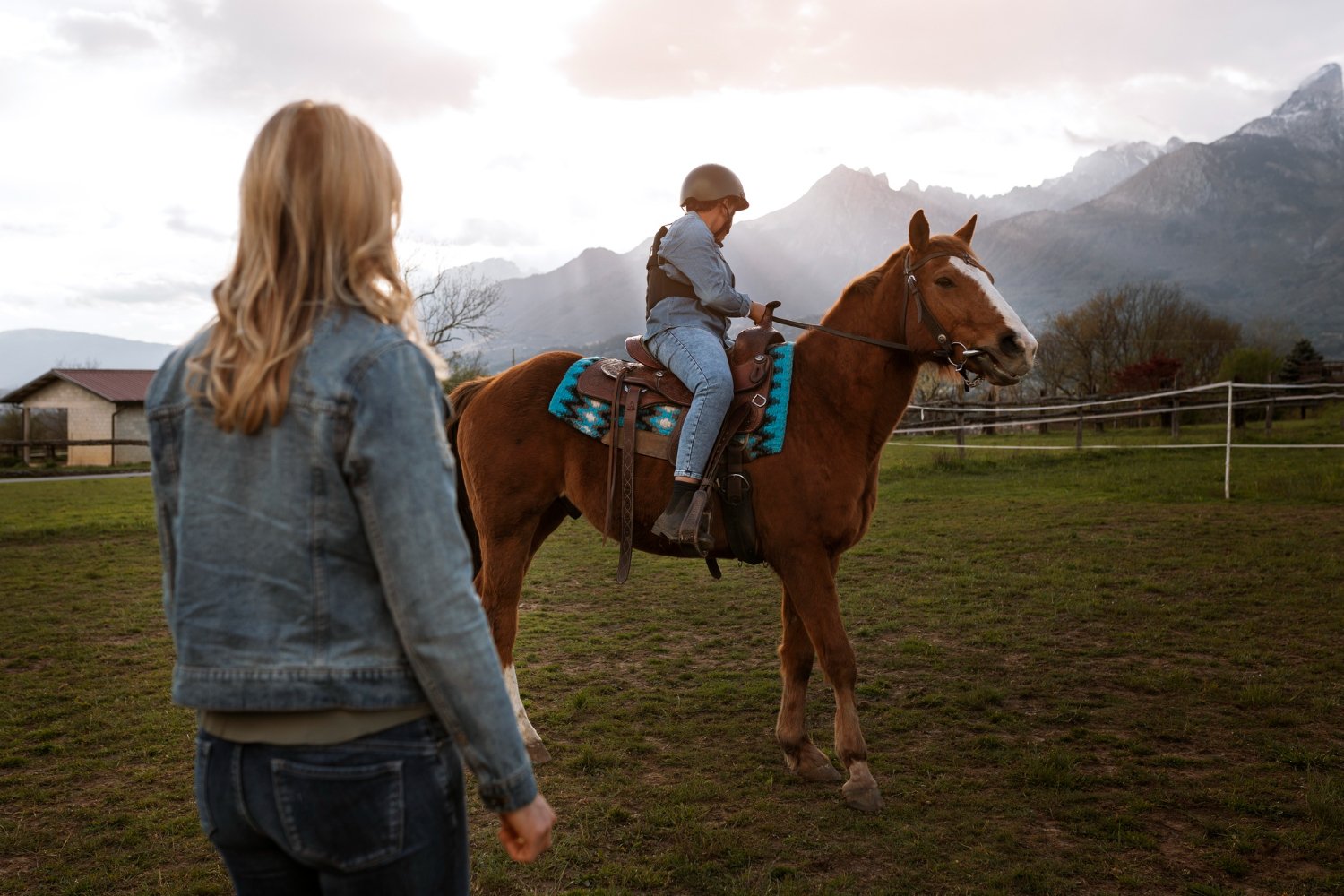
- Match the horse to the rider's level, especially for children and beginners.
- Train with an instructor who teaches how to fall correctly and control a horse.
- Don't film stunts for video: dangerous situations shouldn't be created deliberately.
What to do if your horse becomes restless under saddle
- Note when it happens: at the start of a ride, during certain movements or after jumping.
- Call a vet to examine the back, teeth and gait.
- Have the saddle checked by a qualified fitter.
- Work with an instructor on a calm return to work after treatment.
Injuries don't only happen in the saddle
A large share of injuries in equestrian sport happen not while riding but while handling horses: kicks, bites, trodden-on feet and falls when leading a horse out of its stable. So in the yard, sturdy closed footwear, gloves when leading, calm behaviour and the rule of not standing directly behind a horse's hind legs all matter. A horse is a large animal that takes fright at unexpected movements or sounds, and even the calmest can injure a person by accident.
Children, teenagers and videos
Most people who ride in Sweden are girls and young women, and they're the ones who appear most in #ridingfails videos. Parents and instructors should talk to teenagers about what they see on social media: a funny fall in a video can end in concussion or a fracture, and there's no need to repeat dangerous stunts for a video. It's more useful to share videos about correct position, horse care and safe equipment.
How to make a useful riding video
If you run a horse blog, videos can be useful: showing correct position, warm-ups, hoof and tack care, and calmly introducing a horse to new objects. Film wearing a helmet and safe equipment, don't create dangerous situations for the shot and don't make fun of falls. If a fall does get caught on camera, be honest about how it ended and what you changed afterwards: that kind of video teaches viewers more than funny music.
Social media and horse welfare
Equestrian sport on social media isn't just about falls. Popular videos shape ideas about how to treat a horse properly, and they can help or do harm: showing good care or, conversely, normalising harsh bits, tough methods and dangerous stunts. The Malmö study is a reminder for viewers and creators to look at these videos critically.
What this means for Europe
Riding is one of the most popular sports among girls in Sweden and many other European countries, and hashtags such as #ridingfails gather videos from around the world. Rider safety and horse welfare concern everyone who rides. The researchers' conclusion is simple: a funny video doesn't show the consequences, and behind every fall are two living beings, a person and a horse.
When to see a vet
After a rider falls, check your horse for wounds, swelling and lameness, and look at its legs. If your horse is lame, has a sore back or has started to fear work, call a vet. Do the same if its behaviour under saddle changes sharply for no obvious reason: this is often caused by pain that can be treated.
Sources
- SVT Nyheter, 31 October 2026