Contents
- What happened
- What dementia is
- How the study was done
- Why a simple comparison misleads
- Why a dog might protect the brain
- Why exercise and contact matter
- How many participants owned dogs
- How much could be saved
- Why it matters for Japan
- Why dogs in particular
- What older people worry about
- What the researchers propose
- What that could look like
- Limitations of the study
- Why former owners did not benefit
- Does a dog suit every older person
- Which dog to choose
- How to prepare
- Safety on walks
- If you cannot have a dog
- How a dog helps with loneliness
- Why regular walks matter
- What this means for Europe
- When to see a vet
What happened
Japanese researchers from the National Institute for Environmental Studies and the Tokyo Metropolitan Institute for Geriatrics and Gerontology have published a study on how owning a dog relates to the risk of dementia in older people. It involved around 11,200 Tokyo residents aged 65 to 84 who did not need long-term care at the start.
The researchers followed them for seven and a half years. Dementia requiring long-term care developed in 12.8% of current dog owners, 18.5% of former owners and 18.1% of those who had never owned a dog.
IJERPH and Asahi; 2026
What dementia is
Dementia is a lasting decline in memory, thinking and the ability to manage everyday life. The most common cause is Alzheimer's disease, but there is also vascular dementia and other forms. The study counted dementia severe enough that the person needed long-term care. That is a serious stage that changes life profoundly for both the person and their family.
How the study was done
Participants were divided into three groups: those who currently owned a dog, those who had owned one in the past and those who had never had one. The researchers then tracked who developed dementia requiring care during the follow-up period. Data on dementia came from Japan's long-term care insurance system.
Why a simple comparison misleads
The authors knew that healthier people are more likely to own dogs in the first place, so a simple comparison of groups could overstate a dog's benefit. To isolate the effect of dog ownership better, they used a statistical technique called instrumental variable analysis. With it, they estimated that the risk of dementia is 48% lower among dog owners.
Why a dog might protect the brain
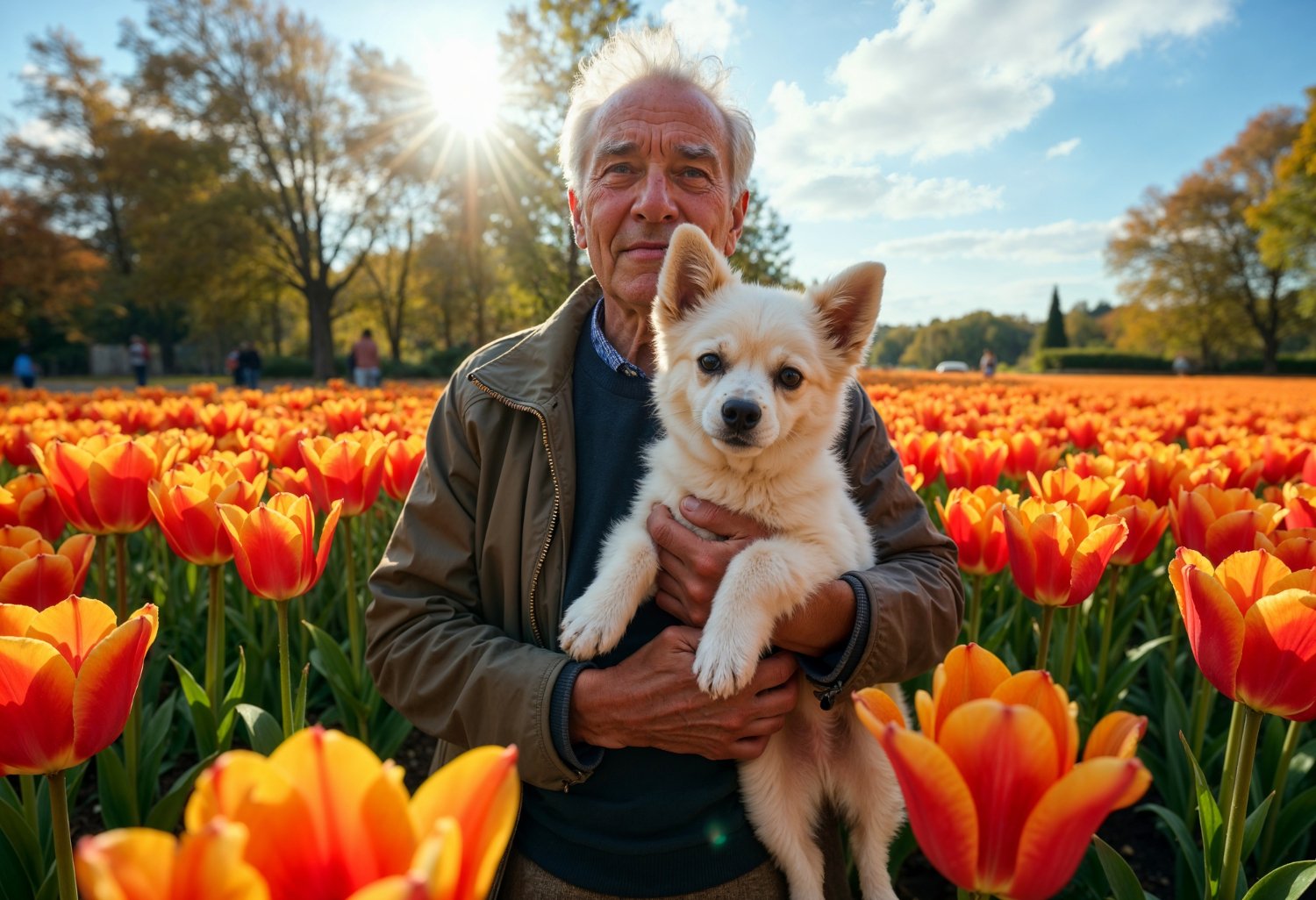
The researchers give two main reasons. First, walking a dog gets owners moving regularly, and physical activity is linked to a lower risk of dementia. Second, a dog creates opportunities to socialise: on walks people meet others and chat with fellow dog owners and neighbours. Social connections also protect the brain.
Why exercise and contact matter
Many studies show that physical activity and social contact are among the most important ways of reducing the risk of dementia, while loneliness and inactivity increase it. A dog combines both: you have to go out with it every day in all weathers, and it makes it easier to strike up conversations with strangers.
How many participants owned dogs
Dog owners made up 8.6% of the participants. Separate research, however, has found that some older people without dogs would like one if their circumstances allowed. The researchers asked: what if such people were supported?
How much could be saved
The authors calculated that if dog ownership among older people rose from 8.6% to 13.4%, public spending on medical and long-term care could fall by about 592 billion yen over four years. That is nearly 150 billion yen a year, or around $950m.
Why it matters for Japan
Japan is one of the fastest-ageing countries in the world. By 2060, around one in six older Japanese people is projected to have dementia. Care costs are rising, and there are not enough care workers. So any way of delaying dementia matters a great deal to the country.
Why dogs in particular
Earlier Japanese studies had already found that it is owning a dog, not a cat, that is linked to a lower risk of dementia. The researchers explain that cats do not need daily walks. Cats bring joy and ease loneliness too, but they do not get their owners out of the house and moving.
What older people worry about
Wanting a dog and being able to care for one are not the same thing for older people. One major concern is what would happen to the dog if its owner fell ill or went into hospital and no one could look after it. Many older people decide against a dog for exactly this reason.
What the researchers propose
The study's lead author, Yu Taniguchi of the National Institute for Environmental Studies, suggests expanding public support so that dogs can live out their lives securely even if something happens to their owner. Then more older people might feel able to live with a dog.
What that could look like
In practice, such support could include temporary foster care for a dog when its owner goes into hospital, rehoming programmes and volunteers who help with walks and care. Some countries already have organisations that look after older people's pets in difficult circumstances; in the UK, for example, the Cinnamon Trust helps older and terminally ill owners care for their pets.
Limitations of the study
The study shows an association but does not prove with complete certainty that it is the dog that lowers the risk of dementia. Statistical methods can account for some differences between groups, but not all of them. The study was also carried out in Tokyo, and results may differ in other countries and cultures.
Why former owners did not benefit
Interestingly, former dog owners had the same risk of dementia as people who had never owned a dog. That suggests it is current life with a dog that matters: daily walks and social contact. When the dog is gone, these habits often disappear, and the protective effect with them.
Does a dog suit every older person
No. A dog needs daily care, walks and money for food and vet bills. For someone with mobility, balance or memory problems, a large or energetic dog can be dangerous: it can pull its owner over on a walk. So the decision should be weighed carefully, ideally with the family.
Which dog to choose
Calm adult dogs of small or medium size often suit older people better than puppies. An adult dog from a rescue centre is already trained, its personality is known and it does not demand as much energy as a puppy. The key is to choose a dog you can physically manage.
How to prepare
- Assess your energy: could you walk a dog every day?
- Choose a calm adult dog rather than a puppy.
- Agree with family or friends who will help if things get difficult.
- Find out about dog fostering services in your area.
- Budget for food, vet bills and insurance.
Safety on walks
Falls are one of the biggest risks for older people with dogs. A dog can jerk the lead, chase a cat or get tangled under your feet. Choose comfortable non-slip shoes, a short lead rather than an extending one, and quiet routes. It helps to teach the dog to walk beside you without pulling, with a trainer if necessary.
If you cannot have a dog
If owning a dog is not possible, you could help at a rescue centre, walk a neighbour's dog or take part in schemes in which volunteers bring dogs to visit older people. That also brings exercise and contact. And regular walks, meeting friends and hobbies are good for the brain with or without a dog.
How a dog helps with loneliness
Many older people live alone, especially after losing a partner. A dog provides a daily routine, someone to care for and a reason to go out. Research shows that dog owners feel lonely less often and talk to their neighbours more. That matters especially in big cities, where people often do not know their neighbours.
Why regular walks matter
For brain health, regularity of exercise matters as well as intensity. Even 20 to 30 minutes of gentle walking a day benefits the heart, blood vessels and brain. A dog will not let you skip a walk because of a bad mood or bad weather, and that regularity may be where the benefit lies.
What this means for Europe
Europe's population is also ageing fast, and dementia is becoming one of the biggest health challenges. Japan's experience suggests that supporting older people who would like a dog could benefit both them and society. Services that look after the dog if its owner falls ill are particularly important.
When to see a vet
If you are older and thinking of getting a dog, ask your vet for advice on a suitable breed, age and size. Take your dog for regular vaccinations and check-ups. If your dog starts finding walks difficult, is lame or tires quickly, see your vet so that walks remain a pleasure for you both.
Sources
- The Asahi Shimbun, 5 November 2026
- International Journal of Environmental Research and Public Health, July 2026