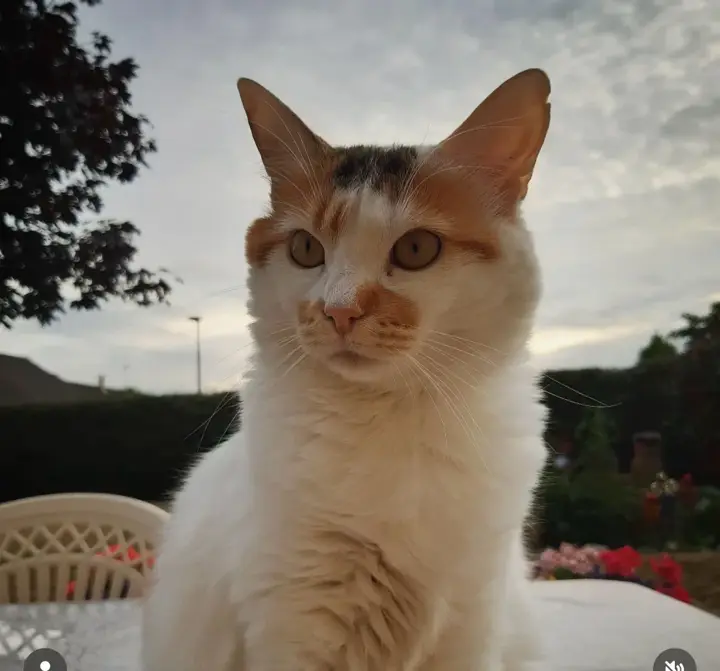
When to see a vet urgently
Congenitally small eyes should not explain away new pain or a sudden vision change:
- Your cat suddenly bumps into things or cannot find familiar routes.
- An eye stays closed, has heavy discharge or is rubbed with a paw.
- An eye becomes very red, rapidly cloudy or visibly contains blood.
- A sharp object has struck the eye or its size changes noticeably.
Contact a vet as soon as signs appear. Find a vet near you.
Overview
Eyes form during foetal development in the uterus. Early disruption may leave an eyeball underdeveloped. Microphthalmia sometimes occurs with other abnormalities, such as coloboma, cataract or anophthalmia, meaning an absent eye. One eye may be small, the unilateral form, or both, the bilateral form.
Coloboma means a congenital defect involving missing tissue in an eye structure. A cataract is clouding of the lens inside the eye. These differ from a small eyeball itself but may coexist. The internal structures of a small-looking eye therefore also need examination.
Anophthalmia and microphthalmia differ: in the former, the eye is absent; in the latter, it exists but is small. A very small eye may be difficult to see on ordinary inspection. Vision in an underdeveloped eye also varies considerably. Some cats can see with it despite an unusual appearance.
Causes
- Inherited factors involving mutations in some feline family lines.
- Viral infections during pregnancy, such as panleukopenia and herpesvirus.
- Toxic effects of medicines or poisons during pregnancy.
- Incomplete foetal development due to metabolic disorders.
- Injury or inflammation of the foetal eye.
Congenital does not automatically mean inherited. An abnormality may involve genes, exposure before birth or their interaction, and the cause may remain unknown. The list cannot establish what caused an individual cat's change, and you should not assume you did something wrong.
Foetal retinal developmental disorders and other eye abnormalities are known with panleukopenia. Herpesvirus can instead damage the eye surface, causing adhesions or corneal inflammation, for example. A confirmed herpes infection therefore does not prove the cause of congenital microphthalmia. Medicines and exposures during pregnancy are reviewed individually.
Risk factors
- Cats with congenital developmental abnormalities.
- Offspring of cats carrying inherited vision defects.
- Pregnant cats that have experienced infection or poisoning.
- Certain breeds with an inherited predisposition, described in Persians and Exotic Shorthairs.
Reliable evidence on frequency and breed-specific risks is limited. Other eye diseases found in Persians and Exotic Shorthairs do not themselves establish a predisposition specifically to microphthalmia. One case or a small patient group cannot confirm breed risk. Non-pedigree cats can also have the abnormality.
Typical symptoms
- an obviously small eye or unequal eyeball sizes;
- a narrow eyelid opening;
- sometimes, clouding of the cornea or lens;
- reduced visual acuity or blindness;
- nystagmus, involuntary eye movements, in the bilateral form.
Impaired vision may cause hesitation before jumping, more cautious movement or difficulty finding a moved food bowl. A cat may walk beside walls and startle at touch from the poorer-seeing side. Navigating a familiar home well does not establish normal vision because cats learn routes and use other senses.
Nystagmus means repeated involuntary eye movement. However, not every behavioural change in a cat with small eyes is a vision symptom. Mention other observations and whether they have existed since kittenhood or started later.
Complications and consequences
- partial or complete sight loss;
- increased risk of secondary eye diseases, such as glaucoma or cataracts;
- other congenital abnormalities, such as coloboma or retinal dysplasia.
A concurrent developmental abnormality is not always a later complication caused by microphthalmia. Vision particularly depends on the retina, lens and other internal structures. If a lid turns inward because the small eye provides less support, hairs can rub the cornea. This irritation may need treatment even though the eye's small size does not change.
Diagnosis at the vet
- an eye examination;
- slit-lamp examination and fundoscopy;
- eyeball ultrasound to assess size and internal structures;
- genetic testing if an inherited cause is suspected.
The aim of examination
Both eyes are examined even if only one looks different. The vet assesses eye and eyelid structure, the surface and responses to light and an approaching object. Vision may be assessed through movement in different lighting. One response alone is not used to measure overall sight.
Fluorescein staining looks for a corneal surface ulcer. A tear test assesses surface moisture, and eye pressure measurement investigates possible pressure abnormalities. A slit lamp shows details at the front, while fundoscopy examines structures including the retina and optic nerve head.
Ultrasound can assess size and anatomy, particularly when cloudiness prevents a direct view inside. The need for investigations and possible sedation depends on condition and findings. Specialist testing does not replace the history of how the eye looked before.
A small eye from birth or a later change?
Later eye shrinkage, called phthisis bulbi, differs from congenital microphthalmia. It may result from severe eye disease or injury. Previous photographs, records and injury details help distinguish them. Shrinkage of a previously normal-sized eye should not be considered a new congenital feature.
Genetic testing helps only if a suitable, reliable test exists for the suspected inherited change. Suspecting heredity does not mean the cause can always be confirmed from DNA. Examination and family history remain essential even when genetic testing is performed.
Treatment and follow-up
No treatment can make a congenitally underdeveloped eye grow normally. This does not mean the cat cannot be helped. The vet separately assesses pain, remaining vision and any treatable eyelid defect, ulcer, inflammation or pressure problem. Medicines target a confirmed disease.
Small size alone does not mean an eye must be removed. If permanently blind and painful, with pain uncontrolled otherwise, removal may improve wellbeing. The decision depends on examination and symptoms. Blindness alone does not determine quality of life either.
Do not try old eye drops or human products. Corticosteroid eye medicine, for example, can worsen a corneal ulcer. If your cat rubs the eye, the vet may recommend a protective collar. Follow-up checks healing of a treated problem even if visible signs have decreased.
A safe daily routine
Keep feeding, resting and litter tray locations consistent. Avoid obstacles in routes and large sudden furniture changes. Let your cat explore at their own pace instead of repeatedly carrying them between places. Do not leave them on a high surface that may be difficult to get down from.
Speak before touching so your cat recognises your approach. A familiar restricted space initially may ease adjustment to a new home. Secure dangerous stairs and prevent access to an open balcony. Outdoor activity for a poorly sighted cat should be supervised in a secure enclosure. Provide play and exploration too: visual impairment does not remove the need for activity.
Assessing the outlook
Monitor appetite, play, confident movement and eye tenderness. Compare changes with your cat's own usual behaviour. New hiding, holding an eye closed or avoiding touch may indicate pain even in a cat adapted to visual impairment. Follow-up is agreed according to associated eye changes.
Prevention
- Do not breed from cats with congenital eye abnormalities.
- Monitor a pregnant cat's health and prevent infections.
- Avoid toxic products during pregnancy.
- Select breeding animals responsibly.
Eye examination and recording family abnormalities complement genetic information when planning breeding. Genetic monitoring therefore means more than a test package. Tell the breeder about a suspected congenital defect so examination of close relatives and breeding choices can be assessed.
Before pregnancy, review the mother's health, medicines and vaccination protection. Where possible, vaccination takes place beforehand; vaccination needs and suitability during pregnancy are assessed by the vet. Even an ordinary medicine may have different safety considerations in pregnancy, so do not start new products yourself.
Important for cat owners
Microphthalmia is a congenital defect that cannot be cured. Remember that an affected cat can lead a full life with an adapted environment, safe spaces and supervised outdoor access. Associated defects require regular follow-up with a vet experienced in eye disease. For breeders, genetic monitoring and excluding affected animals from breeding are the main preventive measures.
This article provides general information and does not replace veterinary care. If you notice signs of illness in your cat, contact a vet.
Frequently asked questions
Is a small eye always blind?
No. Sight may be preserved, impaired or absent. Size and appearance alone do not reveal function.
Can microphthalmia develop in an adult cat?
Microphthalmia is congenital. A previously normal-looking eye becoming smaller needs investigation for an acquired injury or disease, for example.
Must the eye be removed?
Not because of size alone. Removal is particularly considered for a blind, painful eye when other treatment cannot provide enough relief.
Can a poorly sighted cat play?
Yes. Safe, familiar surroundings and exploring through sound, smell or touch help participation. Play is matched to confidence and ability.
This article is for general information only and is not a guide to treatment. If you notice the first signs of illness, contact your vet.
Paw4care editorial team
Sources
- Epidemiology and clinical presentation of feline presumed hereditary or breed-related ocular diseases in France: retrospective study of 129 cats, Journal of Feline Medicine and Surgery, accessed 2026-11-03.
- ECVO Manual: Chapter 5 – Definitions, European College of Veterinary Ophthalmologists, accessed 2026-11-03.
- Understanding blindness in cats, Irish Veterinary Journal, accessed 2026-11-03.
- Blind Cats: How to Look After Blind Cats, Cats Protection, accessed 2026-11-03.
- Blindness in cats, PDSA, accessed 2026-11-03.
- Congenital and Inherited Disorders Affecting Multiple Body Systems of Cats, Merck Veterinary Manual, accessed 2026-11-03.
- Physical Examination of the Eye in Animals, Merck Veterinary Manual, accessed 2026-11-03.
- Disorders of the Retina, Choroid, and Optic Disk (Ocular Fundus) in Cats, Merck Veterinary Manual, accessed 2026-11-03.
- Corneal Ulcers in Cats, VCA Animal Hospitals, accessed 2026-11-03.
- 2024 guidelines for the vaccination of dogs and cats, WSAVA / Journal of Small Animal Practice, accessed 2026-11-03.
- Iris melanoma associated with unilateral phthisis bulbi in a 13-year-old domestic shorthair female cat, Veterinary Quarterly, accessed 2026-11-03.
- Information for Animal Owners & Breeding Clubs, European College of Veterinary Ophthalmologists, accessed 2026-11-03.