
Cavalier King Charles Spaniel:
elegance, gentleness and loyalty

Cavalier King Charles Spaniel:
elegance, gentleness
and loyalty
and loyalty

This breed is known for its grace, friendliness and loyalty. These dogs combine elegant looks, a kind nature and devotion to their owner. They are popular not only with families but also as companions for people with a calm lifestyle. Cavaliers are perfect pets for anyone looking for a small dog with a lovely nature that is deeply attached to its owner.
Cavalier King Charles Spaniel —
The Cavalier King Charles Spaniel has a long and interesting history. Small toy spaniels were popular with European nobility, especially in Britain, from the 16th century. The breed takes its name from King Charles II, a great admirer of these dogs, who were often seen at his court. Thanks to him, these spaniels became known as royal favourites.
Over time, the toy spaniels were bred with ever shorter faces. In the 1920s an American, Roswell Eldridge, offered prizes at Crufts for dogs with the longer nose seen in old paintings. This revival gave rise to the Cavalier, which The Kennel Club recognised as a separate breed in 1945.
Over time, the toy spaniels were bred with ever shorter faces. In the 1920s an American, Roswell Eldridge, offered prizes at Crufts for dogs with the longer nose seen in old paintings. This revival gave rise to the Cavalier, which The Kennel Club recognised as a separate breed in 1945.
Breed history


Appearance
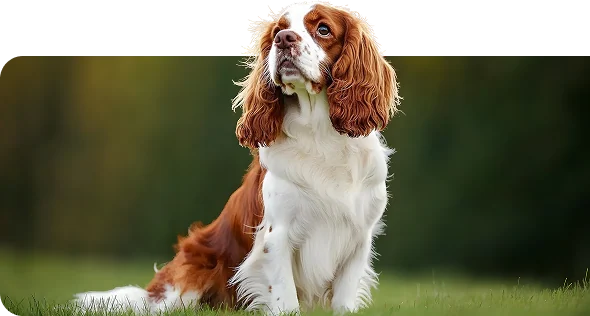
The Cavalier King Charles Spaniel is a small dog with a balanced build and an expressive face. Height at the withers is usually 30–33 cm and weight 5–8 kg. Their beautiful, refined looks make them wonderful companions and popular in the show ring.
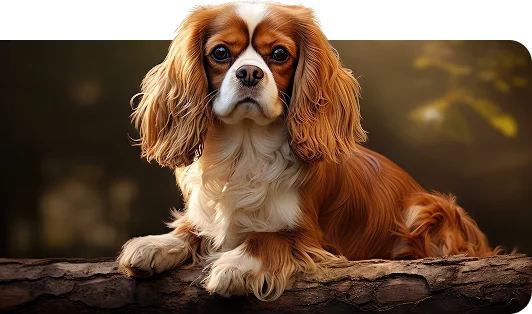
The Cavalier's coat is long, silky and soft, which gives it a very elegant look. There are four colours: Blenheim (chestnut and white), tricolour (black, white and tan), ruby (rich red) and black and tan. Cavaliers have expressive eyes that give them a kind, gentle look.
The Cavalier's coat is long, silky and soft, which gives it a very elegant look. There are four colours: Blenheim (chestnut and white), tricolour (black, white and tan), ruby (rich red) and black and tan. Cavaliers have expressive eyes that give them a kind, gentle look.

The Cavalier King Charles Spaniel is a small dog with a balanced build and an expressive face. Height at the withers is usually 30–33 cm and weight 5–8 kg. Their beautiful, refined looks make them wonderful companions and popular in the show ring.
The Cavalier's coat is long, silky and soft, which gives it a very elegant look. There are four colours: Blenheim (chestnut and white), tricolour (black, white and tan), ruby (rich red) and black and tan. Cavaliers have expressive eyes that give them a kind, gentle look.
Appearance

Character and behaviour
The Cavalier King Charles Spaniel has an exceptionally friendly and loving nature. These dogs are very attached to their owner and want to spend time with them, whether on the sofa or on a walk. Cavaliers are wonderful companions, attentive and sensitive to their owner's mood.
They are very sociable and get on well with children and other animals. Cavaliers are not aggressive; their nature can be described as calm, loving and gentle. They do not like being left alone for long and can suffer from separation anxiety, so they suit people who can give them plenty of attention.
Cavaliers can be a little stubborn, but they are very intelligent and easy to train, especially with positive reinforcement. They enjoy learning tricks and adapt well to different homes, from flats to country houses.
Cavaliers can be a little stubborn, but they are very intelligent and easy to train, especially with positive reinforcement. They enjoy learning tricks and adapt well to different homes, from flats to country houses.
Character and behaviour


Care and grooming
The Cavalier's coat needs regular care. Brush the long hair at least two or three times a week to prevent tangles and mats, and more often during the moult. Bath the dog as needed, but not too often, so as not to strip the skin's natural protective layer.
These dogs are fairly active and enjoy being outdoors. Despite their small size, Cavaliers can be surprisingly hardy and enjoy active games with their owner. Do not overdo the exercise, though, and watch their diet, as they easily put on weight.
These dogs are fairly active and enjoy being outdoors. Despite their small size, Cavaliers can be surprisingly hardy and enjoy active games with their owner. Do not overdo the exercise, though, and watch their diet, as they easily put on weight.
Cavaliers are prone to some inherited conditions, especially mitral valve disease of the heart and syringomyelia, as well as eye problems. Choose a breeder who health-tests their dogs, and take your Cavalier for regular veterinary check-ups.
Care and grooming

Pros and cons of the breed
+Pros
Friendly and affectionate
Great for families with children; they love spending time with their owners.
−Cons
Coat care
They need regular grooming, which can be a chore for some owners.

Cavalier King Charles Spaniel —
This breed is an excellent choice for anyone looking for a small, friendly and loyal companion. These dogs are perfect for families who take an active part in their pet's life, and they become true members of the family. Cavaliers need attention and care, but in return they give their owner boundless love and loyalty. If you are ready to look after your pet and give it enough time, a Cavalier could be your best friend.

Tools