
Dog diseases · General conditions
Anaemia in dogs: symptoms, causes and treatment
Anaemia means reduced red blood cells or the haemoglobin they contain. Fewer red cells can impair oxygen transport to tissues. The cause is investigated because treatment depends on the underlying disease.
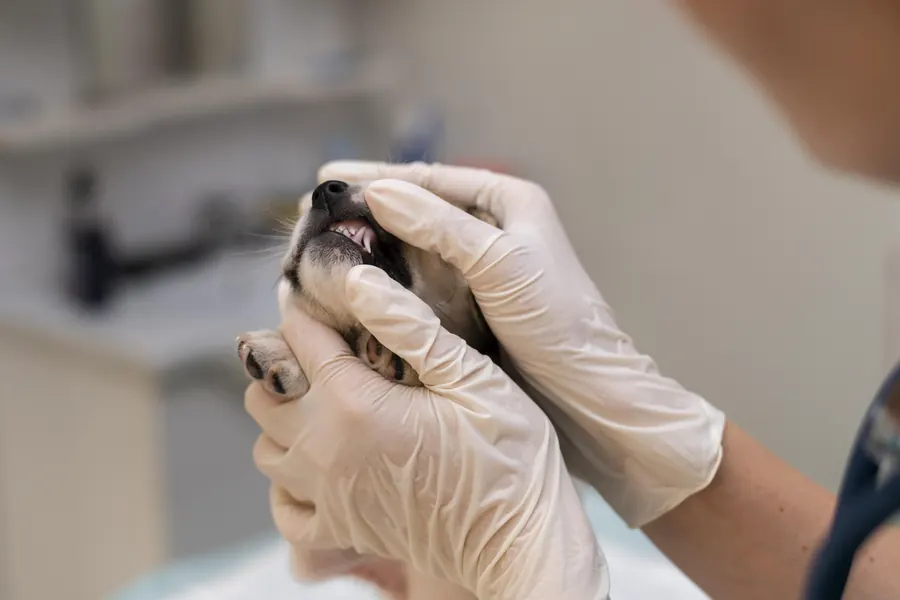
When to see a vet urgently
Sudden heavy bleeding can rapidly cause shock.
- Seek immediate emergency care for collapse or unusual weakness.
- Markedly pale gums require emergency care.
- Difficulty breathing at rest needs immediate veterinary treatment.
- A heavily bleeding wound or painful, rapidly swelling abdomen needs emergency assessment.
- Contact a vet immediately after possible ingestion of rat poison or medication not intended for the dog.
Find emergency care through the vet guide.
Overview
In regenerative anaemia, the bone marrow increases production to replace lost red cells. Young red cells called reticulocytes enter the bloodstream. Typical causes include bleeding and haemolysis, the premature destruction of red cells.
In non-regenerative anaemia, red cell production does not increase to meet the body's needs. After acute blood loss, the marrow response usually takes three to five days to appear in blood. Slowly developing anaemia can be harder to recognise because the body has time to adapt.
Anaemia associated with chronic inflammatory disease is usually mild or moderate. Red cells and platelets can decrease together in Evans syndrome.
Causes
Blood loss
Injury or surgical bleeding can cause rapid anaemia. A ruptured splenic tumour, for example, can bleed into the abdomen. Blood from a stomach or intestinal ulcer is not always visible externally. Prolonged bleeding can gradually deplete iron stores. Ancylostoma caninum hookworms can cause puppy anaemia by feeding on blood and damaging the intestinal surface.
A clotting disorder can cause bleeding without visible injury.
Red cell destruction
In immune-mediated haemolytic anaemia, or IMHA, antibodies target the dog's own red cells. IMHA can be associated with infection or a tumour. Babesia protozoa multiplying inside red cells can cause haemolytic anaemia. Onion or garlic can also cause red cell destruction.
An estimated 75–87% of canine IMHA cases are idiopathic, with no identified trigger. In onion poisoning, haemolysis typically begins three to five days after exposure. A zinc-containing foreign body, such as a swallowed coin, can cause haemolytic anaemia.
Reduced red cell production
In chronic kidney disease, the kidneys may produce less erythropoietin, which stimulates red cell formation. Chronic inflammation can reduce marrow production of new red cells. Widespread marrow dysfunction can reduce white cells and platelets as well as red cells.
During chronic inflammation, less iron may be available for haemoglobin formation. Vitamin B12 malabsorption can cause anaemia in some Giant Schnauzers. Replacement of normal marrow cells with scar tissue can impair blood cell formation.
Risk factors
Increased IMHA risk has been described in breeds including Cocker Spaniels and Finnish Spitz. Females are overrepresented among affected dogs. Basenjis can have inherited pyruvate kinase deficiency, shortening red cell lifespan. English Springer Spaniels can have deficiency of another red cell enzyme, phosphofructokinase.
Young animals have small iron reserves. Blood-feeding hookworms acquired through milk can cause severe anaemia by one to two weeks old. Non-steroidal anti-inflammatory drugs (NSAIDs) can cause gastrointestinal ulcers that may bleed.
Average age in dogs developing IMHA has been around six years. Travel to areas with Babesia-transmitting ticks increases the possibility of infection.
Typical symptoms
Severity depends partly on how quickly anaemia develops.
- Paler-than-usual gums and other mucous membranes.
- Tiring more quickly on walks.
- Weakness or reluctance to move.
- Reduced appetite with persistent anaemia.
- A faster heartbeat, particularly with acute blood loss.
- Faster breathing with IMHA.
- Yellow mucous membranes or skin with red cell destruction.
In haemolytic anaemia, haemoglobin can enter urine and turn it dark red. Black, tarry faeces can indicate stomach or small-intestinal bleeding.
Blood pressure can fall quickly with acute blood loss. Some anaemic dogs have an audible heart murmur. When platelets also fall alongside IMHA, small pinpoint haemorrhages may appear on skin or mucous membranes.
Complications and consequences
Rapid loss of more than 30–40% of blood volume can cause shock and death without prompt treatment. Haemoglobin released by red cell destruction can damage the kidneys when excreted in urine. IMHA increases blood clot risk. A clot can obstruct a pulmonary blood vessel. The risk of death from IMHA is greatest during the first two treatment weeks.
IMHA recurs in around 11–23% of affected dogs.
A multicentre study followed 858 dogs receiving donated blood products. Acute adverse reactions were recorded in 8.9% of red cell transfusions. The most common red cell transfusion reaction was fever without haemolysis.
Diagnosis at the vet
Blood count and marrow response
A blood count can identify anaemia through reduced red cells, haemoglobin or haematocrit. The same sample checks for abnormal platelet or white cell counts. Reticulocyte numbers help assess marrow response. A corrected reticulocyte percentage above 1% suggests a regenerative response.
If anaemia began only two to three days earlier, reticulocytes may not yet have risen. A blood smear shows red cell shape and may reveal parasites within them. Red cells smaller than usual on average suggest iron deficiency.
Red cell clumping can distort analyser-calculated haematocrit. The packed cell volume can then be measured separately by centrifuging blood.
Investigating blood loss, haemolysis and production problems
Red cell destruction can increase blood bilirubin. Spherocytes are small, rounded red cells whose presence on a smear can support suspected IMHA. A direct Coombs test looks for antibodies or complement components bound to red cells. IMHA diagnosis requires anaemia plus evidence of haemolysis and immune-mediated destruction.
Low total blood protein can support suspected blood loss. Blood and urine tests assess kidney and other organ function. If marrow response is poor and the cause remains unclear, a marrow sample may be examined.
Faecal testing can look for blood or parasites when gastrointestinal bleeding is suspected. Abnormal bruising or bleeding may warrant clotting tests. Blood PCR can look for Babesia when travel or exposure history fits. Marrow sampling requires sedation or general anaesthesia.
Heinz bodies on a blood smear can suggest oxidative red cell damage from toxic exposure. If a zinc-containing coin is suspected, X-rays can look for a gastric foreign body.
Treatment
Transfusion and acute blood loss
With severe bleeding, intravenous fluids or a transfusion can support circulation. In IMHA, red cell transfusion may be needed when anaemia compromises tissue oxygenation. The decision considers how quickly anaemia developed and the dog's symptoms. At one veterinary hospital blood bank, donor dogs are blood-typed before donation. Red cells can be separated from volunteer canine donors' blood to treat severely anaemic patients.
Typing the recipient before transfusion helps reduce harmful reaction risk. If blood products were given more than three days previously, the vet considers crossmatching donor and recipient blood. Crossmatching checks whether red cells clump or break down on contact with the other dog's serum.
In IMHA, a red cell product replenishes red cells without overloading circulation with the additional plasma in whole blood.
Treating the cause and monitoring
IMHA is treated with medication suppressing immune activity. Medication preventing blood clots may also be needed. Any treatable infection underlying anaemia is addressed too. In iron deficiency from chronic bleeding, the bleeding source is treated.
For kidney-disease-associated anaemia, the vet may use a medicine stimulating red cell production. Blood pressure may be monitored because it can rise as an adverse effect. After full IMHA recovery, blood counts can continue for four weeks after treatment ends.
Confirmed iron deficiency may be treated with oral or injectable iron to replenish stores. Severe hookworm anaemia may require red cell transfusion or iron alongside parasite treatment.
Medication for renal anaemia may need supplemental iron so developing red cells have enough available.
Prevention
Onion and garlic powders, as well as the whole ingredients, can cause haemolytic anaemia. Keeping human and animal medicines out of reach helps prevent ingestion. Using two NSAIDs together increases gastrointestinal risks. Effective tick protection reduces Babesia risk where the parasite occurs.
Prompt faeces removal reduces environmental hookworm eggs. Clean whelping and nursing areas help protect puppies from hookworm infection.
Important for dog owners
Tell the vet when tiredness or other symptoms began and how quickly they worsened. Mention possible toxins and current medicines. Include foreign travel and possible tick exposure. Report previous transfusions because they can affect blood smear findings. Contact a vet immediately if your dog becomes pale or weak again after IMHA treatment.
If a dog taking an NSAID develops black or bloody faeces, stop giving it and contact a vet immediately.
Contact a vet immediately after onion or garlic ingestion, as haemolysis symptoms may appear only days later.
Frequently asked questions
Can my dog have anaemia with normal-looking gums?
Slowly developing anaemia may initially show mainly as tiredness or weakness. How clearly gums become pale depends partly on anaemia severity. A blood count establishes whether haemoglobin, red cell numbers or packed cell volume are lower than usual.
Does anaemia always mean iron deficiency?
Anaemia can result from blood loss, red cell destruction or reduced production. Iron deficiency in dogs most often results from prolonged bleeding. If suspected, the vet investigates possible hidden bleeding.
Why might red cells be checked again after a few days?
After acute blood loss, marrow response usually takes three to five days to appear in blood. Reticulocytes can therefore be low in an early sample. A repeat count assesses anaemia severity and marrow response together.
Does every anaemic dog need a transfusion?
Transfusion is considered when signs suggest inadequate tissue oxygenation. The vet also considers the speed of onset, symptom severity and availability of hospital monitoring.
What causes dark urine in an anaemic dog?
Haemoglobin released by red cells breaking down within blood vessels can enter urine. Excreted haemoglobin can damage the kidneys. Seek immediate emergency care if gums also become markedly pale or your dog suddenly becomes weak and reluctant to move.
Sources
- Emergency and Critical Care: emergent conditions, Cornell University College of Veterinary Medicine, accessed 2026-11-06.
- Get the Facts about Pain Relievers for Pets, U.S. Food and Drug Administration, accessed 2026-11-06.
- Overview of Anemia in Animals, Merck Veterinary Manual, accessed 2026-11-06.
- Anemia in Dogs, Merck Veterinary Manual, accessed 2026-11-06.
- Yliopistollisen eläinsairaalan veripankki, Helsingin yliopisto, accessed 2026-11-06.
- Koiran immuunivälitteinen hemolyyttinen anemia, Suomen Eläinlääkärilehti, accessed 2026-11-06.
- ACVIM consensus statement on the diagnosis of immune-mediated hemolytic anemia in dogs and cats, Journal of Veterinary Internal Medicine / ACVIM, accessed 2026-11-06.
- ACVIM consensus statement on the treatment of immune-mediated hemolytic anemia in dogs, Journal of Veterinary Internal Medicine / ACVIM, accessed 2026-11-06.
- Nonregenerative Anemias in Animals, Merck Veterinary Manual, accessed 2026-11-06.
- Garlic and Onion Toxicosis in Animals, Merck Veterinary Manual, accessed 2026-11-06.
- Regeneration, Cornell University College of Veterinary Medicine, accessed 2026-11-06.
- A prospective multicenter observational study assessing incidence and risk factors for acute blood transfusion reactions in dogs, University of Edinburgh Research Explorer, accessed 2026-11-06.
- Control of Vector-Borne Diseases in Dogs and Cats, fifth edition (December 2024), ESCCAP, accessed 2026-11-06.
- Hookworms in Small Animals, Merck Veterinary Manual, accessed 2026-11-06.
- Introduction to Digestive Disorders of Dogs, Merck Veterinary Manual, accessed 2026-11-06.
This information does not replace a visit to a vet. In an emergency, contact your nearest emergency vet: find a vet (RCVS).
More on this topic: General conditions
- Addison's disease in dogs: symptoms, crisis and treatment
- Hypothermia in dogs: signs, first aid and treatment
- Alcohol poisoning in dogs: symptoms and first aid
- Wasp stings in dogs: symptoms, first aid and treatment
- Anaplasmosis in dogs: symptoms, tests and treatment
- Babesia in dogs – babesiosis symptoms and treatment