
Dog diseases · Bones, joints and muscles
Joint inflammation in dogs
Joint inflammation can cause sudden lameness or gradually increasing stiffness. Bacterial joint infection needs prompt treatment to prevent joint damage.
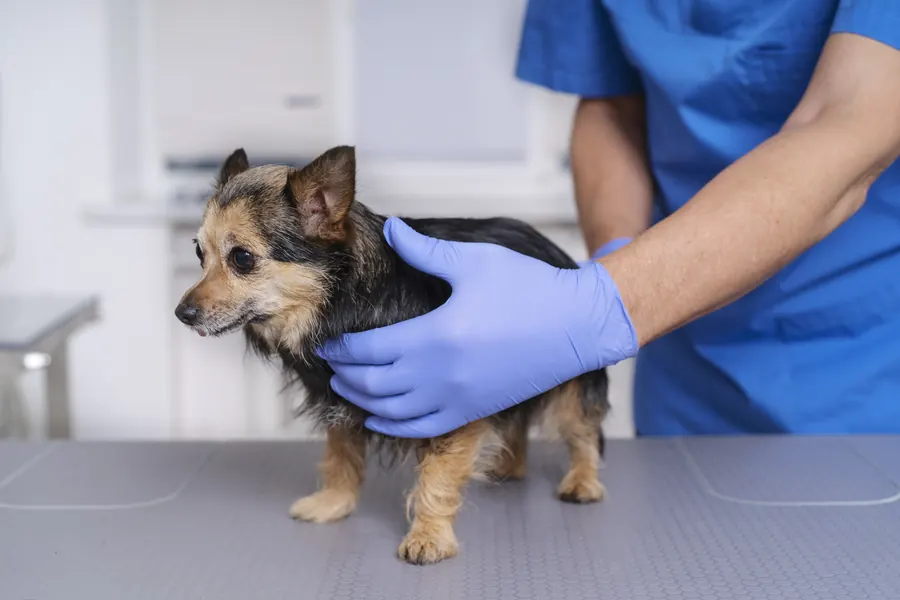
When to see a vet urgently
Contact a vet the same day for sudden joint pain, heat or swelling. Call an emergency clinic immediately for severe pain or rapidly deteriorating general condition.
- Inability to bear weight on the affected leg.
- Inability to stand unaided.
- A fresh puncture or bite wound over a joint.
- Body temperature above 40 °C.
Overview
Arthritis, synovitis and osteoarthritis
Arthritis, or joint inflammation, can result from bacterial infection. It can also result from an immune response without bacteria growing in the joint. Synovitis means inflammation of the membrane lining the joint. Inflamed joints can accumulate extra fluid. Osteoarthritis is degenerative joint disease; a previously degenerated joint can also become infected.
Bacterial arthritis most often affects one joint at a time. Sometimes several are infected, resembling immune-mediated polyarthritis. Immune-mediated polyarthritis can cause simultaneous pain on both sides of the body.
Osteoarthritis stiffness may be worse after rest and ease after some movement. Sudden lameness can also reflect a fracture or ligament injury rather than joint inflammation.
Causes
How bacteria enter joints
Penetrating injuries can introduce bacteria directly into the joint cavity. Nearby infection can spread from surrounding tissues. Bacteria can also arrive through blood from another infection site. Staphylococci are possible causes in adult dogs. Pasteurella species are possible causes in young dogs. Streptococci can also infect young dogs' joints.
Staphylococcus pseudintermedius is often isolated from infected canine joints. Some fungi can also cause arthritis if they enter a joint.
Immune reactions in joints
Immune-mediated polyarthritis involves antibody-containing immune complexes accumulating in the synovial membrane. The response brings neutrophils, inflammatory white blood cells, into the membrane. Investigations find no triggering underlying disease in the most common immune-mediated form. Reactive polyarthritis can accompany infection elsewhere, such as a urinary tract infection. Chronic intestinal disease can also accompany a multi-joint immune reaction. Cancer is another possible trigger.
Risk factors
Recent joint surgery matters when lameness or swelling develops. Joint injections can directly introduce bacteria. Osteoarthritic joints may be more susceptible to infection. Bacterial arthritis affects very young and older dogs.
Retrospective studies typically describe non-erosive immune-mediated polyarthritis onset at 2.5–4.5 years. However, it can occur at any age.
Immunosuppressive medication can increase joint infection risk. Foreign material such as a grass awn can carry bacteria into the cavity. Previously injured joints can also be more susceptible.
Typical symptoms
Bacterial arthritis can cause very sudden lameness from pain in one joint. Immune-mediated lameness can shift between limbs.
- A joint may feel warmer than surrounding areas.
- Swelling can change its outline.
- Dogs may avoid bending it.
- Getting up can become harder.
- Fever may develop.
- Appetite may decrease.
- Unusual tiredness can occur.
Wrists and hocks are common pain sites in immune-mediated polyarthritis. Around 40% of affected dogs have been described without joint swelling. Persistent bacterial infection may cause only milder lameness and swelling.
Knees and elbows can also hurt when several joints are affected. Pus over a joint can indicate bacterial infection. Some immune-mediated cases cause recurrent fever unexplained by basic investigations.
Complications and consequences
Permanent damage and recurrence
Persistent infection can damage cartilage covering joint surfaces. Delayed treatment can permanently impair limb function. Erosive immune-mediated disease can damage surfaces enough for joint collapse. Immune-mediated polyarthritis without a known trigger often responds well to medication. Signs can recur after an initial response, requiring prolonged follow-up.
In follow-up of primary immune-mediated polyarthritis, 69 of 73 dogs responded to treatment. Compatible signs later recurred in 39 of 73.
Infection can spread into adjacent bone. Range of movement can remain reduced after resolution. Of the same 73 primary immune-mediated cases, 46 remained asymptomatic after medication ended. These dogs were followed for 446–2,831 days after stopping.
Severe joint infection can also spread throughout the body and become systemic.
Diagnosis at the vet
Examining the painful joint
The vet assesses limb movement and identifies pain through palpation. Early bacterial arthritis X-rays can show increased joint fluid and surrounding soft tissue swelling. Initial appearances can be similar in bacterial and immune-mediated disease. Longstanding inflammation can also produce degenerative X-ray changes.
A needle collects fluid directly from the joint. Suspected immune-mediated polyarthritis may involve sampling at least three joints. Increased fluid neutrophils can indicate inflammation. Bacteria are sometimes visible microscopically.
Culture and blood tests
Culture checks whether bacteria grow from fluid. Susceptibility testing identifies potentially effective antibiotics. Culture can be negative in up to 50% of bacterial infections. One study found positive cultures in seven of 10 dogs with suspected bacterial arthritis. Bacterial DNA detection using 16S PCR was positive in two of 10.
Young dogs with suspected infection may also have blood cultures. Raised CRP indicates inflammation but can occur with either type of arthritis. Urinalysis can identify a triggering disease elsewhere during polyarthritis investigation.
No joint fluid white cell threshold distinguishes bacterial from other arthritis. Fluid in immune-mediated polyarthritis is often less viscous. Enrichment in a culture bottle intended for small samples can help bacteria grow even from limited fluid. Blood tests assess organ function alongside inflammation while seeking an underlying cause.
With tick exposure, blood tests can investigate tick-borne disease as part of polyarthritis assessment. Abdominal imaging may look for a triggering disease elsewhere.
Treatment
Treating bacterial infection
The vet may start antibiotics before culture results return. Treatment can change if susceptibility testing favours another medicine. Veterinary pain relief is also part of care. Antibiotic treatment is usually prolonged. Severely affected dogs may need hospitalisation and intravenous antibiotics.
Some veterinary guidelines include joint lavage for bacterial arthritis in young dogs. Evidence for lavage in young dogs with blood-borne infection is limited. Comparative information involved only five dogs. Infection after surgery or a penetrating wound may need surgical cleaning.
Some dogs need an especially prolonged antibiotic course. Lavage removes inflammatory material to minimise damage. A lavage catheter may be placed if repeated flushing is needed.
Rehabilitation can help prevent degeneration during recovery from bacterial arthritis.
Treating immune-mediated inflammation
Before immunosuppression, the vet investigates whether findings fit bacterial infection. Primary immune-mediated arthritis usually starts with corticosteroid treatment. Any identified triggering disease also needs treatment.
A second immunosuppressant may be needed alongside corticosteroids if response is inadequate. Previously raised CRP can be monitored during immune-mediated polyarthritis treatment.
Prevention
Seek immediate examination after a bite or puncture near a joint. Such wounds can introduce bacteria into deeper tissue. Contact the surgeon for worsening post-operative lameness or joint heat. Report surgical-site signs promptly because early treatment reduces destruction risk.
Keep your dog on a lead where fighting with loose dogs is possible. Small tooth punctures can close quickly and remain hidden beneath fur. After joint surgery, a collar or protective suit prevents licking and suture damage. Protection is often used for around two weeks or until suture removal, according to veterinary instructions.
Important for dog owners
Until examination, limit movement to brief on-lead toilet trips. Avoid stairs and jumping to minimise unnecessary loading. For intermittent lameness, film voluntary movement in familiar surroundings.
Monitor for returning pain or swelling after discharge and report changes. Keep exercise gentle until the vet considers greater loading appropriate.
Follow individual post-operative exercise advice because orthopaedic restrictions are patient-specific.
Frequently asked questions
Can joint inflammation occur without swelling?
Yes, particularly in immune-mediated polyarthritis. Dogs may instead seem stiff or lame on different legs at different times. Several joints may be tender on examination despite obvious lameness in only one limb.
Does joint inflammation always mean osteoarthritis?
Bacterial infection is one cause needing different investigation from osteoarthritis. An osteoarthritic joint can also become infected. Sudden heat and pain warrant prompt assessment despite existing osteoarthritis.
Can bacteria reach a joint from elsewhere?
Yes, bacteria can travel through blood from another infection site. Respiratory or urinary infections are possible starting points. Blood culture may be added for suspected joint infection, particularly in young dogs.
Does a negative culture rule out bacterial infection?
Culture can be negative despite bacterial arthritis. It is interpreted alongside symptoms and other fluid findings. Microscopy can sometimes identify bacteria during infection assessment.
When can normal exercise resume?
Keep walks short and on-lead until examination. Repeat joint fluid sampling can monitor bacterial arthritis recovery. Ask at follow-up when activity can increase and what is permitted meanwhile.
Sources
- Emergency and Critical Care: emergent conditions, Cornell University College of Veterinary Medicine, accessed 2026-11-06.
- Mitä on päivystyshoito, Helsingin yliopisto, accessed 2026-11-07.
- Immune-Mediated Polyarthritis in Dogs and Cats, Merck Veterinary Manual, accessed 2026-11-05.
- Koiran ei-erosiivinen immuunivälitteinen moniniveltulehdus – kirjallisuuskatsaus, Suomen Eläinlääkärilehti, accessed 2026-11-05.
- Description and outcome of dogs with primary immune-mediated polyarthritis: 73 cases (2012-2017), Journal of Small Animal Practice, accessed 2026-11-05.
- Internal Medicine: Medical Conditions - Joints and Arthritis, Cornell University College of Veterinary Medicine, accessed 2026-11-05.
- Septic Arthritis in Dogs and Cats (2025), Merck Veterinary Manual, accessed 2026-11-07.
- Aikuisen koiran niveltulehdus (bakterielli artriitti), Ruokavirasto, accessed 2026-11-07.
- Nuoren koiran niveltulehdus (bakterielli artriitti), Ruokavirasto, accessed 2026-11-07.
- Detection of bacterial DNA in synovial fluid in dogs with arthritis (2021), Acta Veterinaria Scandinavica, accessed 2026-11-07.
- Bite Wounds in Dogs, VCA Animal Hospitals, accessed 2026-11-07.
- Should joint lavage be performed in the treatment of juvenile canine spontaneous/haematogenous septic arthritis? (2025), Veterinary Evidence, accessed 2026-11-07.
- Observed joint infection incidence following needle arthroscopy in client-owned dogs (2026), Veterinary Surgery, accessed 2026-11-07.
- Inflammatory joint disease (arthropathy), Manchester Veterinary Specialists, accessed 2026-11-07.
- Koiran ontuminen, FirstVet, accessed 2026-11-07.
- Septic Arthritis in Dogs, VCA Animal Hospitals, accessed 2026-11-07.
- Kotihoito-ohjeet toimenpiteen jälkeen, Kuopion Eläinlääkärikeskus, accessed 2026-11-07.
- Ontumatutkimukset, Loisto Eläinlääkäri, accessed 2026-11-07.
This information does not replace a visit to a vet. In an emergency, contact your nearest emergency vet: find a vet (RCVS).
More on this topic: Bones, joints and muscles
- Atlantoaxial instability in dogs: neck pain and treatment
- Crooked front legs in puppies: angular limb deformity
- Cruciate ligament injury in dogs – a torn cranial cruciate ligament
- Hip dysplasia in dogs: symptoms, tests and treatment
- Immune-mediated polyarthritis in dogs: symptoms and care
- Tendonitis in dogs – symptoms, investigations and treatment