
Dog diseases · Nervous system
Meningitis and encephalitis in dogs – symptoms and treatment
Meningitis is inflammation of the membranes surrounding the brain and spinal cord. Encephalitis affects the brain tissue itself. When both occur together, the condition is called meningoencephalitis. The cause may be an infectious organism or abnormal activity of the dog's own immune system. Treatment is selected according to the cause.
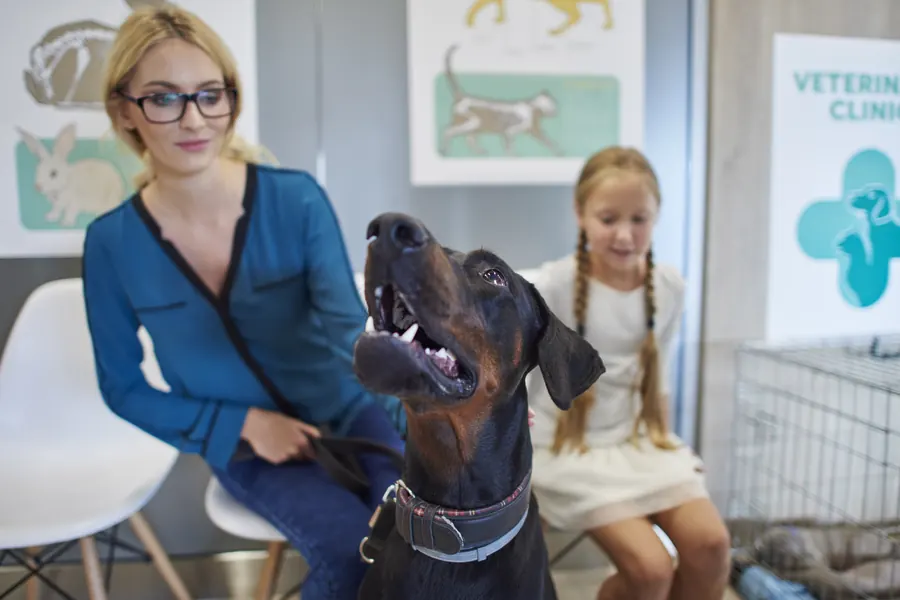
When to see a vet urgently
Severe neck pain and progressive neurological signs require prompt veterinary assessment. Urgent examination is particularly needed if:
- Your dog has a seizure or repeated seizures.
- Your dog is very subdued, confused or becomes less conscious.
- Fever occurs with a stiff, painful neck or marked sensitivity to touch.
- Your dog loses vision, wobbles severely or cannot stand.
- Previously treated encephalitis signs return or new neurological signs develop.
Inflammation of brain tissue can progress to coma. You can find a vet near you for urgent help.
Overview
The location of inflammation affects the signs
The meninges surround both the brain and spinal cord. Inflammation confined to these membranes often causes fever, pain and neck stiffness. With inflammation of brain tissue, behavioural changes, visual problems or seizures may occur as well. If inflammation also extends into the spinal cord, it is called meningoencephalomyelitis.
MUO refers to a group of central nervous system inflammatory diseases of unknown origin, presumed to be immune-mediated. Tissue examination can distinguish forms including granulomatous meningoencephalitis, or GME, and necrotising inflammation.
Signs may develop over a few hours or several weeks. Without treatment, they generally worsen over time. Investigating the cause is therefore important even when the onset appears fairly mild.
Signs suggesting meningeal inflammation may appear before more obvious brain tissue dysfunction.
Causes
Immune-mediated disease
In immune-mediated inflammation, the body's defences mistakenly target its own tissue. The exact initial trigger for MUO is unknown. Individual genetic susceptibility and possible environmental factors are suspected. MUO itself does not spread to another dog or person.
Steroid-responsive meningitis-arteritis, or SRMA, is a separate immune-mediated inflammation of the meninges and blood vessels. Severe neck pain and fever often predominate without the typical signs of brain tissue disease. It is therefore not automatically considered the same disease as MUO affecting the brain.
Infection-related inflammation
Bacteria, viruses, fungi and protozoa can cause central nervous system inflammation. Infection may spread to the central nervous system from an ear, the sinuses, the vertebral region or through an injury. Organisms can also travel in the bloodstream. Important infectious causes in dogs include distemper virus and the protozoa Toxoplasma and Neospora. The occurrence of different infectious agents depends on geography.
Risk factors
MUO often occurs in young and middle-aged small dogs. It is nevertheless possible in a dog of any age or breed. GME is most often diagnosed at around 4–8 years of age. Necrotising encephalitis is often diagnosed before 4 years of age.
Several immune-mediated forms of brain inflammation are recognised in Chihuahuas. Necrotising meningoencephalitis occurs in breeds including Pugs, Maltese and Chihuahuas. SRMA is more typical of young medium-sized and large dogs. It is among the recognised immune-mediated diseases in Nova Scotia Duck Tolling Retrievers.
Infectious meningitis can occur at any age and in any breed. Breed or age alone therefore does not determine the cause of inflammation.
In a 2026 MUO comparison, the threshold for the older group was 8 years. This group contained 71 dogs. The younger comparison group contained 142 dogs.
A 2019 health survey of Nova Scotia Duck Tolling Retrievers from northern Europe included around 350 dogs. SRMA was reported in 2.5% of dogs in the survey. This is a breed-specific owner survey finding, rather than the prevalence of meningoencephalitis in all dogs.
SRMA in Nova Scotia Duck Tolling Retrievers most often starts at around 6–24 months of age. It can also develop earlier or later.
Typical symptoms
Signs depend on which central nervous system regions are inflamed. Possible changes include:
- Neck stiffness and pain when moving the head.
- Fever and unusual sensitivity to touch.
- Loss of appetite and weakness.
- Being quieter than usual or another behavioural change.
- Wobbling, falling or a head tilt.
- Reduced vision or blindness in one or both eyes.
- Circling and repeated abnormal movements.
- Seizures.
Brainstem or cerebellar inflammation can cause limb weakness and cranial nerve dysfunction. Pain from meningitis alone can resemble disc disease or polyarthritis, for example. The cause of neck pain therefore cannot be reliably judged from its outward appearance.
Severe neck pain can also make eating and drinking difficult.
Complications and consequences
A serious early stage and later relapse
Some dogs with MUO die within the first few weeks despite starting appropriate treatment. Many dogs nevertheless show marked improvement, and some recover completely in clinical terms. The severity of initial neurological disability is associated with prognosis.
In the 2026 comparison, older dogs with MUO had a median survival time of 16 months. The younger group's median was 24 months. No statistically significant survival difference was found between groups. Older age therefore did not automatically mean a poorer outcome.
During relapse follow-up, 65.0% of the 103 younger dogs developed another episode. In the older group, relapse occurred in 41.7% of 48 dogs. The difference in relapse was not statistically significant either.
MUO can relapse during treatment or after it ends. Relapse often occurs within 6–18 months of starting treatment but is possible at other times. New signs may differ from the original ones if inflammation develops in another part of the nervous system.
Diagnosis at the vet
Investigations assess inflammation and its cause
Your vet examines your dog's general condition and uses neurological tests to locate the central nervous system disturbance. Eye examination may also provide information about inflammatory changes. A blood count, serum biochemistry and urine sample help assess other aspects of health and alternative causes of similar signs.
Vaccination records are relevant particularly when assessing viral infections. Infection tests are targeted according to the dog's background and possible exposures. Infectious and immune-mediated inflammation cannot be reliably distinguished by signs alone.
Neurological disability can be assessed using the neurodisability scale, or NDS. The scale helps with initial prognosis and monitoring changes during treatment.
MRI and cerebrospinal fluid sampling
MRI shows changes consistent with inflammation in the brain or spinal cord. A lesion may be confined to one location or involve wider areas. A clinical MUO diagnosis usually rests on combined assessment of imaging, signs and cerebrospinal fluid.
Cerebrospinal fluid, or CSF, surrounds the brain and spinal cord. A sample is usually collected under anaesthesia at the time of MRI. In inflammation, it may contain more white blood cells and protein than usual. Some affected dogs nevertheless have a normal sample. It can also be examined for bacteria, fungi or other infectious agents.
The precise tissue type of inflammatory disease would be confirmed through a brain or spinal cord tissue sample. Brain biopsy is, however, invasive and carries a risk of permanent damage. Many diagnoses are therefore clinically probable without a confirmed tissue type.
Treatment
Treatment depends on the cause
Your vet prescribes treatment according to the cause of inflammation and your dog's neurological condition. A severely ill dog often needs hospital care. Supportive care may include fluids, pain relief and management of brain swelling. Antiseizure medicines are used where needed to control seizures.
For bacterial infection, antimicrobial treatment suitable for the central nervous system is selected. Culture and susceptibility testing may guide antibiotic choice. Protozoal and fungal diseases require treatment directed at the organism. Not every viral inflammation can be cured with medication, but supportive care can help the dog.
Supportive care may include nutritional support if an affected dog cannot eat enough independently. Individual physiotherapy can also support recovery of function.
Controlling immune-mediated inflammation
In MUO, medication suppressing the immune system is the foundation of treatment. Glucocorticoids may be used alone or with another medicine that moderates the immune response. Adding a second medicine has not been definitively shown to be better in every case. Treatment is adjusted according to the dog's response and adverse effects.
Glucocorticoids are not an automatic treatment for infectious encephalitis. Life-threatening brain swelling may nevertheless require exceptional decisions in specialist care. This is one reason not to start medication at home using another dog's old instructions.
Monitoring response and adverse effects
Dogs undergo repeat neurological examinations during treatment. Corticosteroids can increase drinking, urination and appetite. They can also increase susceptibility to infection. Monitoring therefore distinguishes changes in disease signs from possible adverse drug effects.
In a 2026 MUO follow-up study, repeat imaging of 35 dogs helped identify active inflammation. A normal follow-up MRI did not reliably predict freedom from later relapse. Clinical monitoring therefore continues after a good imaging result as well.
The volume of inflammatory lesions on follow-up images can decrease after treatment and increase again when signs recur. A reduction in imaging changes alone therefore does not determine when medication can stop without clinical assessment.
Prevention
The cause of MUO is unknown, so no single measure can reliably prevent it. Some Chihuahua breeding guidelines exclude a dog affected by immune-mediated encephalitis even if medication removes the signs.
Appropriate vaccination forms part of preventing infectious diseases such as distemper. Vaccination against that infection is nevertheless not specific prevention of MUO. Further information about routine vaccines is available on dog vaccinations. Treating an ear or other local infection is important because infection can spread to the central nervous system. Long-term follow-up forms part of managing MUO relapse risk.
Important for dog owners
Record changes in walking, vision, alertness and behaviour, as well as any seizures. Avoid unnecessary bending of the head and neck when neck pain is present. Keep medication and follow-up instructions readily available and follow the individual plan.
Your dog's signs can return during treatment as well. A neurological sign different from previous ones may also mean relapse. Report both new signs and unusually severe adverse drug effects to the treating vet. Increased drinking and urination can be associated with corticosteroids.
MUO does not spread to other pets or people. In infectious disease, transmission risk and protection of other animals are assessed according to the identified organism. As well as the disease name, keep a record of whether the inflammation is considered infectious or immune-mediated.
Frequently asked questions
Can a dog's meningitis spread to a person or another dog?
Transmission risk depends on the cause of inflammation. MUO is presumed to be immune-mediated and does not spread to people or other dogs. In infectious disease, the organism is investigated separately and treatment targets it. The word meningitis alone therefore does not determine which protective measures are needed at home.
Why are both MRI and a CSF sample needed?
MRI shows where nervous tissue has changes consistent with inflammation. Cerebrospinal fluid is examined for inflammatory cells, protein and infectious agents where needed. Results are assessed alongside clinical signs, and an affected dog can have an individual normal CSF sample.
Can an older dog have immune-mediated encephalitis?
MUO is possible in an elderly dog as well. In the 2026 comparison, median survival was 16 months in older dogs and 24 months in younger dogs. The difference was not statistically significant. Age therefore does not determine an individual dog's prognosis without assessment of neurological condition and test results.
Can signs return after a good recovery?
MUO can relapse during treatment or after it ends. Signs often return within 6–18 months of starting treatment, but can do so earlier or later. A new site of inflammation can cause a sign different from the original one. Monitoring therefore considers the dog's overall neurological function.
Is every form of encephalitis treated with corticosteroids?
Medication suppressing the immune response is the foundation of MUO treatment. In infectious inflammation, however, glucocorticoids are generally contraindicated. Situations such as life-threatening brain swelling may be exceptions. Appropriate treatment is therefore determined using investigations and the dog's clinical condition.
Sources
- Meningitis, Encephalitis, and Encephalomyelitis in Animals, Merck Veterinary Manual, accessed 2026-11-07.
- Clinical presentation, prognostic factors, and outcomes of meningoencephalitis of unknown origin in older dogs (2026), Journal of Veterinary Internal Medicine / University of Liverpool, accessed 2026-11-07.
- Cerebrospinal fluid markers and magnetic resonance imaging lesion volume predicting relapse in canine meningoencephalitis of unknown origin (2026), Frontiers in Veterinary Science, accessed 2026-11-07.
- Mitä on päivystyshoito, Helsingin yliopisto, accessed 2026-11-07.
- Neurologia eli hermoston sairaudet, Helsingin yliopisto, accessed 2026-11-07.
- Inflammatory brain disease in dogs: Meningoencephalitis of Unknown Origin (MUO), University of Liverpool, accessed 2026-11-07.
- Meningitis in Dogs, VCA Animal Hospitals, accessed 2026-11-07.
- Tollerilla esiintyviä sairauksia, Novascotiannoutajat ry, accessed 2026-11-07.
- Chihuahua: Jalostuksen tavoiteohjelma 2023–2027, Chihuahua ry, accessed 2026-11-07.
- Penikkatauti, Ruokavirasto, accessed 2026-11-07.
This information does not replace a visit to a vet. In an emergency, contact your nearest emergency vet: find a vet (RCVS).
More on this topic: Nervous system
- Peripheral nerve disease in dogs – neuropathy and weakness
- Stroke in dogs – symptoms, diagnosis and treatment
- Brain tumours in dogs: symptoms, tests and treatment
- Ataxia in dogs – causes of wobbling and loss of coordination
- Cauda equina syndrome in dogs: back pain and treatment
- Degenerative myelopathy in dogs: symptoms and care