
Newfoundland:
a mighty and kind giant

Newfoundland:
a mighty
and kind giant
and kind giant

This is one of the largest and gentlest dog breeds. These massive, powerful dogs are known for their calm nature, devotion to their family and impressive rescue instincts. Newfoundlands are often called 'teddy bears' and are famous for their strength and ability to work in water. They are excellent for families with children and for people who can give them enough exercise and attention. Despite their imposing size, they are truly gentle and caring companions.
Newfoundland —
The Newfoundland comes from the Canadian island of the same name. Local fishermen used these dogs as working dogs: they rescued people from the water, hauled nets and pulled loads. Their build and superb swimming ability made them invaluable helpers, and for centuries Newfoundlands have saved lives as water rescue dogs. In Britain the breed became popular in the 19th century, and the Newfoundland Club was founded in 1886; today these dogs are loved both as working dogs and as family pets.
Breed history


The Newfoundland comes from the Canadian island of the same name. Local fishermen used these dogs as working dogs: they rescued people from the water, hauled nets and pulled loads. Their build and superb swimming ability made them invaluable helpers, and for centuries Newfoundlands have
saved lives as water rescue dogs. In Britain the breed became popular in the 19th century,
and the Newfoundland Club was founded in 1886; today these dogs are loved both as working dogs and as family pets.
saved lives as water rescue dogs. In Britain the breed became popular in the 19th century,
and the Newfoundland Club was founded in 1886; today these dogs are loved both as working dogs and as family pets.

Breed history

Appearance
Newfoundlands are giant dogs. Height at the withers is 66–71 cm and weight from about 50 to 69 kg. They have a strong, muscular body covered with a dense, water-resistant coat. The coat is double: the outer coat is coarse and straight, and the undercoat soft and dense, which keeps the dog warm when working in water. Colours are black, brown, grey and the black-and-white Landseer, named after the English painter Sir Edwin Landseer. Newfoundlands have a broad head, small deep-set eyes and an expression that combines gentleness and dignity. The broad tail is usually carried low but may be raised when the dog is active.

Newfoundlands are giant dogs. Height at the withers is 66–71 cm and weight from about 50 to 69 kg. They have a strong, muscular body covered with a dense, water-resistant coat. The coat is double: the outer coat is coarse and straight, and the undercoat soft and dense, which keeps the dog warm when working in water. Colours are black, brown, grey and the black-and-white Landseer, named after the English painter Sir Edwin Landseer.
Newfoundlands have a broad head, small deep-set eyes and an expression that combines gentleness and dignity. The broad tail is usually carried low but may be raised when the dog is active.
Appearance

Character and behaviour
The Newfoundland is a gentle giant with a balanced, calm nature. These dogs are known for their patience and kindness, especially towards children. They are very loyal to their owners and get on well with other animals, which makes them ideal family dogs.
For their size, Newfoundlands are generally peaceful and patient, which is why they are known as natural 'nanny dogs'. Like all large breeds, though, they need good training so that their size and strength do not cause problems. Newfoundlands also have exceptional rescue instincts: they work easily in water and help people in difficulty, and they are still used in water rescue.

The Newfoundland is a gentle giant with a balanced, calm nature. These dogs are known for their patience and kindness, especially towards children. They are very loyal to their owners and get on well with other animals, which makes them ideal family dogs.
For their size, Newfoundlands are generally peaceful and patient, which is why they are known as natural 'nanny dogs'. Like all large breeds, though, they need good training so that their size and strength do
not cause problems. Newfoundlands also have exceptional rescue instincts: they work easily in water and help people in difficulty, and they are still used in water rescue.
not cause problems. Newfoundlands also have exceptional rescue instincts: they work easily in water and help people in difficulty, and they are still used in water rescue.
Character and behaviour


Care and grooming
Caring for a Newfoundland takes some effort, especially because of its thick coat. These dogs shed heavily, particularly during the moult, and need brushing two or three times a week. Make sure the coat does not mat, especially behind the ears and under the legs. Newfoundlands also drool a lot. Bath them when needed, but not too often, so as not to damage the coat's natural protection. Like many giant breeds, they can be prone to hip and elbow dysplasia and heart problems.
Newfoundlands are active dogs and need enough exercise. Walks and swimming are the best ways to keep them fit. These dogs love water, and most of them enjoy swimming, which makes them ideal pets for people who live near lakes, rivers or the sea.
Caring for a Newfoundland takes some effort, especially because of its thick coat. These dogs shed heavily, particularly during the moult, and need brushing two or three times a week. Make sure the coat does not mat, especially behind the ears and under the legs. Newfoundlands
also drool a lot. Bath them when needed, but not too often, so as not to damage the coat's natural protection. Like many giant breeds, they can be prone to hip and elbow dysplasia and heart problems.
also drool a lot. Bath them when needed, but not too often, so as not to damage the coat's natural protection. Like many giant breeds, they can be prone to hip and elbow dysplasia and heart problems.
Newfoundlands are active dogs and need enough exercise. Walks and swimming are the best ways to keep them fit. These dogs love water, and most of them enjoy swimming, which makes them ideal pets for people who live near lakes, rivers or the sea.
Care and grooming

Pros and cons of the breed
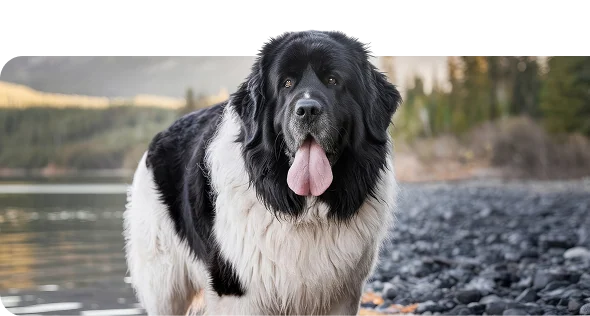
+Pros
Friendly and good with families.
These dogs are known for their kindness and patience. They are calm and careful with children, which makes them excellent family dogs and companions.
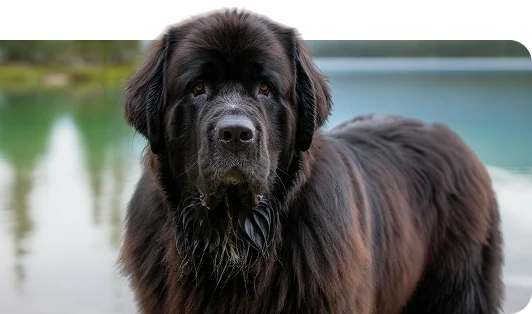
−Cons
They need grooming.
Their thick, long coat needs regular care, brushing and cleaning to prevent mats and keep the skin healthy.

Newfoundland —
Despite its impressive size, this is a dog with a calm, balanced character and a wonderful friend for the whole family. It suits people looking for a loyal, reliable and caring pet. To keep a Newfoundland happy and healthy, though, it is important to look after its care, exercise and health properly.

Tools