
Dog diseases · Skin and coat
Burns in dogs: first aid, symptoms and treatment
A burn is skin damage caused by heat, a corrosive chemical, electricity or radiation. Fur can hide the injury, and the extent of deeper damage may become clear only later. Contact your vet after any burn, regardless of size.
When to see a vet urgently
A burn needs veterinary assessment even if it looks small.
- Breathing difficulty or a changed, hoarse voice after fire exposure can indicate airway injury.
- Severe pain requires an emergency assessment.
- Rapid deterioration in general condition warrants immediate help.
- Seek emergency care immediately if your dog cannot remain standing.
- Breathing difficulty after chewing an electrical cable can result from pulmonary oedema.
Do not delay departure for care to cool an unstable dog or one that has inhaled smoke at home.
Overview
Burn severity depends on both depth and the proportion of skin affected. A superficial burn damages only the outermost layer, the epidermis. A partial-thickness injury extends through the epidermis into the dermis. A full-thickness burn can also damage subcutaneous tissues.
A burn deeper than superficial sunburn affecting over 20% of body surface area is classified as severe. Extensive burns can cause systemic disturbances of circulation, breathing and metabolism. Little pain does not indicate a mild injury, as a deep burn can destroy nerve endings.
Causes
Hot surfaces, liquids and electricity
Flames, hot liquids, steam or hot surfaces can cause thermal burns. Sun-heated tarmac can burn a dog's pads. A heating pad, dryer or hot cooker can also damage skin. Friction from a rope or carpet, for example, can injure the skin.
In electrical injury, current can disrupt the body's electrical activity and heat tissues. Chewing electrical cables is the most common cause in small animals.
Corrosive substances and progressing damage
Acids and alkalis can cause chemical burns. A liquid chemical may remain in the coat and contact skin for a prolonged period. In the most severely affected centre of a thermal burn, damage is irreversible. In the surrounding zone, blood vessel obstruction can impair circulation and worsen injury. The outermost zone has increased circulation and a better capacity to recover.
Risk factors
An anaesthetised, sedated or otherwise immobile dog may be unable to move away from a burning heat source. Water or other fluid between a heating pad and patient increases heat conduction. Direct skin contact with a heat source increases danger. Prolonged immobility on the same heating pad is a risk situation.
A thin coat, thin skin or clipping can increase direct contact with the heat source. Faulty or poorly maintained heating equipment can also cause burns. Cable-chewing electrical injuries occur particularly in animals under 2 years old.
A dog restrained during grooming may be unable to escape a hot dryer.
Typical symptoms
Prolonged contact with a warm surface can leave the coat looking normal while the skin underneath is red. Skin covering deeper damage may die later, causing the initial assessment to underestimate severity.
- Skin becomes red and tender.
- The burned area swells or leaks fluid.
- Hair is singed or skin darkens.
- Your dog protects the painful area and avoids touch.
- With a deep burn, skin turns white, red or black.
- A deep burn may form a dry, leathery eschar of dead tissue.
Fluid can mat the coat and be the first visible sign of a hidden injury. Blisters occur less often with partial-thickness burns in dogs than in people. A heating-pad burn may become visible only after 5–10 days.
Licking a chemical can cause drooling and mouth pain.
Complications and consequences
Extensive burns cause fluid loss through the skin, which can impair circulation. Burn shock may develop 24–48 hours after a substantial deep burn. Blood protein levels may also fall in severe injury. Deep burns are susceptible to infection.
A deep burn can leave permanent scarring or tissue loss. Scar contraction near a joint may restrict movement. Fire-related airway injury can occur without obvious external burns. Delayed obstruction risk from airway swelling can persist for at least 24–48 hours.
A severe burn involving at least 30% of body surface area can cause a systemic inflammatory response.
Diagnosis at the vet
Depth and extent
Your vet asks about the cause and sequence of events if known. Breathing, circulation and possible shock are assessed first. Both burn depth and the affected proportion of body surface area are estimated. Human surface-area charts may be inaccurate in dogs because of differences in body size and shape.
A dense coat can make depth and extent harder to assess. In unclear cases, a skin biopsy can help determine tissue damage depth and possible infection. Other causes of skin necrosis or vasculitis can resemble a heating-pad burn.
Blood tests and airway assessment
Severe burns often require a blood count, organ values and electrolytes. Blood samples can also assess protein levels. Blood pressure monitoring helps identify the effects of fluid loss. If infection is suspected, culture and susceptibility testing help select an effective antibiotic.
After smoke inhalation, lung X-ray changes may not appear until 24–36 hours later. An initially normal X-ray does not exclude significant airway injury. A conventional oxygen saturation monitor can give unreliable readings in carbon monoxide poisoning.
If eyelashes or fur around the eyes are burned, the corneas and other eye structures are also checked for damage.
Treatment
Cooling and rinsing away chemicals
Move your dog away from the burning substance or heat source if safe. Cool a thermal burn under cool running water for at least 20 minutes. Start as soon as possible; cooling may still help within 3 hours of injury. Do not apply ice or iced water. Keep the rest of the body warm to prevent chilling during cooling.
If safe, rinse a chemical from skin under running water for at least 15 minutes before transport. The person helping wears gloves and protects their eyes from corrosive material. Safely remove loose powder from the coat before rinsing. Do not direct water at the face or mouth because of the risk of choking.
Pain relief, fluids and wound protection
Your vet chooses care according to burn severity and your dog's general condition. A severe burn may require hospitalisation to correct fluid and electrolyte disturbances. Intravenous fluids replace fluid lost through damaged skin. Substantial fluid or protein loss sometimes requires blood or plasma transfusion. Pain is treated immediately, with medication adjusted during recovery as needed.
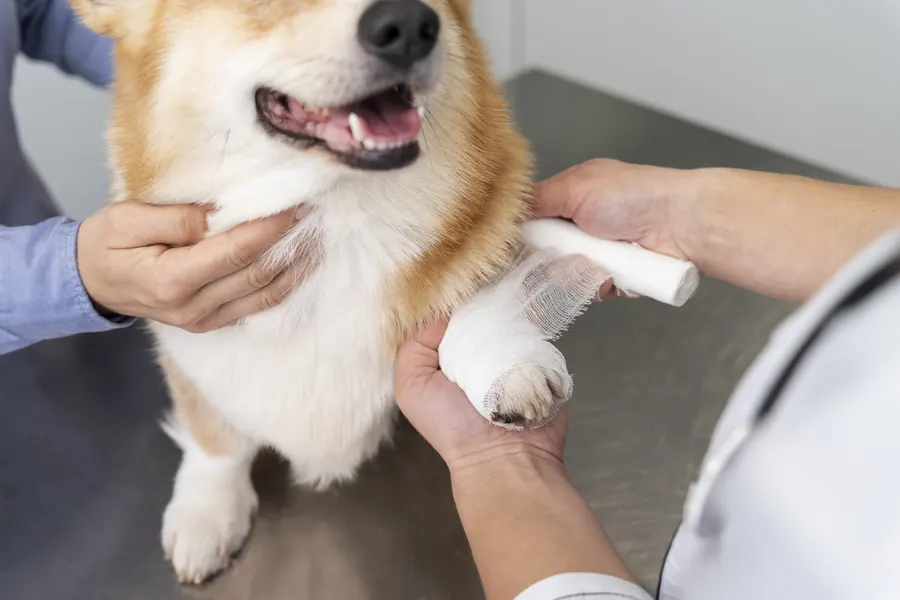
A prescribed topical antimicrobial and non-adherent dressing may be selected. Silver sulfadiazine is one topical medicine used for burns. Dressing changes are performed cleanly to avoid introducing bacteria. The topical product may change according to the healing stage.
Routine preventive systemic antibiotics are not recommended because they do not prevent burn infections and can select resistant bacteria. Confirmed local or systemic infection may require an antibiotic selected using culture results.
Cleaning and dressing changes can cause severe pain even when brief. Nerve ending damage may also cause persistent pain after the skin heals.
Pain from a superficial burn usually decreases within 2–3 days.
Removing dead tissue and recovery
Dead tissue may be surgically removed to allow healing. An extensive or deep burn can need repeated debridement procedures. A skin flap or graft may be used for closure.
A superficial burn usually heals within 3–5 days without scarring. A superficial partial-thickness injury may heal within 1–2 weeks with minimal scarring. A deeper partial-thickness injury may need surgery and take 2–3 weeks to treat. Recovery from a full-thickness burn can take months.
Adequate nutrition meets the increased energy and protein requirements of a severe burn. If your dog cannot eat independently, assisted feeding or a feeding tube may be needed. An immobile dog is repositioned, for example every 4 hours, to prevent pressure sores.
An example of prolonged healing after deep injury
Suspected MRI-associated burns were described in a series of 5 dogs. Skin injuries were noticed 1–12 days after imaging. New epithelium formed over a superficial partial-thickness injury within 14 days. Deep injuries healed in 45–58 days in 3 dogs followed up, averaging 53 days. All 5 dogs survived to discharge. Hospitalisation lasted 11–80 days, with a median of 13 days. In 3 dogs, deep elbow-region wounds were associated with scar contraction and reduced joint movement.
Prevention
Avoid long walks on hot tarmac in sunny weather. Repeatedly check the temperature of heating pads, hot-water bottles and other warmers if your dog cannot move away independently. A barrier or sufficient distance from the heat source can reduce direct skin contact.
Do not use damaged heating equipment, and maintain it according to the manufacturer's instructions. Microwave-heated pads or other aids can develop excessively hot spots. Keeping electrical cables out of reach reduces chewing-related electrical injury risk.
Important for dog owners
Tell your vet what substance or hot object your dog contacted and when exposure occurred. Mention smoke exposure even without visible burned patches in the coat. Do not apply creams to a fresh burn before veterinary advice.
Monitor skin over the following days because damage may become visible after a delay. Keep other areas warm while cooling a local burn. Attend follow-ups as arranged because deep burns may require repeated surgery and prolonged wound care.
Prevent licking of chemically exposed skin, using a collar if needed, to avoid mouth burns.
Frequently asked questions
How long should I cool my dog's burn?
Cool a thermal burn under cool running water for at least 20 minutes as soon as possible after injury. Cooling may still help within 3 hours. However, an unstable dog or one that has inhaled smoke needs prompt veterinary transport.
Why can a burn appear several days later?
Deeper damage is not always immediately visible because overlying skin dies after a delay. A heating-pad injury may appear after 5–10 days. Fur can also hide injury and make its extent difficult to assess.
Is a painless burn mild?
A full-thickness burn may be less painful because nerve endings have been destroyed. It may nevertheless need dead tissue removal and a skin graft. Severity is assessed from depth and extent.
Can I use a human burn cream?
Do not apply creams or ointments to a fresh burn on your own initiative. After examination, your vet selects topical products and dressings suited to the healing stage. Product choice may change as healing progresses because different stages need different care.
How long does a deep burn take to heal?
Treatment of a full-thickness burn may take months. It can require repeated debridement and surgical closure. The outlook depends partly on the total affected area and your dog's general health. During recovery, your dog needs enough energy for tissue healing.
Sources
- Mitä on päivystyshoito, Helsingin yliopisto, accessed 2026-11-07.
- Initial Wound Management in Small Animals, MSD Veterinary Manual, accessed 2026-11-07.
- Tunnista riskit ja vietä turvallinen kesä koiran kanssa, Suomen Kennelliitto, accessed 2026-11-07.
- Burns in Dogs & Cats: Diagnosis, Evaluation, & Treatment, Clinician’s Brief, accessed 2026-11-07.
- Burns in Dogs, VCA Animal Hospitals, accessed 2026-11-07.
- Preventing Thermal Burns in Small Animal Practice, Veterinary Defence Society, accessed 2026-11-07.
- Smoke Inhalation Injury in Animals, Merck Veterinary Manual, accessed 2026-11-07.
- RECOVER Guidelines: First Aid for Dogs and Cats. Clinical Guidelines, sections 3.5–3.6, Journal of Veterinary Emergency and Critical Care / RECOVER, accessed 2026-11-07.
- First aid for burns, PDSA, accessed 2026-11-07.
- Lightning Strike and Electrical Injury in Animals, Merck Veterinary Manual, accessed 2026-11-07.
- Suspected MRI associated burn injuries in dogs, Frontiers in Veterinary Science, accessed 2026-11-07.
- Biology and Diseases of Dogs, Laboratory Animal Medicine / Elsevier, accessed 2026-11-07.
- RECOVER Guidelines: First Aid in Dogs and Cats. Evidence and Knowledge Gap Analysis With Treatment Recommendations, Journal of Veterinary Emergency and Critical Care / RECOVER, accessed 2026-11-07.
This information does not replace a visit to a vet. In an emergency, contact your nearest emergency vet: find a vet (RCVS).
More on this topic: Skin and coat
- Acne in dogs: chin spots and treatment
- Alopecia X and seasonal flank alopecia in dogs
- Paw pad injuries in dogs: first aid and wound care
- Atopic dermatitis in dogs: itching, tests and long-term care
- Demodectic mange in dogs: Demodex mites and skin disease
- Fibrosarcoma in dogs: symptoms, diagnosis and treatment