
Dog diseases · Skin and coat
Dandruff in dogs: causes and treatment
Dandruff consists of dead surface skin cells being shed. Excessive scaling may be associated with dryness, parasites or skin disease. Accompanying itching, hair loss or a change in general condition warrants veterinary investigation of the cause.
When to see a vet urgently
Arrange an appointment if scaling accompanies severe itching, pain, redness or extensive dermatitis.
- Severe pain requires an emergency assessment.
- Rapid deterioration in general condition warrants immediate contact with an emergency vet.
- Seek emergency care if your dog cannot remain standing.
- A body temperature over 40°C needs urgent veterinary assessment.
- Breathing difficulty requires immediate help.
Overview
Surface skin cells normally shed in pieces too small to see with the naked eye. Dandruff becomes visible when more cells from the horny layer accumulate or larger fragments detach. The outermost canine skin layer renews in about 20 days. Visible scale can be fine or form large sheets attached to the skin.
Scaling is a response to various disturbances, so appearance does not directly reveal the cause. Seborrhoea means abnormal skin keratinisation that may involve both scaling and greasiness. In most dogs with seborrhoea, scaling results from another disease.
Causes
Dry skin, nutrition and inflammation
Dry winter air indoors and outdoors in cold climates can increase skin dryness and scaling. Excessive washing or unsuitable shampoo can irritate the surface. Deficiencies of fatty acids, protein or certain vitamins can cause scaling.
Inflammation associated with allergic skin disease can disrupt normal cell renewal. Bacterial infection, yeast overgrowth or ringworm can also cause scaly lesions. Cheyletiella and Demodex mites are possible parasitic causes.
Normal shedding is disrupted in dry skin if insufficient water is available for enzymes that break down connections between cells. Breakdown of the lipids or junctions joining skin cells can increase scale formation. Not every nutrient-responsive skin disease results from deficiency of that nutrient.
Hormones and other skin diseases
Hypothyroidism and Cushing's disease can alter skin function and cause scaling. In primary seborrhoea, cell renewal is abnormally rapid. In Golden Retriever ichthyosis, surface cells fail to shed normally, instead detaching as larger flakes or sheets. Sebaceous adenitis destroys sebaceous glands and can cause scaling and hair loss.
A keratinisation disorder can cause local waxy or greasy scale along ear flap margins. The precise cause of this ear margin condition is unknown.
Cutaneous lymphoma is another possible cause of scaly lesions.
Risk factors
Secondary scaling can affect any breed. A dry environment and frequent washing are common predisposing factors. Obesity or musculoskeletal disease may hinder self-grooming.
Inherited primary seborrhoea usually begins before 18–24 months of age. Signs may appear before 1 year. Affected breeds include American Cocker Spaniels, English Springer Spaniels and Basset Hounds. Seborrhoea beginning before 5 years is more likely to have an allergic cause than later-onset disease. Hormonal causes are investigated more readily when it begins in middle-aged or older dogs.
Typical symptoms
Scale may be white, yellowish or brown, loose or attached to the skin. Seborrhoea can be dry, greasy or a mixture of both.
- Flakes are visible in the coat or on bedding.
- Hair looks dry, dull or thinned.
- Skin or coat feels greasy.
- Skin may be red or crusted.
- Your dog scratches, licks or rubs itchy areas.
- An unusual skin odour may develop.
A waxy cast of scale may form around and adhere to a hair. Cheyletiella infestation can cause head and back scaling with itching, particularly in puppies. An adult dog with the same infestation may show no symptoms.
Ringworm may cause round bald, scaly patches and broken hairs. In ear margin keratinisation disorders, waxy scale can surround easily detached hairs. Severe ear margin lesions can involve inflammation and fissures.
Complications and consequences
Abnormal keratinisation can create conditions favourable for bacterial and yeast growth. Scratching and other self-trauma increase secondary infection risk. Infection can intensify itching and increase crusting, hair loss and scaling. Persistent irritation may cause skin darkening.
Cheyletiella can also cause temporary itching and bumps in people after skin contact. Ringworm can spread from dogs to people and other animals. The outlook for scaling is better when its underlying disease is identified and treated.
Prolonged itching can thicken the skin. Greasy, waxy scale can mat the coat.
Diagnosis at the vet
History and skin examination
Your vet asks about age at onset, itching severity, previous topical treatments and living conditions. Diet and other general symptoms help guide investigation. Skin examination records scale distribution, hair loss, greasiness, odour and surface texture.
Lethargy, weight gain and symmetrical hair loss may prompt hypothyroidism investigations. Increased thirst, urination and muscle weakness may instead be associated with Cushing's disease. Pustules and spots can indicate secondary bacterial infection.
Parasites, microbes and biopsy
Scrapings, tape samples or coat combing can look for external parasites. Cytology can detect bacteria and Malassezia yeast. Fungal or bacterial culture is used if needed to investigate infection. Cheyletiella is not always visible in samples, so your vet may consider a treatment trial.
Blood and urine tests can reveal changes suggesting internal disease. Specific thyroid or adrenal function tests are performed if needed. A biopsy can help identify ichthyosis or sebaceous adenitis. Primary seborrhoea is diagnosed only after other possible causes are excluded.
For suspected food allergy, your vet may plan a 4–12-week elimination diet followed by a challenge. Eight weeks may be needed to identify over 90% of food-allergic dogs.
Blackheads, or comedones, and pustules help distinguish underlying causes. A biopsy can show seborrhoea but cannot alone distinguish primary from secondary forms. Golden Retriever ichthyosis can sometimes be confirmed by a disease-specific genetic test without skin biopsy.
Treatment
Treating the cause of scaling
Your vet chooses treatment according to the identified cause and skin condition. Mild dry-skin scaling can be treated with a gentle moisturising dog shampoo and leave-on conditioner. Confirmed yeast infection is treated with effective topical care or antifungal medication if needed. Topical antimicrobial treatment is first-line care for superficial bacterial infection. For Cheyletiella infestation, your vet plans parasite treatment for other household pets too.
Scaling caused by hormonal disease needs treatment of that condition. Inherited primary seborrhoea may require long-term symptomatic skin care. Golden Retriever ichthyosis is lifelong and has no known cure.
Medicated shampoos and moisturising
Shampoo choice depends on whether skin is dry, greasy, scaly or infected. Keratolytic ingredients remove excess dead surface cells. Keratinisation-regulating ingredients help reduce new scale formation. These products may contain sulphur or salicylic acid, for example.
Scale-removing treatment may initially increase visible flakes during the first 14 days. This happens because detached flakes remain in the coat. Emollient conditioners reduce water loss from skin. A moisture-binding product can be used after washing or sprayed onto skin as your vet advises.
Comb the coat before medicated washing to remove loose hair and undercoat. Rinse shampoo thoroughly after its prescribed contact time. Dry the coat afterwards so moisture does not remain against skin for a prolonged period.
Mild ear margin keratinisation disorders do not always need active medication.
Nutrition and monitoring
A dietary deficiency is corrected if it underlies scaling. Linoleic acid is important to the skin barrier and helps limit water loss. A fatty acid supplement's possible effect develops more slowly, over about 3–4 weeks.
After infection treatment, the skin is re-examined because another underlying condition may become apparent. Returning itching or new lesions requires reassessment. Some severe keratinisation disorders are treated with specialist medication requiring blood and tear-production monitoring.
If a synthetic retinoid is used, monitoring samples are taken 30 days after treatment starts and then every 6 months. Retinoids may raise blood lipid levels or reduce tear production.
Prevention
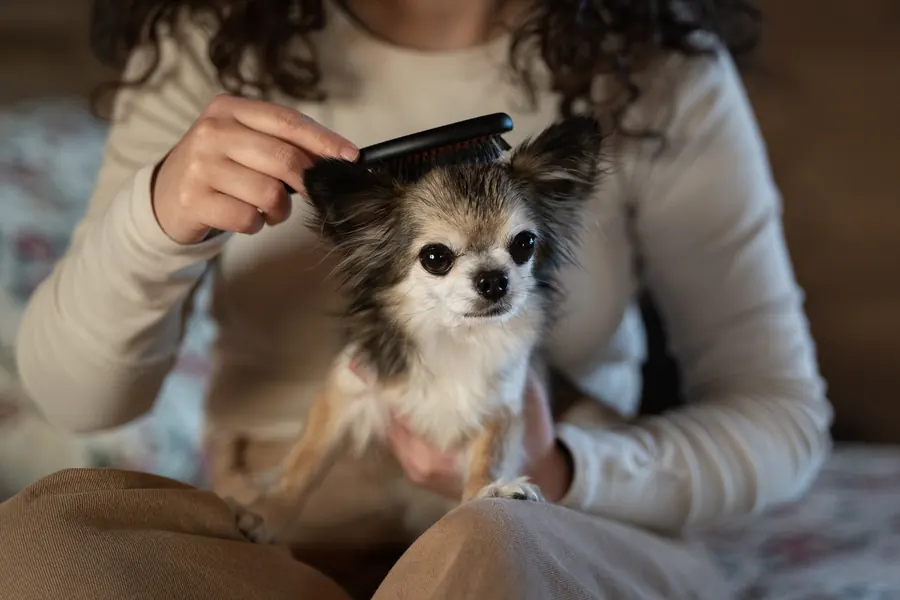
Regular gentle brushing removes loose hair and dead cells and distributes natural oils through the coat. Avoid pulling hard on tangles or irritating skin while brushing. Washing needs depend on coat type, lifestyle and skin health. Avoid unnecessary repeated washing if it increases dryness.
Parasite prevention helps control parasite-related scaling. With Cheyletiella, the environment is cleaned too so infestation does not persist at home. Sharing brushes and bedding can spread ringworm. Genetic tests can inform breeding decisions for inherited ichthyosis.
Regular brushing of long, silky or curly coats prevents tangles, particularly behind the ears, in the armpits and behind the hindlegs. Detangle before bathing because washing can make mats harder to remove.
Important for dog owners
Monitor itching, odour, hair loss and redness as well as flakes. Tell your vet about increased thirst, weight gain or lethargy too. Record the onset and any shampoos or topical treatments used.
Use human shampoo only if your vet has approved it for your dog. Follow product and veterinary instructions for contact time and rinsing. Return for examination if new spots, pus or increased itching develop.
Do not forcibly pull out a mat tightly attached to skin. Extensive matting may need professional removal. Do not cut mats with scissors because the skin can be injured without you realising. Irritated skin beneath a mat needs veterinary examination.
Frequently asked questions
Is dandruff always caused by dry skin?
Dry air can increase mild scaling, but allergy, parasites or internal disease may also be responsible. Itching, hair loss and general symptoms help guide your vet's investigations. Persistent heavy scaling or scaling with other symptoms therefore needs its cause established.
Can dandruff spread to people or other dogs?
Transmission risk depends on the disease or parasite causing scaling. Cheyletiella can transfer between animals and cause itchy bumps in people. Ringworm can also infect people, so a suspected infectious cause needs investigation and appropriate hygiene advice.
Why are there more flakes when medicated washes begin?
A scale-removing shampoo may increase visible flakes during the first 14 days because detached material remains caught in the coat. However, increased itching or new lesions needs reassessment. Washing uses a product selected by your vet.
Can a fatty acid supplement help?
Suitable fatty acids may help support the normal skin barrier. Any effect develops slowly, over about 3–4 weeks. If parasites, infection or hormonal disease underlie scaling, they also need treatment.
Why does my puppy have dandruff without itching?
Puppy scaling can relate to an inherited skin renewal disorder, for example. Golden Retriever ichthyosis does not usually cause itching. Scaling may start within a few weeks of birth, but signs generally appear before 18 months. A biopsy or a suitable disease-specific genetic test can help establish the diagnosis.
Sources
- Mitä on päivystyshoito, Helsingin yliopisto, accessed 2026-11-07.
- Seborrhea in Dogs, MSD Veterinary Manual, accessed 2026-11-07.
- Canine Scaling Disorders, Clinicians Brief, accessed 2026-11-07.
- Principles of Topical Treatment in Animals, Merck Veterinary Manual, accessed 2026-11-07.
- Koiran turkki hilseilee, Vetsy eläinlääkäri, accessed 2026-11-07.
- Seborrhea in Dogs, VCA Animal Hospitals, accessed 2026-11-07.
- Ear Margin Seborrhea in Dogs, Merck Veterinary Manual, accessed 2026-11-07.
- Grooming and Coat Care for Your Dog, VCA Animal Hospitals, accessed 2026-11-07.
- 2023 AAHA Management of Allergic Skin Diseases in Dogs and Cats Guidelines, AAHA, accessed 2026-11-07.
- Iktyoosi, Golden Ring GR ry, accessed 2026-11-07.
- Geenitestit, Golden Ring GR ry, accessed 2026-11-07.
- Ulkoloiset koirilla ja kissoilla, Kalliolan Eläinklinikka, accessed 2026-11-07.
- Antimicrobial use guidelines for canine pyoderma by ISCAID, International Society for Companion Animal Infectious Diseases, accessed 2026-11-07.
- Koiran silsa (Ringworm): Tarttuva sienitulehdus iholla, Vetsy eläinlääkäri, accessed 2026-11-07.
This information does not replace a visit to a vet. In an emergency, contact your nearest emergency vet: find a vet (RCVS).
More on this topic: Skin and coat
- Acne in dogs: chin spots and treatment
- Alopecia X and seasonal flank alopecia in dogs
- Paw pad injuries in dogs: first aid and wound care
- Atopic dermatitis in dogs: itching, tests and long-term care
- Demodectic mange in dogs: Demodex mites and skin disease
- Fibrosarcoma in dogs: symptoms, diagnosis and treatment