
Dog diseases · General conditions
Diabetic ketoacidosis in dogs: symptoms and treatment
Diabetic ketoacidosis, or DKA, is a life-threatening diabetes complication in which ketones accumulate and the body becomes acidic. It also causes dehydration and electrolyte imbalance. It may be the first severe manifestation of previously unrecognised diabetes. A diabetic dog that vomits, will not eat or becomes markedly weak needs urgent veterinary assessment.
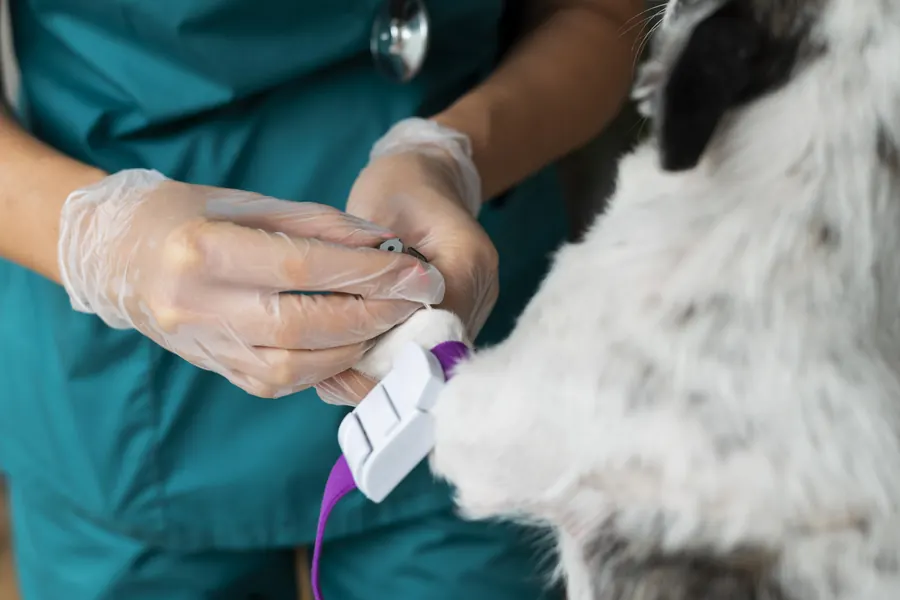
When to see a vet urgently
Suspected ketoacidosis is an emergency because untreated disease can compromise circulation and consciousness.
- Your diabetic dog repeatedly vomits and will not eat.
- Your dog is unusually tired or weak.
- Your dog cannot stand or becomes less conscious.
- Breathing becomes difficult or clearly abnormal.
- Vomiting accompanies abdominal pain, pallor or rapid deterioration.
DKA can occur without a previous diabetes diagnosis. Do not wait for home blood glucose or urine testing before contacting a vet if your dog is unwell. Find a vet near you.
Overview
Diabetes mellitus disrupts glucose utilisation when insulin is insufficient or its effects on tissues are reduced. Ketoacidosis combines insulin deficiency, increased ketones and metabolic acidosis. Finding urine ketones does not itself establish that the body has become acidic. Diabetic ketosis alone involves no acidosis.
In a study of 127 dogs with DKA, 65% received their first diabetes diagnosis during the same episode. Dogs already receiving insulin can also develop DKA. Treatment aims to correct the whole metabolic crisis rather than simply lower the glucose reading.
Causes
Energy deficiency starts ketone production
Insulin deficiency reduces glucose entry into cells. More free fatty acids are also released from fat tissue. The liver uses these to produce ketones. An excessive ketone load acidifies the body.
Insulin-opposing hormones, such as glucagon, cortisol and catecholamines, can intensify the problem. The liver produces more glucose while tissue utilisation is impaired. Blood can therefore contain abundant glucose while the body uses fat reserves for alternative energy.
Water and salts are lost in urine
Urinary glucose increases water loss, causing osmotic diuresis. Sodium and other electrolytes are lost too. Dehydration can progress to reduced circulating blood volume, or hypovolaemia. Poor tissue circulation can increase lactic acid accumulation and worsen acidosis.
Insulin deficiency also changes potassium distribution between the inside and outside of cells. One blood concentration therefore does not directly reflect total body potassium stores.
High blood glucose draws water out of cells into the extracellular space. This movement can dilute measured blood sodium. Sodium interpretation therefore considers the concurrent glucose level.
Reduced intake, vomiting, diarrhoea and increased urinary losses can contribute to magnesium deficiency.
Risk factors
Untreated or poorly controlled diabetes predisposes dogs to ketoacidosis. Concurrent disease can increase insulin requirements or reduce its effects. Common contributing diseases include pancreatitis, urinary or other infection, hypercortisolism and kidney disease.
Glucocorticoids and progestogens can reduce insulin sensitivity. The hormonal phase after oestrus in an unspayed female may involve severe insulin resistance. Pyometra is also investigated when appropriate in an unwell female. DKA risk is assessed from diabetes management and other disease: general diabetes susceptibility cannot establish one shared breed or sex risk for all DKA patients.
A treatment comparison included 24 DKA episodes in 23 dogs because one dog had a recurrence. Median age was 10 years, ranging from 5–15 years. This is a small treatment study's age distribution rather than the age of onset across all dogs.
Typical symptoms
Ordinary diabetes signs may precede the crisis.
- Your dog drinks and urinates more than before.
- Weight falls despite a good or increased appetite.
- Appetite decreases as general condition worsens.
- Your dog vomits.
- Your dog is tired, subdued or clearly weak.
- Dehydration may be severe.
- Breath may smell unusually sweet.
A severe hyperosmolar state can involve unconsciousness. Signs can resemble another diabetic crisis, so testing confirms the cause.
In the 24-episode study, poor appetite was reported in 18/24 cases, or 75%. Vomiting occurred in 13/24, or 54.1%. Tiredness occurred in 17/24, or 70.8%. Canine DKA can also involve abdominal pain and altered consciousness.
Complications and consequences
DKA can cause severe dehydration, hypovolaemia and raised kidney blood results. Severe potassium deficiency can disrupt cardiac electrical activity. Excessive potassium can also cause conduction disturbances. Potassium can change rapidly during treatment because insulin moves it into cells. Treatment may also cause hypoglycaemia, meaning excessively low blood glucose.
The small treatment study compared groups of 11 and 13 DKA treatment episodes. Twenty episodes ended in discharge. Deaths and euthanasia involved conditions including sepsis, pancreatitis and severe kidney disease. Identifying underlying disease therefore forms part of crisis treatment.
Combined discharge rates for hospitalised dogs and cats with DKA have been estimated at 60–70%. This combined estimate and the small canine study do not predict an individual patient's outcome.
In the same comparison, transient hypokalaemia developed during insulin treatment in 81.8% and 76.9% of the groups' cases. No clinical signs attributable to low potassium were seen in these cases. Absence of visible signs therefore does not establish normal potassium.
Diagnosis at the vet
High glucose is not the whole diagnosis
Investigation confirms diabetes and assesses ketones and acidosis. Blood gas analysis measures blood acidity and acid–base balance. In the ALIVE definition, metabolic acidosis involves blood pH below 7.35 and reduced bicarbonate. Suspected DKA is taken seriously even if blood gas measurement is not immediately available.
Blood beta-hydroxybutyrate, or BHB, helps identify ketosis early. Standard urine ketone strips measure acetoacetate. They do not measure BHB in the same way as blood ketone testing. A negative urine strip therefore does not exclude ketoacidosis when signs and other findings support suspicion. Changes appear faster in blood ketones than urine.
Electrolytes and underlying diseases
Blood tests include potassium, sodium, phosphate and magnesium. A blood count and organ biochemistry help assess inflammation and organ function. Urine is assessed for possible infection as well as glucose and ketones. Culture is needed particularly if signs or sediment suggest urinary infection. An asymptomatic bacterial finding alone does not always require antibiotics.
Signs may prompt a pancreatic-specific lipase test for pancreatitis. Ultrasound and X-rays can help identify other diseases. Increased white blood cells can accompany severe acidosis and do not always indicate bacterial infection.
Treatment
Fluids and insulin complement one another
DKA is treated in hospital or a unit providing equivalent monitoring. Correcting hypovolaemia, or inadequate circulating volume, is an early goal. Intravenous fluids support tissue circulation and correct dehydration. Insulin is needed to control glucose metabolism and ketone production. Your vet plans treatment and medication; do not change doses at home to correct a crisis.
Treatment monitors electrolyte loss and movement back into cells. Potassium and other supplementation are tailored to repeated measurements. Acidosis generally corrects with fluids and insulin as circulation recovers and ketones decrease. Bicarbonate is considered only in selected severe situations. Evidence for its use in animals is limited.
Monitoring continues after glucose falls
Blood glucose is generally checked every 1–2 hours initially. Potassium, sodium and blood gases may be monitored every 4–6 hours. Ketones may be monitored every 4–8 hours in hospital. Measurement frequency is tailored to condition and findings. An excessively rapid glucose fall may risk brain swelling and neurological signs.
In the groups of 11 and 13 episodes, median DKA resolution times were 17.5 and 23.5 hours. However, for the 20 episodes ending in discharge, median hospital stays were 147 and 144 hours. Hospitalisation duration did not differ significantly between groups. Correcting the metabolic crisis therefore does not mean immediate readiness for discharge.
Discharge is considered once your dog is otherwise well and eats and drinks independently. Transition to ordinary subcutaneous insulin also occurs before discharge. Concurrent pancreatitis or infection needs its own treatment.
In the same comparison, median resolution of severe hyperglycaemia was 5 hours in both groups. Severe hyperglycaemia may therefore resolve before DKA fully corrects. Phosphate also moves into cells when insulin begins, potentially reducing blood phosphate. During substantial fluid therapy, urine output and signs of fluid overload are monitored. Fluid quantities are adjusted according to losses and clinical progress.
A urinary catheter can allow accurate output measurement even in a weak patient when needed.
Prevention
Preventing recurrence aims for stable diabetes control and management of predisposing diseases. Reliable insulin availability and appropriate use are central diabetes treatment goals. Urinary infection, pancreatitis and other insulin-resistance diseases are investigated if previously stable diabetes becomes difficult.
With hormonal disruption in post-oestrus diabetes, removing the ovaries reduces growth hormone effects. Insulin requirements can change rapidly afterwards, requiring close monitoring. The surgical decision and timing are tailored to the individual female.
Diabetes control is assessed through signs, weight progress and, when needed, a glucose curve, glucose sensor or fructosamine measurement.
Important for dog owners
Keep written records of insulin administration, appetite, drinking and urination. Bring the insulin product, administration device and home readings to the emergency practice. Report missed injections, administration difficulties and new medicines. For an unspayed female, report the most recent season.
Agree an individual plan beforehand for refusal to eat, vomiting or a failed injection. Do not guess an extra dose in an uncertain situation. Seek prompt care when your dog deteriorates. At discharge, confirm feeding, medication administration, possible home ketone monitoring and follow-up timing. Also request clear instructions about signs requiring immediate emergency reassessment. Despite a good reading, an unwell dog's overall condition determines urgency.
Frequently asked questions
Can ketoacidosis be the first sign of diabetes?
Diabetes may first be diagnosed during ketoacidosis. This occurred in 65% of a study of 127 dogs with DKA. Earlier increased drinking, urination or weight loss may have gone unnoticed, so a severely ill dog is investigated without a previous diabetes diagnosis too.
Do urine ketones always establish ketoacidosis?
Ketonuria, meaning ketones in urine, does not itself confirm ketoacidosis. DKA also requires assessment of the body's acid–base balance. However, an unwell, ketotic diabetic dog is treated as suspected DKA even if blood gas testing is not immediately possible.
Can a negative urine strip be trusted?
A standard urine strip detects acetoacetate, while a blood ketone meter measures beta-hydroxybutyrate. Blood BHB may therefore identify ketosis earlier. A negative urine result does not overturn strong clinical suspicion. Do not delay seeking care for an unwell dog based only on a strip result.
Why does treatment continue after glucose has fallen?
DKA treatment simultaneously corrects ketone accumulation, acidity, dehydration and electrolyte disturbances. Insulin moves potassium into cells, so levels need monitoring during treatment too. One good glucose result therefore does not establish that the entire crisis has resolved.
Can a dog already receiving insulin develop ketoacidosis?
DKA can develop in a treated diabetic dog. Concurrent pancreatitis, infection or hormonal disease can impair insulin effects. Vomiting or refusal to eat therefore needs prompt assessment, and any insulin changes follow your vet's individual instructions.
Sources
- 2026 AAHA Diabetes Management Guidelines for Dogs, Journal of the American Animal Hospital Association / AAHA, accessed 2026-11-07.
- Diabeettisen ketoasidoosin hoito koiralla ja kissalla – kirjallisuuskatsaus (2019), Suomen Eläinlääkärilehti, accessed 2026-11-07.
- Koiran diabeettisen ketoasidoosin aiheuttamat elektrolyyttimuutokset sekä hoidon vaikutus niihin, Helsingin yliopisto, accessed 2026-11-07.
- Diabetes Mellitus in Dogs and Cats, Merck Veterinary Manual, accessed 2026-11-07.
- Efficacy and Safety of Intramuscular Insulin Lispro vs. Continuous Intravenous Regular Insulin for the Treatment of Dogs With Diabetic Ketoacidosis, Frontiers in Veterinary Science, accessed 2026-11-07.
- Mitä on päivystyshoito, Helsingin yliopisto, accessed 2026-11-07.
- Agreeing Language in Veterinary Endocrinology: Diabetes mellitus, The Veterinary Journal / ALIVE, accessed 2026-11-07.
This information does not replace a visit to a vet. In an emergency, contact your nearest emergency vet: find a vet (RCVS).
More on this topic: General conditions
- Addison's disease in dogs: symptoms, crisis and treatment
- Hypothermia in dogs: signs, first aid and treatment
- Alcohol poisoning in dogs: symptoms and first aid
- Wasp stings in dogs: symptoms, first aid and treatment
- Anaplasmosis in dogs: symptoms, tests and treatment
- Anaemia in dogs: symptoms, causes and treatment