
Dog diseases · Eyes, ears and mouth
Ear infections in dogs: otitis externa symptoms and treatment
Otitis externa means inflammation of the ear canal. Your dog may shake their head, scratch the ear or find touch painful. Bacterial or yeast overgrowth may accompany the inflammation, but the underlying cause also needs investigation. Simply removing discharge or using previously prescribed drops may not resolve a recurring problem.
When to see a vet urgently
Contact a vet the same day if the ear is very painful or your dog develops problems with balance or facial function.
- Pain prevents your dog from letting you near the ear.
- Your dog develops a new head tilt and becomes unsteady.
- The eyes make involuntary jerking movements alongside ear signs.
- One side of the face looks abnormal, or opening the mouth is painful.
Do not dismiss these signs as ordinary ear itchiness. You can find a vet near you to arrange care.
Overview
The ear canal extends from the ear opening to the eardrum. Otitis externa involves inflammation of this area, and the ear flap may also be affected. Inflammation can be sudden or long-standing, and affect one ear or both.
A dog's ear canal bends on its way to the eardrum. Discharge deep inside may therefore be neither visible from outside nor easy to remove. Skin thickened by inflammation can narrow the canal further.
Otitis externa is one of the most common reasons dogs are brought to the vet. The inflammation may involve microorganisms or develop without infection.
Causes
A primary cause starts inflammation in a previously healthy ear. Common underlying problems include allergic skin disease, an adverse food reaction, parasites and a foreign body. The ear is covered with skin, so a disease affecting the skin generally can also show up there.
Small numbers of bacteria and yeasts are present in healthy ears too. In an inflamed and altered environment, they can multiply excessively and worsen the signs. Finding yeast alone therefore does not explain why an ear problem began.
Plant material, such as a grass seed, entering the ear canal can trigger irritation and inflammation. In an older dog, a tumour may also block the canal and allow a secondary infection to develop.
Cleaning too vigorously or too often can also perpetuate the problem. Reactions to treatment products are among the possible secondary causes. Tell the vet about every product you have used, including those that are not prescription medicines.
Primary causes also include immune-mediated skin diseases, such as pemphigus and inflammation of blood vessels. An underactive thyroid or an overactive adrenal cortex may contribute. Disorders of skin keratinisation or gland function can also alter the environment within the ear canal.
Risk factors
Drooping ear flaps, narrow ear canals and heavy hair growth can predispose a dog to inflammation. Moisture from swimming or the environment is another predisposing factor.
Breed susceptibility is partly associated with how common skin diseases such as allergies are. This underlying tendency may contribute to ear problems in retrievers and terriers, for example. No clear sex distribution is known, and young animals may be affected more often.
Susceptibility related to ear structure occurs in breeds such as the Shar Pei, which can have narrow ear canals. The Basset Hound's long, drooping ear flaps can reduce ventilation. In an older dog, a tumour blocking the canal may also perpetuate secondary inflammation.
Typical symptoms
You may first notice itching or an unusual smell. Signs can worsen gradually, and your dog may start avoiding having their head touched. Allergic ear disease can cause similar signs without a confirmed microbial infection.
- Your dog shakes their head or scratches the ear.
- The inner surface of the ear is red.
- There is discharge or more wax than usual.
- The ear has an unusual smell.
- Touch causes pain or an obvious attempt to move away.
The ear's skin may also swell, become damaged or develop ulcers. These changes need veterinary assessment, as painful skin should not be forcibly scrubbed clean.
Hearing may become reduced if the canal is blocked. Your dog may then seem less responsive than usual to familiar calls.
Complications and consequences
Prolonged inflammation can narrow the ear canal and permanently alter its tissues. Inflammation can also be associated with damage to the eardrum and middle ear disease. This makes treatment more difficult, even if you have previously cared for the ear diligently at home. The altered canal can itself perpetuate a cycle of inflammation.
If the canal is completely blocked or calcified, medicines may no longer be enough. Surgery to remove the ear canal is considered in the most severe cases. Early investigation and treatment of a recurring underlying cause aim to prevent progression to this stage.
Middle ear inflammation can impair facial nerve function and cause a dry eye. With facial paralysis, the lip or the midline of the muzzle may be pulled towards the unaffected side. Inner ear inflammation can cause a head tilt, unsteadiness and jerking eye movements.
Impaired facial nerve function and drying of the eye's surface can be associated with corneal inflammation and ulcers. Untreated middle ear inflammation can spread to the inner ear or rupture a previously intact eardrum.
Diagnosis at the vet
The vet examines the skin and your dog's general condition as well as the ears. Feeling the ears helps assess pain, swelling and chronic changes. Previous test results and responses to treatment are useful, particularly with recurring disease.
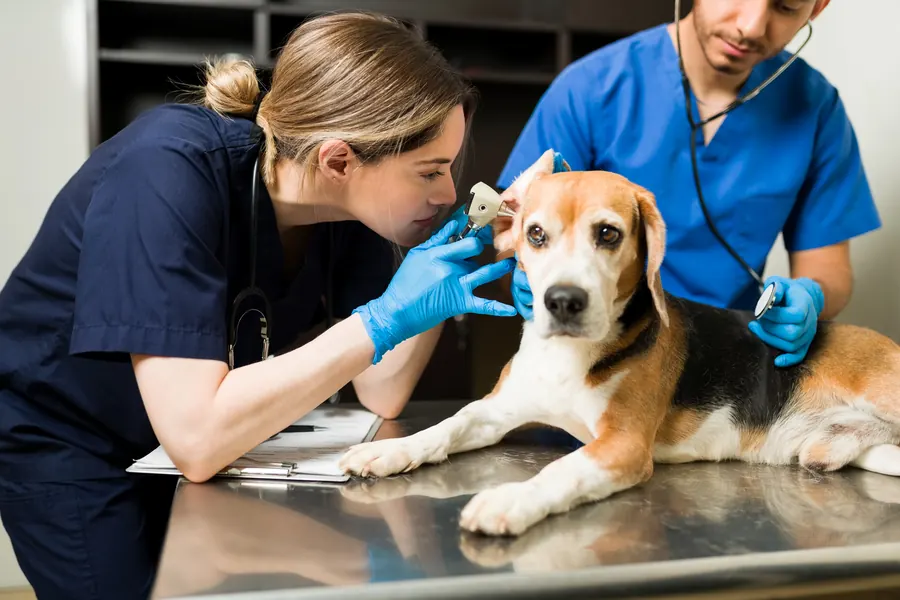
An otoscope is used to inspect the canal and, where possible, the eardrum. Discharge and swelling can obstruct the view. Thorough examination of a painful ear may require sedation or initial treatment of the inflammation before another examination.
A sample of discharge is taken before cleaning. It is examined under a microscope for findings such as yeasts, bacteria and inflammatory cells. This is called cytology, or examination of a cell sample. The sample allows treatment to be chosen more precisely than smell alone would allow. Bacterial culture and susceptibility testing are used for further investigation when necessary.
If inflammation extends into the middle ear, CT or MRI helps establish the extent of the changes. The results may lead the vet to consider opening the eardrum and flushing the middle ear.
Other tests are chosen according to the suspected underlying problem. For example, blood tests may assess thyroid function or a general illness if the findings give reason to investigate these.
Large numbers of microorganisms do not always mean an infection requiring antimicrobial medicine. The presence of inflammatory cells helps assess the significance of the finding. Treatment decisions therefore combine the microorganisms found on cytology with the ear's inflammatory response.
Treatment
The vet prescribes treatment according to the findings. Pain, itching and swelling are relieved while any confirmed bacterial or yeast overgrowth is treated. Parasites are treated or a foreign body removed when necessary. Treatment of an allergy or other underlying disease is also planned, because controlling only the secondary inflammation leaves the cause of recurrence in place.
Topical treatment may contain an antibacterial medicine, an antifungal medicine and a corticosteroid to reduce inflammation. The choice depends on the sample and the ear's condition. Oral antibiotics are not routine treatment for every case of otitis externa. Middle ear inflammation can alter treatment requirements, so do not assume the route of administration will match a previous course.
The eardrum's condition affects the safety of products applied to the ear. Do not start old drops or homemade mixtures without having the ear examined. If a new head tilt, dizziness or change in hearing develops during treatment, stop that ear medicine and contact the vet treating your dog.
Cleaning helps remove discharge that prevents medicine from reaching the affected area. If cleaning hurts, stop and ask for advice. In severe inflammation, home cleaning may need to wait until initial treatment has reduced pain and swelling.
An acute bacterial or yeast infection usually settles within 2–4 weeks. Controlling chronic disease can take months, and some dogs need ongoing maintenance treatment. Resolution of infection is confirmed by a clinical recheck and repeat cytology.
The total duration of treatment ranges from 7–10 days to several months, depending on the product, diagnosis and severity of disease. Initially, inflammatory discharge and microorganisms are assessed at weekly or fortnightly rechecks until infection is no longer detected.
If cytology shows microorganisms without inflammatory cells, treatment may focus on a corticosteroid and cleaning with a topical antiseptic. Medicine for a confirmed microbial infection in otitis externa is usually applied locally. Chronic otitis externa is often accompanied by middle ear inflammation, which changes the investigations and treatment needed.
Thick discharge can prevent topical medicine from reaching deep into the ear canal. Bacteria and yeasts can remain within layers of discharge and cause a new infection after treatment. Pus can also reduce the effectiveness of some medicines.
Prevention
Preventing recurrence chiefly involves controlling the underlying cause and keeping the ears clean and dry in a way suited to your dog. A dog that swims may need different ear care from another dog. Repeatedly washing a healthy, clean ear is not a goal in itself, as excessive cleaning can irritate it.
Do not push cotton buds into the ear canal, as they can move discharge deeper inside. Hair does not need to be routinely plucked from a healthy ear canal either, as this can trigger an inflammatory response. If your dog's ear structure makes hair management necessary, plan it with your vet.
The cleaning product is also chosen according to the ear's condition. Products containing alcohol or hydrogen peroxide are generally not recommended for home cleaning. Homemade vinegar mixtures can also irritate an inflamed ear.
Maintenance cleaning prescribed by a vet may be needed every 1–2 weeks, for example. The interval depends on whether you are treating active inflammation or maintaining an ear that has already settled. Excessive handling of a healthy ear can irritate the ear canal.
Important for dog owners
Keep a care diary recording which ear is affected, smell, discharge and tenderness. Also note swimming, other skin signs and products used. Bring medicine names or packaging to the appointment. Tell the vet promptly and clearly if your dog will not let you treat the ears or if you cannot follow the instructions; the plan must be practical at home.
Ask for written instructions stating which product goes in each ear, the order of cleaning and medication, and when a recheck is due. If the ears are in different conditions, confirm the instructions for each separately. Do not judge treatment success solely by your dog becoming temporarily more settled; follow the agreed recheck plan. Take a phone photograph of a visible change if that helps you remember when it occurred.
Frequently asked questions
Does a smelly ear always mean a yeast infection?
Smell alone cannot distinguish yeast, bacteria or another ear disease. Cytology helps establish what is happening in the ear and what treatment is needed. The underlying cause may also go untreated if the ear is treated for assumed yeast without investigation.
Can I use drops from the previous infection?
Do not start them on your own. The current inflammation may have a different cause, and the eardrum's condition affects safety. Tell the vet about the previous medicine and ask for current instructions after the ear and any necessary samples have been examined.
Should healthy ears be cleaned regularly?
The need for cleaning depends on the dog and the ears' condition. A healthy, clean ear does not need washing simply because the calendar says so, and excessive handling can irritate it. Swimming, recurring problems and ear structure are reasons to ask for an individual maintenance plan.
Why does the ear inflammation keep coming back?
An untreated allergy or another primary cause may be responsible, together with changes that have developed in the ear canal. A new episode may therefore not resolve with the same course of treatment as before. Ask for a plan both to control the inflammation and to investigate and manage the cause of recurrence in the long term.
Can an ear problem cause a head tilt?
Yes, but it needs investigation. Inner ear disease can involve a head tilt and balance problems. A new sign of this kind is a reason to contact a vet promptly, particularly if your dog is receiving ear medication or also has jerking eye movements.
Sources
- Otitis Externa in Animals, Merck Veterinary Manual, accessed 2026-11-02.
- How to Clean Your Dog’s Ears, Cornell University College of Veterinary Medicine, accessed 2026-11-02.
- Otitis Externa, American College of Veterinary Surgeons, accessed 2026-11-02.
- Otitis Media and Interna in Animals, Merck Veterinary Manual, accessed 2026-11-02.
- Ulkokorvan tulehdus koirilla, Ruokavirasto, accessed 2026-11-03.
This information does not replace a visit to a vet. In an emergency, contact your nearest emergency vet: find a vet (RCVS).