
Dog diseases · Nervous system
Eclampsia in dogs – low calcium and nursing mothers
Eclampsia is a life-threatening fall in blood calcium, usually affecting a nursing female dog. It is also called milk fever or puerperal tetany. Restlessness and panting can progress to trembling, stiffness and seizures. Treatment is needed immediately: do not wait for severe convulsions.
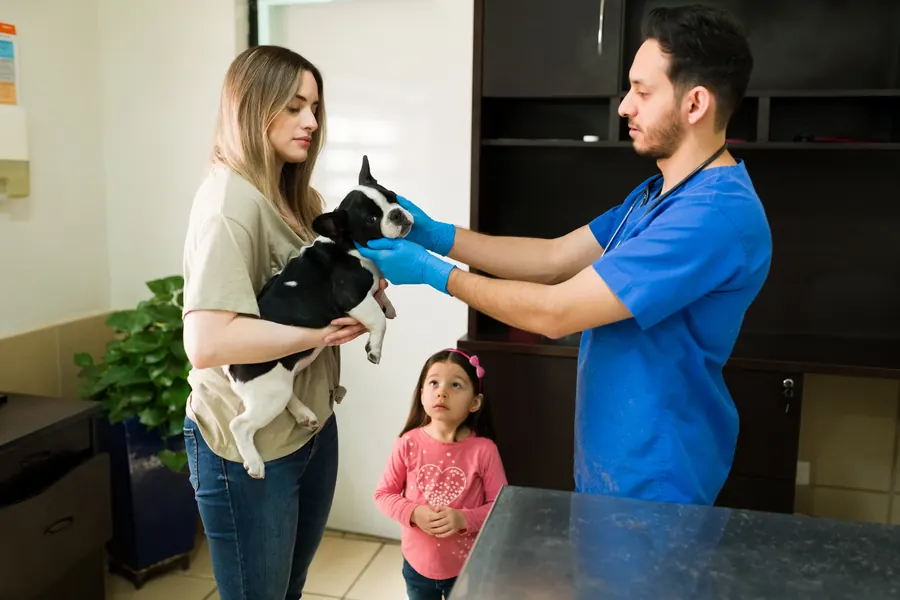
When to see a vet urgently
Stop the puppies suckling if eclampsia is suspected. Contact a vet immediately. Seek emergency care if a nursing dog or one in late pregnancy has:
- Restlessness and unexplained heavy panting.
- Trembling, muscle twitching or persistent stiffness.
- Wobbly walking or inability to stand up.
- A seizure or reduced consciousness.
- Unusual aggression or confusion.
- A markedly raised body temperature with muscle signs.
Giving milk or a calcium tablet at home does not replace the urgent hospital treatment needed. You can find a vet near you for help.
Overview
The mother has too little calcium in her blood
Hypocalcaemia means an abnormally low blood calcium concentration. Calcium contributes to functions including muscle contraction and nervous system activity. Calcium deficiency in dogs can increase the excitability of nerves and muscle cells. Tetany here means strong, prolonged muscle contractions. Not every seizure in a nursing dog nevertheless has the same cause.
The most common time is around 2–3 weeks after giving birth, when milk production is high. Signs have also been described in mothers nursing puppies aged 1–4 weeks. They can begin within 1–3 weeks of giving birth.
The condition can also occur during labour or, less commonly, in late pregnancy. The puppies may nevertheless appear well when their mother becomes ill.
Causes
Milk production uses calcium
Large amounts of calcium leave the mother's body in milk. Calcium may enter milk faster than it can be released from bone into the blood. Dietary intake may then fall short of demand. The problem therefore involves not only intake but the regulatory system's ability to meet a rapidly increasing need.
A litter's high milk demand can particularly burden a small mother. A poorly balanced diet can worsen the situation. Around 99% of the body's calcium is stored in bone. Parathyroid hormone helps release calcium from bone. Vitamin D supports calcium absorption from the intestine. Abnormal parathyroid hormone function is another possible predisposing factor.
Too much supplemental calcium in pregnancy can be harmful
Excess calcium supplementation can suppress the mother's own calcium regulation. Too much calcium can reduce parathyroid hormone production. Calcium given preventively may therefore increase the risk rather than protect against eclampsia. This does not mean a pregnant dog should deliberately receive inadequate nutrition. Appropriate prevention includes a balanced diet intended for pregnancy and lactation.
Risk factors
Small-breed females nursing a large litter are most often affected. The condition is most common in females weighing under 20 kg. This does not rule it out in a large dog. Eclampsia is also possible with a small litter and at other times during lactation.
Breeds considered predisposed include Chihuahuas, Pomeranians, Toy Poodles, Miniature Pinschers and Shih Tzus. Previous eclampsia increases the risk of another episode while nursing a later litter. Poor nutrition or additional calcium–phosphorus supplements can increase risk. Litter size affects the mother's energy needs throughout lactation. The available information does not establish an exact disease frequency.
Typical symptoms
The onset can be subtle before obvious muscle spasms develop. At home, you may notice:
- Restlessness and inability to settle calmly with the puppies.
- Panting or faster breathing than usual.
- Stiff or wobbly movement.
- Trembling and muscle twitching.
- Teeth grinding.
- Drooling, whining or irritability in response to ordinary touch.
- Whole-body stiffening or a seizure.
Intense muscle activity can raise body temperature. Vomiting, excessive drinking and urination can also occur. Heart rate may rise. An affected dog may have small pupils or visible third eyelids. Untreated, the condition can progress to coma.
Complications and consequences
Convulsions and overheating can be life-threatening
Persistent calcium deficiency can cause severe generalised convulsions. Muscle tremors and continuous contractions can raise body temperature dangerously. In severe disease, a dog may become comatose or die. Concurrent low blood glucose can complicate the condition. Severe illness can also involve brain swelling.
During labour, calcium deficiency can weaken contractions and prolong birth. Other obvious neurological signs may not yet be present. Metabolic problems are therefore also considered when assessing difficult labour.
Treatment response is often rapid, but recurrence is possible
Prompt treatment usually leads to a good, complete recovery. Clear neurological improvement can be expected around 15 minutes after intravenous calcium treatment. This is an expected treatment response, rather than a period to leave an affected dog waiting at home.
Eclampsia can recur during the same lactation. It can also recur with future litters. Alongside the mother's recovery, the puppies' feeding must be secured.
Diagnosis at the vet
Signs are considered alongside birth and feeding history
Your vet assesses the combination of signs, examination findings and time since birth. Puppy age and the stage of milk production help assess the possibility of eclampsia. Reviewing diet and any supplements matters because an unbalanced diet can predispose to the condition.
Blood calcium measurement confirms a low concentration. Severe signs also require monitoring of the heart and body temperature. Blood glucose is checked because hypoglycaemia can occur at the same time.
Interpreting laboratory results correctly
Free, or ionised, calcium is the metabolically active form. It normally accounts for around 50–55% of total serum calcium. Protein-bound calcium makes up around 35–45%. Calcium bound to anions, or negatively charged substances, makes up around 5–10%. Total calcium includes all these fractions, so measuring active calcium provides different information.
Ionised calcium below 0.8 mmol/l can be consistent with severe calcium deficiency in a dog. The result is assessed alongside signs and the laboratory's reference ranges. Total calcium does not reflect the severity of signs equally in every situation.
Blood protein concentration affects measured calcium values. Acid–base balance and other electrolytes can also alter the result. Alkalosis, excessive blood alkalinity, worsens the effects of hypocalcaemia. Signs can therefore differ at the same total calcium value.
Distinguishing other diseases after birth
Low blood glucose, poisoning, epilepsy, uterine infection and mastitis can resemble eclampsia. Postpartum uterine infection can cause abnormal discharge, fever and tiredness. Mastitis can be severe and associated with sepsis. Another serious illness, such as sepsis, can also lower blood calcium without lactation. The cause of convulsions is therefore not inferred from the dog's sex or appearance alone.
Treatment
Correcting calcium balance in hospital
Your vet starts emergency treatment and gives intravenous calcium where needed. Heart rhythm is monitored with an ECG during treatment. Giving calcium too quickly can slow the heart and cause arrhythmias. This is one reason why a product given at home does not replace supervised treatment.
Seizures can be controlled with an antiseizure medicine given by your vet. Fluids are provided according to the dog's condition. Low blood glucose and dangerous overheating are also corrected where necessary. Supplemental oxygen can be given in hospital as well.
After the acute phase, your vet may prescribe an oral calcium supplement. This need differs from giving extra supplements to a healthy pregnant dog on your own initiative. In some situations, a vitamin D preparation may be needed to support calcium absorption. Ongoing treatment is adjusted using calcium values measured at follow-up.
Reducing the mother's burden and feeding the puppies
Stop puppies suckling immediately if eclampsia is suspected. Your vet may advise keeping puppies off the teats for 12–24 hours after the acute episode. Whether nursing resumes depends on the mother's condition and options for feeding the puppies. During separation, puppies need a suitable milk replacer or other age-appropriate food.
Puppies can usually start a gradual transition to their own food from 3–4 weeks of age. If eclampsia recurs, puppies younger than 4 weeks may need to be entirely hand-reared. Puppies older than 4 weeks can then be weaned. A vet-prescribed medicine can reduce milk production where needed.
Use a species-appropriate maternal milk replacer for the puppies. Milk from another animal species alone is not an equivalent substitute. Monitor puppies for vomiting, diarrhoea, loss of appetite and lethargy.
Prevention
Nutrition during pregnancy and lactation should be balanced and suitable for this life stage. Extra calcium is not routinely given during pregnancy. The aim is adequate intake from a complete diet, rather than calcium deficiency. Supplementation containing too much calcium and phosphorus can disrupt the mother's adaptation to milk production.
Supplementary feeding of puppies can reduce milk production demands on the mother. During the first week of lactation, her energy requirement averages around 1.5 times maintenance needs. In the second week, it is around twice maintenance. In the third and fourth weeks, it may be around 2.5–3 times maintenance. With a large litter, nutritional requirements may rise to as much as 4 times maintenance. A nursing female should have food and water available. After previous eclampsia, the next litter's risk is assessed in advance. The mother's nutrition and possible supplementary puppy feeding are planned at the same time.
Important for dog owners
Keep a record of the birth date, puppy numbers, the mother's diet and supplements used. Respond quickly to new panting, restlessness and stiffness in a nursing mother. Early eclampsia signs can be mild before severe convulsions.
Do not wait to see whether milk, food or a calcium tablet helps. Stop suckling and contact the emergency practice immediately. Rapid correction of blood calcium may improve signs within around 15 minutes after hospital treatment begins. Keep your dog in a calm, safe space during transport and prevent falls.
After discharge, monitor the mother's eating, drinking, movement, alertness and any new muscle signs. Keep your vet's medication and follow-up plan. Recurrence is possible during the same lactation. Also maintain puppy feeding and monitor growth if they cannot suckle. Do not return puppies to the teats against the treating vet's advice.
Frequently asked questions
Can eclampsia start before convulsions?
Early signs include restlessness and panting. Trembling, twitching, stiffness and unsteady movement can follow. Strong muscle contractions and seizures belong to a more severe stage. Do not therefore wait for a nursing dog's new abnormal behaviour to become a visible seizure before making contact.
Does giving milk or a calcium tablet at home help?
Acute eclampsia needs prompt hospital treatment. Blood calcium can be corrected urgently with intravenous treatment. Heart rhythm is monitored at the same time for safety. Oral calcium generally belongs to subsequent care planned by your vet. Home remedies do not replace this treatment.
Why not give a pregnant dog plenty of calcium just in case?
Extra calcium can suppress the body's own calcium regulatory system. It may then increase the risk of hypocalcaemia after birth. A pregnant or nursing dog nevertheless needs adequate, balanced nutrition. Prescribed ongoing treatment for an already affected dog is different from unnecessary supplementation in a healthy one.
Can puppies continue suckling after eclampsia?
Suckling is stopped immediately when acute eclampsia is suspected. Your vet may advise a break of 12–24 hours. During that time, puppies need suitable milk replacer or other age-appropriate nutrition. Further management depends on the mother's condition, and recurrent disease may require the puppies to be weaned.
Can eclampsia recur with the next litter?
Eclampsia is prone to recurrence in future pregnancies and lactations. Prevention uses a suitable balanced diet and supplementary puppy feeding where needed. Calcium supplementation during pregnancy on your own initiative can, however, increase risk. A plan for another litter is therefore made before the next mating.
Sources
- Eclampsia in Dogs (2025), VCA Animal Hospitals, accessed 2026-11-08.
- Nõuanded loomaomanikule: Eklampsia, Eesti Maaülikool, accessed 2026-11-08.
- Pharmacologic Advances in Canine and Feline Reproduction (2009), Topics in Companion Animal Medicine, accessed 2026-11-08.
- Disorders of Calcium Metabolism in Dogs, Merck Veterinary Manual, accessed 2026-11-08.
- Periparturient Problems in Bitches and Queens, Merck Veterinary Manual, accessed 2026-11-08.
- Koiran tiineys ja synnytys, Pyynikin eläinlääkärit, accessed 2026-11-08.
- Kasvattajan peruskurssin oppilaan materiaali (2025), Suomen Kennelliitto, accessed 2026-11-08.
- Calcium, Cornell University eClinPath, accessed 2026-11-08.
- Feeding Practices in Small Animals, Merck Veterinary Manual, accessed 2026-11-08.
This information does not replace a visit to a vet. In an emergency, contact your nearest emergency vet: find a vet (RCVS).
More on this topic: Nervous system
- Peripheral nerve disease in dogs – neuropathy and weakness
- Stroke in dogs – symptoms, diagnosis and treatment
- Meningitis and encephalitis in dogs – symptoms and treatment
- Brain tumours in dogs: symptoms, tests and treatment
- Ataxia in dogs – causes of wobbling and loss of coordination
- Cauda equina syndrome in dogs: back pain and treatment