
Dog diseases · Digestive system
Enteritis in dogs: acute symptoms and treatment
Enteritis means inflammation of the intestinal lining. If the stomach is also inflamed, it is called gastroenteritis. Acute inflammation can cause diarrhoea and vomiting.
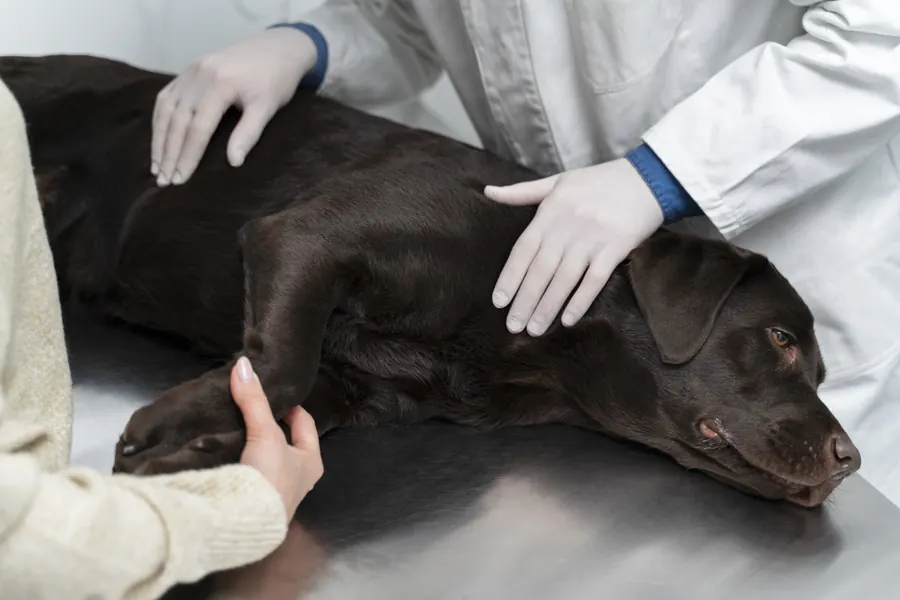
When to see a vet urgently
Profuse bloody diarrhoea with deteriorating general health needs urgent assessment.
- Seek immediate emergency care for collapse, abnormal responsiveness or pale gums.
- Seek urgent care if your dog also vomits back drinking water.
- Severe abdominal pain or clear swelling requires emergency assessment.
- Contact a vet without delay about parvovirus if an unvaccinated puppy vomits and has diarrhoea.
Find the nearest emergency practice through the vet guide.
Overview
The intestinal lining absorbs fluid and nutrients. Surface cells damaged by a virus may absorb fluid less effectively. In some infections, increased fluid secretion into the bowel causes profuse watery diarrhoea.
Acute haemorrhagic diarrhoea syndrome, or AHDS, is a rapidly developing intestinal disease with bleeding from the lining into the bowel. It was previously called haemorrhagic gastroenteritis. In AHDS, inflammatory changes are mainly found in the intestine. Vomiting or diarrhoea lasting more than three to four weeks is considered chronic and investigated separately.
Causes
Viruses, parasites and bacteria
Canine parvovirus 2 can cause acute, highly contagious enteritis. It destroys rapidly dividing cells that renew the small-intestinal surface. Giardia can cause diarrhoea particularly in puppies and dogs with weakened immunity. Whipworms and hookworms are among parasites that can cause gastrointestinal inflammation.
Salmonella can cause enteritis, sometimes with bloody diarrhoea. Campylobacter diarrhoea is often more severe in young dogs. Of 12 pet Salmonella isolates submitted to one northern European veterinary laboratory for confirmation and typing in 2025, seven came from dogs.
Campylobacter can enter through contaminated food, water or animal faeces. Salmonella can also occur in a symptom-free dog's faeces.
Intestinal irritation and AHDS
Acute intestinal symptoms can start after eating unsuitable material. Irritation can inflame the lining. The precise cause of AHDS is unknown. It has been associated with NetF toxin produced by Clostridium perfringens.
Clostridial bacteria potentially damaging the lining can also occur in healthy animals' intestines.
Risk factors
Puppies aged six weeks to six months are particularly vulnerable to parvovirus when maternal protection has waned before vaccine protection develops. Stress from crowded housing can worsen parvovirus disease. Concurrent intestinal parasites can intensify symptoms.
Raw food carries greater microbial exposure risk than cooked food. Contaminated drinking water can also transmit Salmonella. Small and toy breeds are overrepresented among dogs with AHDS. Median age in affected dogs has been five years.
Parvovirus is a particular consideration in an inadequately vaccinated young dog recently arriving from a shelter or kennel.
Typical symptoms
In AHDS, vomiting may start before blood appears in faeces.
- Profuse watery diarrhoea.
- Bright-red blood in faeces.
- Vomiting alongside diarrhoea.
- Reduced or absent appetite.
- Increased tiredness.
- Abdominal pain, for example causing whining or restless movement.
- Fever with bacterial enteritis.
Small-bowel diarrhoea often increases faecal volume. An irritated large intestine can cause frequent straining with little passed each time. Black, tarry faeces may contain blood from the stomach or small intestine that has darkened during intestinal passage.
Campylobacter infection can cause mucoid or watery diarrhoea, sometimes with blood. Intermittent diarrhoea can persist for more than two weeks. In AHDS, faeces may resemble raspberry jam in colour and consistency.
Complications and consequences
Vomiting accelerates dehydration when diarrhoea also causes fluid loss. Severe dehydration can strain the kidneys. Major fluid loss can cause circulatory shock before dehydration is clearly visible. Intestinal losses can lower blood potassium, sodium or chloride.
In AHDS, fluid and blood proteins can leak through damaged mucosa into the bowel. In severe salmonellosis, bacteria can cross the wall into the bloodstream and cause systemic infection. A puppy with parvovirus can develop low blood glucose because young puppies have small glucose reserves.
Parvovirus can damage the barrier that normally prevents intestinal bacteria moving elsewhere in the body. Abdominal pain during parvovirus disease may raise suspicion of intussusception, where one bowel segment slides inside another.
Diagnosis at the vet
General condition and blood tests
History includes diet, previous symptoms and possible exposure to other dogs. The vet feels the abdomen to assess organ size, shape and position. If general health is poor, blood tests investigate possible systemic disease.
In AHDS, haematocrit, the red cell proportion of blood volume, often exceeds 60%. Plasma total protein may meanwhile be normal or slightly reduced. Low neutrophils can raise suspicion of parvovirus or sepsis. Once dehydration is corrected, the vet can reassess whether findings suggestive of systemic inflammation persist.
Faecal samples and other investigations
Faecal antigen testing or PCR can detect parvovirus. An early test can be negative if faecal shedding is only beginning. Samples can also look for intestinal parasites. If bacterial enteritis with systemic symptoms is suspected, faecal culture can help identify the cause. Campylobacter can also be isolated from symptom-free dogs, so findings are interpreted against symptoms.
X-rays are needed if obstruction is suspected. Ultrasound may show fluid-filled intestinal loops in AHDS. Addison's disease can cause similar digestive symptoms and is another possible diagnosis with bloody diarrhoea.
If Salmonella is suspected in the bloodstream, blood can be sent for bacterial culture. A modified-live parvovirus vaccine can cause a false-positive faecal test within four to ten days of vaccination. With diarrhoea, bleeding and markedly prolonged clotting time, the vet investigates a possible clotting disorder.
Parvovirus often markedly reduces white blood cell numbers during illness.
Treatment
Fluids and nutrition
Prompt intravenous fluid therapy is the main treatment for AHDS. It is planned according to circulation, dehydration and ongoing losses. An antiemetic may form part of supportive care. Hospital monitoring of dogs with parvovirus includes blood potassium and glucose.
Once vomiting settles, small portions of easily digestible food can be offered. A dog with parvovirus that will not eat can receive nutrition through a tube passed via the nose in hospital. A Giardia-effective medicine may be prescribed when infection is confirmed in a dog with diarrhoea.
Antibiotics and the outlook
Antibiotics are not recommended for mild acute diarrhoea in a well dog, even with visible blood. They are generally unnecessary when moderate general symptoms improve with adequate fluids. If severe general symptoms persist afterwards, the vet may start antibiotics. When bacterial infection requires antibiotics, susceptibility testing can guide selection.
A Danish hospital follow-up involved 237 dogs with suspected AHDS. Median symptom severity index on admission was 13. Scores fell across treatment groups after the first hospital day. Ninety-six per cent survived to discharge.
With parvovirus, antibiotics may be needed if damaged intestine allows bacteria across the wall. More than 90% of dogs receiving intensive hospital treatment survive parvovirus disease.
If glucose falls too low, the vet may add glucose to fluid therapy. In bloody diarrhoea, an abnormal neutrophil count suggesting severe inflammation can affect the antibiotic decision even if fluids improve general condition.
Prevention
Regular vaccination is the basis of parvovirus prevention. It usually spreads through an infected dog's faeces. An infected dog generally sheds virus for one to two weeks. Virus can survive for a long time on faecally contaminated equipment, for example.
Thorough cooking, particularly of poultry, can reduce Salmonella risk. Washing food and water bowls removes bacteria remaining on surfaces. Collecting faeces from a dog with Salmonella protects other animals from exposure. Some kennel clubs allow attendance after parvovirus diarrhoea only once a dog has been symptom-free for at least two weeks.
Infective parvovirus can survive indoors at room temperature for at least two months. Remove visible dirt before disinfecting surfaces with a parvovirus-effective product.
Important for dog owners
Mild diarrhoea can initially be monitored at home if your dog behaves normally. Keep fresh water continually available. Provide more frequent outings so the dog can defaecate when needed. Contact a vet if mild diarrhoea does not improve within two to three days.
You can bring a fresh faecal sample to the consultation. Seek earlier assessment for a puppy, very small dog or elderly dog because dehydration can develop readily. Do not give human anti-diarrhoeal medication without veterinary advice.
Tell the practice before arrival if parvovirus is suspected so your dog can be separated from other patients. Contact a vet if diarrhoea settles but soon recurs, to investigate the cause.
Mention recent parvovirus vaccination because it can affect faecal test interpretation.
Frequently asked questions
Can enteritis spread to other dogs?
Contagiousness depends on the cause: parvovirus spreads between dogs through faeces. AHDS is not considered contagious between dogs. Keep an unwell dog away from dog parks while the cause remains unknown.
Does bloody diarrhoea always need an antibiotic?
Routine antibiotics are not recommended for mild bloody diarrhoea in a well dog. If severe general symptoms persist after fluids, the vet may prescribe one. Profuse bloody diarrhoea with rapidly developing tiredness or weakness needs urgent veterinary assessment.
Can I give water or food to a dog with diarrhoea?
Fresh water should be available with mild symptoms. Once vomiting settles, small portions of easily digestible food can be offered. A dog that cannot keep water down needs veterinary assessment.
Can a canine intestinal infection spread to people?
Salmonella can pass from dogs to people even without visible canine symptoms. Wash hands carefully after handling a dog carrying Salmonella or cleaning faeces or vomit. Campylobacter from a dog's intestine can also infect people.
When might this be chronic intestinal disease?
Vomiting or diarrhoea lasting more than three to four weeks is classified as chronic. Chronic intestinal disease can also cause intermittent symptoms. With recurrence, a vet may investigate food hypersensitivity, chronic inflammation or intestinal parasites, for example.
Sources
- Emergency and Critical Care: emergent conditions, Cornell University College of Veterinary Medicine, accessed 2026-11-06.
- Introduction to Digestive Disorders of Dogs, Merck Veterinary Manual, accessed 2026-11-06.
- ENOVAT guidelines for antimicrobial use in canine acute diarrhea (2024), ENOVAT / WSAVA, accessed 2026-11-06.
- Acute Hemorrhagic Diarrhea Syndrome in Dogs, MSD Veterinary Manual, accessed 2026-11-06.
- Raakaruoka, Ruokavirasto, accessed 2026-11-06.
- Parvovirusripuli, Ruokavirasto, accessed 2026-11-06.
- Koiran giardioosi, Ruokavirasto, accessed 2026-11-06.
- Eläintaudit Suomessa 2025, Ruokavirasto, accessed 2026-11-06.
- Salmonella lemmikeillä, Ruokavirasto, accessed 2026-11-06.
- Differentiation of Small Intestinal from Large Intestinal Diarrhea, Merck Veterinary Manual, accessed 2026-11-06.
- Diarrhea, Cornell University, accessed 2026-11-06.
- Koiran rokotukset, Kennelliitto, accessed 2026-11-06.
- Koiran akuutti suolistotulehdus; yleisoireinen tai immuunipuutteinen potilas, Ruokavirasto, accessed 2026-11-06.
- A retrospective study of 237 dogs hospitalized with suspected acute hemorrhagic diarrhea syndrome, University of Copenhagen Research Portal, accessed 2026-11-06.
- Disorders Caused by Bacteria in the Digestive System of Dogs, Merck Veterinary Manual, accessed 2026-11-06.
- Suomessa ei toistaiseksi koirien veriripuliepidemiaa, Ruokavirasto, accessed 2026-11-06.
- Ripuli ja oksentelu, Nikulan Eläinsairaala, accessed 2026-11-06.
- Canine Parvovirus Infection (Parvoviral Enteritis in Dogs), Merck Veterinary Manual, accessed 2026-11-06.
- Koiran äkilliset ruuansulatuskanavaoireet, Eläinystäväsi Lääkäri, accessed 2026-11-06.
This information does not replace a visit to a vet. In an emergency, contact your nearest emergency vet: find a vet (RCVS).
More on this topic: Digestive system
- Echinococcus tapeworms in dogs – infection and echinococcosis
- GDV in dogs: recognising a twisted stomach emergency
- Giardia in dogs: symptoms, tests and treatment
- EPI in dogs: pancreatic insufficiency symptoms and treatment
- Pancreatitis in dogs: symptoms, tests and treatment
- Mould poisoning in dogs: mouldy food and compost