
Dog diseases · General conditions
Parvovirus in dogs: symptoms, infection and treatment
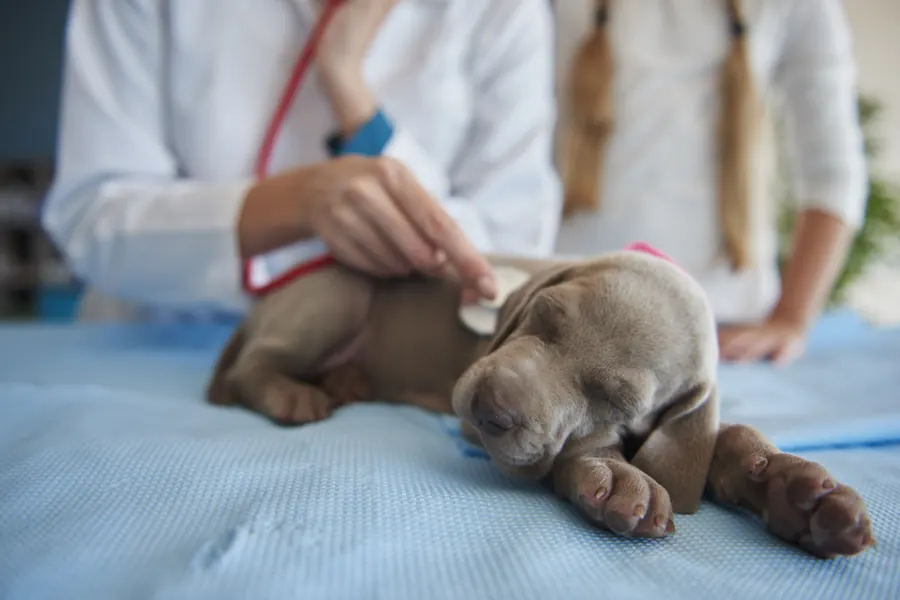
Parvovirus infection is a highly contagious intestinal disease in dogs that can quickly make an unvaccinated puppy particularly unwell. Vomiting, diarrhoea and dehydration can be life-threatening. An affected dog needs a veterinary assessment, and you must prevent other dogs from being exposed as soon as you suspect infection.
When to see a vet urgently
Call an emergency vet immediately if a puppy or a dog with incomplete vaccination protection has vomiting and diarrhoea, or suddenly becomes much worse.
- A puppy with bloody diarrhoea whose condition is deteriorating needs prompt assessment.
- A dog that is repeatedly vomiting and becoming dehydrated needs help before the fluid loss worsens.
- Collapse or marked weakness is a reason to go to an emergency vet.
- Obvious abdominal pain needs prompt investigation, as the disease can involve intussusception, where one section of intestine slides inside another.
You can find a vet near you for emergency care.
Overview
The virus damages the intestinal lining and can also weaken the body's defences. This means that a rapidly developing stomach upset can become an illness affecting the whole body. Young dogs whose vaccination protection is incomplete are most often affected, but unvaccinated adults can also become ill.
Parvovirus diarrhoea is moderately common worldwide. Cases are usually associated with inadequate vaccination protection in the individual dog. Signs can be mild, but severe infection is also possible.
Parvoviral disease is an acute, highly contagious disease of the digestive tract. The organism responsible is called canine parvovirus. No association has been demonstrated between the different virus strains and the severity of clinical disease.
Causes
Infection occurs when material containing the virus enters a dog's mouth or nose. An infected dog's faeces are a common source. Indirect contact with a contaminated environment or an object can also be enough to transmit infection. Dogs do not have to play together, and the sick dog does not even need to be present any longer. People or equipment can carry the virus from one environment to another.
In the intestine, the virus targets cells that renew rapidly. When these cells are destroyed, nutrient absorption and the intestine's protective barrier become less effective. This can allow bacteria to pass from the intestine into the bloodstream. Damage to the bone marrow also weakens the body's defences.
Dogs start shedding the virus in their faeces as early as 4–5 days after exposure. Shedding can begin before visible signs appear and continues for an average of about 10 days after clinical recovery.
Risk factors
Puppies aged 6 weeks–6 months with no vaccination protection or an incomplete course are most susceptible. As protection from their mother's antibodies declines, puppies enter a vulnerable period.
The stress of weaning, overcrowding and poor nutrition have been associated with more severe disease. Intestinal parasites and other concurrent intestinal infections can also make the illness worse.
Antibodies from the mother can interfere with vaccination in puppies younger than 8–10 weeks. A vaccination course and reduced exposure therefore complement each other during puppyhood.
Increased susceptibility has been described in Rottweilers, Dobermanns, English Springer Spaniels and German Shepherd Dogs. Among dogs older than 6 months, entire males become ill more often than entire females.
Typical symptoms
At first, your dog may simply become tired and stop eating. The illness does not always begin with dramatic bloody diarrhoea. Vomiting and diarrhoea may follow quickly, and the faeces may contain mucus and blood. Tests are used to confirm the cause of infection.
- Your dog withdraws from play and seems more tired than usual.
- Appetite decreases, or your dog refuses to eat.
- Vomiting occurs alongside other digestive signs.
- Your dog develops diarrhoea, which may contain blood or mucus.
- Your dog may have abdominal pain, weakness or a fever.
Dehydration is a major feature of severe disease. If your puppy is clearly unwell, do not wait for every sign on this list to appear before contacting a vet.
Signs usually begin 5–7 days after infection, although the possible range is 2–14 days. Vomiting and bloody diarrhoea may develop just 24–48 hours after the first general signs of illness. In about 25% of cases, no blood is visible in the diarrhoea.
Complications and consequences
Intestinal damage can lead to bacterial infection spreading into the bloodstream. Sepsis is a serious disruption of the body's functioning caused by infection. Possible complications also include intussusception and blood clots that block blood vessels. These are reasons why the veterinary team monitors more than just the consistency of your dog's faeces.
Survival usually exceeds 90% in dogs receiving intensive hospital treatment. More broadly, survival of 70–90% is reported in dogs receiving supportive care. Age, size and the severity of illness when treatment begins affect the outlook. Without treatment, most patients do not survive.
Infection before birth or before 8 weeks of age can occasionally also damage the heart muscle. Inflammation of the heart muscle can cause sudden failure of heart function or progressive heart failure later on. This form of the disease is now rare because of antibody protection from mothers.
Puppies that survive the first 3–4 days of illness often recover fully in about 1 week. Infection leads to long-lasting, potentially lifelong immunity. Neurological signs are more often due to low blood glucose, sepsis or disturbances in electrolyte and acid–base balance than to actual brain damage.
Diagnosis at the vet
The vet asks about your dog's age, vaccinations, when the signs began and any possible exposure. A young or incompletely vaccinated dog with vomiting and diarrhoea needs investigation particularly readily. Isolation arrangements may be necessary even before infection is confirmed.
A rapid faecal test detects components of the virus, while PCR testing detects its genetic material. A rectal swab can also be used as a sample. A negative result does not always rule out infection if the sample was taken when little virus was being shed. The vet interprets the result alongside the signs and the timing of sampling.
Blood tests can assess problems such as anaemia and blood glucose levels. They show how the illness is affecting the body and help the vet plan supportive care. If necessary, imaging or other faecal tests are used to look for other causes of vomiting and diarrhoea.
A vaccine containing modified live virus can cause a false-positive faecal test 4–10 days after vaccination. The vaccination date and the onset of signs therefore matter when interpreting the test.
White blood cell counts fall in most patients during the illness. This particularly affects lymphocytes and neutrophils, which are involved in the body's defences. Blood tests may also show low protein levels due to losses through the intestine, and electrolyte imbalances.
A false-negative result is also possible when profuse diarrhoea dilutes the sample. Virus shedding may decrease rapidly 10–12 days after infection, or about 3–4 days after signs begin. The timing of signs and sampling therefore also affects what a negative result means.
Treatment
The vet prescribes treatment and chooses where your dog should be cared for according to their condition. Replacing lost fluids and electrolytes is the basis of treatment. A severely ill dog needs intravenous fluids and close monitoring. Low blood glucose is also corrected if necessary. The aim is to support the body while your dog fights the infection.
Nausea, vomiting and pain are treated with medicines chosen by the vet. Antibiotics are used for bacterial infections associated with intestinal damage; they do not eliminate the virus itself. Nutrition is part of treatment, and a patient that is not eating may need a temporary feeding tube. Do not replace this overall care with diarrhoea remedies or human medicines chosen on your own.
A monoclonal antibody targeting the virus prevents it from entering cells. Further research is still needed to assess its effectiveness and the right timing of use in clinical cases.
A success rate of about 80% has been reported with vet-supervised outpatient treatment. Outpatient care requires successful administration of medication and a daily veterinary examination. Hospital care allows close monitoring and supportive treatment.
Feeding is not usually postponed until every intestinal sign has disappeared. Early feeding through the digestive tract has been associated with faster clinical improvement and better intestinal barrier function. How it is provided depends on vomiting and the patient's condition.
Antibiotics are used because bacteria can cross the damaged intestinal wall and the number of defensive white blood cells falls. Medicines that stop diarrhoea are not recommended, because retaining intestinal contents may increase the risk of complications affecting the whole body. Severe protein loss may require plasma or albumin under veterinary supervision.
A hospital patient that is not eating may have a feeding tube passed through the nose into the oesophagus or stomach. Starting early tube feeding within 12 hours of hospital admission is recommended when the patient's condition calls for it.
Fluid therapy replaces existing dehydration as well as ongoing losses and maintenance requirements. Blood glucose and potassium levels are monitored during treatment to detect dangerous falls.
Prevention
Vaccination is the basis of prevention. Boosters are given according to the instructions for the vaccine used. Dog parks are one example of high-risk places for an unvaccinated puppy. You can also read about protection on the dog vaccinations page.
If infection is suspected, the affected dog is separated from others. Cleaning starts with removing faeces and other visible dirt, followed by disinfection effective against parvovirus. Some dog events require a dog recovering from gastrointestinal illness to have been free of signs for at least 2 weeks; an event rule alone does not establish when the home environment is safe for a new puppy.
Parvovirus resists many ordinary disinfectants as well as changes in temperature and acidity. Infectious virus can survive indoors for at least 2 months. Outdoors, virus protected from sunlight and drying can survive for months or even years.
Current parvovirus vaccines also protect against the different strains of the virus. A new dog entering a home where another dog has had the disease should be fully vaccinated.
Important for dog owners
Write down when vomiting and diarrhoea began, what your dog has eaten and any changes in their condition. Bring vaccination records and tell the vet whether there are other dogs at home. When your dog is discharged, ask for a written plan covering what to monitor, when follow-up is due and which changes mean you must return for treatment immediately.
Agree with the veterinary team when isolation can end. Virus shedding may continue for about 10 days after clinical recovery. Isolation for 2 weeks after signs end is also recommended. Ask at the same time when you can bring a new puppy home and how to treat the outdoor area.
Frequently asked questions
Can an adult dog get parvovirus?
Yes, if their protection is inadequate. Puppies are common patients, but age does not make an unvaccinated adult immune to infection. Tell the vet about vaccination history even if the affected dog is no longer a puppy.
Is there always blood in the diarrhoea?
No. In about 25% of affected dogs, diarrhoea contains no visible blood. Do not simply watch a puppy with vomiting, tiredness and diarrhoea while waiting for blood to appear in the faeces. The need for investigation depends on all the signs and your dog's overall condition.
Can infection occur without contact with another dog?
Yes. Virus can reach a dog from an environment or equipment contaminated with faeces, without a direct encounter with a sick dog. When discussing possible exposure, mention shared spaces and equipment as well as play between dogs.
Is ordinary floor cleaning enough?
An ordinary cleaning product may not destroy the virus. Removing visible dirt and disinfecting effectively against the virus are separate steps. Ask the veterinary team for cleaning instructions suited to your home, as materials and options for treating outdoor areas vary. Plan the arrival of a new puppy with your vet.
Can parvovirus be treated at home?
Some dogs can receive vet-supervised outpatient care, but that decision is made after an examination. It requires careful treatment and follow-up visits. A dog with severe vomiting, dehydration or weakness may need hospital treatment, so do not begin home care by guessing the diagnosis.
Sources
- Canine Parvovirus Infection (Parvoviral Enteritis in Dogs), Merck Veterinary Manual, accessed 2026-11-02.
- Parvovirus: Transmission to treatment, Cornell University College of Veterinary Medicine, accessed 2026-11-02.
- Parvovirusripuli, Ruokavirasto, accessed 2026-11-02.
- Koiran rokotukset, Suomen Kennelliitto, accessed 2026-11-02.
This information does not replace a visit to a vet. In an emergency, contact your nearest emergency vet: find a vet (RCVS).
More on this topic: General conditions
- Addison's disease in dogs: symptoms, crisis and treatment
- Hypothermia in dogs: signs, first aid and treatment
- Alcohol poisoning in dogs: symptoms and first aid
- Wasp stings in dogs: symptoms, first aid and treatment
- Anaplasmosis in dogs: symptoms, tests and treatment
- Anaemia in dogs: symptoms, causes and treatment