
Dog diseases · Digestive system
Perianal fistulas in dogs – symptoms, treatment and outlook
Perianal fistula disease is a chronic inflammatory condition in which painful ulcers and draining cavities, called perianal fistulas, form around the anus. It is also called anal furunculosis. Modern treatment centres on medication that suppresses inflammation and the abnormal immune response.
When to see a vet urgently
Worsening pain and difficulty defecating need prompt veterinary assessment because inflammation can extend into deep tissues.
- Your dog strains heavily but passes no faeces, or defecation looks very painful.
- Your dog cries or whines when defecating and is restless because of pain.
- Ulcers produce pus-like discharge and pain increases rapidly.
- Your dog stops eating or becomes clearly subdued alongside anal pain.
You can find a vet near you to arrange care.
Overview
The disease often starts with small draining skin openings beside the anus. Lesions may widen, deepen and eventually extend around the entire anus. Despite their name, these subcutaneous tracts do not usually open into the rectum.
Perianal fistulas can severely reduce quality of life if pain and inflammation are not controlled. They differ from an anal sac abscess, although anal sac disease may occur alongside them or look similar externally. Early, appropriate treatment helps most dogs.
Treatment has shifted from a mainly surgical approach to long-term medical management.
Causes
The precise cause remains unclear, but abnormal immune function and inherited predisposition are considered underlying factors. Medicines affecting the dog's immune defences are used because of this immune-mediated inflammation. The walls of inflammatory tracts are lined with chronically inflamed tissue.
A broad-based, low-carried tail may encourage bacterial infection and chronic irritation in the area. However, tail carriage is a possible contributing factor rather than a confirmed primary cause. Faeces reaching damaged skin can sustain a cycle of inflammation and pain.
Some dogs also have chronic diarrhoea or inflammatory bowel disease. Adverse food reactions were identified in 18.8% of dogs with perianal fistulas in one patient group. However, coexistence does not establish that food allergy causes every perianal fistula.
Risk factors
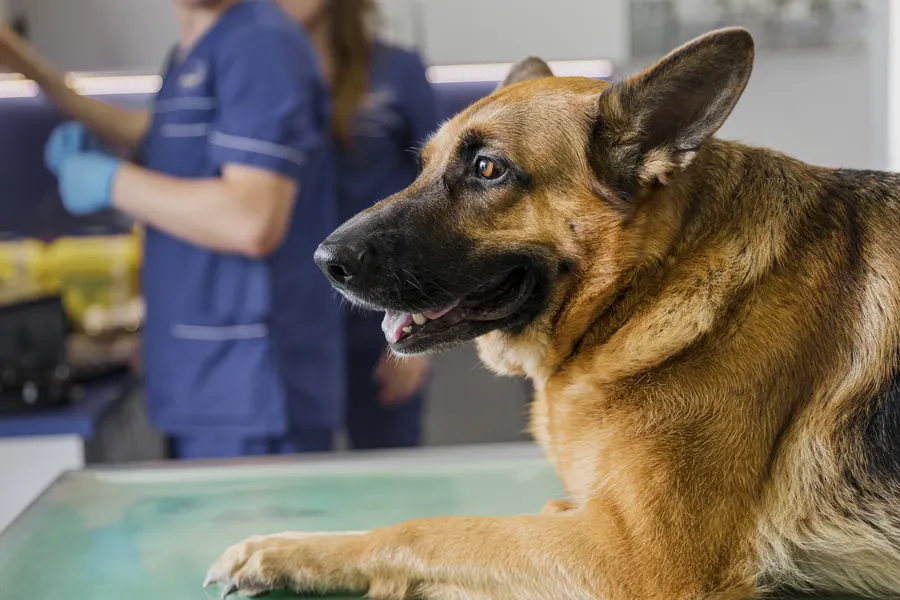
German Shepherd Dogs and German Shepherd crosses are particularly predisposed. German Shepherd Dogs have been reported to account for around 80% of affected dogs. Nevertheless, the disease can occur in any breed or crossbreed. Other recognised breeds include Irish Setters and Labrador Retrievers.
Most dogs develop the disease at around 2–9 years old. More cases have been observed in entire males. However, an effect of sex or neutering has not been consistently demonstrated. Some German Shepherd family lines have more disease than others.
Inherited susceptibility is multifactorial, and the disease is not considered to result from a single gene alone.
Typical symptoms
Early lesions may be subtle and found only during washing, grooming or a routine examination. Your dog may withdraw, seem depressed or become restless and defensive.
- Your dog repeatedly licks or bites around the anus.
- Defecation hurts and your dog strains more than usual.
- Mucus or bright blood appears in the faeces.
- Draining openings, ulcers or pus-like moisture are visible around the anus.
- An unusually strong or unpleasant smell comes from the rear end.
- Your dog does not want to sit or wag its tail normally.
- Touching the rear end may cause avoidance or an attempt to bite.
Diarrhoea, constipation or reduced faecal continence may also occur. Severe or longstanding disease can reduce appetite and cause weight loss.
Complications and consequences
Scarring and reduced continence
Inflammation can spread deeply and damage the external anal sphincter. Persistent disease may narrow the end of the rectum or anus. This narrowing relates to tissue scarring and can permanently impair defecation.
Longstanding tissue damage or repeated surgery can injure local nerves and cause faecal leakage. Severe untreated disease can cause irreversible changes and even lead to euthanasia because of poor quality of life.
Healing and recurrence are different outcomes
The outlook for initial healing of early lesions is generally good. However, recurrence is common, particularly in moderate and severe disease. Depending on treatment method, recurrence rates of up to 80% have been described. Up to 20% of cases do not heal completely and require intermittent lifelong treatment.
Reported surgical failure rates are 6–21%. Medical management also often requires long-term maintenance to keep the disease quiet.
Diagnosis at the vet
External examination and rectal palpation
The vet reviews symptom duration, defecation changes and previous problems around the rear end. Examination assesses the extent of skin openings and includes a digital rectal examination. A painful dog may need sedation to allow a thorough assessment.
The anal sacs are palpated and their contents assessed for an abscess or a tract communicating with them. The vet may assess tract depth using a probe gently. Measuring tract depth also helps monitor healing at later visits.
During examination, tracts may be flushed to assess connections between them and involvement of the anal sacs. Longstanding disease may produce severe scarring and thickened tissues on palpation.
Samples and exclusion of other causes
As well as anal sac disease, a tumour and other causes of fistula formation must be ruled out. If itching is the main symptom, alternatives include allergic skin disease and an anal sac abscess. Without visible tracts, bloody stools and straining may relate to intestinal inflammation, parasites or a rectal stricture.
Cell or tissue samples may be examined microscopically if findings are atypical or another disease is suspected. Bacterial culture may be needed to identify secondary infection. However, biopsy is not routinely necessary in a typical, recognisable case of perianal fistula disease. If concurrent conditions are left untreated, fistula treatment alone will not remove all symptoms.
Treatment
Medication affecting the immune response is the first choice
Medical treatment consists of initial treatment for active disease followed by a maintenance phase.
Your vet prescribes medication and assesses its effectiveness and possible adverse effects at follow-up appointments. The first-choice medicine is usually ciclosporin, which suppresses the abnormal immune response. Larger treatment series have reported clear improvement with ciclosporin in 96–100% of dogs.
Complete remission means that fistulas and other skin lesions have fully settled during treatment.
With ciclosporin, complete resolution of skin lesions often takes 8–12 weeks. The effect can take up to 3 months to develop, so effectiveness is assessed over a sufficiently long follow-up. Treatment reduction after remission is individual and gradual, following the vet's plan.
Topical tacrolimus may be used for mild lesions or as maintenance for more severe disease. Complete remission has been achieved in around 50% of dogs with topical tacrolimus. A glucocorticoid may be considered as an alternative to ciclosporin or part of combination treatment.
An advantage of topical tacrolimus is its action at the treated site without the same degree of whole-body immune suppression.
A glucocorticoid may act faster than other immunosuppressive medicines, but long-term adverse effects limit its use. Other options include azathioprine, which can suppress bone marrow activity and therefore blood cell production. Azathioprine may also cause liver damage or pancreatitis.
In a group receiving tacrolimus, a glucocorticoid, a novel-protein diet and a short antibiotic course, 15 of 19 dogs, or 79%, achieved complete remission. With this combination, complete resolution occurred within 16 weeks. The other 4 dogs in the same group improved substantially.
Systemic immunosuppression means reducing the whole body's defensive response, so monitoring for adverse effects is needed. Gastrointestinal upset is the most common adverse effect of ciclosporin. Check the suitability of other concurrent medicines with the treating vet.
If the response is inadequate, the vet may sometimes assess blood ciclosporin levels or the degree of immune suppression.
However, there is no consensus on the usefulness of blood-level measurement for assessing the treatment response.
Ketoconazole, for example, inhibits ciclosporin breakdown in the body, which must be considered when the medicines are used together.
Treating pain, bacterial infection and bowel symptoms
Pain relief and stool-softening treatment can ease straining and painful defecation. Antibiotics are used for secondary bacterial infection where needed. However, an antibiotic alone does not adequately treat the underlying cause.
If an adverse food reaction is suspected, the vet may plan an elimination diet trial. Evidence is insufficient for the effectiveness of a novel-protein or hydrolysed-protein diet against fistula disease itself. A hydrolysed diet and other supportive measures therefore do not replace the main medical treatment.
Surgery is considered when medication is insufficient
Surgery is usually reserved for dogs whose disease does not settle with appropriate medical treatment. It may remove diseased tissue and, where necessary, involved anal sacs. Laser treatment or freezing can destroy damaged tissue and the lining of fistulous tracts.
Tail amputation is no longer recommended as a routine treatment.
Surgical complications include wound breakdown, stricture, faecal leakage and fistula recurrence. After cryosurgery or laser treatment, open wounds may remain for several weeks. Care includes gentle cleaning to remove dead tissue, bacteria and faecal residue.
Prevention
No effective way to prevent perianal fistula disease is known. Breeding from an affected dog is discouraged because of inherited predisposition. Careful washing and cleaning around the anus may ease symptoms. However, the underlying abnormal immune function also requires treatment. Trimming hair around the anus in a long-haired dog may improve ventilation and symptoms.
Preventing recurrence requires long-term maintenance treatment in many dogs even after visible lesions have settled. The disease may recur after medication stops.
Important for dog owners
Record ease of defecation, stool consistency, pain and discharge around the anus. If useful, photograph changes under the same lighting, provided this does not hurt your dog. Tell the vet about diarrhoea, previous anal sac problems and all current medicines. Ask which changes indicate a treatment response, when follow-up is due and how adverse effects will be monitored.
Pain may make a dog defensive or cause it to try to bite when its tail is lifted. Some dogs need a protective collar to prevent licking and skin damage. In severe, recurring disease, treatment may also aim to reduce pain and discomfort.
Frequently asked questions
Is a perianal fistula just an anal sac infection?
No: it is a chronic inflammatory disease that is probably immune-mediated. However, anal sac disease and a tumour can cause similar draining tracts and must be excluded. Careful anal sac assessment is therefore part of the veterinary examination.
Can antibiotics cure the disease?
An antibiotic may be needed for secondary bacterial infection, but is insufficient as the sole treatment for perianal fistulas. The disease itself is usually treated with medicines that suppress the immune response. Veterinary-prescribed supportive care can also ease pain and difficulty defecating.
How long does treatment take?
With ciclosporin, complete resolution of visible lesions often takes 8–12 weeks. Its effect may take up to 3 months, so assessment requires patient monitoring. Afterwards, many dogs need long-term maintenance because the disease readily recurs when medication ends.
Is surgery always necessary?
Medical management is now usually the first-choice treatment, with surgery considered if the response is inadequate. Surgery may help treat involved anal sacs or severely damaged tissue. Risks include strictures, reduced continence and recurrence.
Does changing diet help?
A diet trial may be justified if an adverse food reaction or concurrent allergic signs are suspected. However, evidence is insufficient for a novel-protein or hydrolysed-protein diet treating fistula disease itself. Diet is therefore planned alongside the other veterinary-prescribed treatment.
Sources
- Perianal Fistula in Dogs, Merck Veterinary Manual, accessed 2026-11-05.
- Literature review and authors’ consensus recommendations for the medical management of perianal fistulae in dogs (2025): Journal Watch summary, RCVS Knowledge, accessed 2026-11-05.
- Perianal Fistulas, American College of Veterinary Surgeons, accessed 2026-11-05.
- Canine Perianal Fistulas, Today’s Veterinary Practice, accessed 2026-11-05.
- Perianaalifistelia, Suomen Leonberginkoirat ry, accessed 2026-11-05.
- Perianal Fistula in Dogs, VCA Animal Hospitals, accessed 2026-11-05.
This information does not replace a visit to a vet. In an emergency, contact your nearest emergency vet: find a vet (RCVS).
More on this topic: Digestive system
- Echinococcus tapeworms in dogs – infection and echinococcosis
- GDV in dogs: recognising a twisted stomach emergency
- Giardia in dogs: symptoms, tests and treatment
- EPI in dogs: pancreatic insufficiency symptoms and treatment
- Pancreatitis in dogs: symptoms, tests and treatment
- Mould poisoning in dogs: mouldy food and compost