
Dog diseases · General conditions
Salmonella in dogs: symptoms, transmission and treatment
Dogs can acquire Salmonella from contaminated food, water or surroundings, for example. They may carry it without signs or develop salmonellosis. Diarrhoea with dehydration or deteriorating condition needs assessment for treatment. Infection can also spread to people.
When to see a vet urgently
Severe Salmonella infection can progress to sepsis. Seek emergency assessment, for example, if:
- Your dog deteriorates rapidly or cannot stand.
- Diarrhoea or vomit contains blood.
- The abdomen is severely painful or consciousness decreases.
- Breathing becomes difficult or mucous membranes pale.
- Temperature exceeds 40 °C.
Puppies develop disease more readily than adults. Find a vet or emergency vet.
Overview
Infection and illness differ
Salmonellosis is infectious disease caused by Salmonella bacteria. Symptom-free carriage is more common in animals than obvious clinical disease. Symptomatic salmonellosis is fairly uncommon in dogs and cats. Nevertheless, an asymptomatic dog can shed bacteria in faeces and contaminate the home.
In one report from northern Europe, Typhimurium was the most commonly isolated Salmonella serotype, or subtype, in small animals. Serotypes may differ in pathogenicity and environmental persistence. Salmonella can cause acute or prolonged gastrointestinal disease. Disease may remain intestinal or spread into blood.
Causes
Faecal bacteria reach the mouth
The usual route is faecal–oral entry into the digestive tract. Contact can be direct or indirect, so visible faeces need not be eaten. Contaminated drinking water and undercooked food are possible sources. Licking the rear can transfer faecal bacteria to the muzzle, mouth and coat. An infected person can also infect a dog.
Unheated foods containing raw meat or eggs are more often Salmonella-positive than heat-treated food. Dried pig ears can also transmit infection. Wild birds and rodents can spread bacteria into animals' surroundings. Avoiding bird carcasses and droppings outdoors reduces exposure.
Swallowed bacteria colonise the gastrointestinal tract and may invade surface cells. Deeper mucosal invasion promotes injury and diarrhoea. The inflammatory response usually prevents systemic spread.
Freezing does not eliminate bacteria
Salmonella survives freezing, so frozen raw food is not sterile. Bacteria can multiply in thawed raw food. Drying also does not reliably kill them. They can survive for weeks in dry conditions and months in moist conditions. Thawing juices provide a good growth medium.
In one northern European survey in 2018, 37 frozen raw pet food samples were tested. They represented 12 product names or manufacturers. No Salmonella was detected in those products. This concerns the products tested then rather than establishing every raw food batch as Salmonella-free.
Risk factors
Puppies develop symptomatic disease more readily than healthy adults. Adult illness often involves concurrent infection or another health problem. Clinical infections also occur with hospitalisation and debilitating diseases.
Raw feeding and free roaming increase opportunities to encounter sources. Young, elderly or unwell dogs may lack adequate defences against raw food microbes. Reduced immunity can make a previously asymptomatic carrier ill. A pet reptile can also carry intestinal Salmonella without signs, relevant to whole-household hygiene. A large bacterial exposure can cause intestinal inflammation even in adults.
Typical symptoms
Acute signs may start around 3–5 days after exposure. However, onset as early as 12 hours has occurred. Signs mainly involve gastrointestinal inflammation. Diarrhoea severity varies and stools may contain blood. At home, you may see:
- Diarrhoea, possibly bloody.
- Vomiting and nausea.
- Poor appetite or refusal to eat.
- Reduced activity and subdued behaviour.
- Fever.
- Abdominal pain and weight loss with prolonged illness.
Diarrhoea may be watery or contain mucus. Diarrhoea and vomiting can cause dehydration. Signs alone cannot reliably identify Salmonella because other diseases cause similar diarrhoea. Resolution does not necessarily mean shedding has stopped.
Complications and consequences
Dehydration and systemic infection
Heavy fluid loss may need fluids and acid–base correction. Bacteria crossing the lining into blood can cause sepsis, a severe systemic infection. Prompt treatment is essential. Infection during pregnancy can cause foetal loss or weak newborn puppies. Severe canine salmonellosis can also involve pneumonia.
Recovery and carriage
Dogs may shed Salmonella for weeks after infection. Sometimes shedding lasts months. Bacteria can remain latent in intestinal lymph nodes, liver or spleen, for example. Stress may reactivate latent infection. Normal stools and elimination of infection are therefore separate monitoring questions.
An asymptomatic pet can also infect people or other animals at home. People can acquire bacteria orally after handling contaminated food or utensils and then touching their mouth. Young children and immunocompromised people are more susceptible. Disease can also be more serious during pregnancy or in elderly people.
Diagnosis at the vet
Faecal samples and the clinical picture
Faecal bacterial culture is the main test. Diarrhoeic faeces are preferred. Suspected sepsis may require blood culture. Results are assessed alongside signs and exposure. One positive culture in an asymptomatic dog may prompt repeat samples to investigate carriage.
Shedding is uneven
Several days' faecal samples are recommended when investigating prolonged asymptomatic shedding. A negative sample does not completely exclude infection. Culture can be negative with small numbers or little shedding at sampling.
PCR can detect bacterial genetic material. It can also detect dead bacteria, so positivity does not automatically establish living infection. Certain faecal compounds can interfere with PCR. After positive PCR, culture helps obtain an isolate for closer testing. Serotyping may help trace the source. Suspected food, water or surroundings can also be tested when needed.
Treatment
Supportive care is enough for many dogs
Most affected dogs and cats need supportive care only. Fluids can correct dehydration and acid–base disturbances. Need depends on general condition and fluid loss severity. Persistent systemic signs despite appropriate fluids place a dog in the severe category. Your vet assesses individual care and hospitalisation needs.
When are antibiotics needed?
Severe systemic infection needs antibiotics and support. Suspected sepsis requires prompt intravenous or other injectable antibiotics. Cultured bacteria can undergo susceptibility testing when treatment is needed. Selection considers local resistance. Hospital-acquired infections may be particularly resistant.
Mild acute diarrhoea in an otherwise well dog generally does not need antibiotics. Blood alone also does not automatically justify them if general condition is good and dehydration absent. Routine antibiotics can themselves cause diarrhoea. They may disrupt protective microbiota and prolong Salmonella shedding. Unnecessary use can also favour resistant strains.
Follow-up continues after improvement
Hospitalised diarrhoea patients have response assessed daily. A blood count suggesting severe inflammation may change antibiotic need even with otherwise moderate diarrhoea. Low neutrophils, a white cell group, are one finding affecting this decision. Clinical recovery does not always confirm bacterial elimination. Repeat samples are planned separately if prolonged carriage needs investigation.
Prevention
Separating dogs with infectious diarrhoea and cleaning their surroundings help infection control. Hand hygiene and thoroughly cooking meat reduce risk. Use separate chopping boards and utensils for raw pet food and human food. Avoid wooden feeding and preparation equipment because thorough cleaning is difficult. Store pet food separately from human food. Use thawed raw food promptly and do not refreeze it.
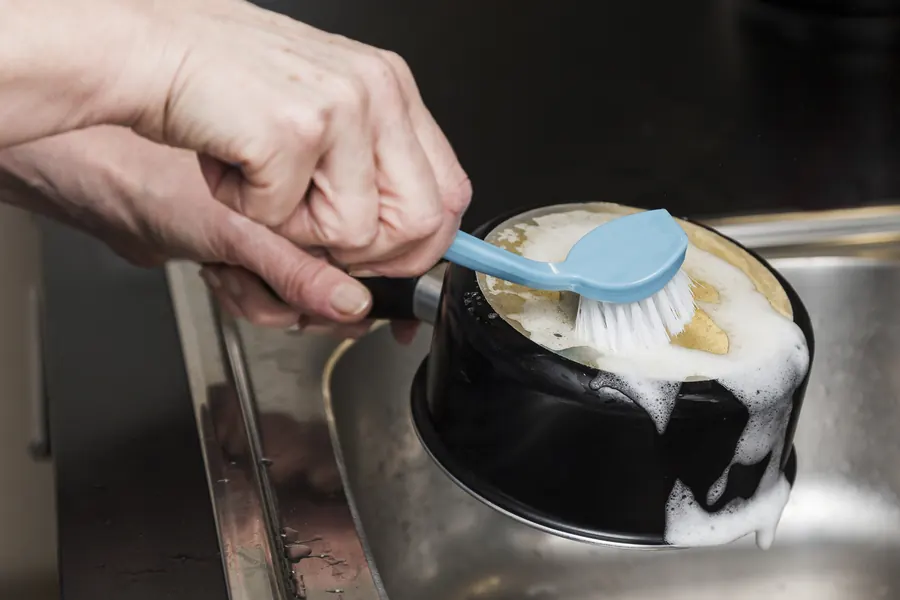
Metal or ceramic equipment can be washed after use in water above 70 °C. Use a separate washing-up brush for pet bowls. Dishwashers generally kill Salmonella on programmes above 60 °C together with detergent. Refrigerate raw food in a lidded container. Wash the water bowl too because bacteria can persist on surfaces and in water.
Prevent children's access to bowls and faeces. Collect faeces on walks to prevent spread to other pets. Wash hands after raw food handling before preparing human food. Wash after animal contact and cleaning faeces or vomit.
Important for dog owners
Collect around 2–3 grams of fresh faeces in a clean, closed, leakproof container. Deliver promptly to the laboratory. Without special transport arrangements, processing should occur within 2 hours. For longer transport, the laboratory advises suitable transport medium. Keep cool at around 4–10 °C without freezing.
Record diarrhoea, vomiting, eating and alertness changes, and report diet and possible raw food exposure. Tell the practice about confirmed Salmonella beforehand so the visit can limit spread. Do not collect faeces with bare hands. Do not allow an infected dog to lick people. Sharing a child's bed is not recommended. Agree individual protection for vulnerable household members.
Hygiene remains necessary during asymptomatic shedding. Agree sampling, shared walking and activity areas, and reasons to contact your vet during treatment.
Frequently asked questions
Can an apparently healthy dog spread Salmonella?
Yes. An asymptomatic dog can shed bacteria in faeces and spread them at home. Saliva may also contain bacteria. Handwashing, collecting waste and preventing licking of people therefore remain necessary despite normal general condition.
Does every positive dog need antibiotics?
No. Supportive care is enough for most dogs. Antibiotics are particularly needed for severe systemic infection. Unnecessary treatment can disrupt normal microbiota and prolong shedding, so decisions consider condition, severity and findings.
Does freezing kill Salmonella in raw food?
No. Salmonella survives freezing. Bacteria can multiply in thawed food too. Frozen food therefore still needs good hygiene, separate equipment and prompt use after thawing to prevent kitchen spread.
Does a negative faecal sample exclude infection?
Not completely, because shedding varies. Investigating prolonged carriage may need several days' samples. Continuing signs and known exposure therefore still matter after an initially negative sample.
When does a dog stop spreading Salmonella?
Symptom resolution cannot establish exactly when shedding ends. Shedding may continue for weeks or sometimes months. Possible prolonged carriage is assessed through faecal samples, with hand hygiene and careful waste collection continuing during recovery.
Sources
- Salmonellosis in Animals (2026), Merck Veterinary Manual, accessed 2026-11-07.
- Raakaruoka, Ruokavirasto, accessed 2026-11-07.
- Lemmikkien raakaruokien mikrobiologinen laatu ja antibioottiresistenttien bakteerien esiintyminen, Ruokavirasto, accessed 2026-11-07.
- Get the Facts about Salmonella, U.S. Food and Drug Administration, accessed 2026-11-07.
- Salmonellatartunnat, Ruokavirasto, accessed 2026-11-07.
- Salmonella lemmikeillä (2023), Ruokavirasto, accessed 2026-11-07.
- ENOVAT Guidelines for Antimicrobial Use in Canine Acute Diarrhoea (2024), ENOVAT / The Veterinary Journal, accessed 2026-11-07.
- Mitä on päivystyshoito, Helsingin yliopisto, accessed 2026-11-07.
- Enteropathogenic Bacteria in Dogs and Cats: Diagnosis, Epidemiology, Treatment, and Control (2011), Journal of Veterinary Internal Medicine / ACVIM, accessed 2026-11-07.
This information does not replace a visit to a vet. In an emergency, contact your nearest emergency vet: find a vet (RCVS).
More on this topic: General conditions
- Addison's disease in dogs: symptoms, crisis and treatment
- Hypothermia in dogs: signs, first aid and treatment
- Alcohol poisoning in dogs: symptoms and first aid
- Wasp stings in dogs: symptoms, first aid and treatment
- Anaplasmosis in dogs: symptoms, tests and treatment
- Anaemia in dogs: symptoms, causes and treatment