
Dog diseases · General conditions
Sepsis in dogs: symptoms and emergency treatment
Sepsis is a life-threatening condition in which a dysregulated response to infection damages organ function. Suspected sepsis needs immediate emergency assessment. Treatment addresses the infection source while protecting circulation and other vital functions.
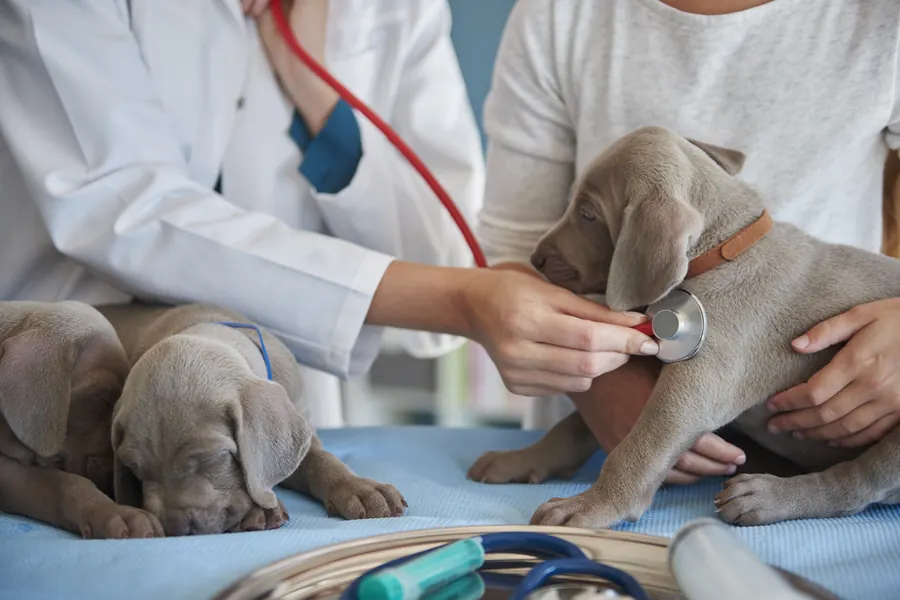
When to see a vet urgently
A septic dog's condition has often deteriorated rapidly. Seek emergency care immediately, particularly if:
- Your dog collapses, cannot stand or responds less than usual.
- Breathing becomes difficult or clearly laboured.
- The gums are pale and your dog is unusually weak.
- Temperature exceeds 40 °C and your dog is unwell.
- Your dog has severe pain or bloody vomiting or diarrhoea.
Temperature can also fall in advanced shock. Find a vet or emergency vet.
Overview
Infection and a dysregulated immune response
Sepsis involves infection with organ dysfunction. Infection alone does not mean sepsis. Injury may affect the infected organ or distant organs. Investigation therefore extends beyond looking for bacteria in blood.
Severe bacterial infection is the most common starting point. Viral, fungal or protozoal infection can also lead to sepsis. A similar systemic inflammatory response can occur without infection after trauma, pancreatitis or tumour disease, for example. Parvovirus is one possible cause of viral sepsis in dogs. Sepsis can involve deterioration of several organ systems, called multiple organ dysfunction.
Causes
Infection can start in different body regions
Escherichia coli is a common bacterial finding in canine sepsis. Enterococci and streptococci also occur. Underlying infections can involve the intestine, respiratory tract, urinary tract or reproductive organs.
In one group restricted to septic dogs, the source was abdominal in 35%. Reproductive sources accounted for 25%. Respiratory sources accounted for 20%. Urinary sources accounted for 10%. Other sites accounted for 10%. These distributions do not estimate disease risk across all dogs.
Septic peritonitis often follows gastrointestinal injury such as a foreign body, ulcer or intestinal suture breakdown. A severely infected skin wound can also provide the source. Pyometra can cause severe infection and shock.
Circulation and cell function are disrupted
Inflammation can increase vascular wall permeability. Fluid moving out of vessels reduces effective circulating volume. Vasodilation can distribute circulation inappropriately between tissues. Heart muscle function and cellular energy metabolism may also be impaired.
Risk factors
Development depends on age, other diseases, infection location and immune function. Pathogen characteristics and ability to cause severe disease also matter. Even pathogens entering blood do not always cause sepsis.
The first 3 weeks of a newborn puppy's life are particularly vulnerable, and sepsis is an important cause of death then. Infection can originate in the mother's uterus. Severe dental or gum disease can also provide a bacterial source. An unspayed middle-aged or older female is predisposed to pyometra. A severely infected uterus can therefore become a sepsis source.
Typical symptoms
Signs depend on the original infection site and disease stage. Early findings can include fever, rapid heart rate and red mucous membranes. You may notice:
- Unusual tiredness, weakness or reluctance to move.
- Refusal to eat or reduced appetite.
- Vomiting or diarrhoea.
- Faster breathing.
- Fever.
- Confusion or abnormal responses to surroundings.
Early veterinary findings may also include a strong peripheral pulse and faster capillary refill. As disease progresses, gums may become pale and consciousness decline. Shock can also reduce urine production. No individual sign is specific, so diagnosis relies on the whole picture.
Complications and consequences
Shock and organ injury
In septic shock, circulation does not ensure tissue oxygen and nutrient needs. Low blood pressure can persist despite appropriate fluids. Injury may affect kidneys, liver, heart and respiratory organs, for example.
Disrupted clotting can produce small clots and later a tendency to bleed. Multiple organ dysfunction means several systems deteriorating simultaneously. The outlook worsens with more affected systems. Organ dysfunction is not necessarily worst on the first hospital day.
Outlook and hospital stay
Mortality in treated dogs has ranged from 18–81%, often 29–50%, between patient groups. These involve different infections and severity. Surviving dogs have spent an average of around 6 days in hospital. Another general estimate is 3–5 days, sometimes longer. These describe different care situations rather than an individual's discharge day. In one group, dogs that died had averaged only 18 hours in hospital. Early treatment and high-quality intensive care improve recovery chances.
Diagnosis at the vet
Infection and organ function are assessed together
Initial assessment checks airway, breathing and circulation. History, examination, imaging and sampling locate the source. Abdominal ultrasound and chest X-rays can help, for example.
Heart rate, respiratory rate, temperature, consciousness, blood pressure and lactate are repeatedly monitored. Systemic inflammatory response syndrome, or SIRS, is insufficient to diagnose sepsis. Severity assessment may use APPLE scoring, for example. Echocardiography may identify sepsis-related pumping dysfunction.
Culture and laboratory tests
Culture samples come from the infection site and blood when needed. Ideally, they precede antibiotics without delaying treatment. Negative blood culture does not completely exclude bacteria in blood. Culture results can target further care.
Cytology from the infection site may reveal the inflammatory pattern faster than culture. Intracellular bacteria in inflammatory cells suggest bacterial infection, for example.
White blood cells may be increased or decreased. An abnormal count is not essential for diagnosis. Platelets may fall through clotting activation. Glucose may be low, high or within reference limits. Organ assessment also includes kidney, liver and clotting tests, for example.
Biochemical abnormalities may appear later despite unchanged early results.
CRP may rise only 4–24 hours after infection begins. It cannot distinguish sepsis from other inflammation. Repeated lactate helps assess tissue oxygenation and circulatory response. Lactate can also rise with disrupted cellular energy metabolism, so elevation does not always mean inadequate circulation alone. Normal blood pressure does not exclude microcirculatory disturbance either.
Treatment
Infection treatment and source control
Treatment starts without delay, with several measures performed simultaneously. Initial antibiotics are generally intravenous and should cover different bacterial groups. For pneumonia causing sepsis signs, the aim is to start antibiotics within 2 hours of arrival. Your vet selects medication according to infection and condition.
If the source needs surgery, intervention follows adequate stabilisation as quickly as possible. Depending on location, the aim is surgical source control within 6–12 hours of arrival. This may involve a ruptured intestine or uterus, for example. Once culture results arrive, antibiotics are targeted and unnecessary treatment stopped.
Circulatory and respiratory support
Intravenous fluids aim to improve circulating volume and tissue perfusion. Treatment is individual because septic patients can become fluid-overloaded. Response is followed through weight, urine production, blood pressure and lactate, for example. Overload signs include weight gain, faster breathing and limb swelling.
Fluid overload in dogs is associated with increased mortality. Synthetic colloids are not recommended first-line in sepsis because of adverse effect risks.
If correcting fluid deficit does not restore pressure, vasoconstrictor medication may be needed. An inotrope can support impaired heart muscle function. Breathing difficulty may require oxygen. Severe respiratory failure may need mechanical ventilation. Blood products can treat anaemia or clotting factor deficiency, for example.
Pain, nutrition and ongoing monitoring
Pain relief begins with short-acting opioids when needed. NSAIDs are avoided initially because of adverse effects. Nutritional support is essential. Enteral feeding can shorten hospitalisation and improve prognosis in dogs. A feeding tube can help if your dog will not eat. Uncontrolled nausea, ileus or significant aspiration risk may delay feeding.
If low pressure requires vasopressor medication, enteral feeding is generally not started.
A seriously ill dog needs round-the-clock hospital care and monitoring. Intensive care also follows glucose, electrolytes, oxygenation, consciousness and organ function. A recumbent patient's position is changed around every 4 hours to prevent pressure sores. Intravenous catheters are checked regularly for displacement and infection. Discharge generally becomes appropriate once fever resolves and heart rate and blood pressure normalise.
Prevention
Preventing underlying infections includes vaccination against parvovirus, for example. Puppies are protected from exposure until immunity develops. Spaying before pyometra develops prevents this source.
Prevent wound licking and damage with a collar or protective suit. Check surgical wounds daily. Marked swelling, warmth, discharge or pain needs veterinary assessment. Prompt recognition and treatment of infection signs reduce severe organ dysfunction risk.
Important for dog owners
Tell the practice about previous diseases, medicines and recent injuries or surgery. Mention original infection signs and onset too. Immediate problems are assessed first, so a lengthy history discussion may continue after stabilisation.
At home, monitor eating, alertness, breathing and urination. Have wound redness, warmth, swelling or increasing pain checked. After sepsis requiring surgery, exercise may be restricted for around 10–14 days. Agree follow-up, nutrition and changes needing immediate action at discharge. Do not give human painkillers.
Frequently asked questions
Does sepsis just mean bacteria in blood?
Sepsis requires infection and associated organ dysfunction. Not every pathogen entering blood causes it. Assessment therefore considers the source, adequacy of circulation and function of different organs to determine care.
Can sepsis occur without high fever?
Yes. Advanced shock can involve reduced temperature. Reduced consciousness and pale mucous membranes are also serious. Overall condition determines care, so absent fever does not justify observing a collapsed dog at home.
Does low CRP exclude sepsis?
CRP may rise only 4–24 hours after infection starts. It also cannot distinguish sepsis from other inflammation. Diagnosis therefore seeks infection and resulting organ dysfunction, with repeated clinical assessment.
Why might antibiotics be insufficient without surgery?
A ruptured intestine or uterus may underlie sepsis and need corrective surgery. A surgically treatable source is addressed as soon as adequate stabilisation allows. Antimicrobials and circulatory support are needed simultaneously.
How long does a septic dog stay in hospital?
Survivors have spent an average of around 6 days in hospital. An estimate of 3–5 days is also common, sometimes longer. Discharge depends on condition, including resolved fever and normalised heart rate and blood pressure.
Sources
- Koiran ja kissan sepsis — tunnistaminen ja hoito (2025), Suomen Eläinlääkärilehti, accessed 2026-11-07.
- Initial Triage and Resuscitation of Small Animal Emergency Patients, Merck Veterinary Manual, accessed 2026-11-07.
- Evaluation and Initial Treatment of Dog and Cat Emergencies, Merck Veterinary Manual, accessed 2026-11-07.
- Mitä on päivystyshoito, Helsingin yliopisto, accessed 2026-11-07.
- Sepsis in Dogs and Cats-Consensus Definition and Clinical Criteria (2026), Journal of Veterinary Emergency and Critical Care, accessed 2026-11-07.
- Tietopankki: Sappirakon tulehdukset, Eläinlääkäriasema Kamu, accessed 2026-11-07.
- Sepsis in Dogs, PetMD, accessed 2026-11-07.
- Parvovirusripuli, Ruokavirasto, accessed 2026-11-07.
- Pyometra, Cornell University College of Veterinary Medicine, accessed 2026-11-07.
This information does not replace a visit to a vet. In an emergency, contact your nearest emergency vet: find a vet (RCVS).
More on this topic: General conditions
- Addison's disease in dogs: symptoms, crisis and treatment
- Hypothermia in dogs: signs, first aid and treatment
- Alcohol poisoning in dogs: symptoms and first aid
- Wasp stings in dogs: symptoms, first aid and treatment
- Anaplasmosis in dogs: symptoms, tests and treatment
- Anaemia in dogs: symptoms, causes and treatment