
Dog diseases · General conditions
Thyroid tumours in dogs: symptoms and treatment
A thyroid tumour may feel like a neck lump even without other visible signs. Most canine thyroid tumours are malignant. Nevertheless, excess hormone production is uncommon. Treatment options particularly depend on size, attachment to surrounding tissues and any spread.
When to see a vet urgently
A neck tumour can compress the trachea and impair breathing. Seek emergency assessment immediately if:
- Breathing becomes difficult or clearly laboured.
- Your dog deteriorates rapidly or cannot stand.
- Your dog becomes unusually sleepy or less conscious.
- The mucous membranes are pale or there is severe bleeding.
- Your dog is in severe pain.
Overview
The neck gland and its tumours
The thyroid lobes lie on either side of the trachea in the neck. Thyroid hormones regulate functions including energy use and metabolic activity. A benign glandular tumour is called an adenoma and a malignant one a carcinoma. Malignant thyroid tumours can spread elsewhere.
Thyroid tumours account for around 1.2–4.0% of all canine tumours. Estimates suggest 63–88% of canine thyroid tumours are malignant. A figure of around 90% has also been reported. Benign adenomas and glandular hyperplasia are also found incidentally at post-mortem examination.
Causes
How does a tumour develop?
A tumour forms when thyroid glandular cells multiply abnormally. The initiating cause in an individual dog is generally unknown. No recognised dietary or environmental causes have been established. Breed differences suggest a possible inherited contribution.
Follicular carcinoma develops from hormone-producing follicular cells. Medullary carcinoma originates in calcitonin-producing C cells. These have different cellular origins and may require special tissue stains to distinguish them.
Location and hormone function
Thyroid tissue can also lie in an abnormal location, such as beneath the tongue or in the chest. Thyroid carcinoma can develop from this tissue. Most dogs with thyroid carcinoma retain normal hormone function. Excess hormones have been described in around 10% of affected dogs. Destruction of functioning tissue can instead cause hypothyroidism.
Risk factors
Median age is around 9–10 years. Thyroid tumours occur particularly in middle-aged and older dogs. Predisposed breeds include Boxers, Beagles and Golden Retrievers. Siberian Huskies are also mentioned among more frequently affected breeds.
In a group of 60 dogs operated on for thyroid carcinoma, median age was 10.21 years. Ages ranged from 5.38–15.49 years. Larger tumours carry greater metastatic risk: a diameter above 5 centimetres or volume above 20 cubic centimetres is considered unfavourable. Invasion of surrounding tissues reduces surgical removal options. Bilateral carcinoma has been associated with a 16-fold metastatic risk. These final features describe diagnosed tumour behaviour rather than why the dog initially develops it.
Typical symptoms
The first finding may be a palpable or visible lump low in the neck. Tumour pressure can cause signs without abnormal hormone production. At home, you may see:
- An enlarging neck lump or swelling.
- Coughing, faster breathing or unusual breathlessness.
- Difficult swallowing or gagging during meals.
- A changed bark.
- Reduced appetite or weight loss.
- With excess hormones, restlessness, constant hunger, weight loss and increased drinking and urination.
A functional tumour can cause rapid heart rate, arrhythmias or muscle tremors. Hypothyroidism from tissue destruction may cause tiredness and hair loss. A thyroid tumour can also cause no signs at all.
Complications and consequences
Local growth and metastases
Thyroid carcinoma can invade the larynx and major blood vessels. Common sites of spread are regional lymph nodes and lungs. Metastases have also been described in bones, liver and brain, for example. Around 33% spread at diagnosis has been reported. Estimates of 40–50% also exist. During the disease course, spread has been described in around 65–90% of dogs.
Prognosis depends on the group selected for treatment
Surgical results are best for a freely movable tumour below 4 centimetres that can be completely removed without metastases. Survival of 1–3 years can be achieved after surgery, depending on histological features and spread. Follow-up of 60 dogs operated on for thyroid carcinoma found median survival of 1,892 days. Eighteen, or 30%, also received another cancer treatment. In 32 dogs treated with radioactive iodine, median overall survival was 707 days. Overall survival included deaths from causes other than thyroid cancer. Figures from different groups therefore cannot directly rank treatments.
Tumour size also affected progression-free time in operated dogs with follicular carcinoma. With tumours below 4.25 centimetres, median progression-free time was 1,892 days. At or above 4.25 centimetres, it was 961 days. This means time without detected progression and differs from overall survival.
Diagnosis at the vet
The lump and hormone function are assessed separately
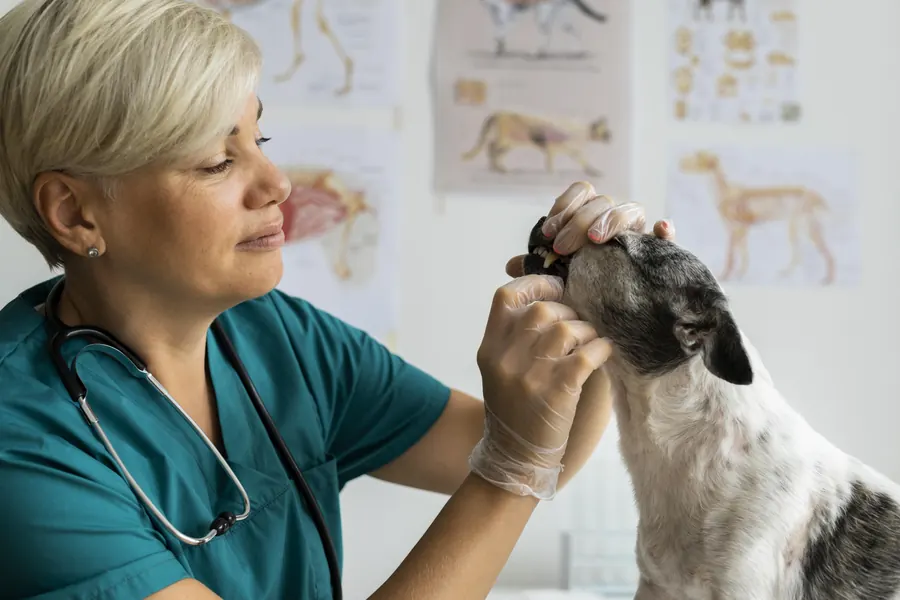
Your vet feels the neck lesion and assesses breathing and findings suggesting hormonal dysfunction. A neck lump may also be an abscess, salivary fluid collection or another tumour. Blood tests include thyroxine, a thyroid hormone. Normal hormone levels do not exclude carcinoma because many affected dogs retain normal function. Planning also reviews concurrent diseases that may alter suitable cancer treatment or support. Low hormones can reflect another serious illness without true hypothyroidism.
Imaging assesses growth and spread
Ultrasound or CT shows size and invasion better than plain neck X-rays. Chest X-rays or CT look for pulmonary metastases. Abdominal ultrasound and blood tests help assess the rest of the body before treatment. Regional lymph nodes may be sampled for spread. Scintigraphy can help locate abnormally positioned thyroid tissue.
Sampling is planned because of bleeding risk
Fine-needle samples may contain carcinoma-like cells, but abundant blood can impair interpretation. Final diagnosis relies on microscopic tissue examination. Tumours are often highly vascular, so clotting is checked before biopsy or surgery. Routine preoperative biopsy is not recommended because of bleeding risk.
Stains for thyroglobulin and calcitonin, for example, can investigate cell origin. Special stain results may help your vet target further care according to tumour type.
Treatment
Surgery suits a local, removable tumour
Your vet selects treatment according to size, invasion and metastatic investigations. Thyroidectomy is particularly recommended for a freely movable tumour without deep invasion. Large or firmly attached tumours often need assessment by an experienced surgeon. Bleeding and growth into local vessels can complicate surgery. Examination of removed tissue helps assess additional treatment needs.
Radiotherapy and other cancer treatments
Radiotherapy or chemotherapy may be used if complete removal or surgery is impossible. Radiotherapy can sometimes shrink an invasive tumour before surgery. Radioactive iodine may suit selected dogs with poor surgical options or vascular invasion. It targets iodine-accumulating thyroid tissue, including metastases. Availability is limited and treatment involves an extended hospital stay.
Recovery and surgical harms
A collar is generally avoided during 10–14 days of healing, with a harness used for walks. Exercise is restricted during the same period. Injury to the nerve controlling laryngeal movement can impair breathing and swallowing. After bilateral removal, calcium may fall if parathyroid tissue is also removed. Calcium may therefore need repeated measurement during recovery. Swelling can occur around the neck wound. Thyroid hormone deficiency may also require postoperative medication. Your vet prescribes medication and plans monitoring.
Symptom relief and nutrition
Pain and other symptoms are relieved alongside cancer treatment to preserve the best possible quality of life. Pain may result from the tumour, treatment or another concurrent disease. Management can combine several mechanisms of action. Chemotherapy may cause nausea, vomiting, diarrhoea or marrow suppression. Treatment adverse effects can reduce muscle and cause weight loss. If nausea is suspected behind poor appetite, it is treated first.
Nutritional status is assessed from diagnosis and repeatedly during treatment. Diet is also tailored to other diseases and nutritional needs. The aim is palatable, nutritionally complete food your dog actually eats. Raw food is not recommended for cancer patients because of increased bacterial infection risk. Persistent refusal to eat despite medication may require tube feeding. Planning this also considers quality of life and the overall situation.
Prevention
No reliable preventive measure is known for thyroid tumours. Because the cause is generally unknown, no single removable exposure can be named. No special protective diet can be derived from recognised dietary causes because none have been established.
Regular health checks look for changes, and repeated thyroid examinations are recommended. A new neck lump should be assessed even with unchanged appetite and activity. A tumour found before local invasion or metastasis offers better prospects for long survival after treatment.
Important for dog owners
Record when the lump was noticed and any changes in bark, swallowing, breathing or appetite. Weight progress, restlessness and increased drinking are also useful observations. Visible tumour size cannot establish whether metastases exist elsewhere: imaging assesses spread.
Ask for written information on tissue type, stage and whether removal was complete. Also agree wound, calcium and hormone monitoring. New breathing difficulty after neck surgery is urgent because laryngeal nerve injury is a procedural risk.
Raw food-related bacteria can also expose carers handling saliva or the coat or cleaning the feeding area.
Frequently asked questions
Can it be cancer despite normal thyroid levels?
Yes. Most dogs with thyroid carcinoma retain normal hormone function. Hormone measurement and tumour investigation answer different diagnostic questions. Tissue establishes tumour type and imaging assesses spread even without excess hormone production in blood tests.
Are thyroid tumours the same in dogs and cats?
Most canine thyroid tumours are malignant, whereas benign changes are common in cats. Canine tumours rarely cause excess hormones. A feline hyperthyroidism pathway therefore is not directly applied to a dog's neck lump: canine tumour type and spread need separate investigation.
Can a neck lump be biopsied immediately?
Sampling follows examination findings because a thyroid tumour can bleed heavily. Fine-needle samples may contain abundant blood, complicating tumour cell assessment. Routine preoperative tissue biopsy is not recommended because of bleeding risk, although final diagnosis requires histology.
Can surgery help a malignant tumour?
A freely movable, local tumour can often be treated surgically. Small size, complete removal and absence of metastases accompany the best outcomes. Vascular invasion or incomplete removal may require radiotherapy, chemotherapy or radioactive iodine.
Will my dog need thyroid medication after surgery?
Removing both lobes may lower hormone levels enough to require medication. Calcium may also need monitoring because of parathyroid injury. Further care depends on surgical extent, your dog's blood results and recovery findings.
Sources
- Thyroid Tumors, American College of Veterinary Surgeons, accessed 2026-11-07.
- Comparative genomic and clinicopathological analysis uncovers contrasting molecular profiles of canine and human thyroid carcinomas (2025), Communications Biology, accessed 2026-11-07.
- Prognostic Role of Patient, Tumor, and Radiomic Factors Influencing Outcomes in Dogs with Thyroid Cancer Treated with Iodine-131 (2025), Veterinary and Comparative Oncology, accessed 2026-11-07.
- Thyroid Tumors Canine, Veterinary Society of Surgical Oncology, accessed 2026-11-07.
- Thyroid Tumors, VCA Animal Hospitals, accessed 2026-11-07.
- Kilpirauhasen vajaatoiminta koiralla (2026), Pyynikin eläinlääkärit, accessed 2026-11-07.
- Mitä on päivystyshoito, Helsingin yliopisto, accessed 2026-11-07.
- Specific Prevention and Screening Recommendations, Cornell University College of Veterinary Medicine, accessed 2026-11-07.
- 2026 AAHA Oncology Guidelines: Supportive and Symptomatic Care, American Animal Hospital Association, accessed 2026-11-07.
This information does not replace a visit to a vet. In an emergency, contact your nearest emergency vet: find a vet (RCVS).
More on this topic: General conditions
- Addison's disease in dogs: symptoms, crisis and treatment
- Hypothermia in dogs: signs, first aid and treatment
- Alcohol poisoning in dogs: symptoms and first aid
- Wasp stings in dogs: symptoms, first aid and treatment
- Anaplasmosis in dogs: symptoms, tests and treatment
- Anaemia in dogs: symptoms, causes and treatment