When to see a vet urgently
Seek immediate treatment if your cat develops:
- seizures, reduced consciousness or collapse;
- severe confusion, head pressing against a wall or inability to walk;
- repeated vomiting and marked deterioration in general condition;
- new neurological signs, abdominal pain or rapidly increasing abdominal swelling after surgery.
Do not force-feed a severely affected cat. You can find a vet near you.
Overview
Normally, intestinal blood travels through the portal vein to the liver, where toxins are neutralised and nutrients processed. A shunt disrupts this: blood bypasses the liver, which remains underdeveloped and small, and toxic substances enter circulation directly.
A cat's shunt may be:
- Congenital, most often identified in young cats.
- Acquired, developing with severe chronic liver disease and raised portal vein pressure.
A single congenital shunt and acquired bypass vessels are different treatment situations. Acquired vessels may open when portal pressure rises and blood needs an alternative route. Closing them can dangerously worsen pressure, so they are not managed like a correctable single congenital shunt.
Liver failure and blood bypassing the liver must also be distinguished. Encephalopathy caused by a congenital shunt does not automatically mean liver tissue is destroyed or the cat has true liver failure. Restoring blood flow to the liver can improve its function. Acquired cases also need investigation of the cause of raised pressure.
Causes
- Congenital vascular abnormalities, most often shunts outside the liver.
- Chronic liver diseases, including cirrhosis, fatty liver and fibrosis.
- Raised portal vein pressure.
- Complications after severe injuries and surgery.
Not every liver disease causes acquired shunting: raised pressure in the portal circulation is central. In cats, bypass vessels have been described with liver fibrosis, portal vein obstruction and an abnormal connection between an artery and the portal vein, for example. Acquired vessels can also develop after congenital shunt closure if pressure rises.
Risk factors
- Kittens and young cats, with congenital shunts causing signs in the first months of life.
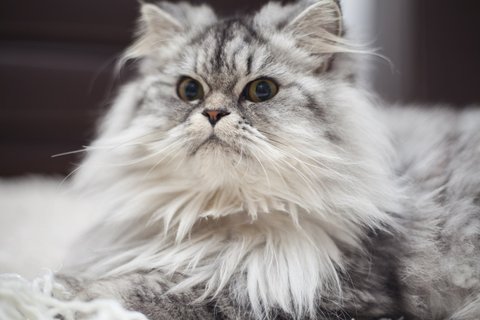
- Cats with hereditary susceptibility, described in some breeds, such as British Shorthairs and Persians.
- Cats with chronic liver disease.
Congenital shunts do not always cause signs in the first months and may be found only in adulthood. Some cats are normal-sized, so small size is not required for diagnosis. Breed observations also do not by themselves establish inheritance or confirm a diagnosis. Breeding decisions use the finding and family history.
Typical symptoms
- Slow growth and poor development in kittens.
- Apathy, tiredness and reduced appetite.
- Vomiting, diarrhoea and weight loss.
- Neurological signs including confusion, unsteady walking, aggression and seizures from hepatic encephalopathy.
- Deterioration after eating, particularly a protein-rich meal.
- Excessive drooling.
- Ascites, or abdominal fluid, with acquired shunts.
Signs may vary from day to day and occur in episodes. Worsening after eating supports suspicion but its absence does not rule out a shunt. Unusual drooling, aimless wandering or staring may matter even without an obvious seizure. A video may help describe episodic behaviour.
Shunts can also accompany urinary changes, including ammonium urate stones. Bloody urine or difficulty urinating is therefore not always a separate problem. Report increased drinking and urination and any unusually prolonged recovery from previous anaesthesia too. These details help piece together unclear signs.
Complications and consequences
- Chronic liver failure.
- Hepatic encephalopathy.
- Seizures and coma.
- Slow growth in young cats.
- Death without treatment.
Other metabolic and inflammatory mechanisms contribute to encephalopathy alongside ammonia. One ammonia value cannot determine symptom severity. Treatment therefore assesses neurological status, nutrition and general condition alongside test results. Seizures and altered consciousness are stabilised before planned further investigations.
Diagnosis at the vet
- Blood biochemistry showing raised ammonia and bile acids and low protein.
- A complete blood count, including assessment for anaemia and reduced white blood cells.
- Ultrasound of the liver and vessels to identify the shunt and a small liver.
- CT angiography, the gold standard for identifying congenital shunts.
- Liver biopsy to assess liver lobe atrophy and fibrosis.
Blood and urine tests help identify changes in liver function, metabolism and the urinary tract. Not every cat has every abnormality listed. Bile acids can rise in other liver diseases, so an elevated result alone neither locates a shunt nor confirms a congenital vascular abnormality.
Ultrasound can examine liver size, vessel routes, flow direction and urinary stones. Success depends on operator experience, the cat's movement and intestinal gas. One inconclusive ultrasound therefore does not necessarily settle the question. Further imaging depends on suspicion and surgical planning needs.
Contrast-enhanced CT can provide a detailed picture of vascular anatomy and assist procedural planning. Calling it the gold standard does not mean every patient receives the same method or that other investigations are unnecessary. Liver biopsy assesses tissue and other liver disease when needed; a tissue sample alone does not map the whole bypass vessel.
Treatment
- Surgery to close or partially close the shunt, the gold standard for congenital forms.
- Medical management when surgery is unsuitable or while waiting for it:
- a protein-restricted diet;
- lactulose to reduce intestinal ammonia production;
- antibiotics, such as metronidazole or amoxicillin, to reduce toxin-producing bacteria;
- supportive treatment for encephalopathy.
Before surgery, a cat may need stabilisation through medical and nutritional management. Medicines reduce the intestinal load of harmful compounds and help control encephalopathy but do not remove the abnormal vessel. If surgery is unsuitable, supportive treatment can continue under an individual plan.
Dietary protein is not reduced to the lowest possible level. Cats need enough high-quality protein and energy, and muscle loss can worsen ammonia burden. Food is chosen according to signs, growth stage and nutritional status. A canine liver diet or a self-designed low-protein homemade diet does not automatically meet feline needs. Weight and muscle condition are monitored during treatment.
Lactulose affects intestinal acidity among other actions and reduces ammonia absorption. Excessive effects can cause diarrhoea and fluid and electrolyte losses. Do not increase it yourself because of drooling or one bad day. Antibiotics and other medicines are assessed separately; give new medication only as the treating vet instructs.
Surgical planning assesses whether the liver's portal circulation can tolerate increased flow. Immediate complete closure is not safe for every cat because it may dangerously raise portal pressure. A vessel may be narrowed or closed gradually. The method is selected individually according to vascular anatomy and test results.
Postoperative care and monitoring
Early complications include raised portal pressure, low blood glucose and new neurological signs. Seizures can occur after shunt correction too, and surgery does not immediately remove every monitoring need. The practice determines hospital monitoring and discharge timing. A new seizure, clear weakness or a painful, swelling abdomen requires prompt contact.
Follow feeding and medication instructions at home even if your cat seems brighter. Do not stop medicines or a special diet based on behaviour alone. Check-ups assess clinical recovery, liver function tests and any remaining bypass flow when needed. Recurrent signs may reflect a persistent shunt or new acquired vessels, for example.
Protect the incision from licking and follow agreed activity restrictions. Report reopening, increasing swelling or discharge. Also monitor the actual amount eaten, stool consistency and activity. If food is refused, the practice assesses nausea, nutritional support and medication; force-feeding does not replace this review.
Prognosis
Successful congenital shunt correction can substantially improve health, but outcomes vary. Some cats need ongoing medication, dietary treatment or further investigation. With acquired shunts, prognosis particularly depends on the disease causing raised pressure. Canine surgical results cannot be directly used to promise recovery for an individual cat.
Prevention
- Genetic monitoring in breeding programmes for breeds susceptible to vascular abnormalities.
- Early diagnosis in kittens with slow growth or neurological signs.
- Regular investigation of cats with chronic liver disease.
Diet and routine vaccinations do not prevent a congenital vascular abnormality. Recognising risk means considering symptoms and family information and seeking investigation. For acquired bypass vessels, monitoring known liver disease and portal circulation problems matters, although not all progression can be prevented.
Important for cat owners
A portosystemic shunt is a serious disease in which blood bypasses the liver and toxins accumulate. Remember that tiredness and slow growth in a kitten, or neurological signs after eating, are reasons for urgent veterinary investigation. Surgery for a congenital shunt clearly improves prognosis and gives a cat the chance of a full life.
This article provides general information and does not replace veterinary care. If you notice signs of illness in your cat, contact a vet.
Frequently asked questions
Can a shunt be found only in an adult cat?
Yes. A congenital shunt may go unrecognised for years, and the cat may be normal-sized. Age or normal growth alone therefore cannot rule it out when signs and test results raise suspicion.
Is every shunt operated on?
Not in the same way. A correctable single congenital shunt is assessed surgically, but acquired bypass vessels opened because of raised portal pressure are usually not closed. Their underlying disease and symptoms are treated.
Should my cat receive as little protein as possible?
No. Excessive restriction can cause muscle loss and poor nutrition. The amount and protein quality are matched to symptoms and feline needs. Change the diet as the treating vet advises, rather than eliminating protein.
This article is for general information only and is not a guide to treatment. If you notice the first signs of illness, contact your vet.
Paw4care editorial team
Sources
- Portosystemic Shunts, American College of Veterinary Surgeons, accessed 2026-11-05.
- Congenital Portosystemic Shunts in Dogs and Cats: Treatment, Complications and Prognosis, Animals, accessed 2026-11-05.
- Feline abdominal ultrasonography: what’s normal? what’s abnormal? Hepatic vascular anomalies, Journal of Feline Medicine and Surgery, accessed 2026-11-05.
- Hepatic Encephalopathy in Small Animals, Merck Veterinary Manual, accessed 2026-11-05.
- Nutrition in Hepatic Disease in Small Animals, Merck Veterinary Manual, accessed 2026-11-05.
- 2022 ISFM Consensus Guidelines on Management of the Inappetent Hospitalised Cat, Journal of Feline Medicine and Surgery, accessed 2026-11-05.
- Initial Triage and Resuscitation of Small Animal Emergency Patients, Merck Veterinary Manual, accessed 2026-11-05.
- Care of Surgical Incisions in Cats, VCA Animal Hospitals, accessed 2026-11-05.