Contents
- What happened
- Why they won
- Who the winners are
- Words from Agria's chief executive
- Prize money and conditions
- The prize is changing its name
- Why heart disease matters
- What clinical cardiology is
- Dogs: what to watch for
- Cats: the disease is hard to spot
- The role of preventive check-ups
- How to prepare for the appointment
- One Health and comparative medicine
- What happens next
- What it means for owners
What happened
Swedish professors Ingrid Ljungvall and Jens Häggström of the Swedish University of Agricultural Sciences (SLU) have received the 2026 Grand Research Prize in Veterinary Medicine. The award was presented to them on Wednesday 25 November at the university's Ultuna campus. The professional journal VeterinärMagazinet reported the news on 26 November.
The prize was awarded for research into heart disease in dogs and cats. The jury particularly highlighted how the researchers have combined clinical work with scientific research. For pet owners, this is a good opportunity to understand why heart disease matters so much and what can be done right now.
The prize money of one million kronor underlines the importance of the subject. After the ceremony, the winners told colleagues about their approaches to reducing the risk of heart disease in pets.
Why they won
In the jury's assessment, the professors carry out interdisciplinary research, introduce clinical innovations and play a leading international role in clinical veterinary cardiology. This is a summary of the substance of the citation, not its exact wording.
The jury also stressed that the winners' collaboration between clinic and research is strong and mutually reinforcing: clinical practice raises questions for research, and research results flow back into the clinic. According to the jury, this work has extended the lives of a large number of pets. Importantly, the jury speaks of an impact that reaches beyond one country and one species. For readers, this means that the researchers' findings may also be useful in other European countries.
Who the winners are
Ingrid Ljungvall is a professor of One Health with a focus on comparative medicine. Jens Häggström is a professor of internal medicine. Both work at SLU.
After the ceremony, the winners gave a lecture on their work to reduce the risk of heart disease in dogs and cats. The source does not describe the content of the lecture in detail, so we do not summarise specific research findings. But the topic itself shows that the focus is not only on treatment but also on prevention. The ceremony took place at the university in Ultuna, which is known as Sweden's main centre for veterinary education.
Words from Agria's chief executive
The prize was presented by David Haak, chief executive of the insurance company Agria. It is awarded jointly by the Agria research fund (Agria forskningsfond) and SLU.
Thanks to your efforts, many dogs and cats have the chance to live longer and with a good quality of life.
David Haak, chief executive of Agria (translated from Swedish)
These words capture the practical meaning of the prize: in the end, research results are measured in years of life and the wellbeing of pets. Agria is a Swedish company known for pet insurance, and its involvement in the prize through a research fund shows the industry's interest in the practical results of science.
Prize money and conditions
The prize is worth one million Swedish kronor. It is awarded for completed research in veterinary medicine in Sweden, Norway, Denmark or Finland. In other words, the award covers the whole of the Nordic region, not just Sweden.
VeterinärMagazinet; 26 November 2026
The prize is changing its name
At the ceremony it was announced that the award will in future be called the Hernqvist Prize (Hernqvistpriset). It is named after Peter Hernqvist, who founded Sweden's first veterinary institution in the town of Skara in 1775.
This year's winners are therefore the last to receive the award under its previous name, and in the years to come it will be presented in the name of the founder of Swedish veterinary medicine. This gives the prize historical continuity. The new name is a reminder of the roots of veterinary education in Sweden.
Why heart disease matters
The jury stated plainly that heart disease in dogs and cats is common and often serious. This is well known: heart conditions are among the most frequent reasons for visits to veterinary specialists and often determine how long a pet lives.
Many of them develop unnoticed over years. The owner sees only ordinary tiredness or signs of ageing, while changes are already taking place in the body. That is why early diagnosis and knowledge of risk factors are so important in practice. For owners, this means paying attention to any changes in a pet's behaviour and breathing, even if they seem minor. The sooner a vet knows about a problem, the wider the choice of ways to help.
What clinical cardiology is
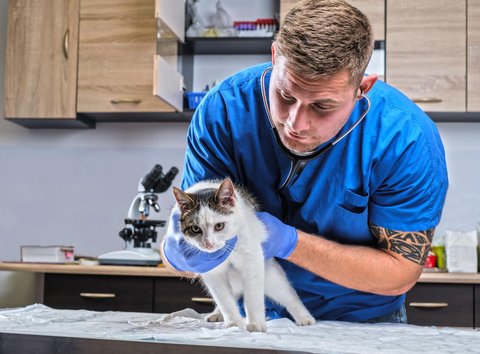
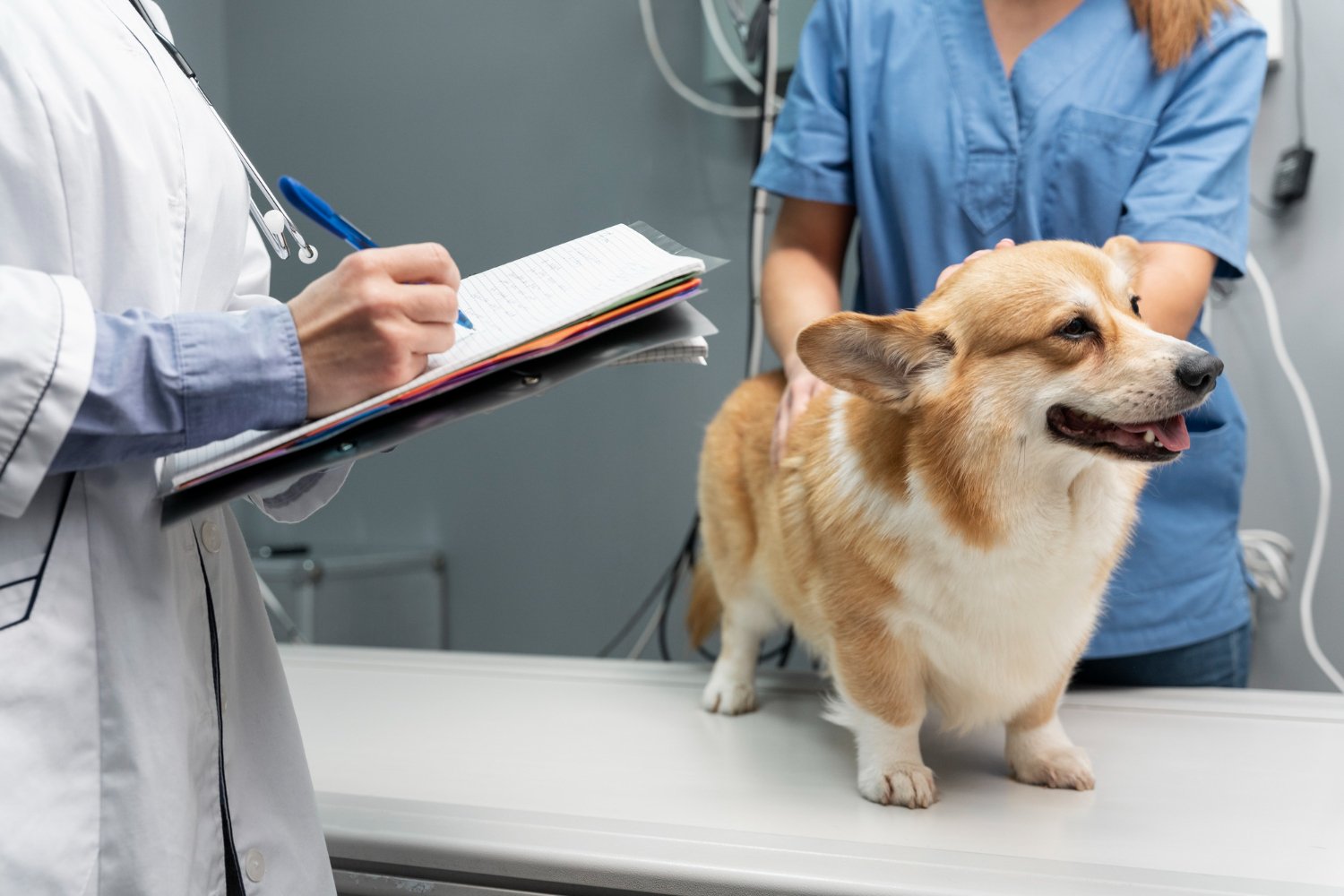
Veterinary cardiology is the branch of medicine that deals with the heart and blood vessels of animals. The vet listens to the heart, measures blood pressure and arranges an ultrasound scan of the heart, an electrocardiogram and blood tests.
Clinical cardiology means that knowledge is applied directly at the patient's side. It is precisely the link between clinic and laboratory, highlighted by the jury, that makes it possible to turn scientific observations more quickly into clear methods vets can use to examine and manage sick animals. Owners may be reassured to know that such tests are usually painless, although an animal sometimes needs to be gently held for an ultrasound scan. The vet explains the results during the appointment.
Dogs: what to watch for
Dog owners should know the typical signs of possible heart problems. These are general pointers, not a diagnosis:
- coughing, especially after exercise or at night;
- tiring quickly on walks;
- fast or laboured breathing at rest;
- fainting or sudden weakness;
- a swollen belly and weight loss.
These symptoms can also occur with other diseases, so you should not try to diagnose your dog yourself. Any one of them is a reason to take your dog to a vet. If your dog suddenly wants shorter walks or refuses its usual games, that can also be a signal. Note down when the changes started and tell the vet.
Cats: the disease is hard to spot
In cats, heart disease often stays hidden, because cats are good at concealing illness and move around relatively little. Noticeable signs can include fast breathing at rest, open-mouth breathing, lethargy, loss of appetite and sudden weakness in the hind legs.
It is useful for owners to count the breathing rate of their sleeping cat from time to time and to tell the vet if it is unusually high. This is a simple way to spot a problem earlier. It is best to ask your vet at an appointment about normal values and how to count. If a cat suddenly loses the use of its hind legs or is breathing heavily, this is an emergency and you should go to the clinic straight away rather than wait for it to pass.
The role of preventive check-ups
Regular check-ups help detect heart murmurs and other changes before any symptoms appear. Owners of older pets and of breeds known to be predisposed to heart disease should be particularly attentive.
The vet may suggest further tests if a murmur is heard during the examination or if there are other worrying signs. This approach reflects the idea recognised by the prize: the earlier a disease is detected, the more options there are to help the animal live longer and better. Many clinics recommend more frequent check-ups for older animals than for young ones; the vet decides the exact frequency based on age, breed and general health. Do not hesitate to ask what test results mean and what changes to daily life may be needed.
How to prepare for the appointment
Before seeing a vet about your pet's heart, it helps to prepare short notes: when the coughing or breathlessness began, how your pet copes with walks, and how it eats and sleeps. If you have a video of unusual episodes, such as fainting or a seizure, show it to the vet.
Bring vaccination records and the results of previous tests, as well as a list of everything your pet receives, including food and supplements. This will help the vet see the full picture and avoid unnecessary repeat tests.
One Health and comparative medicine
Professor Ljungvall works in the field of One Health and comparative medicine. These approaches are based on the idea that the health of people, animals and the environment is connected, and that similar diseases in different species can be studied together.
Heart disease in dogs and in people shares many mechanisms, so knowledge gained from pets can also be of interest to medicine as a whole. The jury noted precisely that the impact of the winners' work extends beyond one species and one country. For owners, this is another reminder that a pet is a member of the family, and caring for its heart is part of a wider approach to health at home. Calm walks, weight control and good nutrition remain widely accepted foundations of caring for the heart and circulation.
What happens next
The source does not mention any new rules or programmes linked to the award. What is known is that from now on the prize will bear the name of Peter Hernqvist and will continue to be awarded for completed research in veterinary medicine in the Nordic countries.
For owners, the main consequence is greater attention to heart disease. If your pet has worrying signs or you would like its risk assessed, talk to the vet at your clinic. Only a vet can make a diagnosis and prescribe treatment after an examination.
What it means for owners
The prize in itself does not change any rules or introduce new treatments. But it draws attention to a subject that affects many families with dogs and cats.
The practical conclusion is simple: do not put off a visit to the vet if your pet is coughing, breathless or unusually tired, attend routine check-ups and discuss breed- and age-related risks with your vet. Questions about treatment and medicines are always decided by a vet after an examination, and treating heart disease yourself is never acceptable. Calm, regular monitoring of your pet's health is usually more useful than worrying once serious symptoms have appeared. Make a habit of noting your pet's weight, appetite and resting breathing rate.
Sources
- VeterinärMagazinet, 26 November 2026