Contents
- What happened
- Tragedy on the trail
- A long search for the bears
- "Predatory" behaviour
- Why the bears were put down
- Last year's attack
- Not the same bear
- A curfew
- Patrols continue
- DNA as evidence
- Why autumn is more dangerous
- Grizzlies in British Columbia
- How to behave in bear country
- If a bear is nearby
- Dogs on a hike
- When a dog has met a bear
- Communities and bears
- A disputed decision
- What next
- Bears and a sense of safety
- Bear spray
- If an attack does happen
- What this means for Europe
- When to see a vet
What happened
On 11 November 2026 it emerged that a female grizzly bear and her three cubs had been put down in the Canadian province of British Columbia. The animals were caught over the previous weekend. Forensic tests, including DNA analysis, showed that they were the ones that attacked two women near the village of Bella Coola. Local conservation authorities announced the findings, and AFP then reported them.
Tragedy on the trail
The victims were a 48-year-old mother and her 20-year-old daughter. On Saturday 31 October they set off on a hike along a trail near Bella Coola, a small coastal community north-west of Vancouver. The next day they were reported missing. The remains of one were found on the Monday, the other on the Tuesday. According to a relative, the women had walked this route before and saw it as an easy recreational hike.
A long search for the bears
The discovery triggered an investigation lasting several days. Specialists collected evidence at the scene and tracked the bears through difficult terrain and bad weather. The animals were only caught at the weekend. Their DNA was then compared with traces collected where the women died. The match confirmed that these bears carried out the attack.
"Predatory" behaviour
The authorities said the bears had shown predatory behaviour. This means they were not defending themselves or protecting cubs, but hunting people as prey. A sign of this is that the daughter's body was found at a spot where the bears cached food. Such attacks are rare among grizzlies, even in areas where the animals are common.
NOS (AFP); 11 November 2026
Why the bears were put down
The authorities cited public safety. A bear that has hunted and eaten a person even once is considered extremely dangerous: it may attack again. Cubs learn from their mother, so they would very likely have copied her behaviour. In such cases, relocating the animals or sending them to a zoo is usually not considered an option.
Last year's attack
The place where the women died is about three kilometres from the site of another attack a year earlier. Then a grizzly seriously injured three children and a teacher during a school trip. That bear was never caught, but specialists were able to collect its DNA. This made it possible to compare it with the bears caught now.
Not the same bear
The analysis showed that the four bears now put down were not involved in last year's attack. So in the space of a year, two different animals attacked people around Bella Coola. That is a worrying sign for residents: bears in the area seem to be coming close to people more and more often. What led to the latest attack has yet to be established.
A curfew
After the women's deaths, the Nuxalk Nation, the Indigenous government of the Bella Coola area, imposed a curfew on residents. The Royal Canadian Mounted Police began night patrols, and officers escorted pupils to and from the school bus. After the bears were caught, Chief Samuel Schooner announced that the curfew had been lifted.
Patrols continue
Night patrols are continuing for now and will be reviewed in the coming days. The chief urged residents to stay alert and report any bear sightings to the authorities immediately. In small communities on the British Columbia coast, bears often come close to houses in autumn, when they are searching for food before hibernation.
DNA as evidence
Investigating wildlife attacks increasingly resembles forensic work. Specialists collect saliva, hair and blood at the scene and then compare the genetic profile with captured animals. This approach avoids killing random bears "just in case" and finds the ones that actually attacked. In this case DNA both identified the bears responsible and ruled out a link to the earlier attack.
Why autumn is more dangerous
In autumn grizzlies are busy putting on weight before hibernation. On the coast they feed on salmon in the rivers, berries and carrion. At this time bears search for food especially persistently and may defend their food. A mother with cubs is always more dangerous: she is nervous and attacks more quickly if she thinks her young are threatened.
Grizzlies in British Columbia
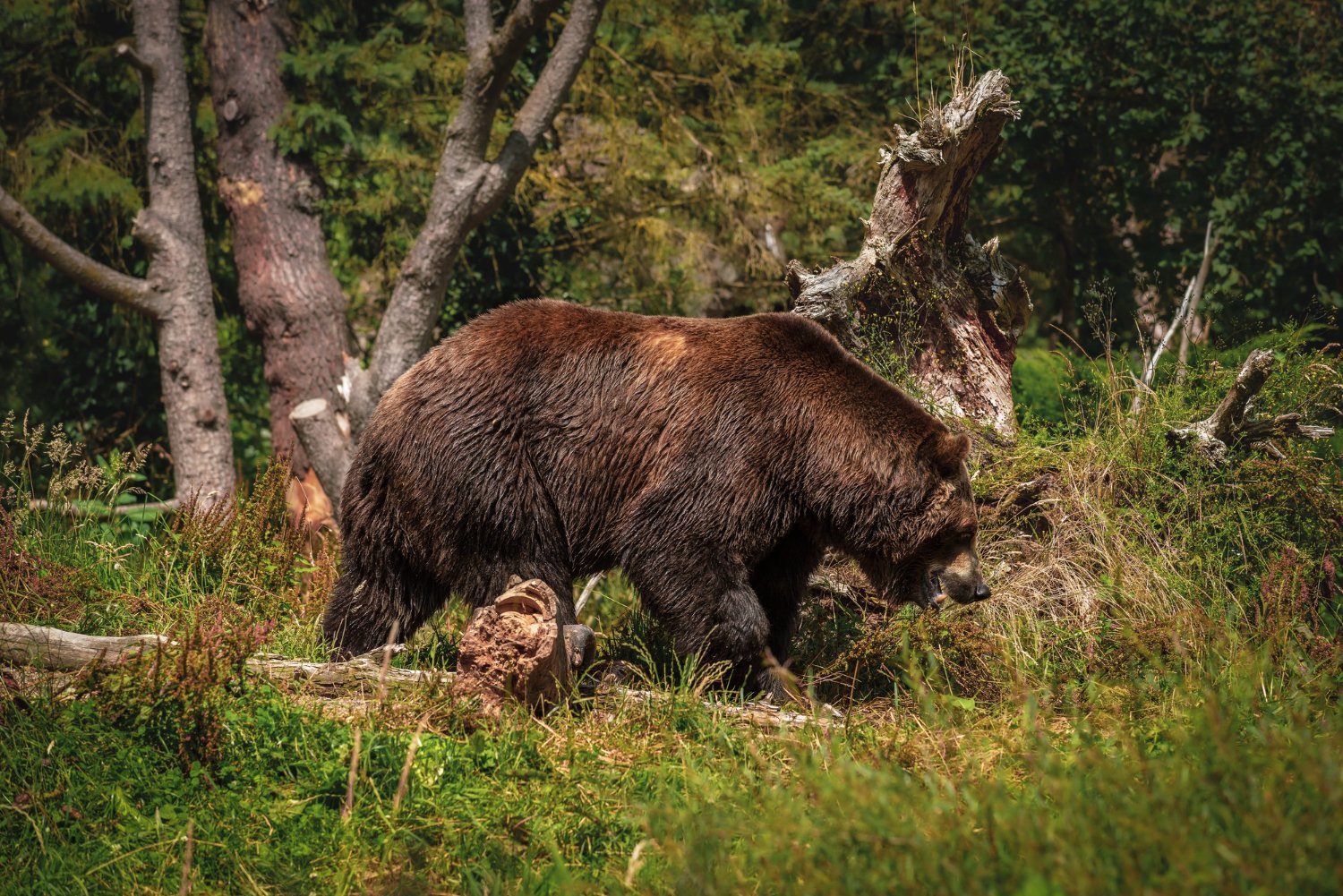
British Columbia is one of the main grizzly habitats in North America. These brown bears are larger than black bears, with a distinctive shoulder hump and long claws. Most encounters with people end peacefully: the bear leaves on its own. Fatal attacks are rare, but each one prompts a review of safety rules.
How to behave in bear country
A few simple rules reduce the risk of meeting a bear:
- Walk in a group and talk, so a bear hears you in advance.
- Carry bear spray and know how to use it.
- Do not leave food and rubbish by your tent; store them in bear-proof containers.
- Avoid animal carcasses and places that smell of carrion.
- Check with local services whether bears have been seen on your route.
If a bear is nearby
If you see a bear at a distance, calmly back away without turning your back or running. Running can trigger a predator's chase instinct. Speak in a steady voice so the animal knows you are human. Do not approach cubs: their mother is almost certainly close by. If the bear comes towards you, get your spray ready.
Dogs on a hike
A dog on a forest walk can provoke an encounter with a bear: it runs ahead, barks and sometimes leads an angry bear back to its owner. In areas with bears, keep your dog on a short lead. Do not let it sniff or chew animal carcasses — this can attract predators and is also bad for the dog's health.
When a dog has met a bear
If your dog has met a bear and come back, check it carefully. Bites and claw wounds can be deep, with only small marks visible on the surface. Such wounds often become infected. Even if the dog seems lively, after an encounter with a large predator it should be seen by a vet.
Communities and bears
Living alongside bears needs shared rules for the whole community. Bear-proof bins, not feeding wild animals and picking up fallen fruit in gardens help avoid teaching bears to approach people. A bear that gets used to human food becomes bolder and more dangerous, and sooner or later has to be killed.
A disputed decision
Every decision to put down wild animals is controversial. Some argue that the bears were following their own nature and should not be punished. Others point out that these were predators that had already hunted people, and the risk of a repeat was too high. Wildlife services usually take such measures only after the animal's guilt has been confirmed.
What next
The investigation into the circumstances of the attack continues. Specialists want to understand why the bears began hunting people: whether they lacked food, had become used to human waste, or were injured themselves. The answers will help local authorities reduce the risk of further tragedies.
Bears and a sense of safety
For residents of Bella Coola and visitors, this is a shock. The trail was considered easy and safe. Cases like this are a reminder that even a familiar route in the wild remains predator territory. Local services urge people not to give up walking, but to prepare more carefully and report every bear they see.
Bear spray
In Canada and the US, hikers are advised to carry spray containing hot pepper extract. It is sprayed as a cloud towards an approaching bear from a few metres away. The spray does not kill the animal but causes severe burning of the eyes and nose and usually makes it leave. The canister should hang on your belt, not sit in your backpack: there is no time to search for it.
If an attack does happen
The advice depends on why the bear attacks. If it is defending cubs or food, specialists recommend lying face down, covering your neck with your hands and staying still until it leaves. If the bear attacks as a predator, stalks a person or attacks a tent at night, you need to fight back as hard as you can, hitting its face and using anything to hand.
What this means for Europe
In Europe, brown bears live in Scandinavia, Finland, the Carpathians, Slovakia, Slovenia, Italy and Spain. Fatal attacks are rare here but do happen, and encounters with bears have become more frequent in recent years. The Canadian case is a reminder that hikers need to know how to behave and that authorities need to investigate every attack quickly and explain their decisions openly.
When to see a vet
Take your dog to a vet urgently if it has met a bear or another large animal, even without visible wounds: there may be deep bites, fractures or internal injuries. See a vet if your dog is limping, breathing heavily, lethargic or bleeding. After contact with a wild animal carcass, watch for vomiting, diarrhoea or a fever.
Sources
- NOS (AFP), 11 November 2026
- CTV News, 2026