Contents
- What happened
- Found in a flat
- Two years of delays
- What CITES is
- A first for India
- Forest school
- Four years to freedom
- Why babies have no mothers
- Five babies in Odisha
- Indonesia ready to help
- Who will be in the delegation
- Sumatran orangutans
- Three species of orangutan
- Against smuggling
- How smuggling works
- The veterinary side
- How an orangutan travels
- Quarantine on arrival
- How forest school works
- Time with mother
- What will happen to the Odisha babies
- Why they cannot be kept at home
- What to do if you see an exotic animal
- India and exotic animals
- What this means for Europe
- When to see a vet
What happened
On 6 November 2026 the conservation news site Mongabay reported on an event that India is calling historic. A young orangutan seized two years ago from a flat in Mumbai has returned to its homeland, Indonesia. It has been handed over to a rehabilitation centre on the island of Sumatra. This is the first successful repatriation from India of a confiscated CITES-listed animal.
Found in a flat
In 2024 the Indian authorities found a baby orangutan in a flat in Mumbai, India's largest city. Orangutans do not live in the wild in India: the animal had clearly arrived through illegal trade. The baby was seized, but sending it home proved difficult. It took two years.
Two years of delays
The return was held up both by the animal's health and by procedures. Before travelling, the orangutan had to undergo veterinary checks and quarantine, and permits were needed from both countries. Moving a protected animal across borders requires CITES documents, veterinary certificates and an agreed flight.
What CITES is
CITES is the Convention on International Trade in Endangered Species of Wild Fauna and Flora. Orangutans are listed in its Appendix I, the strictest category: international commercial trade in wild specimens of these species is banned. Any movement is possible only with special permits, for example to return an animal to its homeland.
Mongabay; 6 November 2026
A first for India
“This is the first successful repatriation of a confiscated CITES animal from India, and my department made every effort to make it happen,” said Yogesh Nilkanth Warkad of the CITES office in Mumbai. For the Indian authorities it is an important precedent that could make it easier to return other animals.
Forest school
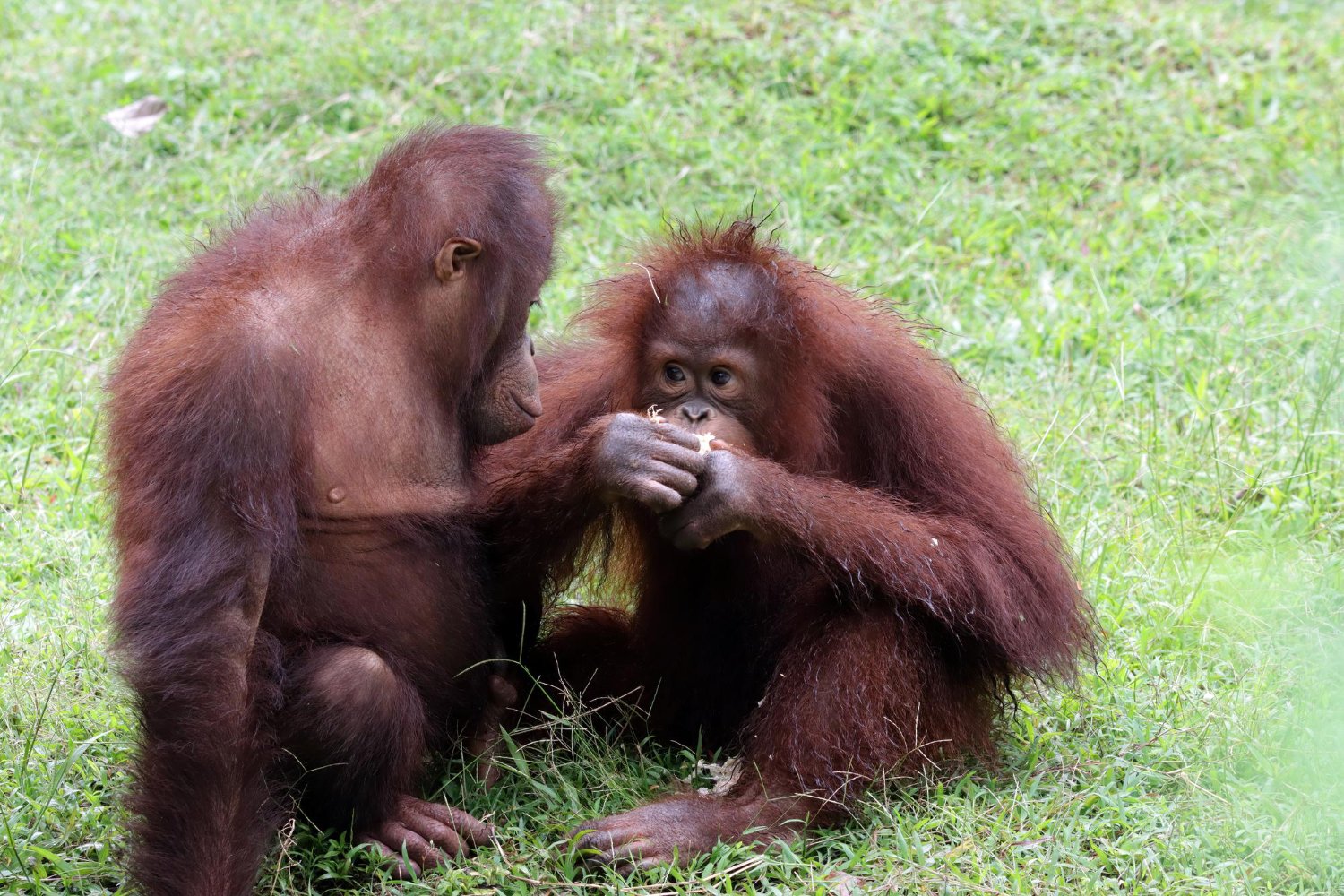
The orangutan has been handed over to the Sumatra Rescue Alliance centre, run by the Indonesian organisation YOSL-OIC. Its adviser, Sinan Serhadli, said that after quarantine the youngster will go to “forest school”. There young orangutans learn to climb trees, find food, build nests to sleep in and avoid danger.
Four years to freedom
“If all goes to plan, it could be released into the wild in about four years,” says Serhadli. Such a long time is explained by orangutan biology. In the wild a baby lives with its mother for many years and learns everything from her. Without a mother, people have to teach it: the centre's keepers and vets.
Why babies have no mothers
Baby orangutans almost never end up in the trade by chance. To take a baby, poachers usually kill the mother, who defends it to the last. So every baby in a flat or private zoo usually means a dead female in the forest. That is why fighting smuggling matters so much for the survival of the species.
Five babies in Odisha
The success in Mumbai has drawn attention to another story. In September five baby orangutans aged one to one and a half were rescued in forests in the state of Odisha in eastern India. They now live at Nandankanan Zoological Park in Bhubaneswar. The authorities are trying to establish where they came from and suspect smuggling.
Indonesia ready to help
Panut Hadisiswoyo, founder of the Orangutan Information Centre, believes that media attention on the Odisha case helped speed up the return of the orangutan from Mumbai. “A team of experts from Indonesia will soon visit the babies and look at what documents are needed,” he said. Indonesia has offered to send a delegation of seven people.
Who will be in the delegation
The delegation will include government officials, vets and orangutan specialists. They will assess the babies' health and welfare and try to establish their origin. That will determine where exactly they are returned and which rehabilitation centre they go to.
Sumatran orangutans
Ahmad Munawir, director of species and genetic conservation at Indonesia's Ministry of Forestry, said that initial observations suggest the babies are Sumatran orangutans. This is one of the three orangutan species, and it is critically endangered. Official confirmation, however, requires a genetic test.
Three species of orangutan
Scientists recognise three orangutan species: Bornean, Sumatran and Tapanuli. The Tapanuli orangutan was described only in 2017 and has the smallest population. All three species live only in Indonesia and Malaysia and are threatened with extinction by deforestation, fires and poaching.
Against smuggling
The Indonesian authorities hope the orangutan's return will set an example for handling seized animals in India. Hadisiswoyo urges both countries to use the case to break cross-border smuggling networks. “We demand that mechanisms are set up to fight illegal international trade,” he said.
How smuggling works
Smugglers move baby primates, birds and reptiles through ports and airports, often with forged papers. The end point is private collections, mini zoos, entertainment venues and social media, where exotic animals attract followers. Demand for “unusual pets” keeps this business going.
The veterinary side
Babies that survive smuggling are often emaciated, dehydrated and ill. They are carried in cramped crates and bags and fed the wrong food. Vets have to treat infections, parasites, digestive problems and the effects of stress. Great apes can also catch human diseases such as tuberculosis and respiratory viruses, so quarantine is essential.
How an orangutan travels
Flying a great ape is a complex operation. The animal travels in a special transport crate, usually with a vet or an experienced keeper close by. Before departure its health is checked, it is given time to get used to the crate, and food and water for the journey are planned. Every stage, from leaving one country to entering the other, is agreed with veterinary and customs services.
Quarantine on arrival
After arriving in Indonesia the orangutan goes into quarantine. Vets test it for tuberculosis, hepatitis, parasites and other diseases it may have caught from people while living in the flat. Only then can it meet other young orangutans at the centre. Otherwise a single infection could put the whole group at risk.
How forest school works
At forest school, keepers take the young orangutans into the forest every day. There the youngsters learn to climb ever higher, look for fruit, leaves and insects, try new food and build nests from branches. Gradually people step in less and less. When an orangutan is ready to live on its own, it is released into a protected forest and monitored for a while.
Time with mother
In the wild a baby orangutan stays with its mother for about seven to eight years, longer than the young of almost any other animal apart from humans. All that time the mother feeds it, carries it and teaches it which plants are edible and how to avoid danger. So an orphan raised in a flat has a huge gap in its knowledge, which the school takes years to fill.
What will happen to the Odisha babies
If genetic testing confirms that the Odisha babies are Sumatran orangutans, they will probably also be prepared for return. But each case is considered separately: their health must be assessed, a place found in a rehabilitation centre and the paperwork completed. The experience with the Mumbai orangutan may help to do this in less than two years.
Why they cannot be kept at home
Great apes are not suited to life in a house. A small orangutan may seem cute, but it grows into a strong animal that cannot live in a flat. It needs others of its kind, trees and space. Animals from private homes often suffer from poor diet and loneliness, and later there is nowhere for them to go.
What to do if you see an exotic animal
If you notice someone keeping a primate, a bird of prey or another protected animal at home, or see one offered for sale, it is best to tell the authorities:
- Do not buy the animal, even to “rescue” it: that fuels demand.
- Do not take selfies with exotic animals at tourist spots.
- Report it to the police, who have wildlife crime officers, or to the RSPCA.
- Keep the advert or photos as evidence.
- Support reputable rescue centres, not private zoos.
India and exotic animals
India, like many countries, faces illegal imports of exotic animals, and in recent years it has tightened the rules on registering such species. The orangutan cases in Mumbai and Odisha showed that animals from South-East Asia are entering the country illegally. The return to Indonesia is a sign that the authorities are ready to act.
What this means for Europe
Europe also remains a market for smuggled exotic animals: customs officers regularly find primates, tortoises and birds in luggage. Stories like this orangutan's return show that seizure is only the beginning, and the real task is to get the animal back to the wild. Europeans should refuse to buy exotic pets of uncertain origin.
When to see a vet
If you keep an exotic animal, it should be looked after by a vet who works with such species. Seek help urgently if it stops eating, is lethargic, has diarrhoea, a cough, discharge from the nose or eyes, or loses weight. Primates, birds and reptiles can pass dangerous infections to people, so always wash your hands after handling them.
Sources
- Mongabay, 6 November 2026