
Veterinary care in the UK · Parasites and diseases
Ticks on dogs and cats in the UK: Lyme disease, babesiosis and safe removal
Ticks are small blood-feeding parasites related to spiders. In the UK they live in woodland, moorland, heathland, long grass and bracken, and increasingly in urban parks and gardens. Dogs and cats pick them up as they brush through vegetation. Ticks attach to the skin, feed for several days and then drop off. Most tick bites cause no lasting harm, but ticks can carry diseases that affect pets and people. Regular checks, safe removal and the right preventive treatment keep the risk low.
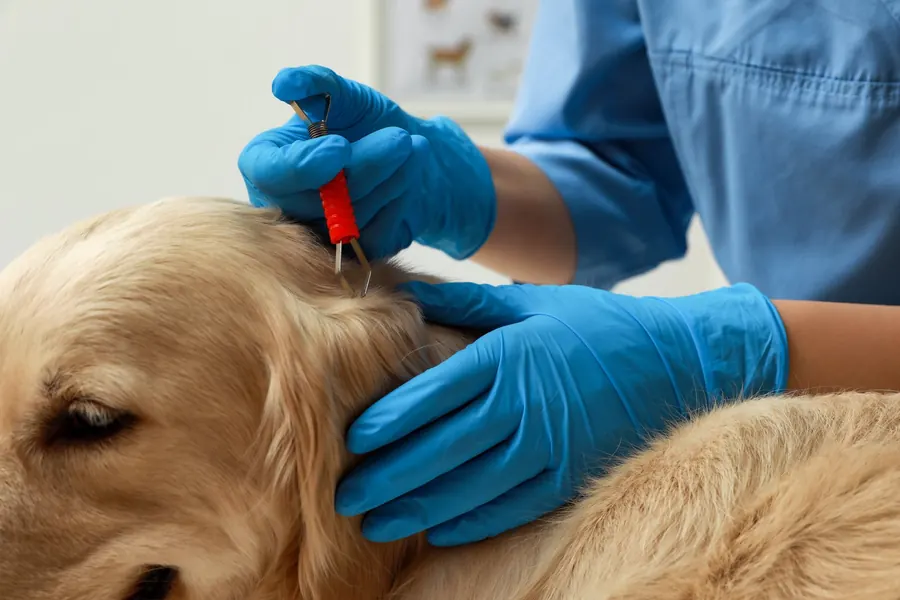
Ticks are found across the UK, especially in woodland, moorland, long grass and parks.
When and where ticks are found
Ticks are most active from spring to autumn, with peaks in late spring and early summer and again in autumn. In mild winters they can be active all year. The most common species in the UK is the sheep tick, Ixodes ricinus, but several other species are found, including the hedgehog tick and the ornate dog tick.
Areas with deer, sheep and other wildlife often have more ticks, but research by the University of Bristol found ticks on dogs across the whole of the UK, including in towns. Ticks do not jump or fly: they wait on vegetation and climb on when an animal brushes past.
Diseases ticks can carry
Lyme disease is caused by Borrelia bacteria carried by some ticks. In dogs it is diagnosed less often than in people. Signs can include lameness that moves from leg to leg, swollen joints, a high temperature, tiredness and loss of appetite, sometimes weeks after the bite. Cats rarely show signs. Dogs do not pass Lyme disease to people directly, but the ticks they carry home can bite people.
Babesiosis is caused by a parasite that destroys red blood cells, leading to weakness, pale gums, fever and dark urine. It used to be seen in the UK only in dogs that had travelled abroad. In 2016 cases were found in dogs in Essex that had never left the country, carried by the ornate dog tick. It remains uncommon but is serious.
Anaplasmosis and other tick-borne infections are occasionally diagnosed in UK dogs. If your pet becomes unwell after a tick bite, tell your vet about the bite and where you walked.
Ticks can also cause local reactions: a small lump, redness or a scab where the tick was attached. These usually settle within a week or two. See your vet if the lump grows, becomes hot and painful, or does not go away.
Checking your pet
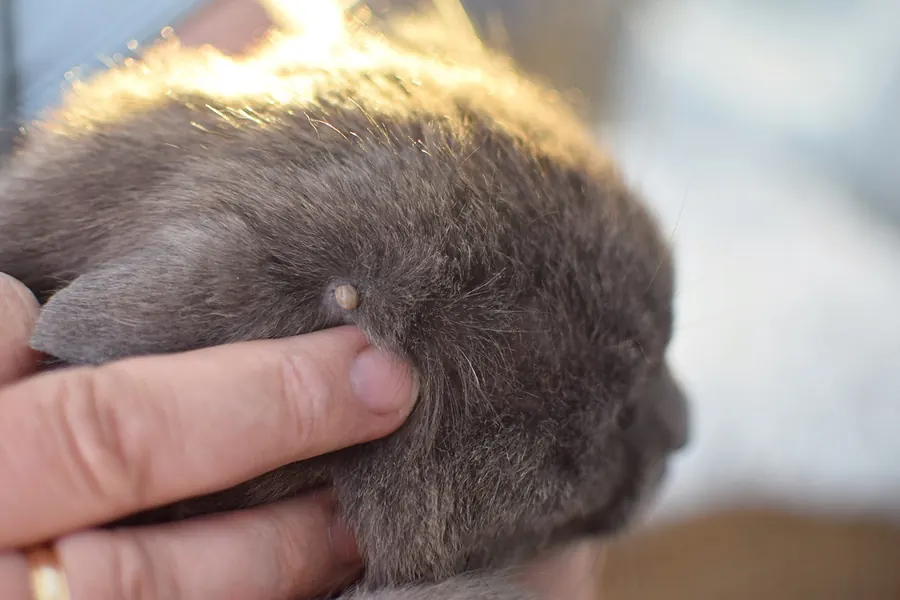
After walks in tick areas, run your hands over your pet's body, feeling for small bumps. Ticks favour the head, ears, neck, armpits, groin and between the toes. An unfed tick is tiny, but a feeding tick swells to the size of a pea and is usually grey or brown. Long-haired pets need a closer look.
Removing ticks promptly reduces the chance of disease being passed on, because many infections need a tick to be attached for some time.
How to remove a tick
Use a tick removal tool or fine-tipped tweezers. Tick hooks are inexpensive and available from vets and pet shops.
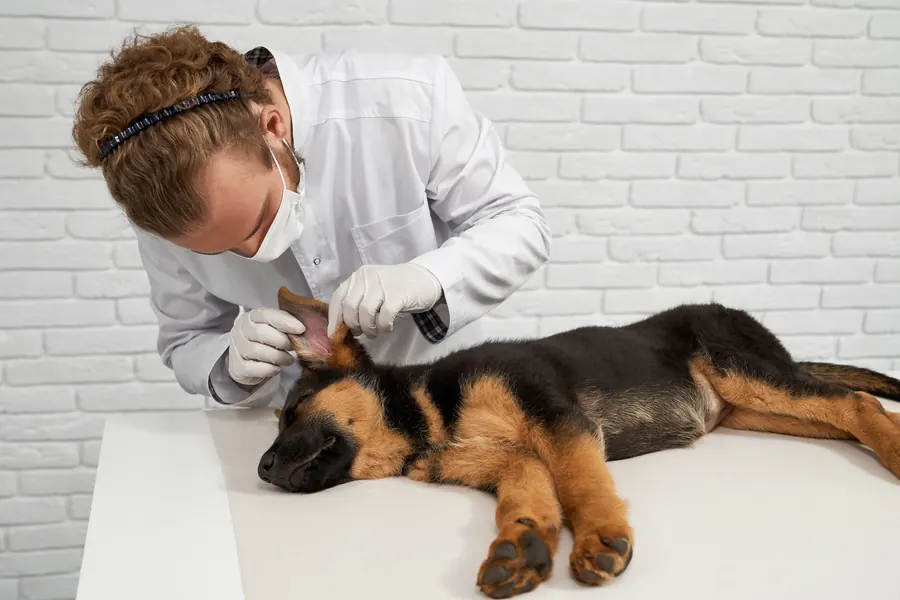
- Part the fur so you can see where the tick enters the skin.
- Slide the tick tool under the tick's body, as close to the skin as possible.
- Twist gently in one direction several times until the tick comes away. With tweezers, grip the tick close to the skin and pull upwards steadily without squeezing its body.
- Check the tick is whole, then clean the area and wash your hands.
- Dispose of the tick by sealing it in tape or a bag. If your pet later becomes unwell, your vet may want to know when and where the tick was found.
Do not burn the tick, smother it with petroleum jelly or alcohol, or squeeze its body: these methods can make the tick release more fluid into the bite. If you are not confident removing a tick, your vet or vet nurse can show you.
Ticks on cats
Cats that hunt and roam outdoors often pick up ticks, especially around the head and neck. Many tick treatments for dogs contain permethrin, which is highly toxic to cats. Never use a dog product on a cat, and keep cats away from recently treated dogs if the label tells you to. Ask your vet for a product that is licensed for cats.
Preventing ticks
Several tick treatments for dogs and cats are available as spot-ons, tablets and collars. They kill ticks soon after they attach, which reduces the risk of disease. Some are prescription-only and others are sold in pet shops. Your vet can recommend a product based on your pet's species, lifestyle and the areas you visit, and can combine tick control with flea and worm prevention.
Other simple steps help:
- keep to the middle of paths and avoid long grass and bracken where possible;
- check your pet, yourself and your children after walks;
- keep garden grass short.
Protecting yourself
People can be bitten by ticks carried into the home by pets, and Lyme disease in humans can be serious. The UK Health Security Agency advises checking yourself for ticks after outdoor activities and removing any ticks promptly. If you develop a circular red rash around a tick bite or flu-like symptoms after a bite, see your GP and mention the bite.
Tick-borne encephalitis
Tick-borne encephalitis is a viral infection of the brain that is common in parts of Europe. The virus has also been found in ticks in a small number of places in England. It mainly matters for people: human cases in the UK are very rare, and the UK Health Security Agency monitors the virus. Dogs are rarely affected. Checking for ticks after walks and removing them promptly protects both you and your pet.
Travel
Ticks abroad carry diseases that are rare or absent in the UK. Tick treatment is not currently required for dogs entering Great Britain, but vets strongly recommend tick protection for dogs travelling to Europe. Ask your vet before you go.
Frequently asked questions
What does a tick look like on a dog?
A feeding tick looks like a small grey, brown or cream lump attached to the skin, sometimes with tiny legs visible near the skin. It can be mistaken for a skin tag or wart.
Can my dog give me Lyme disease?
Not directly. But a dog can bring ticks into the home that may then bite people. Checking your dog after walks and using tick prevention helps.
What happens if the tick's head stays in?
Sometimes the mouthparts stay in the skin. This usually causes a small local reaction that heals on its own. Do not dig at the skin; see your vet if the area becomes swollen or painful.
Are tick collars safe for cats?
Only use collars and treatments licensed for cats. Some dog products contain permethrin, which can poison cats.
Do ticks die in winter?
Many ticks become less active in cold weather, but in mild winters they can still be found. Your vet may recommend year-round protection.
Sources
- Ticks on dogs, PDSA, accessed 2026-11-18.
- Ticks, The Royal Kennel Club, accessed 2026-11-18.
- Tick bite risks and prevention of Lyme disease: resources, UK Health Security Agency, accessed 2026-11-18.
- Lyme disease, NHS, accessed 2026-11-18.
- ESCCAP UK & Ireland: parasite control guidance, ESCCAP UK & Ireland, accessed 2026-11-18.
 Law and rulesPlanning for your pet's future: wills, care schemes and emergencies in the UKHow to make sure your dog or cat is cared for if you fall ill, go into hospital or die: wills, power of attorney, Dogs Trust and Cats Protection schemes and emergency cards.
 End of lifeCoping with the loss of a pet: grief and bereavement support in the UKGrief after losing a dog or cat is real and can be intense. How grief affects adults, children and other pets, ways to remember, and free UK pet bereavement services.
 Law and rulesRoad accidents involving dogs and cats in the UK: the law and what to doWhat UK law says if you hit a dog or a cat with your car, how to help an injured animal safely, who to call, and what to do if your own pet is hurt or missing.