
Veterinary care in the UK · Seasonal care
Winter and Christmas dangers for dogs and cats in the UK
Winter in the UK is rarely harsh for long, but the cold months bring a particular set of risks for dogs and cats. Some are seasonal, such as antifreeze, road grit and frozen ponds. Others arrive with Christmas, when kitchens fill with chocolate, mince pies and leftovers, and homes fill with visitors, decorations and plants. Most pets get through the season without any trouble. The aim of this guide is to help you spot the hazards in advance and know what to do if something goes wrong, especially over the bank holidays when your usual vet may be closed.
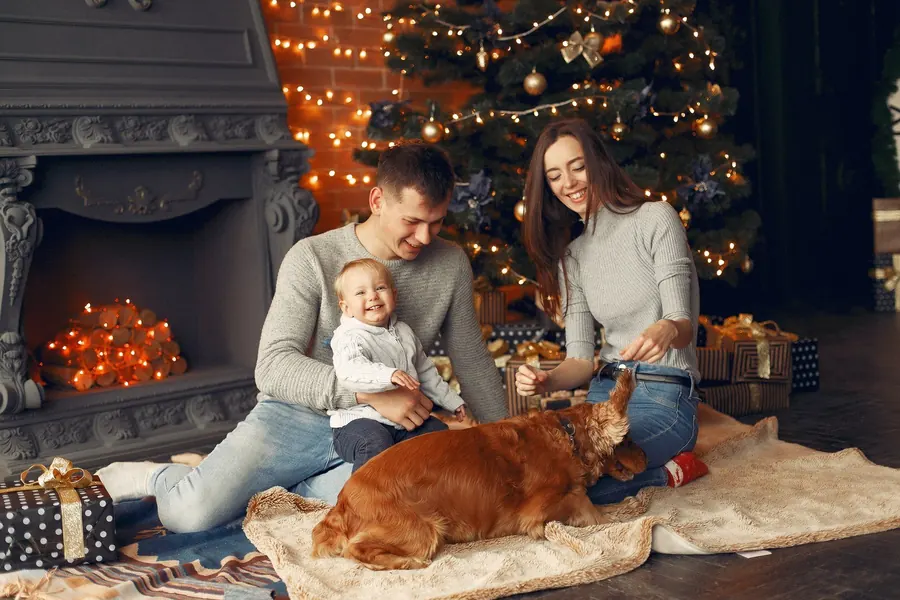
Christmas is a happy time for most pets, but it brings foods and decorations that can make them ill.
Antifreeze, grit and cold weather
Antifreeze is one of the most dangerous poisons a pet can meet. Many products contain ethylene glycol, which tastes sweet, so cats and dogs may lap up spills from driveways, garage floors or leaking radiators. Even a small amount can cause severe kidney damage. Cats are particularly at risk because they roam and may drink from puddles near cars.
Early signs can look like drunkenness: wobbling, vomiting and seeming dazed. These may appear to pass, but kidney failure can follow over the next day or two. If you think your pet has swallowed antifreeze, contact a vet immediately. Treatment works best within the first few hours, long before obvious kidney signs appear.
To reduce the risk:
- store antifreeze and screenwash in sealed containers out of reach;
- clean up spills straight away and dispose of the cloths safely;
- consider products that are not based on ethylene glycol;
- keep cats indoors if you know a neighbour is working on a car.
Road grit and de-icers can irritate paws, cause sore, cracked pads and upset stomachs if a dog licks large amounts off its feet. After walks on gritted pavements, rinse or wipe your dog's paws and belly with lukewarm water and dry them well. Check between the toes for compacted ice and stones.
Cold weather affects some pets more than others. Puppies, older animals, thin-coated breeds such as greyhounds and whippets, and pets with arthritis or heart problems feel the cold more. A well-fitting coat can help on long walks. Keep walks shorter in very cold spells, and never leave a dog in a car in freezing temperatures. In the dark evenings, a reflective collar or light-up lead helps drivers see you both.
Outdoor cats sometimes shelter in warm car engines. Before setting off on a cold morning, knocking on the bonnet gives a sleeping cat the chance to escape.
Frozen ponds and lakes
Every winter, people are injured or drown trying to rescue dogs that have fallen through ice. Keep dogs on a lead near frozen water, and do not throw balls or sticks onto ice. If your dog does fall through, do not go onto the ice yourself. Encourage the dog to swim back towards you, move to a point where it can climb out, and call 999 and ask for the fire service if you cannot reach it safely.
Christmas food
The festive table holds several foods that are toxic to dogs and cats. The most common problems at Christmas are:
- Chocolate. It contains theobromine, which dogs cannot process well. Dark and baking chocolate are the most dangerous, but a box of milk chocolates or chocolate tree decorations can also cause vomiting, a racing heart, tremors and fits. Dogs are very good at finding wrapped chocolates under the tree.
- Grapes, raisins, currants and sultanas. These can cause kidney failure in dogs, and there is no known safe amount. Mince pies, Christmas pudding, Christmas cake and stollen are all full of dried fruit.
- Onions, garlic, leeks and chives. Found in stuffing, gravy and sauces, they damage red blood cells in both dogs and cats. Signs may not appear for several days.
- Macadamia nuts, which can cause weakness and a high temperature in dogs.
- Xylitol, a sweetener in some sugar-free sweets, chewing gum and baking, which can cause a dangerous drop in blood sugar in dogs.
- Alcohol, including in puddings, trifle and liqueurs.
- Cooked bones from the turkey or goose, which can splinter and cause choking or tears in the gut. Fatty leftovers and turkey skin can also trigger pancreatitis.
The safest approach is to keep the kitchen and dining table out of bounds, put leftovers and bins where pets cannot reach them, and ask guests not to feed scraps. If you want to include your pet, a small portion of plain, boneless turkey meat is fine for most dogs and cats. You can check other foods and plants with our Is it poisonous? tool.
Decorations, plants and presents
Christmas trees and decorations attract curious pets, cats in particular.
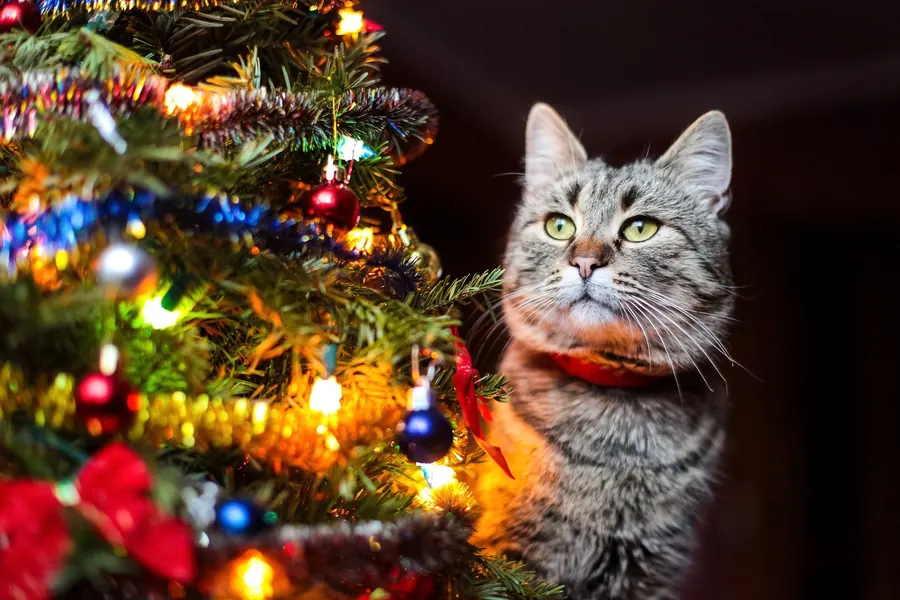
- Tinsel, ribbon and string can cause a serious blockage in the gut if swallowed, especially in cats. If you see something hanging from your cat's mouth or bottom, do not pull it: take your cat to a vet.
- Glass baubles can break and cut paws and mouths. Hang fragile ornaments higher up the tree.
- Fairy lights and cables can tempt puppies to chew. Switch lights off at the wall when you are out.
- Batteries, including button batteries in toys and cards, can cause internal burns if chewed or swallowed.
- Silica gel sachets and small toy parts from presents are a choking risk.
Some festive plants are harmful. Lilies are extremely dangerous to cats: every part of the plant, including the pollen and the water in the vase, can cause kidney failure. Lilies often appear in Christmas bouquets, so check flowers you receive and keep lilies out of homes with cats. Poinsettia, holly, mistletoe and ivy usually cause milder problems such as drooling, vomiting and an upset stomach, but it is still best to keep them out of reach.
A real tree can drop needles that stick in paws, and the water in the tree stand may contain fertiliser or preservatives. Make sure the tree is stable, especially if you have a climbing cat or a boisterous dog.
Visitors, noise and routine
Christmas changes a household's rhythm. Visitors, children, music and late nights can be overwhelming for some pets. Give your dog or cat a quiet room or a hiding place with water, a bed and somewhere to retreat. Try to keep to normal feeding and walk times. Make sure guests close doors and gates, as frightened pets sometimes slip out. Check that your pet's microchip details and ID tag are up to date before the holidays.
New Year's Eve often brings fireworks. Plan ahead if your pet is frightened of loud noises: see our guide to fireworks and pets.
What to do if your pet eats something harmful
Do not wait for symptoms. Phone your vet straight away and tell them what your pet ate, how much and when. If you can, keep the packaging. Do not make your pet sick unless a vet tells you to.
Over Christmas and New Year, many practices close or run reduced hours. Before the holidays, find out who provides out-of-hours cover for your practice and save the number in your phone. Our guide to out-of-hours emergency vets explains how emergency care works. Owners can also call the Animal PoisonLine, a paid service run by the Veterinary Poisons Information Service, for advice on whether a poisoning needs urgent treatment.
Frequently asked questions
Can my dog have Christmas dinner?
A small amount of plain turkey meat without skin, bones, gravy or stuffing is fine for most dogs. Avoid anything with onions, garlic, dried fruit, chocolate, alcohol or a lot of fat. Sudden rich meals can upset the stomach.
How much chocolate is dangerous for a dog?
It depends on the type of chocolate and the size of the dog. Dark chocolate is far more dangerous than milk chocolate. Because it is hard to judge, contact a vet whenever a dog has eaten chocolate.
Is a poinsettia poisonous to cats?
Poinsettia can irritate the mouth and stomach and cause drooling or vomiting, but it is not usually life-threatening. Lilies are much more dangerous for cats and should be kept out of the house altogether.
Does my dog need a coat in winter?
Many dogs with thick coats are comfortable without one. Small, thin-coated, elderly or unwell dogs may benefit from a coat on cold walks. Make sure it fits well and does not rub.
What should I do if my cat drank antifreeze?
Treat it as an emergency and contact a vet immediately, even if your cat seems well. Early treatment greatly improves the chances of recovery.
Sources
- Antifreeze poisoning in dogs, PDSA, accessed 2026-11-18.
- Lily poisoning in cats, PDSA, accessed 2026-11-18.
- Animal PoisonLine, Veterinary Poisons Information Service, accessed 2026-11-18.
- A to Z of dog health and care issues, The Royal Kennel Club, accessed 2026-11-18.
 Law and rulesFireworks and pets in the UK: the rules, the season and how to keep your pet calmUK firework rules and curfews, when fireworks season happens, how to prepare dogs, cats and small pets, building a den and when to ask your vet for help.
 Law and rulesPet theft in the UK: how to protect your pet and what to do if it is stolenHow to protect your dog or cat from theft, what the Pet Abduction Act 2024 changed, why microchips and ID tags matter and what to do if your pet is stolen.
 Law and rulesRenting with pets in England: your rights under the Renters' Rights Act and how to make a requestHow the Renters' Rights Act changes renting with pets in England from May 2026: asking to keep a pet, valid reasons to refuse and practical tips.