
Veterinary care in the UK · Emergency care
Out-of-hours emergency vets in the UK: how night and weekend care works
Pets rarely fall ill at a convenient time. A dog eats rat poison on a Sunday afternoon, a cat is hit by a car late in the evening, a large breed dog develops a swollen stomach at 2 a.m. In those moments, owners need to know quickly who to call and where to go. In the UK, every veterinary practice must make arrangements for emergencies outside normal opening hours. But "out-of-hours" (OOH) care often happens at a different address, with a different team and different prices. This guide explains how it works, what the rules say and how to prepare before you need it.
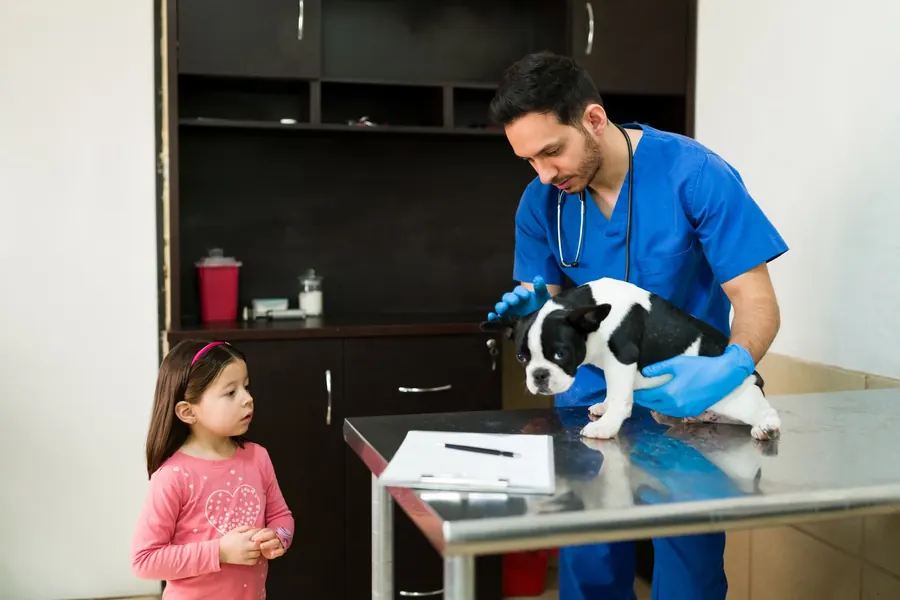
Every practice must take steps to provide 24-hour emergency first aid and pain relief, often through a separate clinic.
What the rules say
The Royal College of Veterinary Surgeons (RCVS) Code of Professional Conduct states that all veterinary surgeons in practice must take steps to provide 24-hour emergency first aid and pain relief to animals, according to their skills and the specific situation.
"Taking steps" does not mean that every vet must personally be on call every night. Vets are not expected to remain constantly on duty. They must, however, make sure that when they are off duty or unavailable, clients are directed to another appropriate service. Practices can cooperate with each other, share a rota, or use a dedicated emergency clinic. These arrangements should be made in advance and confirmed in writing.
The aim of emergency first aid and pain relief is to meet the animal's immediate welfare needs. The vet's first consideration is to relieve pain and suffering. In some cases, euthanasia may be the kindest option.
A vet on duty should not unreasonably refuse to provide first aid and pain relief for an animal of a species that the practice treats during normal hours. For other species, the vet should help until a more suitable emergency service accepts responsibility.
Who provides out-of-hours care
There are three common models in the UK:
- The practice covers its own nights and weekends, with a vet on call, sometimes sharing the rota with nearby practices.
- A dedicated emergency clinic provides OOH care for many practices in an area. These clinics are staffed overnight and often at weekends and on public holidays.
- A larger hospital or referral centre provides 24-hour care, including for patients from other practices.
Your practice must tell you how its emergency cover works when you first register and remind you regularly. The information should include the phone number, the address, when the service is available and what kind of service it is. From December 2026, large veterinary businesses must also publish on their websites who provides their outsourced OOH care, where it is, its contact details and its opening times; smaller businesses must do so by March 2027.
What owners must do
Owners have legal responsibilities too. The Animal Welfare Act 2006 (England and Wales), the Animal Health and Welfare (Scotland) Act 2006 and the Welfare of Animals (Northern Ireland) Act 2011 place a duty of care on anyone responsible for an animal to take reasonable steps to meet its welfare needs. That includes protecting it from pain, suffering, injury and disease.
The RCVS guidance is clear that owners are responsible for transporting their animals to a veterinary practice, including in emergencies. In most cases a vet will not come to your home at night. If you do not drive, plan in advance who could take you, or find a pet-friendly taxi service.
When to call an emergency vet
Call immediately if your pet:
- has difficulty breathing, or its gums are pale, grey or blue;
- has collapsed, cannot stand or has a seizure lasting more than five minutes;
- has been hit by a car, has fallen from a height or has a deep wound;
- is bleeding heavily;
- may have eaten something poisonous, such as rat or slug bait, antifreeze, human medicines, grapes, raisins or chocolate, or, for cats, any part of a lily;
- is a male cat straining in the litter tray and passing little or no urine;
- is a large dog with a swollen, tight stomach and is retching without bringing anything up;
- is giving birth and has been straining for 30–60 minutes without producing a puppy or kitten;
- shows signs of heatstroke on a hot day.
If you are unsure, phone. The vet or nurse will ask questions and tell you whether your pet needs to be seen now or can safely wait until the morning. Telephone advice is limited without an examination, so describe what you see as clearly as possible. Our cat symptom checker can help you describe symptoms, but it does not replace a call.
How to prepare before an emergency
- Save numbers in your phone: your practice, its OOH provider and the Animal PoisonLine (01202 509000; a fee applies).
- Know the address of the emergency clinic and how long it takes to get there.
- Keep a carrier ready for cats and small dogs, and a blanket that can be used as a stretcher for a larger dog.
- Keep your pet's records easy to find: vaccination card, list of medicines, microchip number and insurance details.
- Check your insurance: many policies cover emergency treatment, but there may be limits or excesses.
- Plan for the cost: emergency consultations are more expensive than daytime appointments, and many clinics ask for payment or a deposit on the day.
What happens at the emergency clinic
The team will usually assess (triage) your pet as soon as you arrive. The most urgent cases are seen first, which can mean a wait if your pet is stable. The vet will explain what they think is wrong, what treatment they recommend and roughly what it will cost.
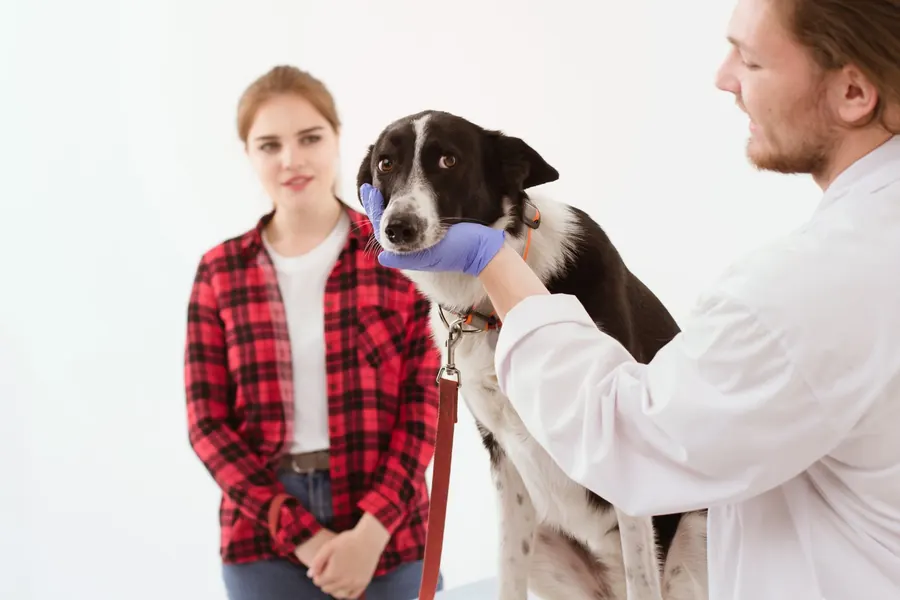
If your pet needs to stay overnight, it may be transferred back to your usual practice the next morning. Ask for a written summary and make sure your own vet receives the clinical notes.
How much does out-of-hours care cost?
Prices vary widely between areas and providers, and the cost of an emergency visit can be several times the price of a routine consultation. Treatment such as intravenous fluids, X-rays, surgery or overnight hospitalisation adds to the bill.
The CMA's reforms are designed to make these costs more transparent. Price lists published from December 2026 (March 2027 for smaller businesses) must include standard services, and practices must explain who provides their OOH care. From June 2027 for large businesses and September 2027 for smaller ones, vets must give written estimates for treatments likely to cost £500 or more.
If you cannot afford emergency care, tell the vet at the start. Charities such as the PDSA provide out-of-hours care for their registered clients, and many private practices can discuss payment options.
Frequently asked questions
Will my vet come to my house in an emergency?
Usually not. Owners are responsible for bringing their animals to the practice, including in emergencies. Home visits are sometimes possible during the day or for euthanasia, but you should not rely on them at night.
Can an emergency vet refuse to see my pet?
A vet on duty should not unreasonably refuse first aid and pain relief for species the practice treats. They may, however, direct you to a more suitable clinic, for example for exotic species or horses.
Why is the emergency clinic so far away?
Many practices share one emergency clinic so that a fully staffed team is available overnight. This can mean a longer journey, but the clinic is usually better equipped for night-time cases than a single on-call vet.
Will the emergency clinic have my pet's records?
Not always. Take a list of medicines, any recent test results and your insurance details with you, and give the clinic your usual practice's name so they can share information.
Do I need to call before I go?
Yes, whenever possible. The team can prepare for your arrival, give first aid advice and confirm that you are going to the right place.
Sources
- 3. 24-hour emergency first aid and pain relief, Royal College of Veterinary Surgeons, accessed 2026-11-14.
- Large veterinary businesses: complying with the CMA's Order, Competition and Markets Authority, accessed 2026-11-14.
- Small veterinary businesses: complying with the CMA's Order, Competition and Markets Authority, accessed 2026-11-14.
- Our services, PDSA, accessed 2026-11-14.
- Practice Standards Scheme, Royal College of Veterinary Surgeons, accessed 2026-11-14.
 TravelTravelling abroad with your dog, cat or ferret after Brexit: the rules in 2026Pet travel from Great Britain to the EU in 2026: microchip, rabies vaccine, animal health certificate, tapeworm treatment and pet passports.
 Law and rulesDangerous dogs law in the UK: what every owner needs to know, including the XL Bully rulesThe UK law on dangerous dogs for every owner: dogs out of control, penalties, the five banned types, XL Bully exemption rules and the 2026 changes.
 Law and rulesMicrochipping dogs and cats in the UK: what the law requiresThe UK law on microchipping dogs and cats: deadlines, approved databases, keeping details up to date, fines, collars and tags, and what to check.