
Veterinary care in the UK · Travel
Travelling abroad with your dog, cat or ferret after Brexit: the rules in 2026
Before 2021, British owners could take their dogs and cats to Europe with a pet passport that lasted for years. Since the UK left the EU, travel from Great Britain has become more complicated. For every trip to the EU you now need an animal health certificate issued by a vet shortly before you leave, and the rules changed again in April 2026. At the same time, the UK and the EU are negotiating an agreement that could bring multi-use pet passports back. This guide explains the current rules for dogs, cats and ferrets travelling from England, Scotland and Wales to the EU and back, and what is different in Northern Ireland. Rules change, so always check GOV.UK and the rules of your destination country before you book.

Travelling from Great Britain to the EU needs planning weeks in advance.
Step 1: Microchip first
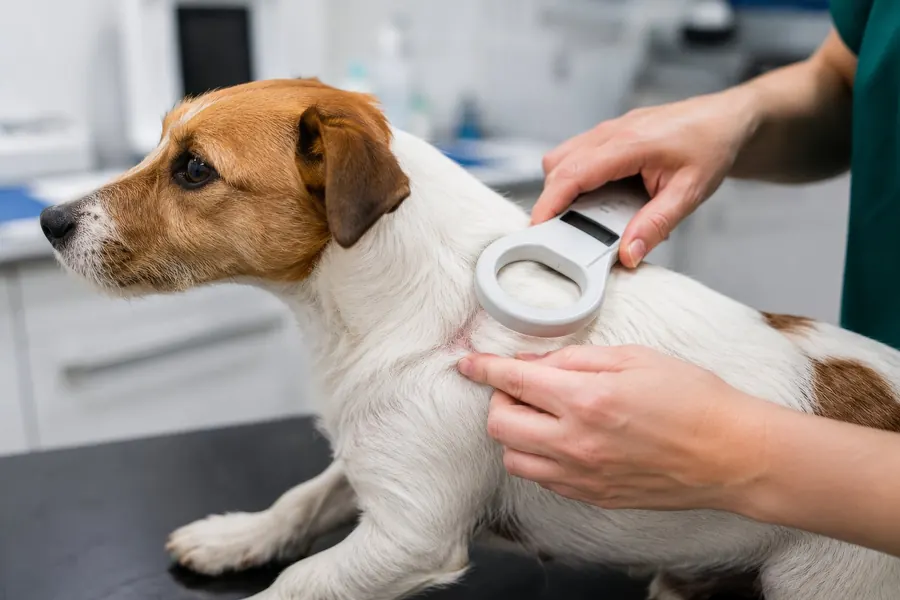
Your pet must be microchipped before, or at the same time as, its rabies vaccination. If the chip is fitted after the vaccination, the vaccination does not count and must be repeated.
All dogs in the UK must already be microchipped by 8 weeks of age, and cats in England by 20 weeks, so most pets will already meet this requirement. Ask your vet to scan the chip and check that the number matches your records.
Step 2: Rabies vaccination
Your pet must be vaccinated against rabies before it can travel. The vet needs proof that your pet is at least 12 weeks old before vaccinating.
After a first vaccination (or the last injection of a primary course), you must wait at least 21 full days before travelling. The exact period depends on the vaccine. If your pet has been vaccinated before, check whether it needs a booster; if there has been no break in cover, you do not need to wait again after a booster.
Rabies is not present in the UK's land animals, so the rabies vaccine is not part of routine vaccinations for British pets. Plan it well before your trip.
Step 3: An animal health certificate for each trip
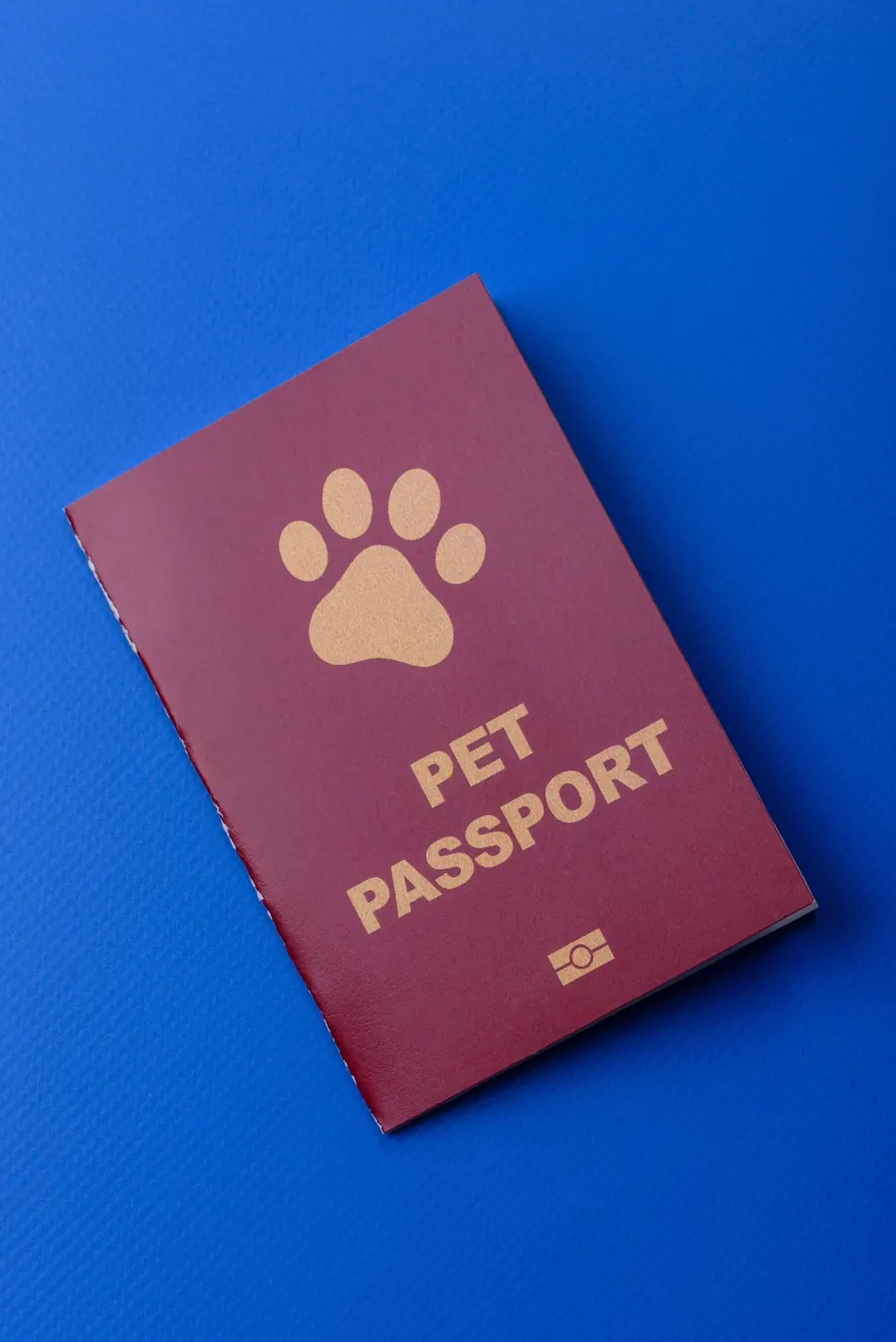
To travel from Great Britain to an EU country, you need an animal health certificate (AHC) from a vet who is authorised to issue them. Ask your practice in advance: not every vet can issue AHCs, and the appointment usually needs to be booked.
After the date of issue, the certificate is valid for:
- 10 days for entry into the EU;
- 6 months for onward travel within the EU after you arrive;
- 6 months for re-entry to Great Britain.
You need a new certificate for each separate trip. If your pet's rabies vaccination expires during the trip, the certificate can no longer be used for onward travel or for returning home. When you collect the certificate, you also sign a declaration that you will not sell or rehome the pet while abroad.
What about pet passports?
If you live in England, Scotland or Wales, you cannot use a pet passport to enter the EU, even if it was issued in an EU country. Since 22 April 2026, stricter EU rules mean that EU pet passports held by residents of Great Britain are no longer valid for travel from Great Britain to the EU. Using one instead of an AHC risks your pet being refused entry.
If you live in Northern Ireland, you can still enter the EU using an EU pet passport, because Northern Ireland remains part of the EU pet travel scheme.
Step 4: Tapeworm treatment for dogs
Some countries, including Ireland, Finland, Malta and Norway, require dogs to be treated for tapeworm before arrival. Check the rules for your destination.
When you return to Great Britain, dogs coming from most countries must be treated for tapeworm by a vet no less than 24 hours and no more than 5 days before arrival. The treatment must be recorded on the pet's travel document. Plan this into your holiday: you may need to visit a local vet before your return journey.
Step 5: Travelling and arriving
- Use an approved route and transport company when returning to Great Britain. This does not apply to journeys within the UK or from Ireland.
- You may take up to 5 pets with you, unless you are travelling to a competition, show or sporting event and have written evidence of registration.
- If your pet travels with someone else, for example a friend, the journey must be within 5 days of your own and you must sign a declaration giving them permission.
- On arrival in the EU, you will go through a travellers' point of entry where the documents may be checked.
If you do not follow the rules on returning to Great Britain, your pet may be put into quarantine for up to 4 months, or refused entry if you travelled by sea. You pay any fees.
Banned dog types
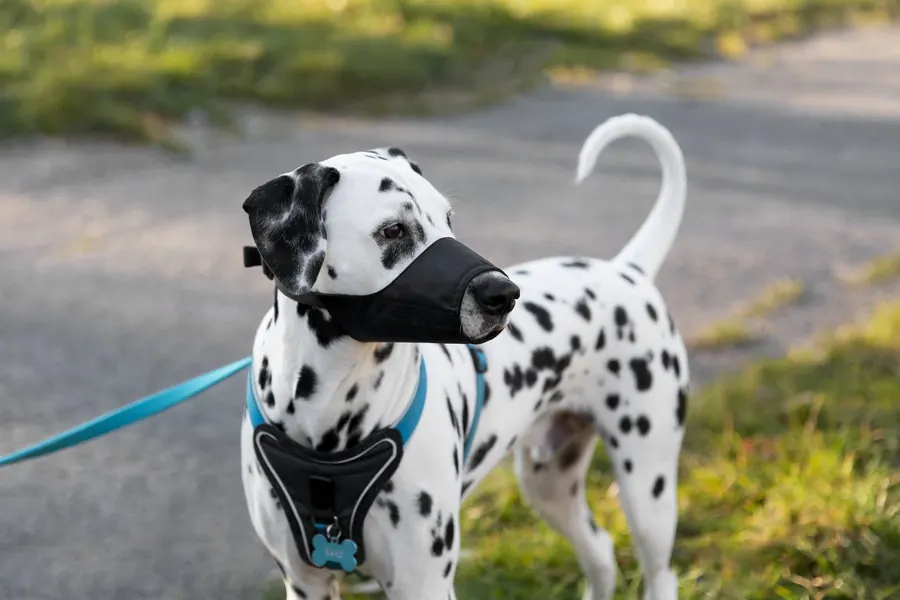
A dog of a banned type, including an XL Bully, can only be brought into Great Britain if it already has a valid Certificate of Exemption. Owners of exempted dogs should check the rules carefully before travelling.
Health risks abroad
Travel exposes pets to diseases that are rare or absent in the UK, especially in southern Europe:
- Leishmaniosis, spread by sandflies;
- Heartworm, spread by mosquitoes;
- Babesiosis and Ehrlichiosis, spread by ticks;
- Echinococcus multilocularis, a tapeworm that is the reason for the tapeworm treatment rule.
Talk to your vet several weeks before travelling about tick, sandfly and mosquito protection and about any vaccines that might help. Pack your pet's usual food, medicines, vaccination record and the contact details of a vet at your destination.
Will pet passports come back?
The UK and the EU are negotiating a sanitary and phytosanitary (SPS) agreement as part of their wider relationship. According to reports in November 2026, the agreement could restore multi-use pet passports for dogs, cats and ferrets travelling between Great Britain and the EU, so that owners would no longer need a new certificate for every trip. A UK–EU summit was planned for 20 November 2026.
Until any new agreement actually comes into force, the current rules apply: an animal health certificate for each trip from Great Britain to the EU. Check GOV.UK before every journey.
Frequently asked questions
How far in advance should I start planning?
At least a month before travelling if your pet has never had a rabies vaccination, because you must wait 21 full days after the vaccine. You also need to book an appointment for the animal health certificate within 10 days of travel.
Can I travel to Ireland without an animal health certificate?
No, Ireland is an EU country, so dogs, cats and ferrets travelling from Great Britain need an animal health certificate, and dogs need tapeworm treatment before arriving. Travel between Great Britain and Northern Ireland has its own rules; check GOV.UK.
Does my cat need tapeworm treatment?
The tapeworm treatment rule applies to dogs. Cats and ferrets do not need it for entry into Great Britain.
My pet's EU pet passport is still in date. Can I use it?
If you live in England, Scotland or Wales, no: since 22 April 2026, a pet passport is not a valid document for travel from Great Britain to the EU. Residents of Northern Ireland can still use one.
What happens if I miss the tapeworm treatment window?
Your dog may not be allowed to enter Great Britain, or may be put into quarantine. Plan your return so that a vet can treat your dog between 1 and 5 days before you arrive.
Sources
- Taking your pet dog, cat or ferret abroad, GOV.UK, accessed 2026-11-14.
- Bringing your pet dog, cat or ferret to Great Britain, GOV.UK, accessed 2026-11-14.
- Get your dog or cat microchipped, GOV.UK, accessed 2026-11-14.
- Pet passports set to be restored between the EU and the UK, The Local, 4 November 2026, accessed 2026-11-14.
- Ban on XL Bully dogs, Department for Environment, Food & Rural Affairs, accessed 2026-11-14.
 Law and rulesDangerous dogs law in the UK: what every owner needs to know, including the XL Bully rulesThe UK law on dangerous dogs for every owner: dogs out of control, penalties, the five banned types, XL Bully exemption rules and the 2026 changes.
 Law and rulesMicrochipping dogs and cats in the UK: what the law requiresThe UK law on microchipping dogs and cats: deadlines, approved databases, keeping details up to date, fines, collars and tags, and what to check.
 Emergency careOut-of-hours emergency vets in the UK: how night and weekend care worksWho provides emergency vet care at night and at weekends in the UK, what the RCVS requires, what owners must do, how to prepare and what emergency care costs.