
Veterinary care in the UK · Law and rules
Dangerous dogs law in the UK: what every owner needs to know, including the XL Bully rules
Most owners will never face the law on dangerous dogs. But it applies to every dog, from a Chihuahua to a Great Dane, and the consequences can be serious: unlimited fines, prison sentences, bans on keeping dogs and, in the worst cases, the destruction of the dog. Since 2024 the rules have changed significantly because XL Bully type dogs were added to the list of banned types in England and Wales, with similar rules in Scotland and Northern Ireland. This guide explains the general rules on dogs being out of control, the banned types, what owners of exempted dogs must do and the new rules that apply from November 2026.
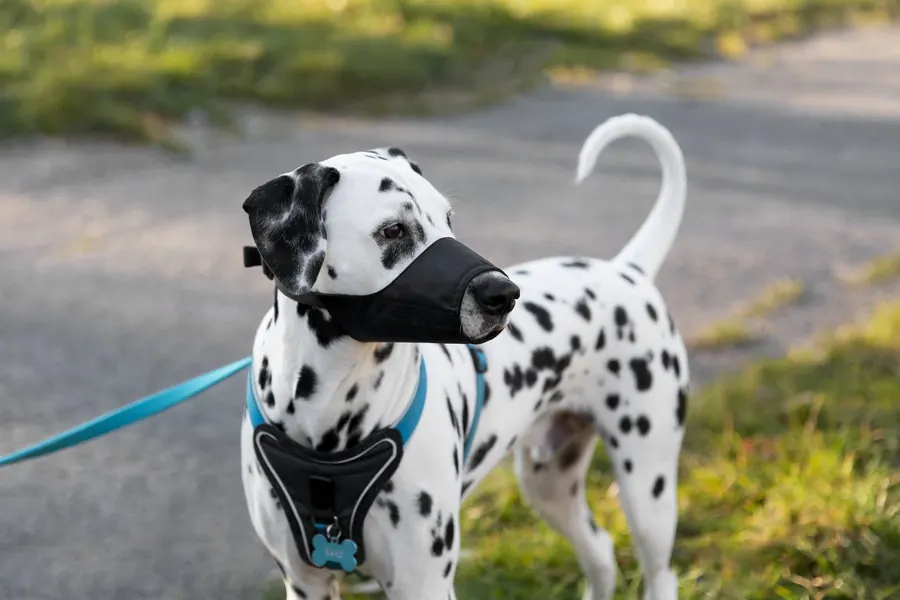
Exempted XL Bully dogs must be muzzled and on a lead in public places.
A dog out of control: the law applies to all dogs
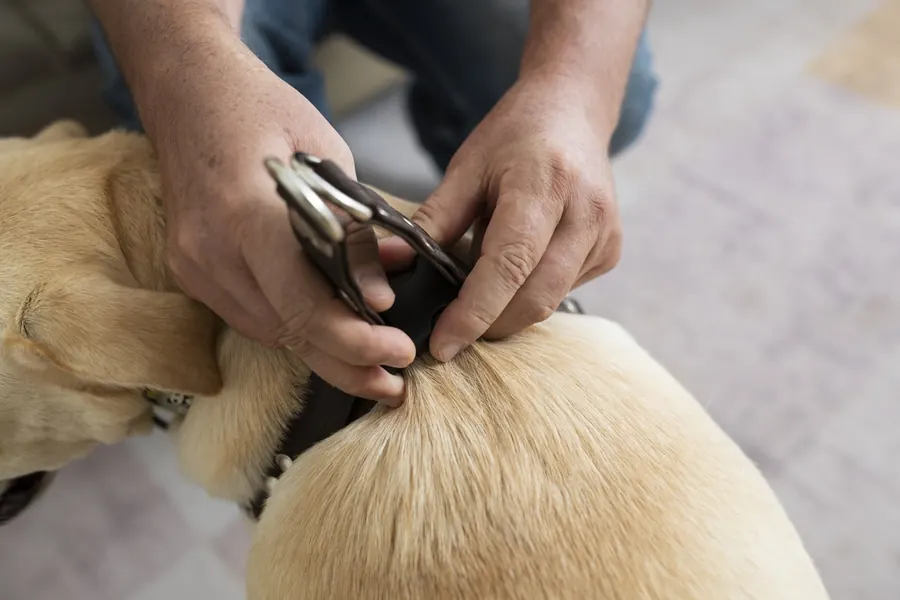
It is against the law to let any dog be dangerously out of control anywhere. That includes:
- public places such as parks, streets and beaches;
- private places, for example a neighbour's house or garden;
- your own home.
Your dog is considered dangerously out of control if it injures someone or makes someone worried that it might injure them. A court can also decide that a dog is dangerously out of control if it attacks someone else's animal, or if the owner of that animal reasonably thinks they could be injured trying to stop the attack.
Note the second point: a bite is not necessary. A dog that repeatedly rushes at people, jumps up aggressively or corners someone so that they fear being hurt can fall within the law.
Penalties
According to the government's guidance:
- You can get an unlimited fine or up to 6 months in prison, or both, if your dog is dangerously out of control. You may be banned from owning a dog, and your dog may be destroyed.
- If you let your dog injure someone, you can be sent to prison for up to 5 years or fined, or both.
- If you allow your dog to kill someone, you can be sent to prison for up to 14 years or receive an unlimited fine, or both.
- If you allow your dog to injure an assistance dog, such as a guide dog, you can be sent to prison for up to 3 years or fined, or both.
If someone deliberately uses a dog to injure another person, they could face a charge of malicious wounding.
The banned types
In the UK it is against the law to own certain types of dog:
- Pit Bull Terrier
- Japanese Tosa
- Dogo Argentino
- Fila Brasileiro
- XL Bully
It is also illegal to sell, abandon, give away or breed from a banned dog.
Importantly, whether a dog is a banned type depends on what it looks like, not on its breed name or paperwork. A dog sold as a "bulldog cross" or "American Bully" may still be considered an XL Bully or Pit Bull type if it matches the physical description.
What happens if police think your dog is banned
The police or the council's dog warden can take a dog they believe is a banned type, even if it has not acted dangerously and there has been no complaint. In a public place they do not need a warrant; in a private place they must get one, unless they are already there with a warrant for something else.
A police or council dog expert will assess your dog. It may be released, or kept in kennels while the case goes to court. Owners are not allowed to visit while they wait for a court decision. It is your responsibility to prove that your dog is not a banned type. If you cannot, you can receive an unlimited fine or up to 6 months in prison, and the dog will be destroyed, unless the court decides it is not a danger and can be exempted.
XL Bully dogs: the rules for exempted dogs
In England and Wales it has been a criminal offence since February 2024 to own or possess an XL Bully dog without a valid Certificate of Exemption. Applications have closed, and new exemptions can now only be authorised by a court order. Scotland and Northern Ireland have their own exemption schemes, which have also closed.
For the life of the dog, the owner of an exempted XL Bully in England and Wales must:
- keep the dog at the same address as the certificate holder, except for a maximum of 30 days in any 12 months;
- tell Defra if they permanently change address, or if the dog dies or is exported;
- keep the dog muzzled in public places, using a muzzle that lets it pant, breathe and drink;
- keep the dog on a lead in public places, held securely by someone aged at least 16;
- keep the dog in secure conditions that stop it escaping;
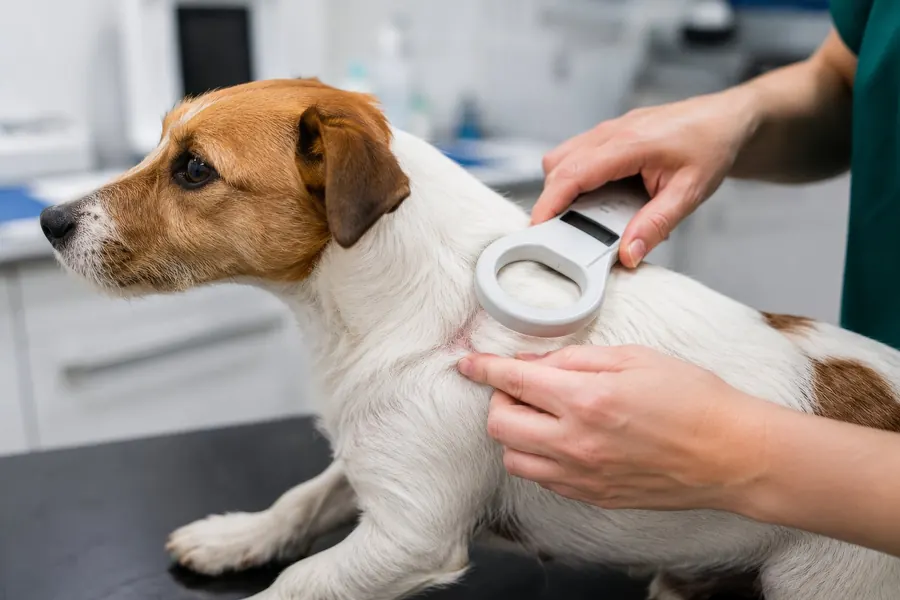
- give a police officer or authorised council officer access to read the dog's microchip, and produce the certificate within 5 days if asked.
Exempted XL Bullies must also have been neutered. The deadlines for neutering and sending evidence to Defra have now passed. If your dog was not neutered in time, contact your local police force and continue to follow all the other requirements.
It remains illegal to sell, rehome, give away or transfer ownership of an XL Bully dog, or to abandon one or let it stray. Rehoming organisations must not rehome XL Bully dogs.
Changes in 2026
Several changes took effect in 2026:
- Insurance: from 1 July 2026, owners of banned breed dogs, including XL Bullies, no longer need third-party public liability insurance to keep their certificate valid.
- Withdrawing a certificate: from October 2026, owners who no longer believe their dog is an XL Bully type can apply to Defra to withdraw the certificate, after checking the official conformation standard.
- Children: from 1 November 2026, you must not leave a child under 12 in close contact with a banned dog in a private place, such as a home or garden, without adult supervision. This is a condition of the Certificate of Exemption. Scotland has introduced the same rule from the same date: an adult aged 16 or over must be present whenever a child under 12 is with an XL Bully or other banned type dog in a home or private place. In Scotland, breaking the exemption rules can lead to a fine of up to £5,000, up to 6 months in prison, or both.
Responsible ownership for every dog
The law on dogs out of control applies to every breed. Practical steps that keep everyone safe include:
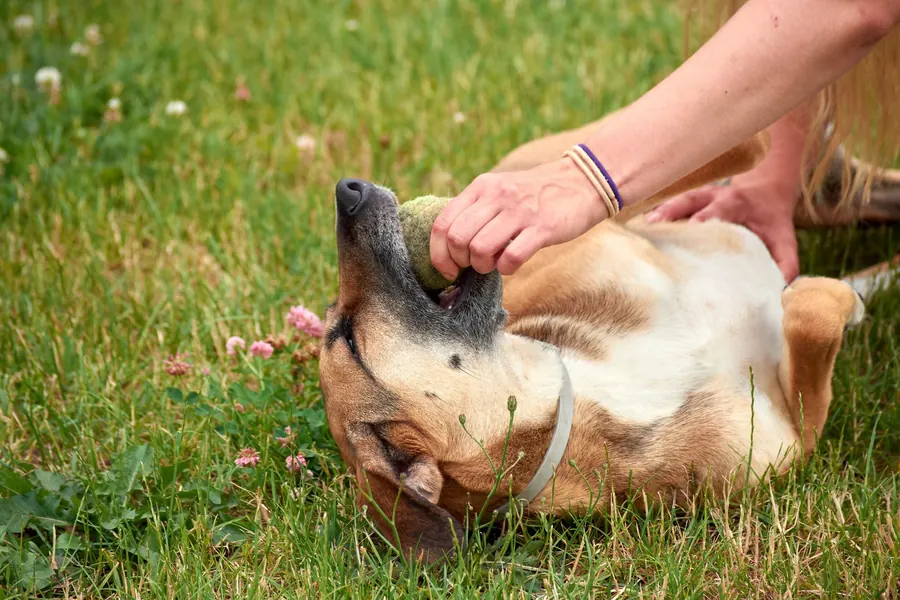
- training and socialisation from puppyhood, using reward-based methods;
- keeping your dog on a lead where required and in busy areas, near livestock and near children's play areas;
- knowing your dog's body language, and moving away from situations that make it anxious;
- supervising children and dogs at all times, whatever the breed;
- securing your garden so your dog cannot escape or rush at people over the fence;
- following local rules: councils can make Public Spaces Protection Orders that require dogs to be on leads or exclude them from certain areas;
- getting help early from your vet and a qualified behaviourist if your dog shows signs of aggression.
What to do if a dog attacks
- Get to safety and seek medical help for any injuries.
- If your dog has been attacked, take it to a vet.
- Report the incident to the police if someone has been injured or the dog is dangerously out of control. Other incidents, such as stray dogs, can be reported to the council.
- Note the time, place, description of the dog and owner, and any witnesses.
Frequently asked questions
Can I be prosecuted if my dog bites someone in my own home?
Yes. The law on dogs being dangerously out of control applies in private places, including the owner's home. This includes, for example, a visitor or delivery driver.
My dog is a mixed breed that looks like an XL Bully. What should I do?
Whether a dog is a banned type depends on its appearance, not its name. Check the official XL Bully conformation standard. If you think your dog may be an XL Bully and you did not apply for an exemption, the government advises contacting your local police force.
Do I still need insurance for my exempted XL Bully?
No. From 1 July 2026, third-party public liability insurance is no longer a requirement for banned breed dogs. All other conditions of the exemption still apply.
Can I take my exempted XL Bully on holiday?
You can keep the dog at a different address for up to 30 days in a 12-month period. It must still be muzzled and on a lead in public. Travelling abroad and returning raises additional issues: a banned type can only enter Great Britain if it already has a valid Certificate of Exemption.
Who decides whether my dog is dangerous?
The police, the council and ultimately the courts. A court can impose conditions, such as a muzzle or lead, ban a person from keeping dogs, or order a dog to be destroyed.
Sources
- Controlling your dog in public, GOV.UK, accessed 2026-11-14.
- Controlling your dog in public: banned dogs, GOV.UK, accessed 2026-11-14.
- Ban on XL Bully dogs, Department for Environment, Food & Rural Affairs, accessed 2026-11-14.
- XL Bully dogs in Scotland: exemptions, Scottish Government, accessed 2026-11-14.
- Bringing your pet dog, cat or ferret to Great Britain, GOV.UK, accessed 2026-11-14.
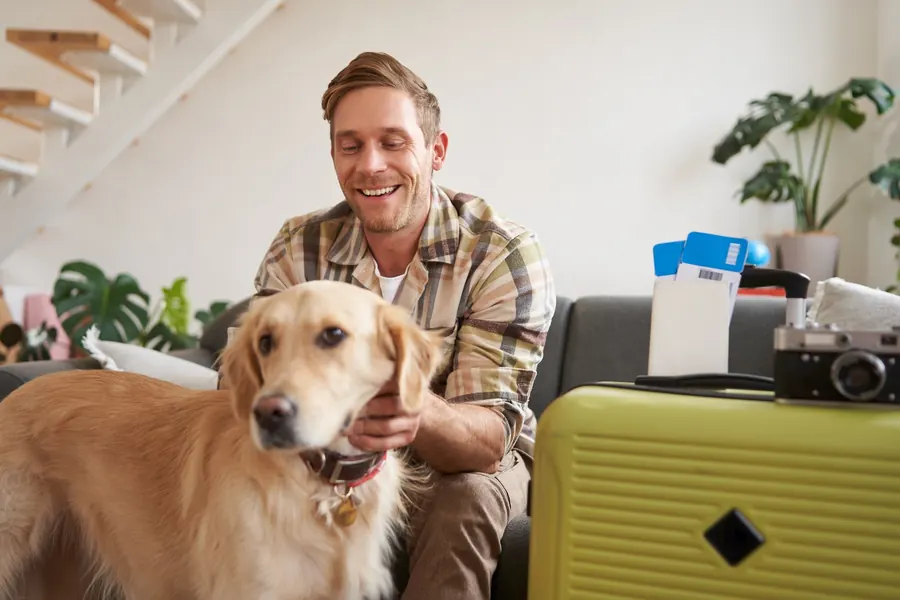 TravelTravelling abroad with your dog, cat or ferret after Brexit: the rules in 2026Pet travel from Great Britain to the EU in 2026: microchip, rabies vaccine, animal health certificate, tapeworm treatment and pet passports.
 Law and rulesMicrochipping dogs and cats in the UK: what the law requiresThe UK law on microchipping dogs and cats: deadlines, approved databases, keeping details up to date, fines, collars and tags, and what to check.
 Emergency careOut-of-hours emergency vets in the UK: how night and weekend care worksWho provides emergency vet care at night and at weekends in the UK, what the RCVS requires, what owners must do, how to prepare and what emergency care costs.