Contents
- What happened
- Two groups of German Shepherds
- Working dogs are bolder
- Why behaviour matters so much
- How behaviour was assessed
- Play, "ghosts" and a stranger
- 23,000 dogs
- Genome analysis
- Genes for curiosity and play
- The researcher's view
- The vet's view
- A link to humans
- Behaviour involves many genes
- Not ready for practice yet
- Working with the armed forces
- Why the armed forces and police care
- Show lines
- What it means for owners
- Behaviour testing in Sweden
- Why socialisation matters
- Fear and health
- Genetics and disease
- Dogs as a model for humans
- What this means for Europe
- How to choose a breeder
- A rescue dog
- Nature and nurture
- Why large data sets matter
- Anxious dogs at home
- What happens next
- When to see a vet
What happened
On 23 November Uppsala University announced a new study of German Shepherds. Researchers at Uppsala University and the Swedish University of Agricultural Sciences (SLU) found that working and show German Shepherds differ not only in behaviour but also in their genes. The study is published in the scientific journal Animal Genetics.
Two groups of German Shepherds
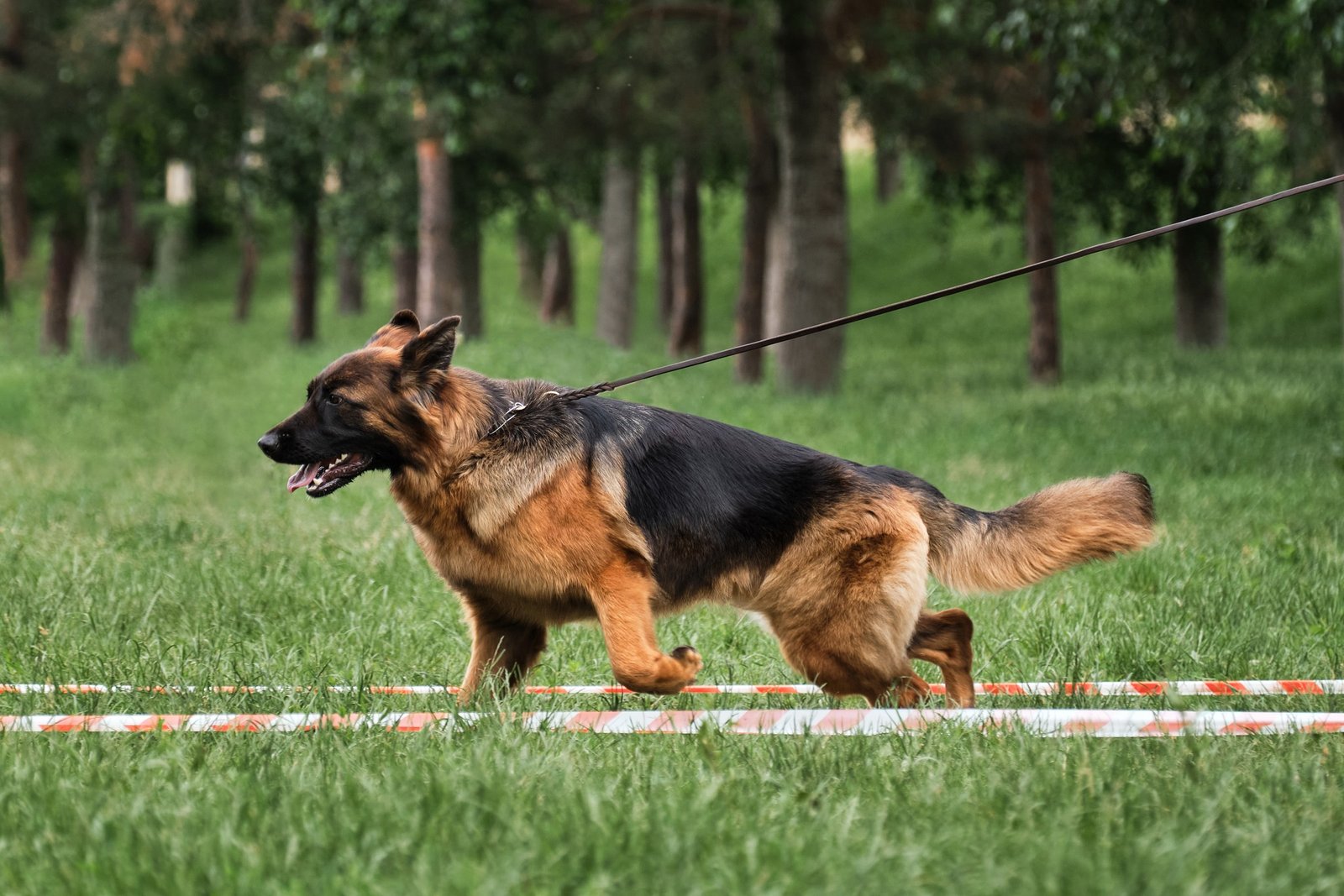
The researchers showed that German Shepherds in Sweden are in effect split into two groups. Some are bred mainly for looks and the show ring. Others are bred for service work, for example in the police and the armed forces. These groups differ genetically.
Working dogs are bolder
On average, working German Shepherds showed less fear, more curiosity and socialised well with people. Show dogs more often showed fear and nervousness. The university describes working dogs as more curious and less neurotic than those bred for show.
Why behaviour matters so much
The German Shepherd is one of the main service breeds. It is used by the police, the armed forces and search and rescue services. For this work a dog must be bold, balanced and keen to work with a handler. Finding and raising such a dog is difficult and expensive.
Uppsala universitet; 23 November 2026
How behaviour was assessed
Behaviour was assessed with a standardised test known in English as the Dog Mentality Assessment. The dog is taken through a series of situations and its reactions are recorded. Today most German Shepherds in Sweden take this test.
Play, "ghosts" and a stranger
In the test the dog is invited to play, and assessors watch how it reacts to being handled by a stranger and to threatening ghost-like figures. The reactions show how curious, playful and fearful the dog is and how quickly it recovers.
23,000 dogs
The researchers used test results for about 23,000 German Shepherds. That is a huge sample for research on dog behaviour. It made it possible to see differences between lines that are hard to spot in a small number of animals.
Genome analysis
The researchers then took blood from 373 German Shepherds that had taken the test and mapped their genomes. They looked for stretches of DNA that differ between dogs with different behaviour: more or less curious, more or less playful.
Genes for curiosity and play
The scientists found areas of the genome where differences could be seen depending on how curious or playful a dog was. This made it possible to identify some of the genes in working dogs linked to curiosity and playfulness. It is a first step towards understanding the genetics of the breed's behaviour.
The researcher's view
"Breeders of working dogs have selected and bred the ones that really enjoy working; it's a bit like a game for them," said Kerstin Lindblad-Toh, Professor of Comparative Genomics at Uppsala University. She said it was interesting to see that this selective breeding has led to differences at both the behavioural and genetic levels.
The vet's view
"We could see that, on average, the working dogs showed less fear, more curiosity and were able to socialise well with humans," said Åke Hedhammar, Professor Emeritus at SLU. In his view, this shows how important it is to select for behaviour when breeding dogs for important service roles.
A link to humans
Some of the genes linked to German Shepherd behaviour have been associated in earlier studies with neuroticism in humans. Neuroticism is a tendency towards anxiety and negative emotions. According to Lindblad-Toh, this is an example of how dogs could help us understand human behaviour better.
Behaviour involves many genes
The authors stress that behaviour is not determined by single genes. It is a complex interplay of many genes and the environment: upbringing, experience and living conditions. So even a dog with "good" genes can grow up fearful if it is poorly socialised.
Not ready for practice yet
"But we are not there yet," Hedhammar said of the idea of choosing dogs by their genes. The study is only a first step, showing that there are clear behavioural differences between working and show German Shepherds. Genetic tests for temperament are still a long way off.
Working with the armed forces
Together with the Swedish Armed Forces, the researchers are preparing larger studies to map the genetics of behaviour more precisely. In future this could help select dogs with the best chance of becoming good service dogs and decide which dogs to use for breeding.
Why the armed forces and police care
Training a service dog takes months and costs a lot. If a dog turns out to be unsuitable because of fear or nervousness, that effort is wasted. Being able to judge a puppy's prospects in advance would help services save time and money and reduce disappointments.
Show lines
Show German Shepherds are selected mainly for appearance: conformation, movement and colour. Temperament is considered too, but less strictly. The study suggests that this kind of selection changes the breed's behaviour over time. It is a reason for breeders to pay closer attention to dogs' temperament.
What it means for owners
If you are choosing a German Shepherd for your family, ask the breeder about the line and the parents' behaviour test results. A working line can suit an active family, but such dogs need lots of exercise and activity. Show dogs may be more sensitive and need calm socialisation.
Behaviour testing in Sweden
In Sweden, dogs of many breeds take the behaviour test, not just German Shepherds. It is carried out by trained assessors following a single protocol. The results go into the Swedish Kennel Club's database, and breeders use them when choosing pairings.
Why socialisation matters
Even in a dog with good genes, character is shaped in the first months of life. A puppy needs to meet people, sounds, places and other animals calmly. Without that, a dog may grow up fearful and anxious, whatever its genes.
Fear and health
Chronic fear and anxiety harm not only behaviour but also a dog's health: stress affects digestion, skin and immunity. Fearful dogs are more likely to bite out of fear. That is why dealing with anxiety is part of veterinary behavioural medicine.
Genetics and disease
German Shepherds are also prone to physical diseases: hip and elbow dysplasia, degenerative myelopathy and digestive problems. Responsible breeders screen parents for these conditions. Behavioural genetics could become another tool in breeding.
Dogs as a model for humans
Dogs share many diseases and behavioural traits with humans. Breeds have been shaped by selection, so it is easier to find genes linked to particular traits in them. Lindblad-Toh's group in Uppsala has long studied dog genomes to understand human diseases and behaviour.
What this means for Europe
The German Shepherd is one of the most widespread breeds in Europe, especially in the police and armed forces. The debate about differences between working and show lines is going on in many countries. Swedish data based on tens of thousands of tests will be useful to breed clubs across Europe.
How to choose a breeder
A good breeder knows the temperament of their dogs, checks their health and behaviour and is open about a line's weaknesses. Ask to see the puppies' mother and watch how she behaves with strangers. A calm, friendly mother is a good sign.
A rescue dog
German Shepherds often end up in rescue centres, sometimes because of behaviour their owners could not handle. Before taking on such a dog, find out about its temperament and talk to the rescue staff and a trainer. Many dogs respond well to patient work.
Nature and nurture
Scientists have long debated what matters more for a dog's character: genes or upbringing. Studies show that heredity explains a noticeable part of the differences in boldness, playfulness and sociability, but a puppy's experiences and how the owner treats it also matter a great deal. The Swedish study helps pin down the genetic part more precisely.
Why large data sets matter
To find genes linked to behaviour, you need many dogs whose temperament has been measured in the same way. Sweden has tested dogs to a single protocol for decades, creating a unique database. Other countries have less data of this kind, which is why the Swedish results are so valuable to geneticists.
Anxious dogs at home
If your dog is afraid of loud noises, strangers or new places, do not force it to get used to them. Gradual exposure, rewards and a calm setting work better. In severe cases a vet can prescribe treatment and refer you to a behaviour specialist.
What happens next
The researchers will expand the work with the armed forces and study more dogs to identify behaviour genes more precisely. The results are not yet ready for genetic temperament tests. But they already show that selecting for working ability keeps German Shepherds curious and bold.
When to see a vet
If your dog becomes fearful, anxious, irritable or aggressive for no obvious reason, take it to the vet. Pain, thyroid disease and other health problems often change behaviour. After a check-up, the vet can tell you whether a behaviour specialist is needed.
Sources
- Uppsala universitet, 23 November 2026
- Animal Genetics, 2026