Contents
- What has happened
- Where Cochise County is
- What measures have been taken
- How the fly moved north
- Why a case in a dog matters
- How a dog or cat can become infested
- Signs of infestation
- What to do if you suspect it
- How sterile flies work
- Can the fly infest people
- Why autumn is no reason to relax
- What this means for Europe and the UK
- What to know if you travel with a dog or adopt one from the Americas
- When to see a vet
What has happened
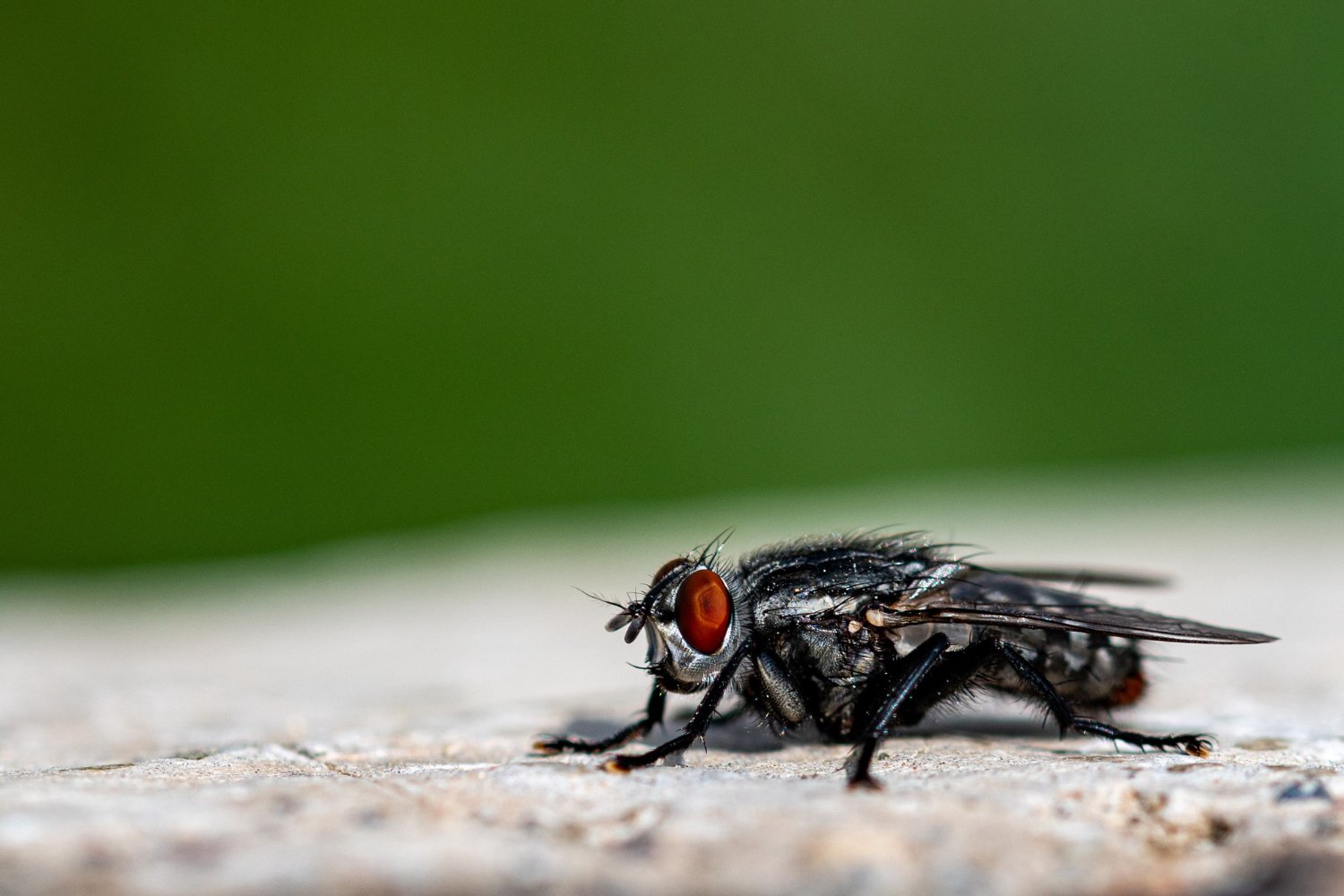
On 28 October 2026 the US Department of Agriculture's Animal and Plant Health Inspection Service (APHIS) reported Arizona's first case of New World screwworm. This is a parasite whose larvae feed on the living tissue of animals.
The larvae were found in a dog in Cochise County, in the south-east of the state. Samples were tested and the diagnosis confirmed by USDA's National Veterinary Services Laboratories in Ames, Iowa. USDA is now running a joint response on the ground with the Arizona Department of Agriculture. The announcement doesn't say how the dog is doing.
USDA APHIS; 28–29 October 2026
Where Cochise County is
Cochise County is the south-eastern corner of Arizona. To the south it borders the Mexican state of Sonora, and to the east New Mexico. There are many cattle ranches here, and the town of Douglas has a port of entry for cattle from Mexico, which reopened on 24 August after inspections were tightened.
The case didn't come entirely out of the blue. On 27 October neighbouring New Mexico reported new detections, including in a calf in Hidalgo County, which borders Cochise. Back in September, larvae were found in a horse in Grant County, New Mexico, about 50 miles (80 km) from the Arizona border. Arizona had been setting hundreds of fly traps since last year, and until now the parasite hadn't been found there.
What measures have been taken
USDA and the Arizona authorities are following the same plan as in Texas and New Mexico:
- an infested zone with a 20-kilometre radius around the detection site — animals can move into and out of the zone only after inspection and under supervision;
- more surveillance — specialists are inspecting animals and setting fly traps to find out how far the parasite has spread;
- sterile fly releases — sterilised males are being dispersed over the area;
- outreach — farmers, vets and residents are being told how to recognise an infestation and where to report it.
How the fly moved north
Until recently New World screwworm was considered defeated in the US: it was eradicated decades ago, and a "barrier" of sterile flies was maintained on the border between Panama and Colombia. In recent years that barrier was breached. The fly moved through Central America and Mexico, where it was found in several northern states, and in summer 2026 it crossed the US border.
The parasite was first found in Texas, then in New Mexico, where eight infestations had been counted by 27 October. On 21 October it was detected in a wild animal in the US for the first time — an elk on a game ranch in Texas. Now it's Arizona's turn. USDA's announcement doesn't give a national total: the department publishes up-to-date figures on a separate page and updates them daily.
Why a case in a dog matters
Screwworm is usually associated with livestock: cattle, sheep, goats and horses. But any warm-blooded animal with an open wound will do for the parasite, including dogs, cats and people. The Arizona case shows that pet owners in the southern US need to be just as vigilant as farmers.
Dogs often spend time where flies lay their eggs: on pasture, ranches and in desert areas. They pick up scratches, bites and thorn wounds. Any such wound can become the place where a female leaves hundreds of eggs.
How a dog or cat can become infested
The female fly lays her eggs on the edges of fresh wounds, on the navels of newborn animals or in moist skin folds. Within hours the larvae hatch and burrow into living tissue. The wound quickly enlarges, starts to fester and smells unpleasant, which attracts more flies.
Particularly at risk are:
- stray and street animals, whose wounds go untreated;
- elderly and less mobile pets with pressure sores and inflamed skin;
- animals after surgery, with stitches and dressings;
- puppies and kittens with an unhealed navel;
- dogs after fights and with tick bites.
Signs of infestation
USDA is asking owners to check their animals every day and look out for:
- wounds that drain fluid or get bigger;
- larvae or egg masses in a wound — white, ringed and sitting deep in the tissue;
- discomfort and irritability — the animal shakes its head, rubs, licks or bites one spot;
- lesions around body openings — the ears, nose, genitals and navel.
Another sign is a foul, rotting smell from the wound.
What to do if you suspect it
If you see larvae in a wound on your dog or cat, call your vet straight away. Don't try to treat the wound only with home remedies: the larvae sit deep, and some may be left behind. The vet will remove them, clean the wound and prescribe treatment. The larvae are usually kept and sent to a laboratory: only testing confirms that it's New World screwworm and not an ordinary blowfly, which can also lay eggs in a wound.
In the US, suspected cases must be reported to a vet, the state animal health officials or USDA. Until a vet has examined the animal, it's best not to move it to other areas.
How sterile flies work
The method that defeated screwworm last century is still in use. Specialist facilities rear millions of flies, sterilise the males with radiation and release them from aircraft. A female mates only once in her life, and if her mate is sterile, there will be no offspring. When there are enough sterile flies, the population gradually dies out.
At the moment there aren't enough sterile flies to cover the whole area where the parasite has appeared. USDA is expanding production: once planned investments are complete, it should approach 500 million flies a week. For now, the authorities are sending sterile flies to where new cases are found, as in Arizona now.
Can the fly infest people
Yes, although it's rare. A female can lay eggs in a wound, a graze or the lining of the nose in a person, especially in people who spend a lot of time outdoors near livestock, and in elderly and frail people. In the US, recent cases have mostly been in people returning from trips to Central and South America. Infestations are treated by doctors, who remove the larvae and clean the wound.
For animal owners the rule is simple: treat and cover your own wounds as carefully as your pet's, and don't care for an infested animal with bare hands.
Why autumn is no reason to relax
Screwworm likes warmth, and its activity drops in the cold months. But in southern Arizona, as in Texas and New Mexico, October and November stay warm, and frosts don't come every night. So the flies keep laying eggs, and the authorities aren't easing surveillance. Farmers and dog owners in southern areas are advised to check their animals daily until steady cold weather sets in, and to be especially alert again in spring.
What this means for Europe and the UK
New World screwworm isn't present in Europe or the UK, and its spread in the southern US poses no direct threat to European animals. The parasite lives in the warm climate of the Americas, and animals imported from the US and other countries of the Americas come with veterinary documents and inspections.
But the subject matters in Europe too. First, southern and eastern Europe have a relative of their own — the Wohlfahrtia magnifica fly, whose larvae also infest wounds in sheep, dogs and sometimes people. The signs are similar, and so are the rules: check animals daily in summer and treat any wound straight away. Second, more and more Europeans travel with dogs or adopt dogs from countries in the Americas where the fly is now spreading.
What to know if you travel with a dog or adopt one from the Americas
If you're taking your dog to Mexico, Central America or the southern US, talk to your vet before you go. Take wound care products and insect repellents that your vet has chosen for your dog. While you're away, check your dog every day, especially after walks on pasture and in the countryside.
If you're adopting a dog from these countries, ask for it to be examined before travel and take it to your vet as soon as it arrives. Tell the vet where the dog comes from: it helps them think early of diseases that aren't found in Europe.
When to see a vet
See a vet straight away if your dog or cat has a wound that won't heal, is getting bigger, weeping or smells unpleasant, if you see larvae in it, or if your pet keeps shaking its head or licking or biting one spot. The sooner the larvae are removed and treatment begins, the faster the animal will recover.
Sources
- US Department of Agriculture, APHIS, 28 October 2026
- USDA APHIS, Stop Screwworm page, 29 October 2026