Contents
- What happened
- How she was rescued
- She was lucky
- Why she isn't released straight away
- The Sri Lankan leopard
- What a snare is
- What the study found
- Floating snares
- Removing snares is hard
- Where to release
- A GPS collar experiment
- The scientists' conclusion
- Not enough vets
- There is progress
- Dangerous work
- Not just elephants
- Snares and pets
- If your dog gets caught in a snare
- Why a vet is needed
- How to protect your dog
- Traps in Europe
- What this means for Europe
- Wildlife vets
- How a leopard is immobilised
- Why the kidneys matter
- Meat and poachers
- What happens next
- When to see a vet
What happened
On 17 November the conservation news site Mongabay reported the rescue of a female Sri Lankan leopard caught in a wire snare. It happened on a cold November night on the Athad tea estate in the Norwood area of the island's Central Highlands. Estate workers were woken by growling and found the animal tangled in the snare.
How she was rescued
The female was about three and a half years old. The wire had cut tightly into her flank as she struggled to escape. Early in the morning, staff from the Department of Wildlife Conservation and a vet from the veterinary unit at Randenigala arrived. They sedated the agitated animal and freed her from the snare.
She was lucky
According to the central region's wildlife vet, Akalanka Pinidiya, despite the severe constriction the female had no serious external wounds of the kind often seen in snare victims. She is now eating the meat offered to her and passing urine and faeces normally. These are encouraging signs that there are no serious internal injuries.
Why she isn't released straight away
Even if a leopard looks calm, it isn't released immediately after being freed. “The struggle to escape a snare can cause serious internal damage, especially to the kidneys, which can be fatal even if it isn't visible,” Pinidiya explains. The female will be kept under observation for a few more days.
Mongabay; 17 November 2026
The Sri Lankan leopard
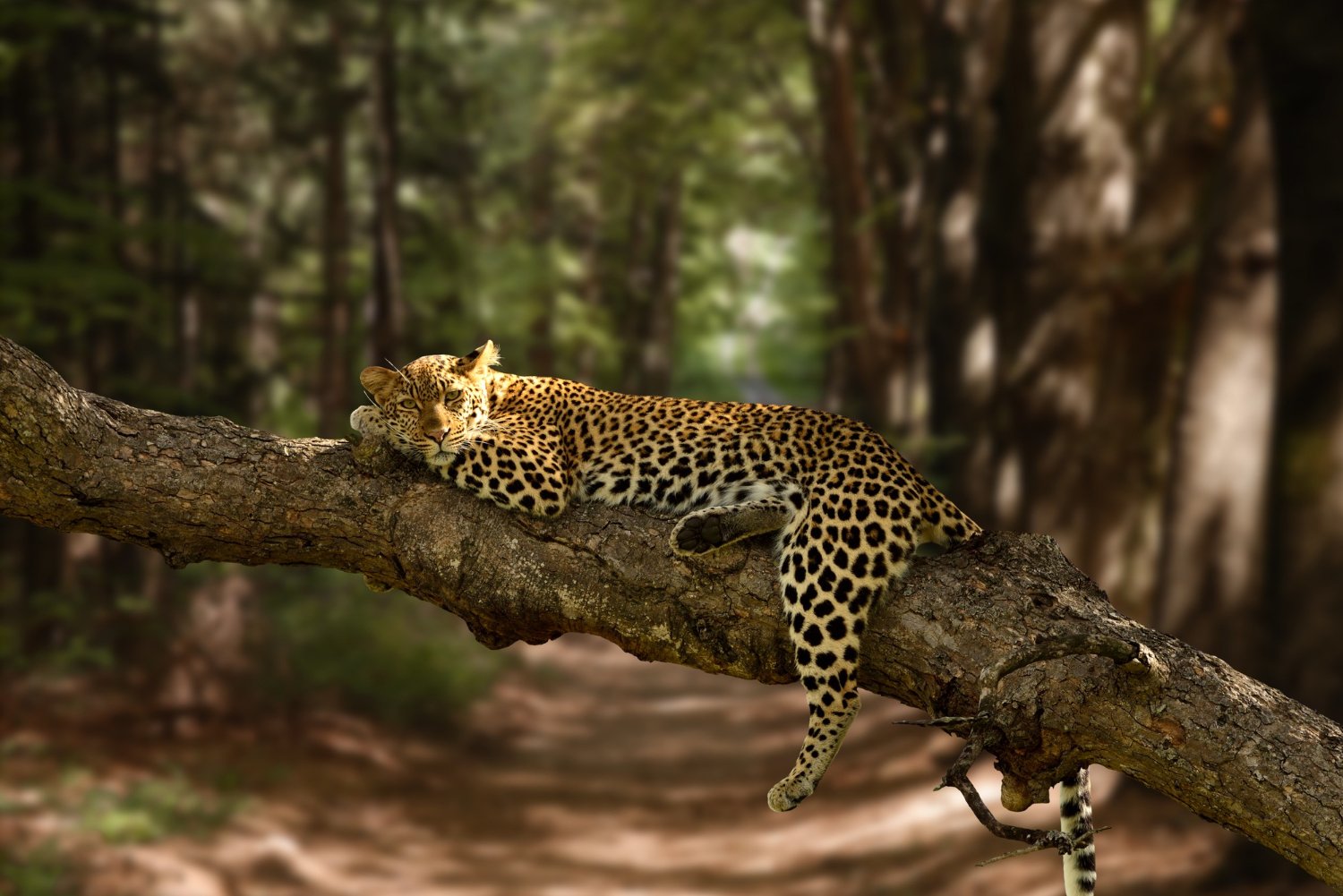
The Sri Lankan leopard is a subspecies found only on the island. It is the country's top land predator. In the Central Highlands, leopards live among tea estates, patches of forest, grasslands and villages. Here they find prey and shelter, but they also constantly come up against human traps.
What a snare is
A wire snare is a strong metal cable formed into a loop and set on an animal trail. When an animal passes through, the loop tightens around its body or leg. Snares are set for the meat of wild boar and sambar deer, but they don't choose their victims. Leopards get caught in them, and sometimes even elephants.
What the study found
A study of 17 years of data on human-caused leopard deaths from 2008 to 2024 documented 164 cases. Of the 138 cases with a known cause, snares accounted for 62.3%. Poisoning, shooting and road collisions together accounted for 31.9%. Almost half of the deaths occurred on plantations.
Floating snares
In the latest case, poachers used what's called a floating snare. The cable isn't tied to a tree but to a heavy log. A trapped animal first drags the log along, but it eventually gets stuck in bushes or rocks. This makes it easier for poachers to avoid being caught, as the trap is hard to link to a particular plot of land.
Removing snares is hard
Naturalist Palinda Perera, who volunteers to remove snares in the highlands, says they are hard to find. He tested the strength of one himself by trying to break free and could barely move. The logs attached to the cables are so heavy they're difficult to carry away. Perera believes regular patrols would help.
Where to release
Treatment is only part of the job. Deciding where to release the animal is just as difficult. If it's returned to where it was caught, it may end up in a snare again. But moving a leopard far away to unfamiliar territory is also risky, says Anjali Watson of the Wilderness & Wildlife Conservation Trust, which studies leopards.
A GPS collar experiment
In 2022 vets rescued a young male from a snare on another estate. After surgery and four months of treatment, he was fitted with a GPS collar and released in a protected area 20 km from where he was caught. The male immediately headed home, swam across a reservoir and three weeks later was 10 km from his old territory.
The scientists' conclusion
Based on this observation, researchers advise against moving rescued leopards far away if there is another option. It's better to release them in a relatively safe place near where they were caught, provided the threats there can be removed. Leopards are strongly attached to their territory.
Not enough vets
The central region's veterinary team is based at Randenigala, more than 100 km from the places where leopards are often found in snares. Pinidiya agrees that the highlands need their own rapid response service, but the main problem is a shortage of wildlife vets.
There is progress
According to Watson, the rescue and treatment of leopards is better than it used to be. Pinidiya backs this up with figures: in 2025 alone he worked with 30 leopards caught in snares, and 22 of them were treated and released into the wild. There are rehabilitation enclosures at Randenigala.
Dangerous work
Rescuing leopards is dangerous for people too. A few months ago an adult male lunged at Pinidiya as he tried to dart it, and the vet was scratched. In 2023 another vet was injured while releasing a leopard from a snare.
Not just elephants
After the death of a well-known tusker elephant, Sri Lanka's government launched an elephant protection programme with the army, including removing snares where elephants roam. Conservationists welcome this but are calling for snare removal to be extended to all wildlife habitats.
Snares and pets
Snares and traps are dangerous for pets too. Dogs walking in woods and cats roaming fields also get caught. The wire can constrict a leg or neck, cut off the blood supply and cause serious injuries, even if the animal is freed quickly.
If your dog gets caught in a snare
Don't pull the animal, as the snare will tighten further. Calm the dog and, if necessary, put on a muzzle or wrap a cloth around its muzzle: even gentle dogs bite when in pain. Loosen the snare by spreading the cable, or cut it with wire cutters. Once your dog is free, take it to a vet immediately.
Why a vet is needed
As with leopards, dogs can have hidden injuries after being caught in a snare: impaired blood supply to tissues, muscle damage and kidney damage from crushing. Tissue under the wire can die within a few days. So a veterinary check is needed even if everything looks fine.
How to protect your dog
- Keep your dog on a lead in unfamiliar woodland.
- Don't let your dog roam where people hunt or set traps.
- Take a small pair of wire cutters on walks.
- Teach your dog a reliable “stay” and recall.
- Report any snares you find to the police or wildlife authorities.
Traps in Europe
Snares are banned or strictly regulated in many European countries, but illegal traps are found here too. Dogs get caught in fox traps and in snares set for deer and boar. If you find a trap, don't try to remove it yourself; report it to the police or the relevant wildlife authority.
What this means for Europe
The Sri Lankan leopard's story echoes problems in Europe. Here, lynx, wolves and bears also die from illegal traps and poison. And a shortage of wildlife vets is a problem in many countries. Wildlife rehabilitation centres often depend on volunteers and donations.
Wildlife vets
Treating wild animals requires special knowledge: how to immobilise an animal, how to dose drugs for different species, and how to rehabilitate and release. Such specialists are scarce all over the world. Supporting rehabilitation centres is one way of helping wildlife in your own country.
How a leopard is immobilised
To approach an animal caught in a snare safely, the vet fires a dart with a sedative from a distance using a special rifle or blowpipe. The dose is calculated from the animal's estimated weight. While the leopard is asleep, the snare is removed, wounds are examined, and it is then taken in a cage to a rehabilitation centre.
Why the kidneys matter
When an animal struggles desperately in a snare for a long time, its muscles break down and substances are released into the blood that damage the kidneys. This is known as crush syndrome. It can develop several days after release, which is why vets monitor urination and appetite.
Meat and poachers
Snares are set for the meat of wild boar and deer, which is sold or eaten. For many plantation workers it's a way of getting food or earning money. Conservationists say bans alone aren't enough: patrols, work with local communities and punishment for those who set traps are all needed.
What happens next
The female leopard is due to be released after a few days of observation if her tests and behaviour are normal. Conservationists are calling on the authorities to step up patrols, remove snares and set up a rapid response veterinary service in the highlands.
When to see a vet
If your dog or cat has been caught in a snare or trap, even briefly, make sure a vet sees it the same day. Take your pet to the vet urgently if a leg is swollen or cold, it's limping or wounded, it has difficulty breathing after its neck was constricted, it's weak or it's passing less urine.
Sources
- Mongabay, 17 November 2026