Contents
- What happened
- Where the outbreaks were
- The outbreak in Chiba
- What the authorities did
- Checks and investigation
- Food is safe
- What H5N9 means
- Why H5 is dangerous
- How new subtypes arise
- A previously rare subtype
- Why it's being watched
- Tests and diagnosis
- Japan's control system
- The season in Japan
- Risk to mammals
- Risk to cats
- Risk to people
- What this means for Europe
- The European season
- Vaccines for poultry
- What bird keepers should do
- What the disease looks like in hens
- Chiba prefecture
- How the virus reaches farms
- Monitoring wild birds
- What happens next
- When to see a vet
What happened
This week the Japanese authorities confirmed that the season's first two outbreaks of highly pathogenic bird flu on poultry farms were caused by the H5N9 subtype. The University of Minnesota's Center for Infectious Disease Research and Policy reported this on 20 November. It's the first time this subtype has been found in Japan.
Where the outbreaks were
According to Japan's Ministry of Agriculture, Forestry and Fisheries, one outbreak was in Kyoto prefecture in the west of the country and the other in Chiba prefecture near Tokyo. Both farms kept hens, and in both cases the birds were culled.
The outbreak in Chiba
The ministry confirmed the season's second outbreak on 13 November. The virus was found on a farm in the city of Asahi in Chiba prefecture, which kept around 40,000 hens. The day before, the farmer had reported unusual symptoms in the birds. Vets carried out an inspection and a rapid test, and genetic analysis confirmed the infection the next morning.
What the authorities did
Around 40,000 laying hens were culled, and the carcasses were burned or buried to stop the virus spreading. A 3 km movement restriction zone and a shipment restriction zone of up to 10 km were set up around the farm. Vehicle disinfection points were set up on main roads.
CIDRAP, The Star; 20 November 2026
Checks and investigation
The ministry sent an epidemiological team to the site to find out where the virus came from and how it may have spread. Neighbouring farms are being checked. The ministry convened a bird flu task force and asked all prefectures to step up surveillance and report suspicious cases quickly.
Food is safe
The ministry stressed that under current conditions, eating poultry meat and eggs in Japan carries no risk of bird flu infection. Produce from infected farms doesn't go on sale, and the virus is killed by cooking.
What H5N9 means
Influenza viruses are named after two proteins on their surface: haemagglutinin, labelled H, and neuraminidase, labelled N. There are 16 main haemagglutinin types in birds and 9 neuraminidase types. H5N1 and H5N9 share the same H5 haemagglutinin but have different neuraminidase.
Why H5 is dangerous
Viruses with H5 and H7 haemagglutinin can become highly pathogenic for chickens. This means they cause severe disease and mass deaths. H5 is currently responsible for most outbreaks worldwide. The neuraminidase can vary: N1, N5, N8, N9 and others.
How new subtypes arise
New combinations arise when two different influenza viruses end up in the same bird at the same time. They swap parts of their genome and a new variant is born. Wild waterbirds, especially ducks, carry many influenza viruses and act as a natural “laboratory” for such exchanges.
A previously rare subtype
CIDRAP describes H5N9 as a previously rare subtype. Highly pathogenic H5N9 has been found in isolated cases in various countries, including on a duck farm in California in early 2025. The subtype's appearance on two Japanese farms at once suggests it may have spread widely among migratory birds.
Why it's being watched
Scientists study every new subtype to understand how dangerous it is for birds, mammals and people. It's important to find out how the virus spreads, which genes it inherited from H5N1 and whether existing tests and vaccines work against it. So far there's little data on H5N9.
Tests and diagnosis
Most bird flu tests detect the virus by its H5 gene, so H5N9 is picked up in the same way as H5N1. Identifying the neuraminidase and full subtype requires additional laboratory analysis. It was this kind of analysis that showed H5N9, not H5N1, was circulating in Japan.
Japan's control system
Japan has a strict bird flu control system. Farmers must report unusual bird deaths immediately, and vets carry out tests within hours. If infection is confirmed, the whole flock is culled and restriction zones are set up around the farm. This rapid response helps stop the virus at a single farm.
The season in Japan
Japan's bird flu season usually starts in autumn, when migratory birds arrive from the north, and lasts until spring. In previous years Japan has culled millions of hens in a season. The outbreaks in Kyoto and Chiba were the first this season, and the authorities expect more.
Risk to mammals
It's not known whether H5N9 can infect mammals such as cats, foxes, seals and cows as easily as H5N1. The H5N1 virus of recent years has shown it can cross to mammals. So scientists will check what changes there are in the genes of the new subtype.
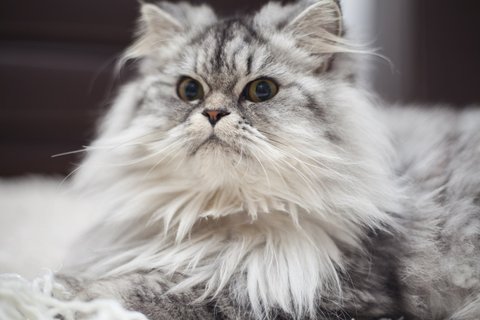
Risk to cats
Cats catch bird flu when they hunt or eat sick birds. There's no data yet on cats being infected with H5N9, but caution makes sense. In areas with outbreaks it's best not to let cats roam unsupervised and not to feed them raw poultry.
Risk to people
No human infections with H5N9 have been reported in Japan. In general, bird flu rarely passes to people, mainly through close contact with sick birds. Farm workers, vets and staff carrying out culls use protective equipment.
What this means for Europe
Migratory birds link continents: some species breed in Siberia and winter in both Asia and Europe. So European scientists closely monitor subtypes that appear in East Asia. European laboratories determine the subtype of every virus found so that H5N9 or other new variants can be spotted in time.
The European season
In Europe the main subtype at present is H5N1, and H5N5 has also been found in the UK and Iceland. France raised its risk level to high on 20 November, Ireland and Wales are bringing in mandatory housing from 23 November, and new outbreaks are being confirmed in Germany and England. Japan's experience is a reminder that the virus is constantly changing.
Vaccines for poultry
Some countries vaccinate poultry against bird flu. France has vaccinated farmed ducks since 2023. Vaccines are matched to circulating viruses, and it's important that they protect against new variants. H5N9 has the same type of H5 protein as H5N1, so H5 vaccines may offer protection, but this needs to be tested.
What bird keepers should do
- Keep birds under cover if the authorities require it.
- Prevent contact between poultry and wild birds.
- Feed and water birds indoors.
- Follow hygiene rules: separate footwear and clothing for the hen house.
- Report unusual bird deaths to a vet straight away.
What the disease looks like in hens
Whatever the subtype, highly pathogenic bird flu in hens shows up as sudden deaths, lethargy, refusing food and water, a sharp drop in egg production, swelling of the head, a bluish comb and wattles, and diarrhoea. In Chiba it was unusual symptoms in the birds that prompted the farmer to call the vets.
Chiba prefecture
Chiba is one of Japan's main poultry-farming prefectures. It lies east of Tokyo, and its farms keep millions of laying hens that supply eggs to the capital region. So every outbreak in Chiba causes particular concern: if the virus spreads to neighbouring farms, egg supplies could be affected.
How the virus reaches farms
The virus is most often brought in by wild birds. Droppings from ducks, geese or crows land on the farm, and from there on workers' boots, vehicle wheels, feed and bedding. Sometimes small rodents and wild animals bring it in. That's why Japanese farms net their poultry houses, disinfect vehicles and restrict access for outsiders.
Monitoring wild birds
Japan, like European countries, tests dead wild birds and droppings at wintering sites. This helps find out in advance which virus is circulating in a region before it reaches farms. The discovery of H5N9 in poultry is likely to prompt scientists to test wild birds for this subtype more closely.
What happens next
Japanese scientists will continue to study the H5N9 virus and work out where it came from. The agriculture ministry is urging farmers to follow biosecurity measures and report any suspicious cases. New outbreaks during the bird migration season are quite likely.
When to see a vet
If several birds in your flock die suddenly, your hens stop eating, drinking and laying, or their heads swell, contact your vet and the veterinary service urgently. If your cat has caught or eaten a bird and develops a temperature, lethargy, difficulty breathing or seizures, see a vet straight away.
Sources
- CIDRAP, 20 November 2026
- The Star, 13 November 2026