
Veterinary care in the UK · Vet services
How to find and choose a vet in the UK: the RCVS, practice standards and your rights
Most owners only think about their vet when something is already wrong. Yet the best time to choose a practice is before you need one: when your puppy or kitten arrives, when you move house, or when you adopt an adult pet. In an emergency you want to know who to call, where to go and roughly what it will cost. In the UK, veterinary surgeons and veterinary nurses are regulated by the Royal College of Veterinary Surgeons (RCVS). Practices, however, vary a great deal in size, services, opening hours, ownership and price. This guide explains how the system works and what to check before you register.
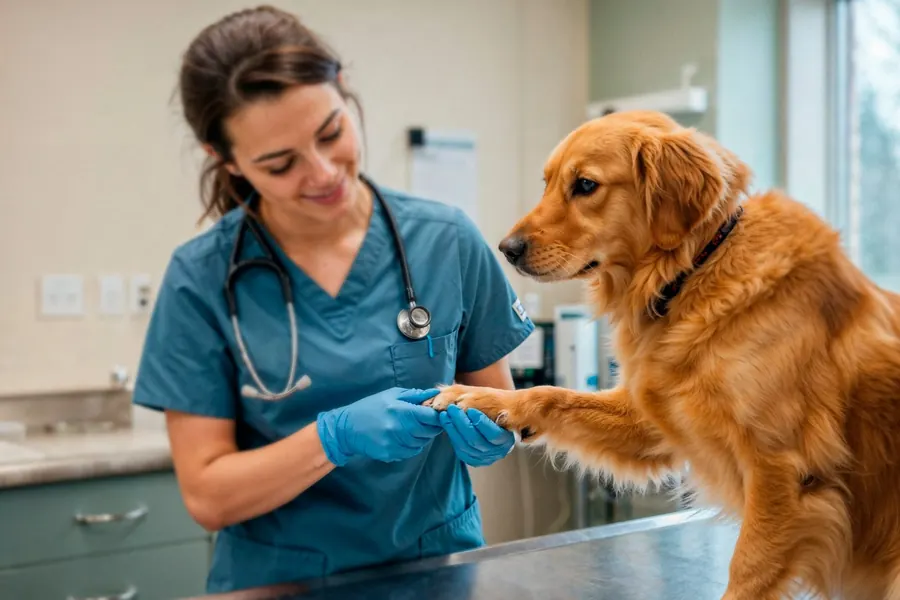
Registering with a practice before you need it means your vet already knows your pet when something goes wrong.
Who regulates vets in the UK
Only a veterinary surgeon registered with the RCVS may practise veterinary surgery in the UK. Registered vets use the letters MRCVS after their name, and registered veterinary nurses use RVN. The RCVS sets the professional standards in its Code of Professional Conduct and investigates serious concerns about a vet's or nurse's conduct.
Veterinary medicines are a separate area. They are regulated by the Veterinary Medicines Directorate (VMD), an agency of the Department for Environment, Food and Rural Affairs (Defra). Every practice that supplies medicines must have registered premises, and those premises are inspected.
Since 2026 a third body has become important for pet owners: the Competition and Markets Authority (CMA). After a market investigation lasting from September 2023 to March 2026, the CMA made a legally binding Order on 22 September 2026. It requires practices to publish clearer information about their services, prices and ownership. The changes are being introduced in stages between December 2026 and late 2027.
How to find a practice near you
The simplest starting point is the RCVS "Find a Vet" directory, which lists registered practices across the UK. You can also ask neighbours, local dog walkers, breeders or rescue centres for recommendations.

Look at more than the nearest address. Useful things to compare are:
- The animals they treat. Not every practice sees rabbits, birds, reptiles or other exotic pets.
- Opening hours and appointments. Some practices offer evening and weekend appointments or video consultations.
- Out-of-hours care. Every practice must take steps to provide 24-hour emergency first aid and pain relief, but many use a separate out-of-hours provider. Find out where it is and how far away.
- Facilities. Some practices have in-house laboratories, X-ray and ultrasound, or separate waiting areas for cats and dogs.
- Ownership. Many UK practices belong to large groups, even when they keep a local name. Under the CMA Order, groups must show their ownership clearly on websites, signs and communications, with the deadline for large groups after 22 March 2027.
- Prices. From the end of December 2026, large veterinary businesses (15 or more practices) must publish a standard price list for 36 common services online and in practice. Smaller businesses have until March 2027.
The Practice Standards Scheme
The RCVS Practice Standards Scheme (PSS) is a voluntary accreditation for UK veterinary practices. Accredited practices are assessed every four years against a set of standards covering clinical care, the practice premises, medicines and the way the practice is run. They can display the blue RCVS accredited practice logo, which has been used since 2011.
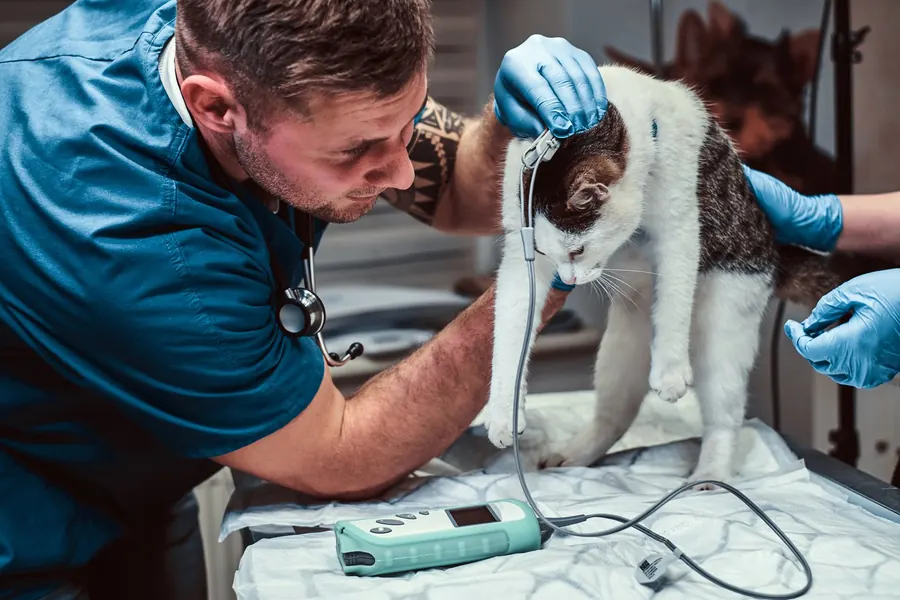
There are several levels, depending on the type of practice and the animals treated. For pet owners, the most relevant are:
- Core standards, which reflect the legal requirements for all UK practices;
- General practice, for practices that meet higher standards of care and service;
- Small animal emergency service clinic, for dedicated emergency clinics;
- Veterinary hospital, the highest level, for practices with the most extensive facilities and services.
Accreditation is not compulsory, and a practice without it is not necessarily poor. But it gives you independent assurance that a practice has been checked. From December 2026 (March 2027 for smaller businesses), practices must also publish their PSS accreditation and staff qualifications on their websites and in their premises.
Questions to ask before you register
Before you register, it is reasonable to ask the practice:
- How much is a standard consultation, and is there a separate fee for vaccinations, health plans or nurse clinics?
- Who provides out-of-hours care, where is it, and what does an emergency consultation cost?
- Do you offer a pet health plan, and what exactly does it include?
- Can you treat my type of pet, including exotic species?
- Do you have vets with a particular interest or further qualifications in areas such as cats, dermatology or behaviour?
- How do I get repeat prescriptions, and can I have a written prescription to buy medicines elsewhere?
A good practice will answer these questions clearly. Many already publish this information on their websites.
Registering and your first visit
Registering is usually free. You give your contact details and your pet's information, and you can then book appointments. Bring any previous records, the vaccination card and the microchip number to the first visit. If you have pet insurance, take the policy details as well.
For a new puppy or kitten, the first visit is the time to plan vaccinations, parasite control, microchipping and neutering. See our guides to dog vaccinations and cat vaccinations.
Changing vets
You are free to change practice at any time, for example after a move or if you are unhappy with the service. Tell your new practice the name of your previous one, and they can request your pet's clinical history. It is worth doing this before a new problem arises, so that your new vet knows your pet's past treatment, allergies and test results.
If your pet is under treatment, finish the current course or speak to both practices so that nothing is missed.
If something goes wrong
Most disagreements are about communication or cost rather than serious professional failings. The usual steps are:
- Raise it with the practice. Ask to speak to the vet, the practice manager or the clinical director. Put your concern in writing if it is not resolved quickly.
- Use mediation. The Veterinary Client Mediation Service (VCMS) is an independent and free service funded by the RCVS. It helps owners and practices reach an agreement when a complaint cannot be resolved within the practice.
- Contact the RCVS if you believe a vet or nurse's conduct is serious enough to call into question their fitness to practise. The RCVS deals with professional conduct, not compensation.
The CMA Order strengthens these steps. From March 2027, every practice must have an in-house complaints process, keep a log of complaints and take part in mediation in good faith if the owner wishes.
Frequently asked questions
Do I need to register with a vet before my pet is ill?
It is not a legal requirement, but it is strongly recommended. In an emergency you will already know where to go, and the practice will have your pet's details and history.
Can I see any vet in an emergency, even if I am not registered?
Yes. Vets on duty should not unreasonably refuse to provide first aid and pain relief to animals of the species the practice treats. You will usually be charged an emergency fee and may be asked to pay on the day.
Is a bigger or newer practice always better?
Not necessarily. Size and modern equipment matter for some treatments, but continuity of care, good communication and clear prices matter just as much for most pets.
How do I check that someone is a registered vet?
You can search the RCVS register of veterinary surgeons and veterinary nurses online by name. Registered vets use MRCVS after their name.
What can I do if I think a bill is too high?
Ask the practice for an itemised explanation and discuss it with them first. If you cannot agree, the VCMS can help. From 2027 the CMA Order also requires itemised bills and written estimates for higher-cost treatments.
Sources
- Practice Standards Scheme, Royal College of Veterinary Surgeons, accessed 2026-11-14.
- 3. 24-hour emergency first aid and pain relief, Royal College of Veterinary Surgeons, accessed 2026-11-14.
- Veterinary Client Mediation Service, VCMS, accessed 2026-11-14.
- Veterinary services for household pets, Competition and Markets Authority, accessed 2026-11-14.
- Large veterinary businesses: complying with the CMA's Order, Competition and Markets Authority, accessed 2026-11-14.
- Small veterinary businesses: complying with the CMA's Order, Competition and Markets Authority, accessed 2026-11-14.
- Retail of veterinary medicines, Veterinary Medicines Directorate, accessed 2026-11-14.
 TravelTravelling abroad with your dog, cat or ferret after Brexit: the rules in 2026Pet travel from Great Britain to the EU in 2026: microchip, rabies vaccine, animal health certificate, tapeworm treatment and pet passports.
 Law and rulesDangerous dogs law in the UK: what every owner needs to know, including the XL Bully rulesThe UK law on dangerous dogs for every owner: dogs out of control, penalties, the five banned types, XL Bully exemption rules and the 2026 changes.
 Law and rulesMicrochipping dogs and cats in the UK: what the law requiresThe UK law on microchipping dogs and cats: deadlines, approved databases, keeping details up to date, fines, collars and tags, and what to check.