Contents
- What happened
- Samples in batches
- Where the hotspot is
- Figures since mid-year
- Calmer than a year ago
- Where are the cranes?
- Perhaps immunity
- Which birds are affected
- A rook for the first time
- Goose farms under threat
- A year's work for the holidays
- Keepers want vaccination
- The bigger obstacle
- Schleswig-Holstein
- The week before
- How the zones work
- Birds under cover
- Advice for poultry keepers
- Signs of disease
- Dead birds on walks
- Risk to cats
- Risk to people
- What about goose prices?
- What this means for Europe
- Vaccination in Europe
- Who Timm Harder is
- Why the virus survives in winter
- What happens next
- When to see a vet
What happened
Bird flu is gathering pace again in Germany. On 22 November the German Press Agency dpa published an interview with Timm Harder, head of the national reference laboratory for avian influenza at the Friedrich-Loeffler-Institut. He says the situation is changing particularly fast in the north of the country.
Samples in batches
Harder said that a few weeks ago only the odd sample reached the lab. Now whole batches of 10, 15 or 20 samples from sick and dead wild birds are arriving at once. The sharp increase came last week.
Where the hotspot is
The main hotspot at the moment is the Wadden Sea on the North Sea coast. Most cases are in Schleswig-Holstein, Hamburg and Lower Saxony. There have also been detections in Mecklenburg-Western Pomerania and Brandenburg, and recently a mute swan tested positive near Trier in the west.
Figures since mid-year
Since mid-year the reference laboratory has confirmed 157 bird flu cases in wild birds and 18 outbreaks in poultry. Since the start of November alone the virus has been found on four farms in Schleswig-Holstein, three in Lower Saxony and one in Mecklenburg-Western Pomerania.
dpa; 22 November 2026
Calmer than a year ago
Despite the increase, the season is so far much calmer than the last one. Harder calls the situation moderate. In autumn 2025 the institute sometimes received hundreds of positive results from wild birds a week. But he warns that things can still develop – with this virus, surprises are always possible.
Where are the cranes?
A year ago bird flu killed cranes on an unprecedented scale. Thousands of dead birds were found at their stopover sites. This season there is not a single crane among the new cases. Harder says this is not because the virus has changed: it is the same variant as last year.
Perhaps immunity
Some cranes and other birds may have survived infection and become immune. But that cannot be proven yet. It would require blood samples from a large number of live wild birds, and there is no such data. Migration is largely over, and it is mainly birds wintering in Germany that are being infected.
Which birds are affected
No single species is particularly hard hit at the moment. But large geese – Canada geese, greylag geese and white-fronted geese – are over-represented. Ducks, gulls and occasionally birds of prey are also affected. This is typical of winter, when waterfowl gather in large flocks.
A rook for the first time
One find surprised even the experts. For the first time ever the institute confirmed bird flu in a rook. "We hadn't had that before," Harder said. Crows and their relatives live close to people and farms, so they will be watched more closely.
Goose farms under threat
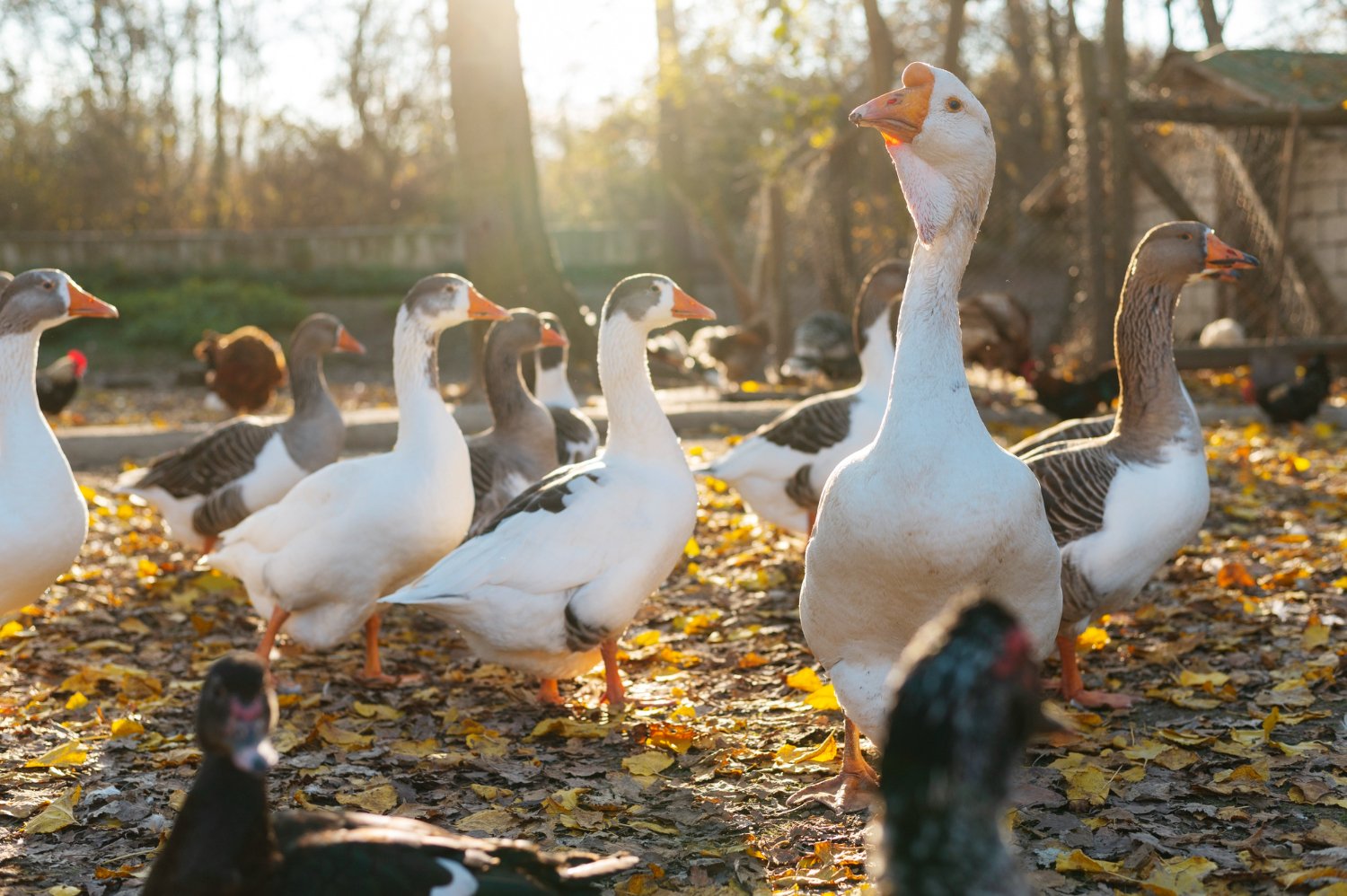
Goose keepers have most reason to worry. Their birds usually live outdoors in pens with ponds and water. According to Harder, these are favourable conditions for the virus: wild geese and ducks visit the same water and bring infection with them.
A year's work for the holidays
Goose keepers work all year towards November and December, when geese are sold for the festive table. Roast goose is a tradition in Germany on St Martin's Day and at Christmas. If an outbreak strikes a few weeks before sale, all the birds have to be destroyed.
Keepers want vaccination
Many goose and duck keepers are pressing the institute to start vaccinating against bird flu. But unlike some other poultry species, there is no authorised vaccine for geese at all. So even those who want to vaccinate have nothing to use.
The bigger obstacle
Harder thinks the bigger obstacle is trade. Countries outside the EU might close their markets to poultry products from a European country that vaccinates. For exporters of meat and eggs this is a serious risk, which is why the decision to vaccinate is a difficult one.
Schleswig-Holstein
Schleswig-Holstein currently has the most farm outbreaks. On 22 November the Kieler Nachrichten newspaper reported a confirmed outbreak in the Rendsburg-Eckernförde district and restriction zones around it. According to the paper, five districts in the state are already affected.
The week before
In early November the virus was found on farms in the Stade district of Lower Saxony and in Dithmarschen in Schleswig-Holstein, and in a cormorant on a Baltic beach in East Holstein. The first wild bird case in North Rhine-Westphalia was confirmed at the same time. Now the epidemic is spreading.
How the zones work
Around each farm with an outbreak, the authorities set up a protection zone of at least 3 km and a surveillance zone of at least 10 km. Movements of poultry, eggs and manure are restricted, and vets check every flock. Poultry on the affected farm is culled.
Birds under cover
In many districts of Germany the authorities have already ordered poultry to be kept indoors or under cover. The rule applies both to large farms and to people with a few hens. Keepers should check the current requirements with their local veterinary office.
Advice for poultry keepers
Keep chickens, ducks and geese away from water used by wild birds. Feed and water under cover. Change your footwear before entering the shed. Keep strangers away. House new birds separately. Any sudden deaths in a flock are a reason to call a vet straight away.
Signs of disease
In chickens and turkeys bird flu is usually severe: the birds are lethargic and stop eating, their combs and wattles turn blue, their heads swell, egg production collapses and many die. Geese and ducks may be less severely affected, sometimes showing balance problems and a twisted neck.
Dead birds on walks
If you find dead wild birds, especially swans, geese or ducks, do not touch them. Report them to the local veterinary office or authorities. Keep dogs on a lead near water so they do not pick up carcasses.
Risk to cats
H5N1 can also infect cats, usually when they catch or eat sick birds or are fed raw meat from infected poultry. During the bird flu season vets advise keeping outdoor cats indoors where possible.
Risk to people
The risk of infection for people in Germany is considered low. Infection is possible through close, unprotected contact with sick birds. Properly cooked poultry and eggs are safe. A festive goose bought from a shop poses no risk.
What about goose prices?
Every outbreak on a goose farm before the holidays reduces supply. If more follow, fresh German goose could become more expensive or scarce. Some demand is met by imports from Poland and Hungary, but many buyers prefer local birds.
What this means for Europe
Bird flu has spread across almost all of Europe this autumn, with outbreaks in the Netherlands, Poland, France, the UK and Denmark. Migratory birds carry the virus between countries. That is why German data on which species are affected and on new hosts matter to all its neighbours.
Vaccination in Europe
Since 2023 France has made vaccination of farmed ducks against bird flu compulsory. The Netherlands is running a pilot vaccination of laying hens. Germany has not moved to mass vaccination yet. Neighbours' experience shows that vaccination reduces outbreaks but requires strict monitoring.
Who Timm Harder is
Timm Harder heads the national reference laboratory for avian influenza at the Friedrich-Loeffler-Institut. The institute is Germany's federal research institute for animal health, with its main site on the island of Riems near Greifswald. All bird flu cases in Germany are confirmed there.
Why the virus survives in winter
Bird flu virus survives well in cold water and damp droppings. In winter it can remain infectious for weeks. Ponds where wild and domestic birds mix become places of transmission, and cold weather extends the dangerous season into spring.
What happens next
The Friedrich-Loeffler-Institut will keep tracking findings in wild birds and warning of risks. Harder expects more cases in winter, especially on the coast. Poultry keepers are advised not to relax their precautions until at least the spring.
When to see a vet
If your chickens, ducks or geese suddenly die, stop eating and drinking, or show blue combs, swollen heads or loss of balance, tell your vet or the veterinary authorities immediately. If your cat becomes ill after catching a bird, take it to a vet as well.
Sources
- Tagesspiegel (dpa), 22 November 2026
- Kieler Nachrichten, 22 November 2026